
Physical, Cognitive and Occupational Rehabilitation for Brain Injury
Rehametrics is the clinical platform that enables physiotherapists, neuropsychologists, occupational therapists and speech and language therapists to manage the recovery from acquired brain injury using a single system. It comprises three modules: Physical, Cognitive and VR (Virtual Reality), featuring adaptive and customisable exercises, automatic recording of each session and longitudinal monitoring of the patient’s progress.
+30%
more sessions completed compared with the conventional approach
+100
clinical parameters recorded automatically per session
89%
of patients who are more motivated
A single approach to tackling the complexity of brain damage
Acquired brain injury rarely affects just one functional area. Stroke, traumatic brain injury, cerebral hypoxia or brain tumours can simultaneously impair motor control, cognitive functions (attention, memory, executive functions) and the ability to carry out activities of daily living, which requires a coordinated approach involving physiotherapy, neuropsychology and occupational therapy.
Rehametrics integrates the three areas of rehabilitation into a single platform: the Physical Module for motor training, the Cognitive Module for cognitive stimulation and rehabilitation, and Rehametrics VR for functional and occupational training in immersive virtual environments. The clinical team combines the modules according to each patient’s profile, and Rehametrics objectively records their progress within a single system.
Brain damage conditions addressed
- Stroke / ACV
- Traumatic Brain Injury (TBI)
- Cerebral anaemia and encephalopathies
- Brain tumours and neurosurgery
- Encephalitis and neurological infections
- Brain haemorrhages
- Other causes of acquired brain damage
One system, three rehabilitation modules
Each Rehametrics module bears the CE mark as a medical device and was designed by clinicians for clinical use. They are combined according to the therapeutic objectives of each patient with brain damage.
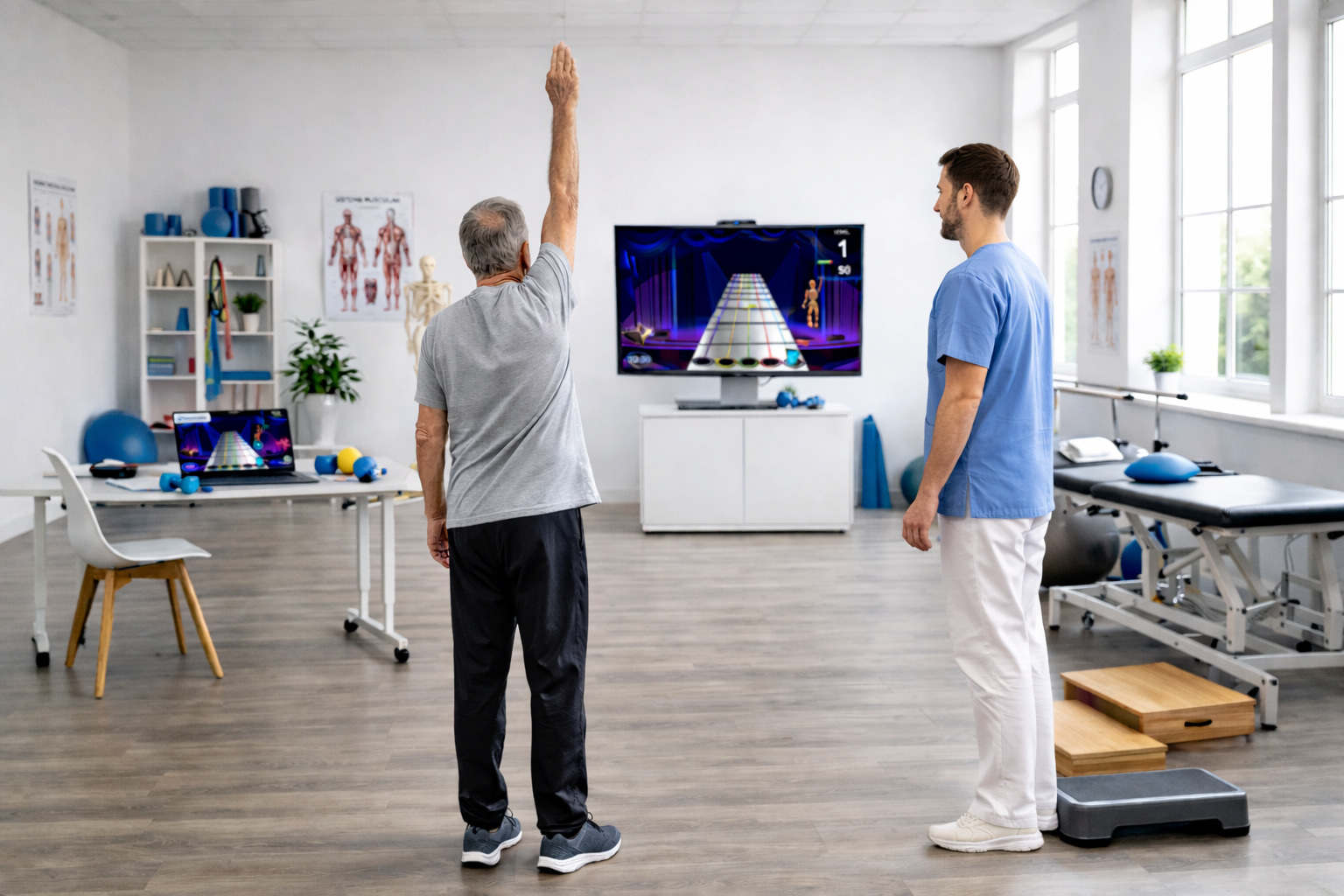
Physio Module
An augmented reality system with motion detection that combines analytical and functional exercises; no sensors or controllers required. Over 120 interactive exercises to improve balance, range of motion, coordination, body control and gait.
It automatically records more than 100 parameters per session — range of motion, base of support, centre of gravity displacement, stride height — without any manual intervention by the clinician.
- Stroke / ACV
- Traumatic brain injury (TBI)
- Cerebral anoxia and encephalopathies
- Brain tumours and neurosurgery
- Other causes of acquired brain damage
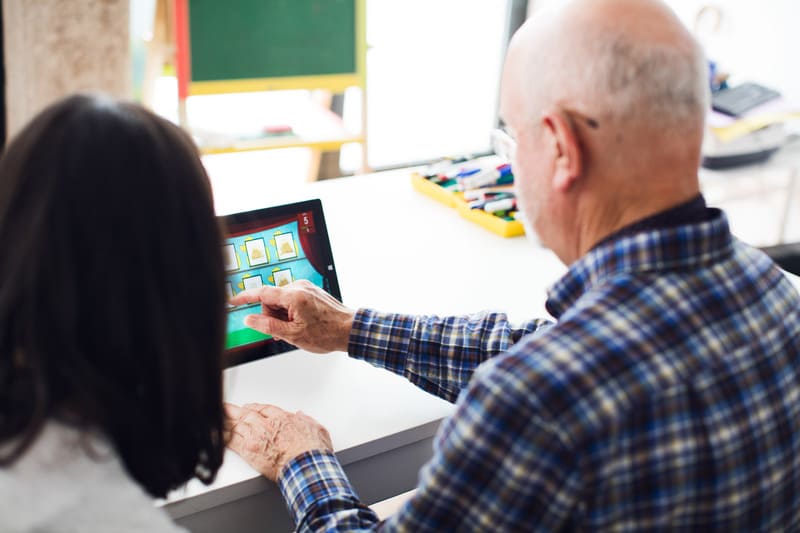
Cognitive Module
A digital cognitive stimulation and rehabilitation system featuring over 190 gamified and customisable exercises. It helps to improve attention, memory, executive functions, language, perception and cognitive aspects of activities of daily living.
Tailored to each patient’s individual profile, this is particularly useful when physical and cognitive recovery go hand in hand.
- Stroke / acquired brain damage
- Traumatic brain injury
- Cerebral anaemia and encephalopathies
- Brain tumours and neurosurgery
- Associated cognitive impairment
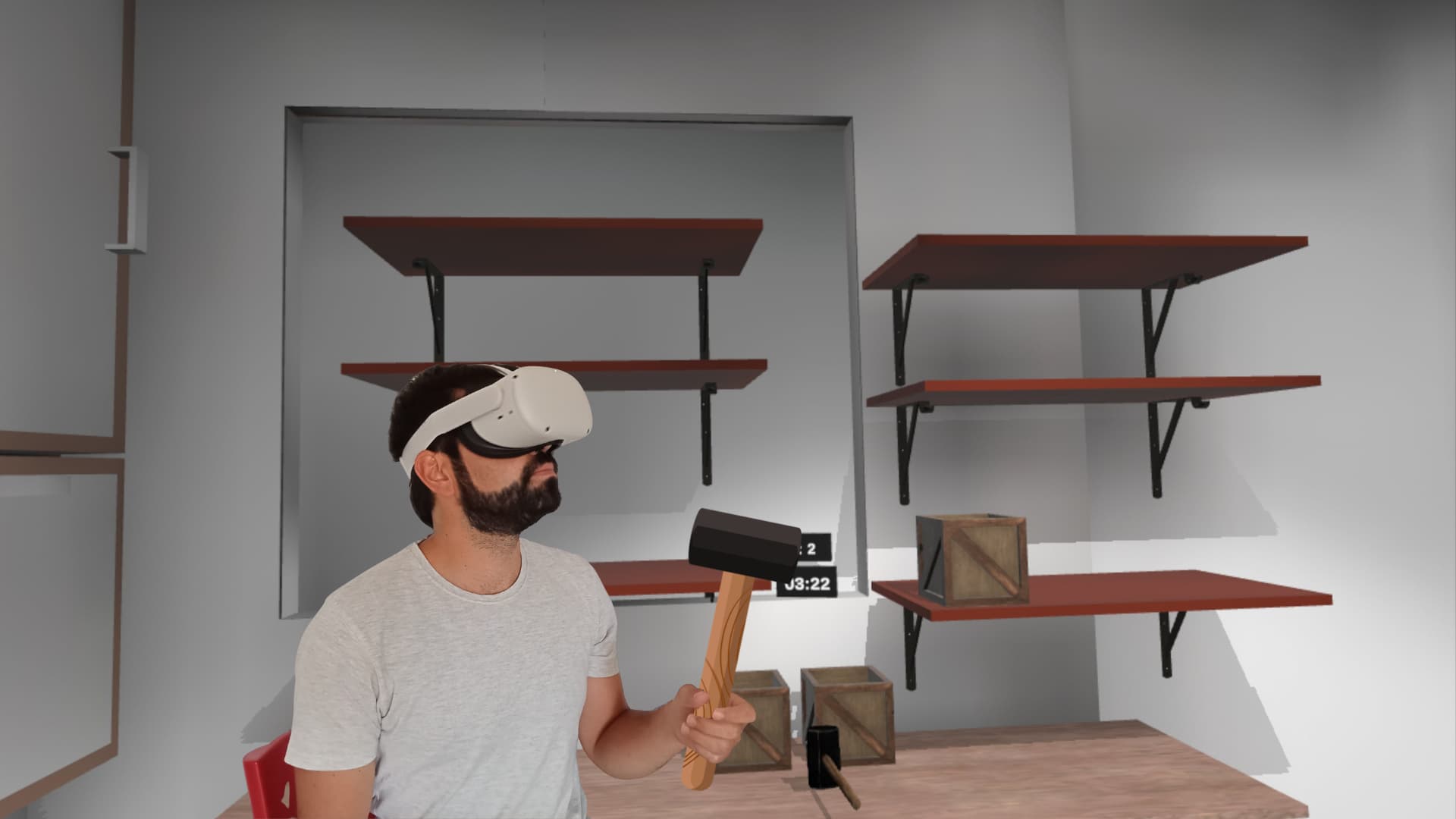
VR Module
Wearing virtual reality headsets, patients are immersed in virtual or mixed environments with over 70 exercises for the upper limbs, reaction time, fine motor skills and activities of daily living. No gloves, controllers or calibration are required, thanks to hand tracking.
It includes two assessment scales: the Box and Block Test (BBT) and the Nine Hole Peg Test (9HPT).
- Stroke affecting an upper limb
- Traumatic brain injury
- Incomplete spinal cord injury
- Post-traumatic hand rehabilitation
- Acquired brain injury in general
Acquired brain injury conditions treated with Rehametrics
Each condition presents a distinct clinical profile in terms of motor, cognitive and functional aspects. Rehametrics allows the Physical Module, the Cognitive Module and the VR Module to be combined according to the specific needs of each patient and their stage of recovery.
Stroke (CVA)
Following a stroke, it is common to observe impairments in motor function, balance, gait and upper limb control, alongside deficits in cognition, attention, working memory and executive functions, which are often of a comparable severity. Rehametrics allows the Physical Module, the Cognitive Module and the VR Module to be combined within a single programme designed to restore functional abilities and activities of daily living.
Traumatic Brain Injury (TBI)
Patients with TBI often present with impairments in motor function, balance, gait and upper limb control, as well as deficits in cognitive function, executive function, inhibitory control and sustained attention. The platform makes it easier to tailor physical, cognitive and occupational therapy to each patient’s specific profile and to adjust the level of difficulty in line with their progress.
Cerebral anaemia and encephalopathies
Hypoxic injuries tend to particularly affect memory, attention and processing speed, and are often accompanied by generalised weakness and impaired balance and gait following prolonged immobilisation in the ICU. Rehametrics enables both areas to be addressed through graded exercises and longitudinal monitoring of performance.
Brain tumours and neurosurgery
Many neuro-oncology patients experience impairment in areas such as motor function, strength and balance, as well as cognitive function, memory and attention, resulting from the tumour and the treatments themselves. Combining physical, cognitive and occupational rehabilitation helps to maintain functionality and quality of life during the course of treatment and following surgery.
Other causes of acquired brain damage
Neurological infections, encephalitis, cerebral haemorrhages or complex neurological sequelae may benefit from personalised programmes combining physical, cognitive and occupational stimulation, tailored to each patient’s functional profile.
Areas of treatment in physical, cognitive and occupational rehabilitation
The system covers the main areas affected by acquired brain injury by combining the three Rehametrics modules, with automatic and objective recording of the entire course of the condition.
Balance and gait
Augmented reality exercises designed to train balance, base of support, centre of gravity control, and gait patterns, with automated kinematic parameter tracking during each session.
View exercises →Range of motion and coordination
Analytical and functional exercises targeting joint mobility and motor coordination, fully adaptable to each stage of recovery following a stroke, TBI, or other causes of brain injury.
View exercises →Strength and body control
Progressive strengthening and postural control programmes, customized to match the clinical stage and specific functional baseline of each patient during neurological or orthopaedic recovery.
View exercises →Functional mobility and transfers
Movement and positional transfer exercises that replicate real-world daily demands, reinforcing patient independence within home and community environments.
View exercises →Attention and processing speed
Targeted training for sustained, selective, and divided attention, alongside structured tasks built to improve information processing speed and cognitive responsiveness.
View exercises →Memory
Specific cognitive modules for episodic memory, working memory, and visual memory, dynamically adjusting task complexity, exposure times, and cognitive load.
View exercises →Executive functions
Interactive training paths focusing on planning, cognitive flexibility, problem solving, response inhibition, and goal-directed decision-making within structured virtual environments.
View exercises →Cognitive activities of daily living
Functional simulation tasks structured to apply cognitive capacities directly to everyday situations: tracking orientation, task sequencing, and managing simultaneous environmental stimuli.
View exercises →Upper limb intervention
Virtual reality environments driven by controller-free hand tracking to work on dynamic reaching, spatial accuracy, and upper extremity movement ranges following stroke, TBI, or SCI.
View exercises →Fine motor skills and manipulation
Precision manual tasks for dexterity and object handling, incorporating two natively integrated standardized clinical scales: the Box and Block Test (BBT) and the Nine Hole Peg Test (9HPT).
View exercises →Dual-task training
Exercises combining simultaneous motor and cognitive demands within the same virtual scenario, replicating the complex dual-processing needs of real-world activities.
View exercises →Functional activities of daily living
Immersive simulations of routine activities—such as grocery shopping or domestic chores—built to train functional independence in a safe, ecologically valid context.
View exercises →What Rehametrics brings to the clinical team
A platform designed to facilitate multidisciplinary collaboration between physiotherapy, neuropsychology and occupational therapy, with longitudinal monitoring of recovery and decision-making based on objective data.
Personalised and adaptive sessions
Every patient with brain damage has a different profile and recovers at a different rate. Rehametrics allows you to design Physical, Cognitive or VR Module sessions according to the therapeutic objective, and automatically adjust the difficulty level based on the recorded performance.
Recording and objective quantification
The system automatically records kinematic parameters (range of motion, balance, gait) and cognitive parameters (response times, correct responses, errors). All the information is incorporated into exportable clinical reports.
Longitudinal monitoring of recovery
The platform enables users to compare results across sessions, identify areas for improvement or where progress has stalled, and objectively document the patient’s physical, cognitive and functional progress throughout the course of treatment.
Greater adherence and motivation
Exercises based on interactive virtual environments encourage patient participation and improve treatment adherence compared with conventional, repetitive methods, whether in physical, cognitive or occupational therapy sessions.
Physical and cognitive telerehabilitation
Rehametrics enables physical and cognitive rehabilitation programmes to be maintained or supplemented at home, with clinical supervision and automatic data recording, thereby facilitating continuity of care.
more sessions completed compared with the conventional approach
clinical parameters recorded per session
of patients who reported higher levels of motivation
clinics and hospitals in 20 countries
Hospitals that already use Rehametrics
Implemented in leading public and private organisations: Osakidetza, SESCAM, the Murcia Health Service, Salud Madrid, HACLE La Pedrera, the Regional Government of Galicia, Quirónsalud, IMSERSO, the Sisters of Charity, Adacen, Mutua de Terrassa and others.

Incorporate physical, cognitive and occupational rehabilitation into your clinical practice
If you work with patients with acquired brain injury and are looking for a platform that combines physical, cognitive and occupational rehabilitation, personalises sessions, sets targets for outcomes and tracks recovery over time, Rehametrics is designed for your team.
Frequently asked questions about rehabilitation following brain injury
All three: the Physio Module for balance, gait, joint range of motion and coordination; the Cognitive Module for attention, memory, executive functions and cognitive activities of daily living; and Immersive Rehabilitation (VR) for the upper limb, grip, fine motor skills and functional activities of daily living.
Yes. The clinician can manually adjust the clinical parameters of each module, or allow the system to adjust them based on the patient's performance in each session.
The Physio Module enables work on balance, gait, joint range of motion, coordination, body control and strength, through augmented reality motion-detection exercises with no sensors or controllers.
The Cognitive Module enables intervention on attention, memory, executive functions, processing speed, language and perception, as well as cognitive activities of daily living.
Immersive Rehabilitation works on the upper limb, grip, fine motor skills and activities of daily living in virtual environments, without gloves or controllers. It includes two integrated standardised assessment scales: Box and Block Test (BBT) and Nine Hole Peg Test (9HPT).
The Physio Module requires a Windows 10 (64-bit) computer, a screen of at least 42 inches and a Kinect camera or webcam, depending on the version. The Cognitive Module works with a computer or tablet. The VR module requires Meta Quest 2, 3 or 3S headsets and a Windows computer.
Yes. Rehametrics has clinical validation studies in acquired brain damage across its physical, cognitive and occupational modules.
Yes. The clinician can schedule home sessions of Rehametrics Physio and Cognitive, maintaining clinical follow-up and automated recording of results.
Yes. Rehametrics is the only platform that integrates the physical and cognitive approach in a single clinical environment. The clinician can design sessions combining both dimensions, including dual tasks — or work on them separately according to the therapeutic moment, with unified recording of all parameters.
The clinician controls the session duration, number of exercises, difficulty level and pace of progression. For patients with high fatigability, short and frequent sessions can be designed, or physical and cognitive work days can be alternated.
Rehametrics is clinical software. The clinician prescribes and controls the programme, the system records objective clinical parameters, and the reports generated form part of the patient's clinical documentation.
The clinician manages all patients from a centralised clinical dashboard. Automatic reports are available to the whole team and exportable for the clinical record. The platform adapts to both individual care models and supervised group sessions in a day centre or inpatient unit.
Yes. There are clinical validation studies across various neurodegenerative conditions, with more than 40 scientific publications documenting clinical improvements.
Rehametrics is a Software as a Medical Device (SaMD) with CE marking, designed for clinical use across its three modules. Treatment is prescribed and monitored by the clinician, with objective recording of clinical parameters and automatic report generation.