
Rehabilitation exercises to improve mobility and gait
At Rehametrics, physiotherapists and other rehabilitation professionals have access to more than 16 exercises designed to improve patients’ mobility, with specific gait analysis parameters, multiple levels of difficulty and customisation options.
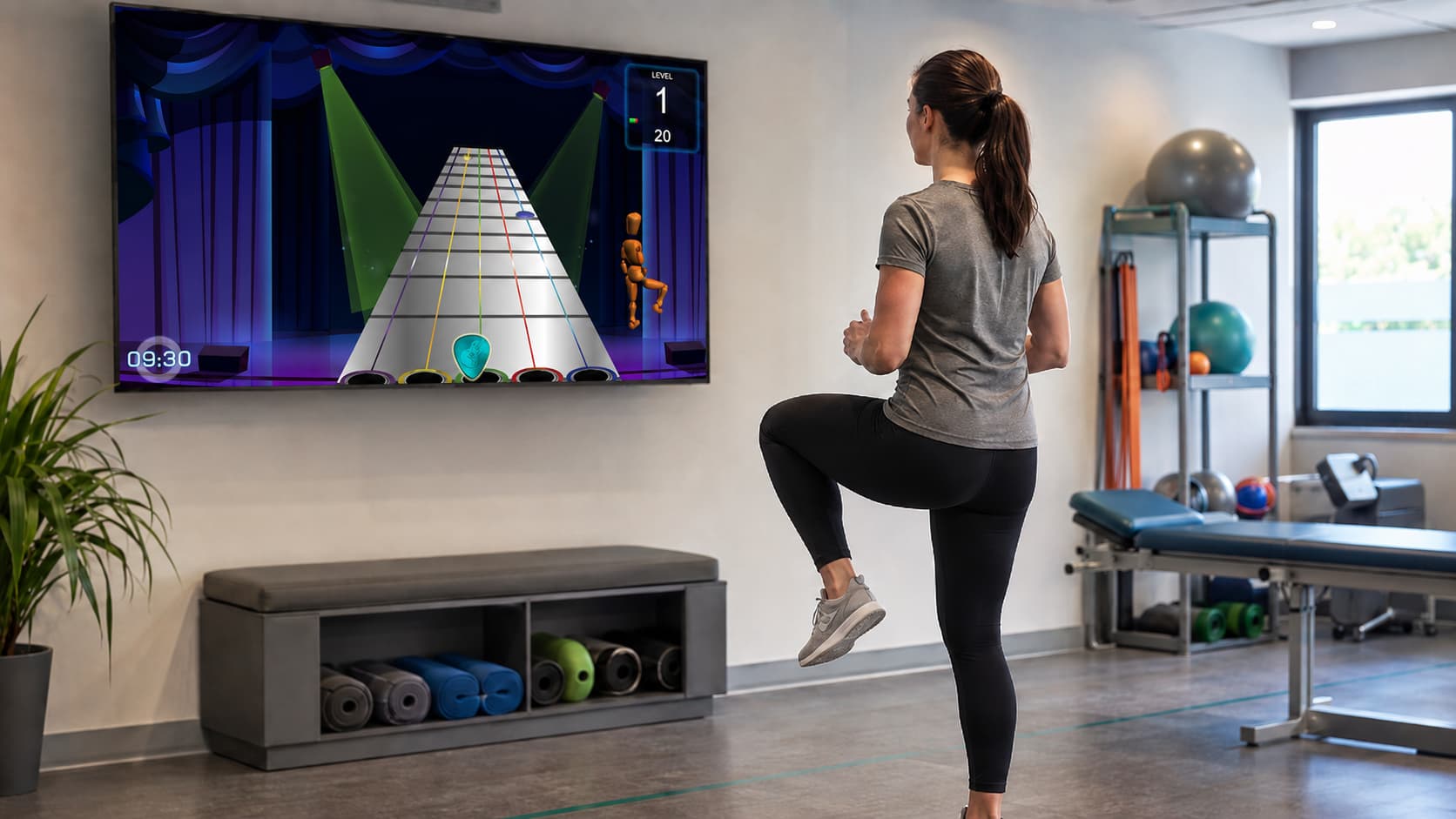
Functional gait re-education
Functional walking is the foundation of independence: it enables patients to leave their homes, move about their surroundings, access different places and take part in their daily lives without having to rely on others all the time.
Rehametrics facilitates gait rehabilitation through virtual reality exercises designed to train the key components of functional walking. Patients work on weight-bearing on the affected limb, stride length and cadence, dynamic balance and adapting to different walking situations.
The platform provides objective data to assess the patient’s progress and adjust treatment accordingly.
- More than 16 exercises delivered via virtual environments.
- Automated real-time analysis.
- Complete flexibility to arrange training sessions at the clinic or at home.
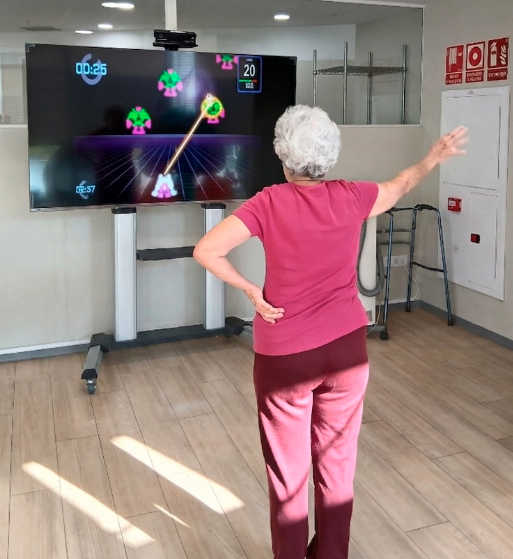
What do the movement exercises focus on?
The targets vary according to the patient’s clinical profile and the stage of treatment, and are adjusted flexibly in real time:
Examples of movement exercises
Exercises that can be adapted to suit the patient’s functional profile.
Balance and weight transfer
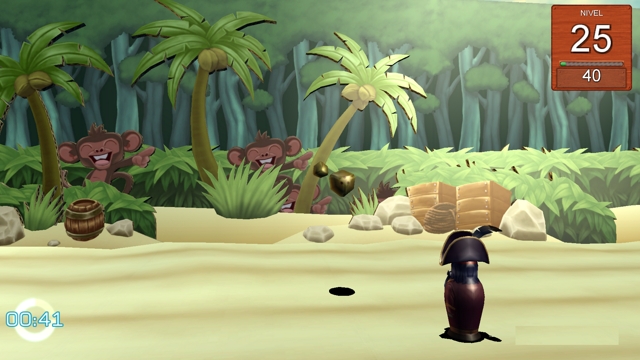
Lateral movements
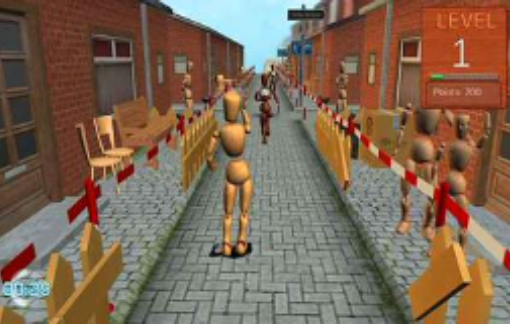
Obstacle course
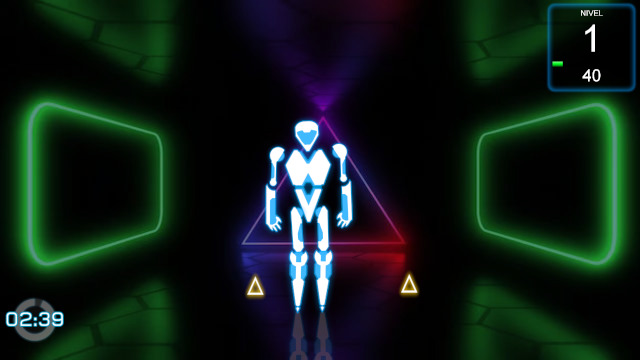
Lower-body strength

Transfers
+10
exercises
Objective quantification of gait and movement
Rehametrics automatically records the number of steps, their duration, and the height and width of each step during every walking exercise, broken down by left and right side. As it is a full-body motion capture system, it also collects data on balance, joint range of motion and coordination during the exercise, without any manual intervention from the clinician. The difficulty level is adjusted in real time according to the patient’s performance."
Each session is recorded as a 3D model of the movement, which can be replayed on demand. The practitioner can manually adjust the parameters as required, and all reports can be printed and exported.
Successes
Errors
Response time
Level of difficulty
Support base
Asymmetries
Centre of gravity
Height and width of the passage
Benefits of movement exercises
A digital solution designed to maximise independence of movement, improve adherence and provide the therapist with spatio-temporal parameters.
Functional independence in walking
A functional gait enables the patient to leave the house, move around independently and take part in activities of daily living without having to rely on others all the time.
Motivation through gamification
Virtual and interactive environments increase engagement, helping to prevent frustration in treatment programmes that require weeks or months of continuous repetition.
Objective monitoring with customisable clinical reports
Sessions are automatically recorded with quantitative data. The practitioner can generate personalised clinical reports that facilitate communication within the therapeutic team and the ongoing adjustment of treatment.
Augmented reality solution for physiotherapy
Discover an augmented reality solution that helps improve physical rehabilitation through personalised exercises and clinical monitoring.
Frequently Asked Questions
Gait disorders are disruptions in the way a person walks or moves - typically caused by musculoskeletal injury, neurological damage or conditions affecting motor control. In rehabilitation they are addressed to recover the most functional and safe gait possible, reduce the risk of falling and restore the patient's ability to move independently.
Primarily people with gait disorders associated with stroke, acquired brain injury, partial spinal cord injury, neurodegenerative conditions or orthopaedic pathology affecting the lower limbs. Also indicated for patients who have lost weight-bearing control on the affected limb and need to retrain their gait pattern.
The software automatically records step height and width, the number of steps completed during the session and the average time taken per step. These spatiotemporal gait parameters enable quantitative, objective monitoring of the patient's progress over time.
Yes. The objective of the exercises is to improve the patient's gait capacity regardless of whether they use a walking aid. Exercises are designed to adapt to different functional levels - from early rehabilitation phases to more advanced stages.
Difficulty is adjusted according to the patient's functional level and clinical objectives. The clinician can configure the starting level and modify the available personalisation parameters for each exercise to adapt the session to each patient's specific needs.
Conventional gait observation is qualitative and observer-dependent. Rehametrics automatically records specific quantitative parameters (step height and width, cadence, number of steps) that enable objective, precise comparison of patient progress throughout treatment.
It enables immediate visual feedback on the patient's gait pattern, the creation of motivating environments with different types of obstacles and gait conditions, and greater training variability and intensity than conventional therapy. Gamification techniques also increase motivation and treatment adherence.
Yes. Exercises can be performed from any location with remote professional supervision, facilitating continuity of treatment outside the clinical setting and enabling the patient to maintain the session frequency needed to progress.
This varies depending on the patient, the underlying condition and the intensity of treatment. The regularity of sessions and appropriate progression of difficulty are the most important factors in achieving functional improvements in gait and mobility.
Yes. Exercises can be adapted to different phases of the process - from the earliest stages in which the patient works on weight-bearing control on the affected limb, to more advanced phases focused on improving cadence, symmetry and gait endurance.
No. The system is designed so that any clinical professional can configure sessions and access monitoring data intuitively, without the need for specialist technical training.