
Augmented rehabilitation for physiotherapy and neurorehabilitation
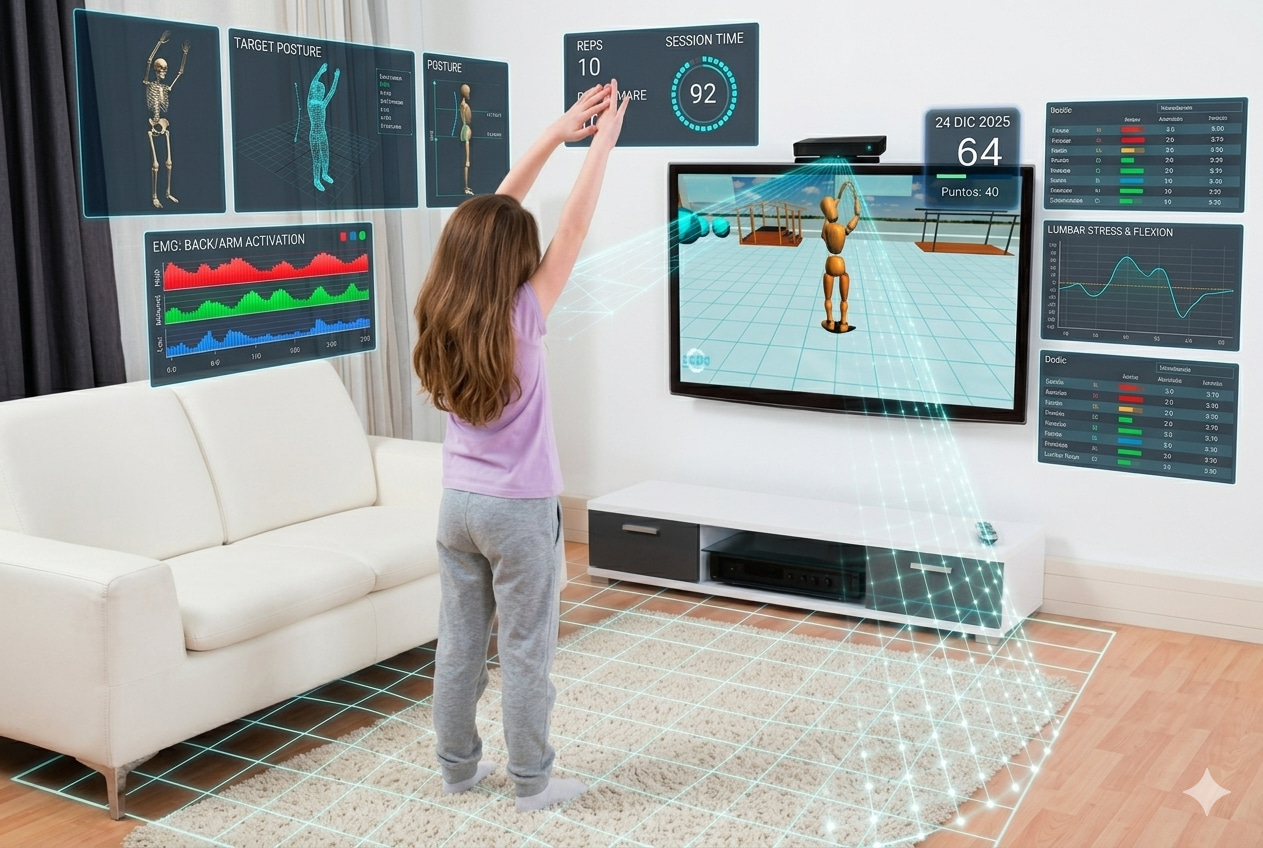
Augmented rehabilitation combines therapeutic exercises, motion sensors and real-time visual feedback to improve adherence, provide objective performance metrics and facilitate more dynamic therapies in clinical and home settings.
- Applications in neurorehabilitation and physical rehabilitation
- Increasing use in hospitals and clinics
- Compatible with motion sensors and cameras
- Integration with objective clinical metrics
What is augmented rehabilitation?
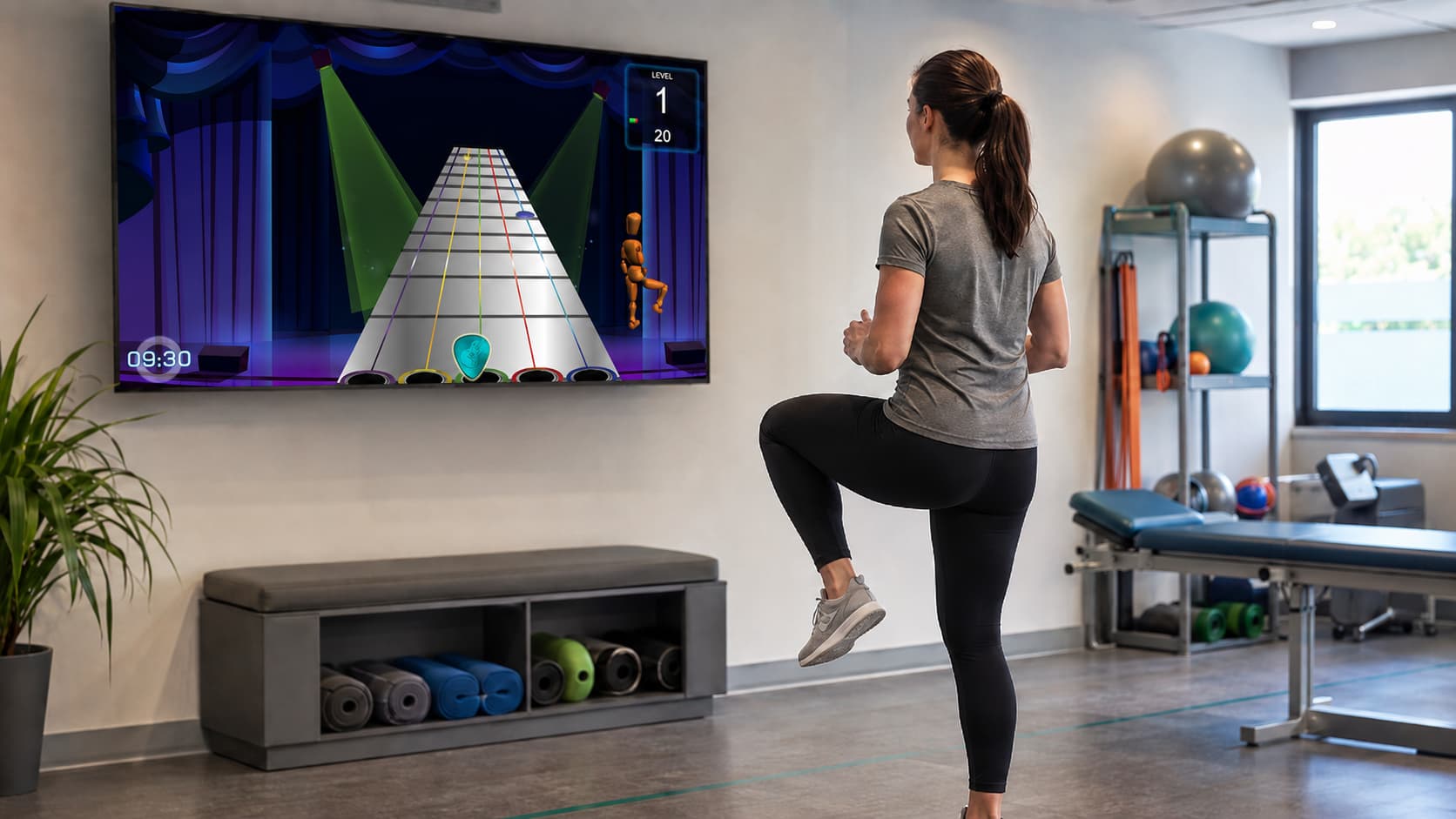
Augmented rehabilitation is a form of therapy that uses interactive technologies to enhance the performance of exercises through visual stimuli, motion tracking and real-time feedback.
Unlike immersive virtual reality, the patient remains in direct contact with the physical environment whilst interacting with digital elements displayed on screen or integrated into the therapeutic exercise.
Gamification turns therapeutic exercises into more motivating experiences, encouraging greater adherence to treatment, more repetitions per session and more precise execution of movements. It is particularly useful in physiotherapy, functional rehabilitation and neurorehabilitation.
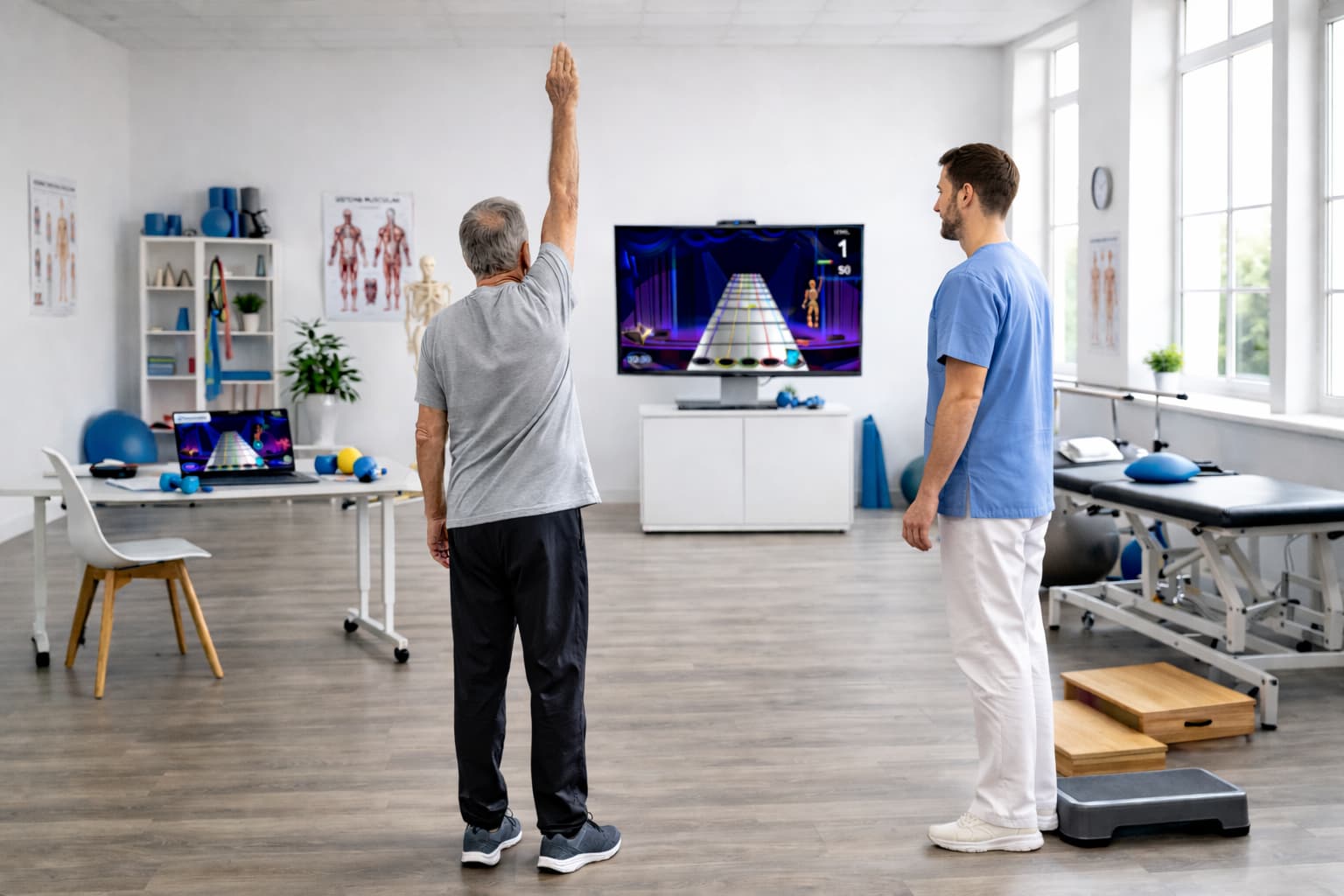
Rehametrics combines gamification, augmented reality and biomechanical analysis to offer personalised rehabilitation programmes that boost patient motivation and provide healthcare professionals with objective data on each session, whether in the clinic or at home.
Augmented rehabilitation, virtual reality and mixed reality
Although they are often grouped together under the term ‘virtual reality’, there are significant differences between these forms.
| Technology | Features | Common clinical use |
|---|---|---|
| Augmented rehabilitation | Exercises in a real environment with digital feedback | Physical therapy, mobility, balance, upper limb |
| Immersive virtual reality | Completely virtual environment using VR headsets | Neurorehabilitation, pain, motor training |
| Mixed reality | Virtual elements integrated into a physical environment | Gait, balance, occupational therapy |
Augmented rehabilitation or non-immersive virtual reality tends to have a gentler learning curve and a high level of tolerance, particularly in geriatric patients, those with musculoskeletal conditions, or those with a low tolerance for full immersion.
How does non-immersive virtual reality therapy work?
Current systems use sensors or motion cameras to record the patient’s activity and provide immediate feedback during the therapy session.
🎥
Motion capture
- RGB or depth cameras
- Body sensors
- Optical tracking
- Biometric detection
- Handheld devices
🔁
Real-time feedback
The patient sees targets, movements or interactive stimuli that make the therapeutic exercise a more dynamic and understandable experience.
Immediate feedback facilitates:
- Motor correction
- Greater engagement
- Higher exercise intensity
🩺
Clinical platform
- Customisable therapeutic exercises
- Clinical metrics
- Professional dashboards
- Longitudinal monitoring
- Continuity between the clinic and the home
Benefits compared with conventional rehabilitation
Greater patient involvement
Visual interaction and immediate feedback increase engagement and adherence to treatment.
Objective metrics
Automatic motion capture enables functional parameters to be recorded consistently and over time.
Higher exercise intensity
Exercises can be carried out with greater intensity and consistency whilst maintaining motivation and supervision.
Accessible implementation
Many systems require only a screen and motion sensors, making clinical integration easier.
In-person and home use
Augmented rehabilitation can be used both in clinical practice and in supervised telerehabilitation programmes.
Clinical applications
Augmented reality is now used across a wide range of clinical settings.
🧠
Neurorehabilitation
Used in the treatment of stroke, acquired brain injury, Parkinson’s disease and other neurological conditions, with a focus on functional and motor recovery.
🦴
Musculoskeletal rehabilitation
For use on the shoulder, knee, hip and spine, and for post-surgical recovery.
⚖️
Balance and fall prevention
Programmes focusing on postural control, stability and functional training.
🧓
Geriatrics
Particularly useful for patients who require functional exercises involving low levels of technological complexity.
🧒
Paediatrics and neurodevelopment
Interactive environments facilitate adherence to treatment and patient engagement.
🏠
Telerehabilitation
Digital systems make it possible to supervise home-based programmes and monitor clinical progress remotely.
Clinical technology versus recreational systems
Not all interactive systems used in rehabilitation have a clinical purpose. There are significant differences between adapted video games, recreational platforms, and software designed specifically for rehabilitation.
Adapted video games and recreational platforms
Designed for entertainment, without clinical objectives or therapeutic metrics.
Software designed specifically for rehabilitation
With clinical criteria, therapeutic customization, and objective metrics, such as Rehametrics Physical.
- Therapeutic customization
- Objective measurement
- Professional supervision
- Clinical traceability
- Adaptation by pathology
Platforms like Rehametrics Physio have been developed specifically to integrate these functionalities into the standard clinical workflow.
Use cases and centres of excellence
Augmented reality is increasingly used across a wide range of clinical settings:
SEE MORE
How to integrate digital therapy into hospitals and rehabilitation centres
Read the article →
Virtual rehabilitation in neurorehabilitation
Read the article →
Digital group activities in geriatric physical rehabilitation: clinical applications in care homes and day centres
Read the article →
Explore how to apply augmented rehabilitation in physiotherapy and neurorehabilitation
Find out how platforms such as Rehametrics Físico enable the integration of interactive exercises, clinical metrics and digital monitoring in hospitals, clinics and home-based programmes.
Frequently Asked Questions
Augmented rehabilitation keeps the patient within the real physical environment while incorporating interactive digital stimuli. Immersive virtual reality uses headsets that generate a completely virtual environment.
Usually a screen, motion sensors or cameras, and a specialized clinical platform.
Yes. Many systems allow for remotely supervised therapeutic continuity.
Stroke, Parkinson's disease, musculoskeletal rehabilitation, balance, geriatrics, and other functional and neurological conditions.
No. It acts as a complementary tool within the rehabilitation process.
Greater feedback, objectification of movement, and improved therapeutic adherence.