
Physic and Cognitive Rehabilitation for Children and Young People
Rehametrics is the clinical platform that enables physiotherapists, neuropsychologists, occupational therapists and speech and language therapists to design personalised physical and cognitive rehabilitation programmes for children and young people. All within a single system, featuring adaptive exercises, motivational environments and objective monitoring of progress.
Rehabilitation tailored to child and adolescent development
Rehabilitation for children and young people requires programmes tailored to each patient’s level of development, attention span and functional progress.
Neurological conditions, neurodevelopmental disorders or childhood brain injury can affect mobility, coordination, attention and functional independence. Rehametrics enables the design of personalised sessions combining clinical exercises and interactive environments that promote motivation, adherence and continuity of care.
The platform can be adapted to different clinical profiles
- Cerebral palsy in children
- Neurodevelopmental disorders
- Childhood brain injury
- Paediatric motor rehabilitation
- Cognitive rehabilitation for children
Clinical profiles addressed using Rehametrics
Each patient has different therapeutic needs. Rehametrics allows the physical, cognitive or combined approach to be tailored to each patient’s functional level and stage of recovery.
Cerebral palsy in children
Rehametrics enables patients to work on balance, coordination, postural control, mobility and cognitive functions, with the difficulty and intensity adapted to the patient’s functional level. The available evidence shows that virtual reality-based rehabilitation can improve motivation and motor training in children with cerebral palsy.
Neurodevelopmental disorders
The programmes may focus on training attention, executive functions, and cognitive and motor coordination and planning in children and adolescents with neurodevelopmental disorders.
Childhood brain injury
The platform provides personalised physical and cognitive rehabilitation programmes following trauma, brain tumours, encephalopathies or acquired neurological injuries.
Paediatric motor rehabilitation
Exercises designed to improve mobility, balance and recovery following fractures, injuries or operations.
Cognitive rehabilitation for children
Programmes designed to train memory, attention, processing speed and executive functions through tasks tailored to the paediatric population.
A holistic approach: physical, cognitive and functional
Three modules within a single clinical setting, designed to cater for each patient’s individual profile based on their level of maturity, diagnosis and therapeutic objectives. All are CE-marked as medical devices.
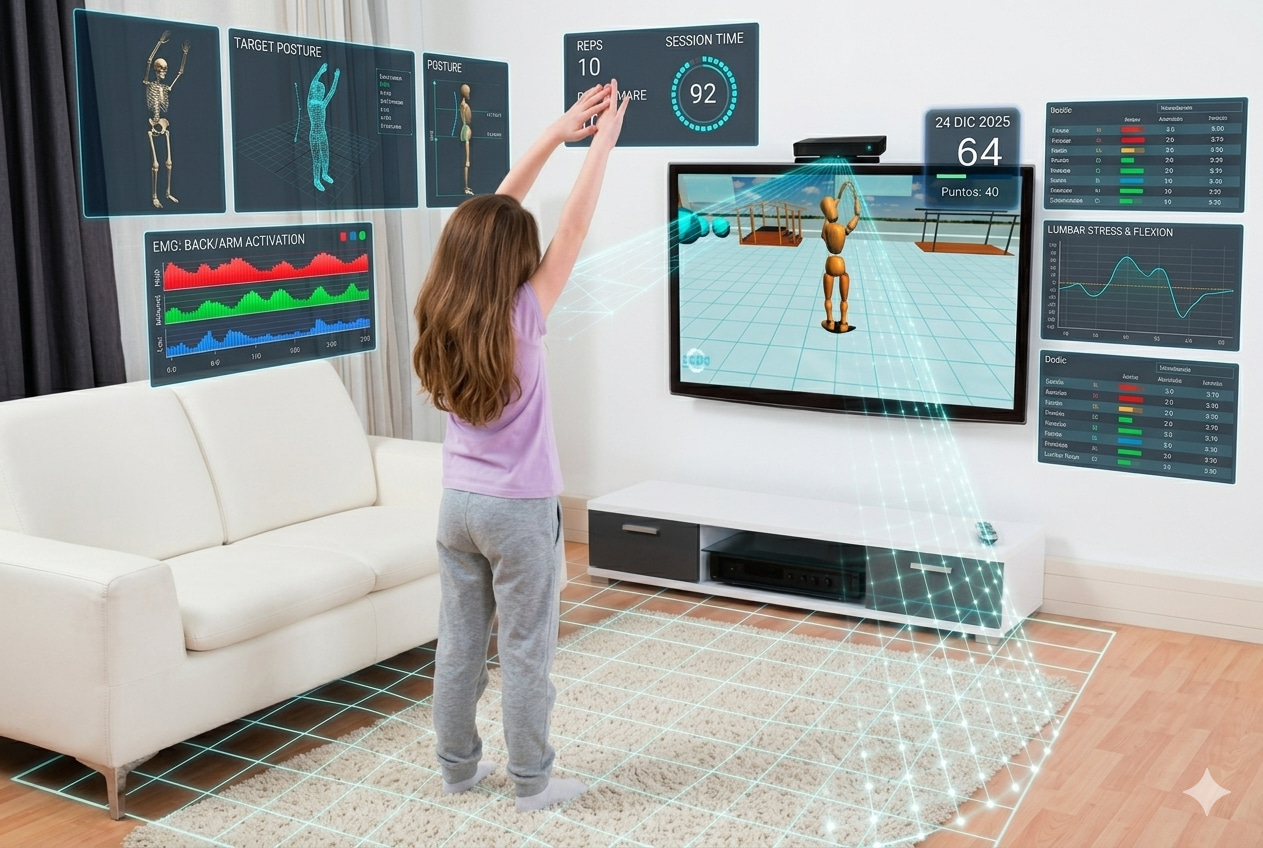
Physio Module
Augmented reality system with motion detection. Over 120 exercises for balance, postural control, coordination, mobility and movement patterns, adaptable to the functional and developmental level of each child or teenager, with no sensors or controllers.
The system automatically records more than 100 kinematic parameters per session without any manual intervention by the clinician.
- Cerebral palsy in children
- Paediatric motor rehabilitation
- Fall prevention
- Neurodevelopmental disorders affecting motor function
- Acquired brain injury in children
Explore the Physio Module →
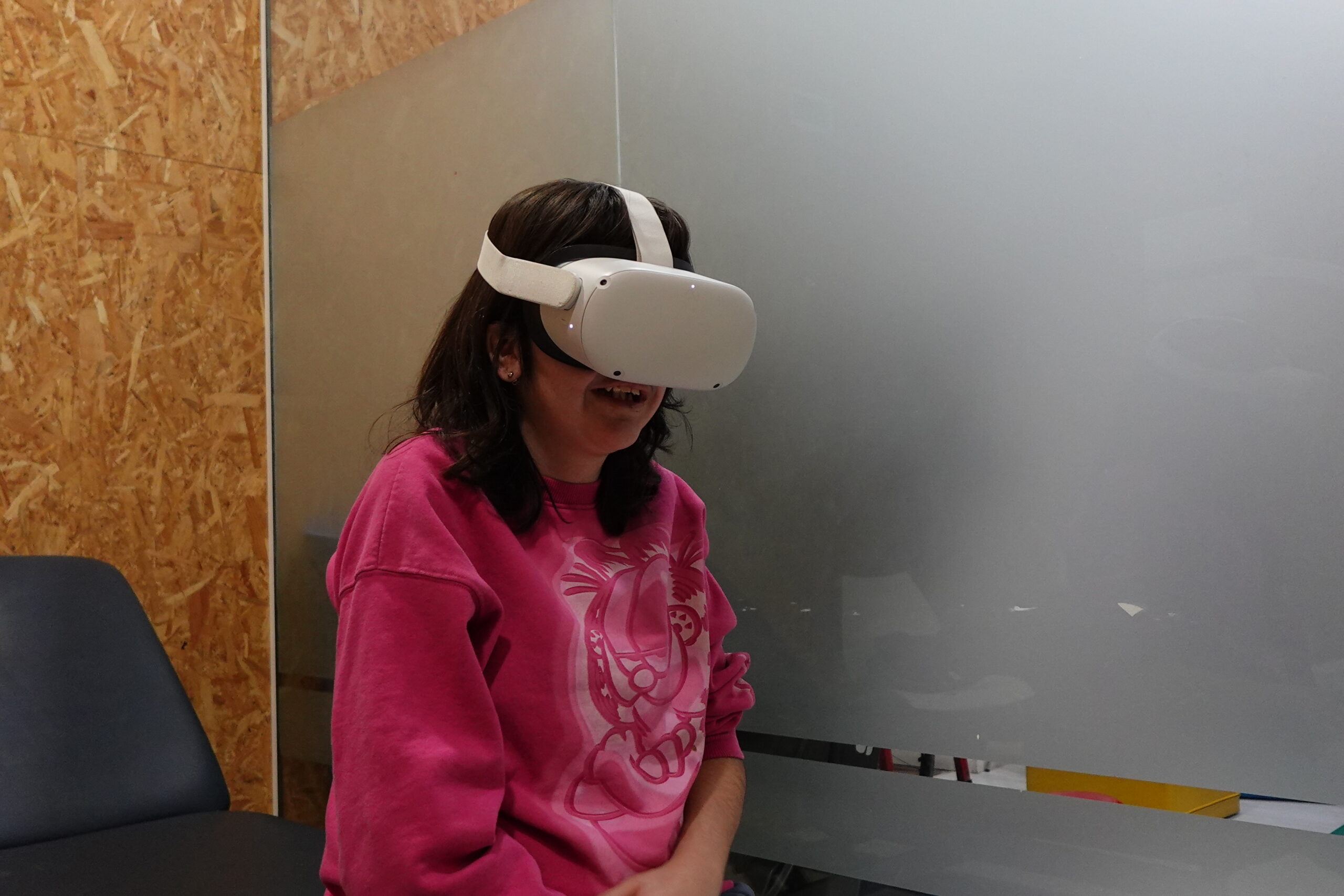
VR Module
Virtual Reality environments featuring over 70 exercises for the upper limbs, fine motor skills, dual-tasking and functional activities. These immersive environments are particularly effective at boosting motivation and engagement among paediatric patients. No gloves or controllers required.
The clinician monitors the session in real time from their computer without interrupting it.
- Cerebral palsy affecting the upper limb
- Paediatric hand rehabilitation
- Motor coordination disorders
- Childhood brain injury
- Paediatric occupational therapy
Explore the VR Module →
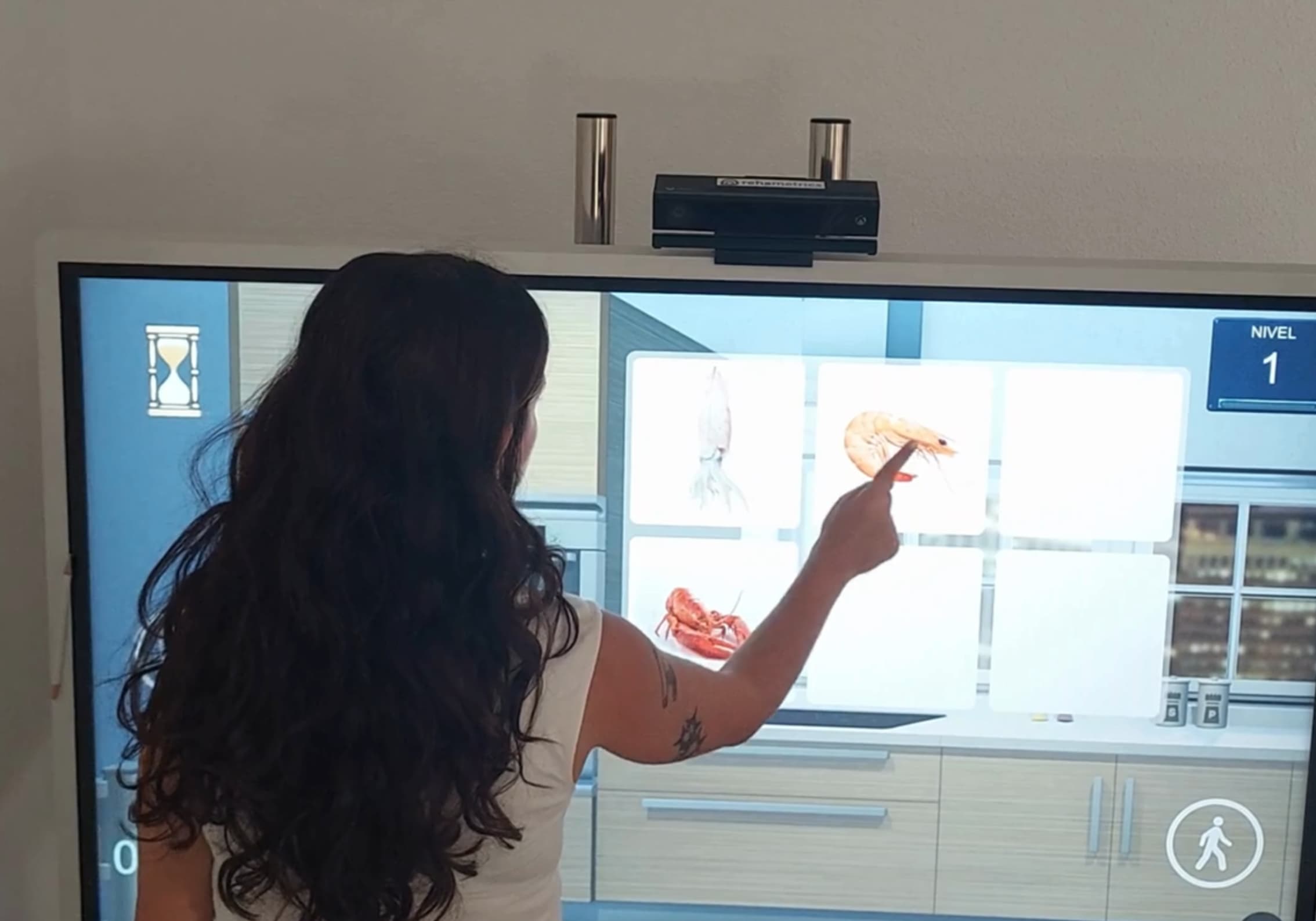
Cognitive Module
+190 gamified exercises for attention, memory, executive functions, language and processing speed. Tailored to children through interactive visual tasks that encourage active participation.
The difficulty level is adjusted according to the progress made. This is particularly useful for cases where physical and cognitive rehabilitation go hand in hand.
- Neurodevelopmental disorders
- Acquired brain injury in children
- Post-traumatic cognitive rehabilitation
- Difficulties with attention and executive functions
Explore the Cognitive Module →
What Rehametrics brings to the clinical team
A platform designed for multidisciplinary work, customisation according to development profile, and the objective assessment of functional progress.
Improved treatment adherence
Interactive environments and gamification encourage motivation and active participation during sessions, particularly in long-term treatments.
Personalised and adaptive sessions
The practitioner can adjust the difficulty, therapeutic objectives and intensity according to each patient’s age, functional level and clinical progress.
Objective measurement of performance
The system automatically records parameters relating to mobility, accuracy, response times and progress between sessions.
Longitudinal monitoring of developments
The platform enables users to compare results and objectively document functional and cognitive changes throughout the course of treatment.
Paediatric telerehabilitation
Rehametrics facilitates continuity of care at home by providing clinical supervision and automated performance monitoring, which is particularly useful when regular visits to the clinic present logistical difficulties for families.
number of sessions completed compared with the conventional method
clinical parameters recorded per session
of patients who reported higher levels of motivation
health organisations in 20 countries

Incorporate advanced paediatric and adolescent rehabilitation into your clinical practice
If you work with children or adolescents and are looking for a tool that allows you to personalise sessions, improve adherence and objectively assess functional and cognitive progress, Rehametrics is designed for your team.
Frequently asked questions about paediatric and young people's rehabilitation
The platform can be used with children (from 4 years of age) and adolescents with cerebral palsy, neurodevelopmental disorders, acquired brain damage and other motor or cognitive conditions.
The clinician can adjust difficulty, cognitive load, therapeutic objectives and task complexity according to each patient's age and functional level.
Rehametrics enables intervention on mobility, balance, coordination, attention, memory, executive functions and functional activities.
Interactive environments promote motivation, adherence and active participation, aspects that are particularly important in prolonged paediatric treatments.
Although it uses interactive visual dynamics similar to video games to improve motivation and adherence, Rehametrics is clinical software designed for rehabilitation. Exercises have defined therapeutic objectives, are supervised by healthcare professionals and enable objective quantification of the patient's functional and cognitive progress.