
Post-operative rehabilitation using digital tools
Rehametrics is the clinical platform that enables physiotherapists, rehabilitation doctors and occupational therapists to design and monitor post-operative rehabilitation programmes. The virtual reality exercises automatically record each session and allow the patient’s progress to be tracked from the acute phase through to their return to activity.
+30%
more sessions completed compared with the conventional approach
+100
clinical parameters recorded per session
89%
of patients who reported higher levels of motivation
The challenge of post-operative rehabilitation
Following orthopaedic or trauma surgery, the quality of recovery depends on what happens after discharge: whether the patient follows the protocol and whether their progress is in line with their actual recovery. To this end, healthcare professionals need objective data to support their clinical decisions.
In practice, post-operative rehabilitation frequently encounters obstacles. Pain and kinesiophobia limit early mobilisation. Adherence to home exercises is often low. And once the patient is no longer attending the centre daily, it becomes difficult to monitor their progress on an ongoing basis.
Rehametrics provides professionals with tools to design protocols tailored to each post-operative phase and to facilitate adherence through virtual reality exercises. Clinical monitoring remains comprehensive even between face-to-face sessions, with objective recording of every relevant parameter.
Post-operative rehabilitation following these operations
- Hip and knee replacement surgery
- Spinal surgery
- Shoulder surgery
- Ligament reconstruction (ACL) and knee surgery
- Fractures treated surgically
- Ankle, foot, elbow and wrist surgery
- Other orthopaedic and trauma surgeries
Post-operative rehabilitation for each procedure
Every surgical procedure has its own protocol. Rehametrics enables rehabilitation to be structured in phases and the progression to be tailored to each patient, using objective clinical data at each stage.
Hip and knee replacement surgery
Hip and knee replacement surgery requires a gradual recovery of joint range of motion, periarticular muscle strength, balance control and functional ability in activities of daily living. Rehametrics enables patients to work on these aspects through exercises tailored to each phase of the rehabilitation programme, whilst monitoring progress in parameters such as range of motion, balance and exercise tolerance.
Spinal surgery
Following a discectomy, arthrodesis or other spinal procedures, the programme must manage pain and restore motor control of the trunk, in order to gradually regain functionality. Rehametrics enables the design of sessions tailored to the postural restrictions of each protocol.
Shoulder surgery
Rotator cuff repair, shoulder replacement or arthroscopic stabilisation require a progressive, phase-based recovery programme. Rehametrics enables patients to work on their range of motion, muscle activation and upper limb function in everyday activities.
Ligament reconstruction and knee surgery
In ACL reconstruction and other knee surgeries, load progression, neuromuscular control and the restoration of confidence in the joint are critical factors for a return to activity. Rehametrics enables the objective monitoring of a patient’s progress throughout the various phases.
Other orthopaedic and trauma surgeries
Fractures treated surgically, ankle and foot surgery, elbow and wrist procedures, and other conditions can benefit from personalised programmes tailored to the specific protocol for each procedure and the patient’s functional profile.
Progressive, data-driven functional recovery
Two areas of intervention covering the entire post-operative recovery process, with automatic recording of over 100 clinical parameters per session.
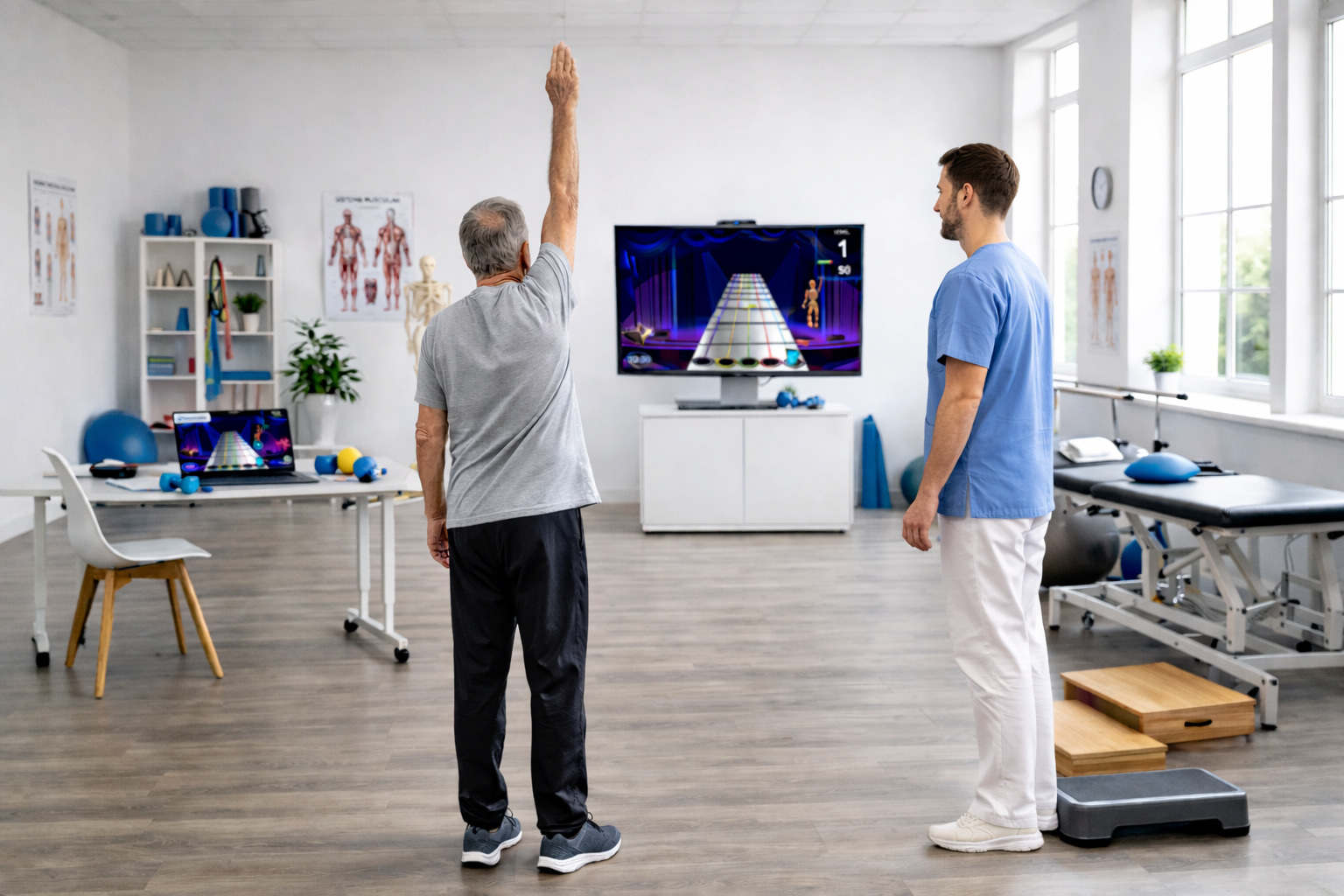
Physical Module
Augmented reality system with motion detection. Over 120 exercises designed to maintain motor function and prevent secondary complications: static and dynamic balance, coordination, postural control, range of motion and movement patterns.
The system automatically records more than 100 kinematic parameters per session without any manual intervention by the clinician.
- Hip and knee replacement surgery
- Spinal surgery
- Shoulder surgery
- Ligament reconstruction (ACL) and knee surgery
- Fractures treated surgically
- Ankle, foot and elbow surgery
Explore the Physics Module →
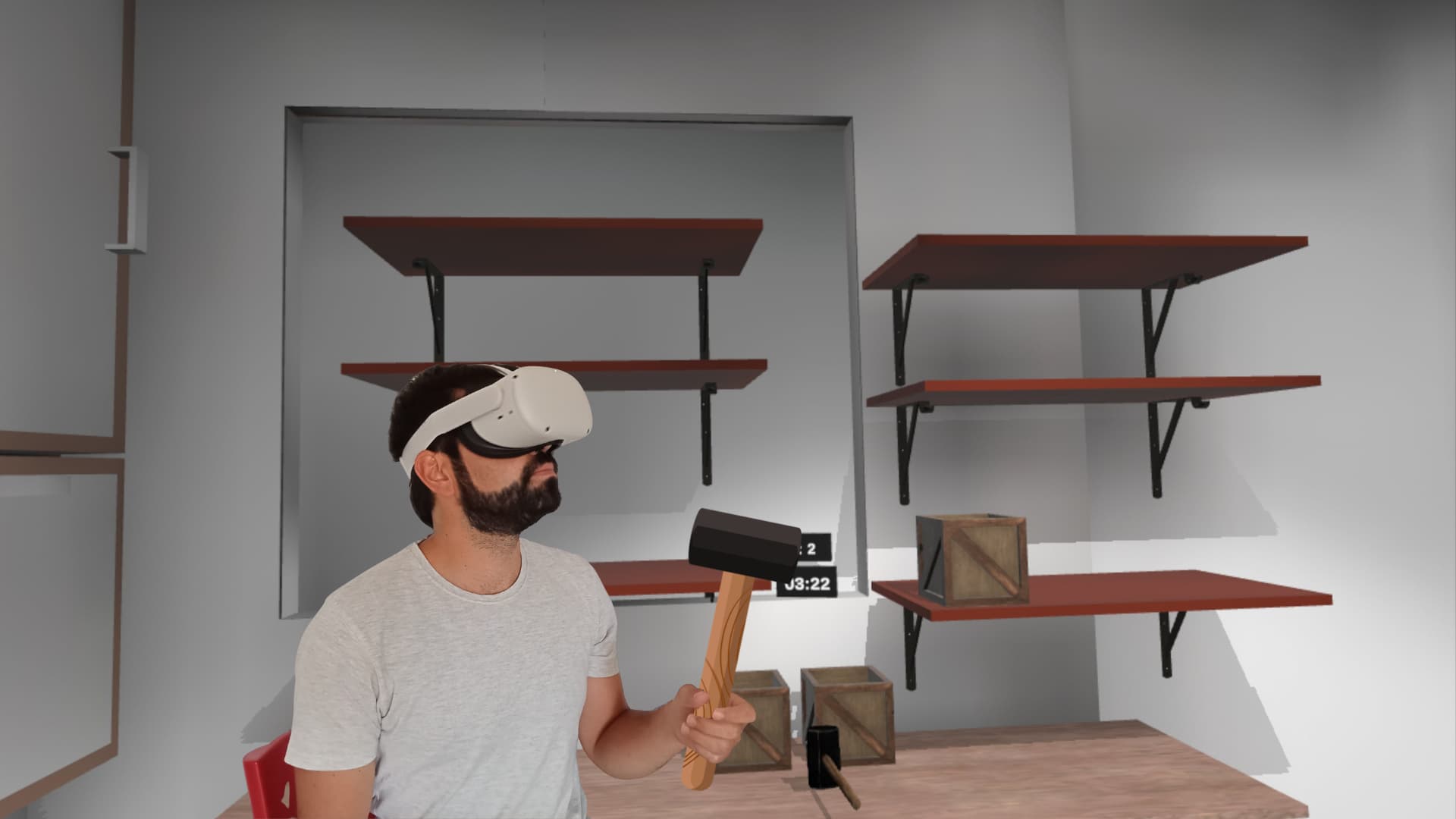
VR Module
VR environments featuring over 70 exercises for the upper body, fine motor skills and dual-tasking activities that combine simultaneous physical and cognitive challenges. No gloves, controllers or calibration required.
The clinician monitors the patient in real time from their computer without interrupting the patient’s session.
- Shoulder surgery (rotator cuff, prosthesis, arthroscopic stabilisation)
- Elbow and wrist surgery
- Rehabilitation of grip strength and fine motor skills following hand surgery
- Dual physical-cognitive tasks
- Recovery of range of motion following prolonged immobilisation
Explore the VR Module →
What Rehametrics brings to the clinical team
A platform designed to structure the post-operative protocol, improve adherence and document recovery using objective clinical data at each stage.
Structured protocols and full traceability
The practitioner designs the rehabilitation programme in phases, with the exercises, parameters and progression criteria defined for each stage. Any changes are recorded, which facilitates both clinical decision-making and communication with the surgical team.
Personalised and flexible sessions
Each patient recovers at a different pace following surgery. Rehametrics allows the difficulty, workload and objectives of each session to be adjusted in line with the patient’s actual progress, whilst maintaining the structure of the protocol. The practitioner can modify the programme in real time when the patient’s tolerance or pain levels require it.
Automatic recording and quantification
The system records more than 100 clinical parameters per session: range of motion, balance, completion times, level of difficulty achieved and consistency between sessions. Using this data, the system automatically generates clinical reports that are useful for follow-up, the surgical team and the insurer where applicable.
Longitudinal monitoring of recovery
Rehametrics enables performance to be compared across sessions and recovery rates to be monitored, allowing any plateaus or setbacks to be detected at an early stage. Using this data, the practitioner can adjust the treatment plan, keep the patient informed of their progress and make a more informed decision regarding discharge from rehabilitation.
Tele-rehabilitation for greater continuity
Early discharge from hospital and restrictions on face-to-face sessions are now the norm in post-operative rehabilitation. Rehametrics enables patients to continue their programme from home under full clinical supervision: healthcare professionals can access the data from each home session in the same level of detail as for a face-to-face session.
number of sessions completed compared with the conventional method
clinical parameters recorded per session
of patients who reported higher levels of motivation
health organisations in 20 countries




Incorporate Rehametrics into your post-operative rehabilitation practice
If you work with patients recovering from orthopaedic or trauma surgery and are looking for a tool to structure your treatment protocol, improve adherence and document progress using objective data, Rehametrics is designed for your team.
Frequently asked questions about post-operative rehabilitation with Rehametrics
The platform can be incorporated from the early mobilisation phase, provided the patient has sufficient stability and clinical condition to participate in supervised sessions. The clinical team decides the point of incorporation, the initial exercise selection and the progression criteria for each phase.
The VR module offers immersive environments that enable progressive, graded exposure to movement. By working in a virtual setting, patients can mobilise without the direct fear of pain or re-injury, while the clinician monitors parameters in real time. This approach facilitates earlier mobilisation and reduces the psychological component of avoidance.
Yes. The clinical team configures the protocol, exercise selection, target difficulty, duration and progression criteria, according to the specific procedure and the patient's clinical profile. Protocols can be replicated for similar patients and modified individually as clinical evolution requires.
Yes. Rehametrics enables remote continuity of the protocol from home, with the same clinical control, automatic recording of parameters and real-time monitoring as in an in-person session. This is particularly useful in the transition from in-patient to ambulatory or home-based rehabilitation.