
How to Integrate Virtual Reality into Long-Term Care Facilities
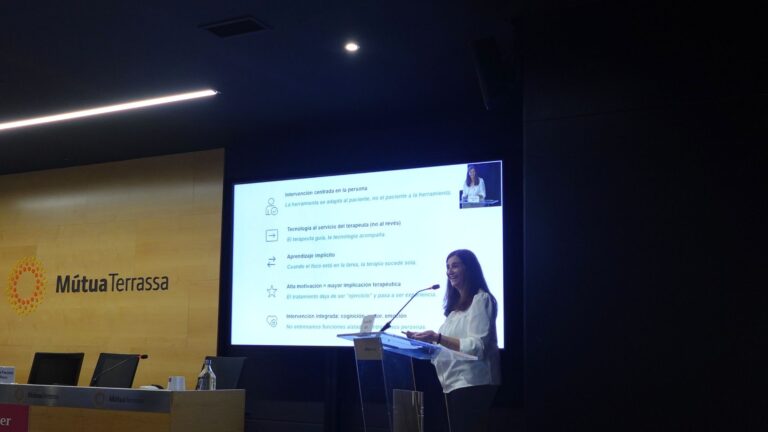
During the First Conference on Virtual Reality in Rehabilitation, held at MútuaTerrassa University Hospital in April 2026, Dr. Gemma Más, a neurologist at La Pedrera Hospital in Denia, shared her team’s experience with integrating virtual reality into acute and long-term care hospitals.
His remarks were based on a central idea: these centers should not be viewed as places of passive care, but rather as complex care settings designed to help patients with long-term rehabilitation needs regain functionality and independence.
From this perspective, virtual reality in long-term care facilities is a particularly useful tool, not only because of its ability to boost patient motivation, but also because it allows for the development of motor, cognitive, functional, and emotional skills within a safe, adaptable environment that is controlled by healthcare professionals.
This type of medium- and long-term hospital setting has very specific characteristics that influence rehabilitation interventions and make the use of digital tools particularly important.
Table of contents
A hospital focused on restoring functionality
The doctor explained that La Pedrera Hospital is part of a network of hospitals in the Valencian Community that care for chronic and long-term patients. However, she believes that this description can be misleading, as many people associate these facilities with very elderly patients, palliative care, or situations where there is little chance of recovery.
In contrast to that image, the reality is quite different. The center treats many patients with acquired brain injury, stroke, trauma, severe infections, or weakness resulting from prolonged stays in the ICU. These are patients who require more time than they would in an acute care hospital, but whose primary goal remains rehabilitation.
“Two out of every three patients come for rehabilitation, not for passive care.”
Because these patients have such long hospital stays, the hospital is an ideal setting for introducing therapeutic technology. Since they remain hospitalized for weeks or months, the medical team can closely monitor their daily progress, adjust treatments, and determine whether a specific tool is providing real value, especially in the context of rehabilitation in long-term care hospitals.
Technology as part of current clinical practice
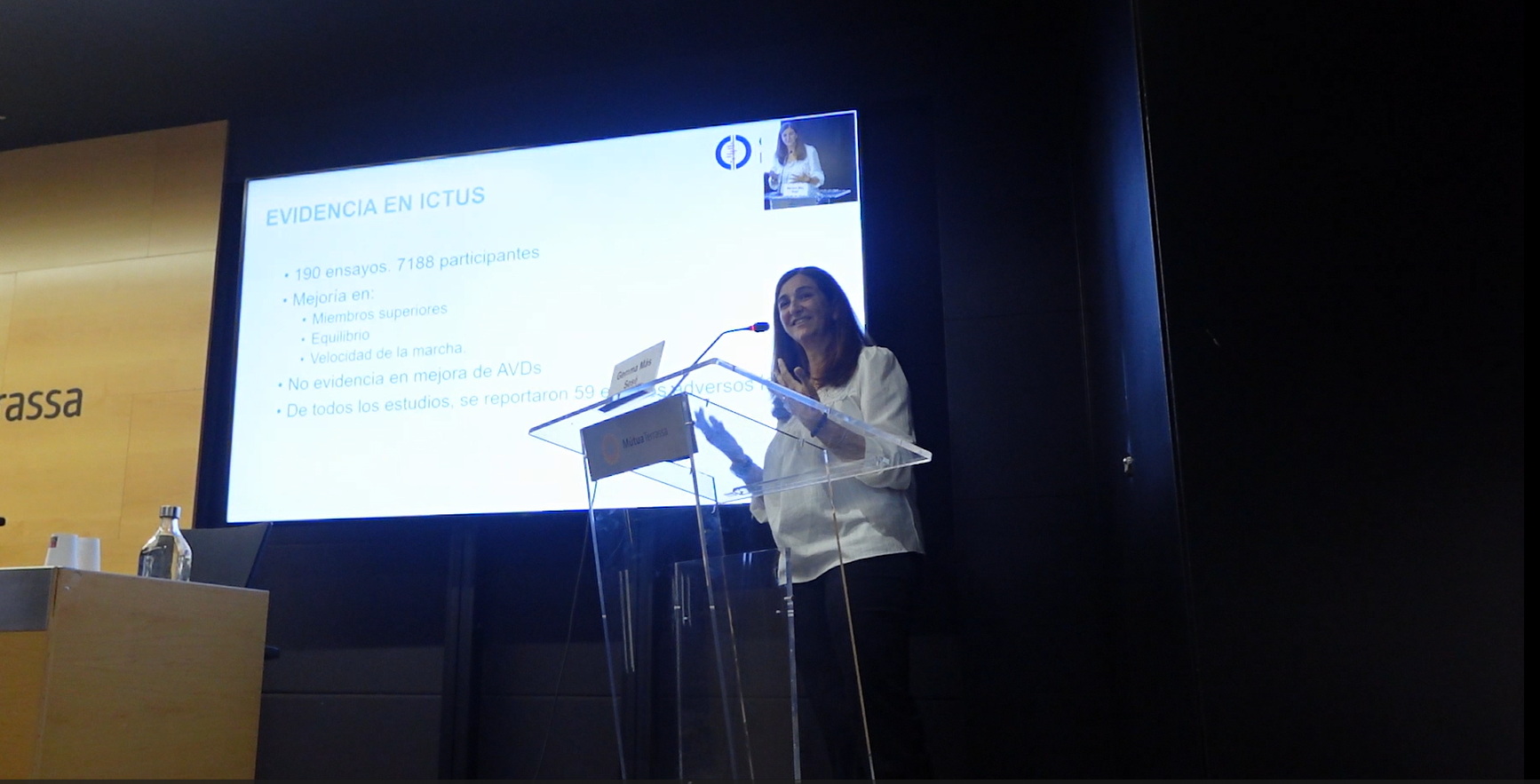
One of the points Dr. Más emphasized is that it no longer makes much sense to talk about “new technologies” as something external or exceptional. Technology is already an integral part of healthcare, and in rehabilitation, it can be a valuable tool for intensifying treatment, personalizing sessions, and offering therapeutic experiences that would be difficult to replicate in a conventional setting, especially in hospital-based neurorehabilitation settings.
At the center, the adoption of technology has been a gradual process. They began working with Rehametrics in 2013 and have since integrated its use into their daily clinical practice.
The key, he explains, is not just in acquiring the technology, but in ensuring that the clinical team uses it, adapts it, and realistically integrates it into their therapeutic goals.
The tool should be tailored to the patient and the therapist, not the other way around. That is why, before implementing a technological solution, it is essential to assess which patients are being treated, what their needs are, what facilities are available at the hospital, what technical support is required, and which professionals will be using it.
“The tool has to adapt to us, not the other way around.”
Types of Virtual Reality and Their Clinical Applications
Non-immersive virtual reality
The doctor explained that this type of technology, which relies on screens (tablets, computers, or projectors), was one of the most commonly used in her practice.
He noted that it allowed for the development of motor skills in patients with varying degrees of impairment, while maintaining a high degree of control by the therapist. In addition, it facilitated direct supervision and continuous adaptation of the task.
In his experience, it proved particularly useful for patients with brain damage, as it provided a controlled environment that was less invasive and easier to tolerate.
Mixed reality
Mixed reality takes it a step further. It not only superimposes virtual objects onto the real environment, but also allows those elements to interact with the physical space.
At this point, the doctor makes an important distinction: many of these most impactful experiences come from commercial environments or applications that are not designed for therapeutic purposes.
For this reason, it highlights the importance of using specific clinical tools, where stimuli are controlled, the environment is designed for the intervention, and the risk of adverse reactions in the patient is minimized.
Immersive virtual reality
Immersive virtual reality is a form of virtual reality in which the patient wears a headset and enters a fully simulated environment. Even though they are physically in a hospital room, their perception is transported to another space: a forest, a room, a street, or any virtual environment designed for the procedure.
The doctor emphasizes that this immersion can be very powerful, both in a positive and negative sense. It can significantly boost motivation and lead to deeply enriching therapeutic experiences, but it can also cause fear or anxiety if the content is not carefully selected.
In this regard, he warns that the use of non-clinical applications—such as games or environments designed for leisure—can trigger intense reactions even in healthy individuals, which may pose a greater risk to neurological patients.
In light of this, the value of clinical platforms such as Rehametrics stands out, as their activities are specifically designed for rehabilitation, featuring controlled stimuli, adaptive progression, and clear therapeutic goals.
This allows patients to reap the benefits of immersive virtual reality while significantly reducing the occurrence of adverse effects and improving patient tolerance.
Integrating Virtual Reality into Real-World Clinical Cases
The most significant part of the presentation is the description of how her team has been integrating virtual reality into daily clinical practice. For Gemma Más, these technologies are no longer a thing of the future, but rather an essential part of her daily routine.
“I wouldn’t call these new technologies ‘new’ anymore. They’re already here.”
Trunk Control Exercises for Spinal Cord Injury
One of the first examples is that of a patient with a spinal cord injury who could only move his upper limbs and lacked good trunk control. The therapeutic goal was to improve muscle tone and postural control while seated.
Although some exercises were originally designed to be performed while standing, the team adapted them so that the patient could do them while seated. The wheelchair did not interfere with the system, which continued to detect movement accurately.
In addition, since one arm moved less freely than the other, they used a bar to help both upper limbs work together in a coordinated manner. In this way, the patient worked on his arms, trunk, and postural control simultaneously, with support from the therapist when necessary.
Once the patient had improved, they were able to reduce the level of assistance and let the patient perform the movements more independently.
Later on, the team decided to try using immersive virtual reality goggles as well. The patient was nearly 70 years old, so at first there were concerns about how he would handle this type of technology. Still, since he was a motivated individual, they decided to introduce a reaching task.
The doctor explained that, during the session, the therapist could see on the screen exactly what the patient was seeing and guide him in real time: “more to the left,” “more to the right.” The patient responded well from the start; even a task that required a wide range of motion seemed “easy” to him.
From there, the doctor pointed out a very interesting idea from a clinical perspective: “Since it’s an unreal environment, it’s as if they don’t even realize what they’re doing.” In other words, the patient ended up making an effort that he or she would likely have resisted in a conventional exercise. As she herself explained, if she had been asked directly to perform a movement, her response would have been something like “I can’t, I can’t,” whereas within the virtual task, she became engaged and ended up moving toward the goal.
Since it's an unreal environment, it's as if they don't even realize what they're doing... But they're making an effort that, if you asked them to do it without virtual reality—saying, "Take my hand and make this movement"—they'd say, "I can't, I can't," but here, they do it.
Cognitive Rehabilitation and Hemispatial Neglect
The doctor also explained the use of cognitive activities for patients with stroke and hemignosis. Initially, these tasks were performed on a tablet, which allowed for the development of attention, executive functions, and other cognitive processes through touch-based interaction.
However, the team noted that, in these cases, a small screen might not be sufficient. That is why they sought a way to expand the working field of view using a touch-enabled projector.
They adapted a tilted table to project the exercises onto a larger, adjustable, and more accessible surface. This allowed them to work on visual tracking and attention to the affected visual field in a more challenging and functional way.
Standing and balance exercises using a harness
Otro caso es el de una paciente con tetraparesia espástica tras un traumatismo grave. Inicialmente apenas podía levantarse de la cama, pero progresivamente comenzaron a trabajar la bipedestación.
Debido a su alteración del equilibrio, necesitaba mucha asistencia. Para mejorar la seguridad, el equipo instaló un sistema de arnés suspendido desde el techo.
Esto permitió trabajar equilibrio, control de tronco y desplazamientos con menor riesgo de caída. Además, redujo la carga física del terapeuta y aumentó la confianza de la paciente.
Con el tiempo, la paciente fue ganando autonomía hasta poder realizar ejercicios sin asistencia directa.
Reducing fear of movement in a patient with a cerebellar stroke
One of the most telling examples is that of a patient with a cerebellar stroke who had significant difficulty walking.
Through a gamified activity in which she had to hunt for stimuli, the patient focused her attention on the task rather than on her deficit.
This allowed him to perform complex movements—such as crouching, changing direction, or adjusting his posture—that he was unable to execute in a conventional setting.
This case illustrates how virtual reality can shift the focus of attention and facilitate functional recovery.
Body image after amputationRepresentación corporal tras amputación
The doctor also presented the case of a young patient who had undergone a lower limb amputation following an accident.
The goal was not merely functional, but also to maintain the cortical representation of the limb. To achieve this, they used a simple strategy: simulating the leg with a physical support and integrating it into a virtual activity (such as kicking a ball).
By introducing a meaningful task, the patient became actively involved. Subsequently, he was able to receive a prosthesis and made a favorable recovery.
Why Virtual Reality Can Be Useful in Rehabilitation
Dr. Más outlines several reasons why virtual reality makes sense in a rehabilitation hospital.
First, it allows for the creation of safe environments. Patients can practice complex activities without exposing themselves to the real risk of a fall, a functional error, or a frustrating situation. They can make mistakes, repeat the activity, and try again.
Second, it allows for the simulation of functional activities that cannot always be practiced within the hospital. For example, grocery shopping, navigating an environment, searching for objects, responding to stimuli, or practicing tasks that the patient will need to perform upon returning home.
Third, it boosts motivation. Many patients who are hospitalized for months find rehabilitation to be repetitive, difficult, or emotionally draining. Virtual reality transforms part of that process into a more engaging experience, with clear goals, immediate feedback, and a sense of accomplishment.
Fourth, it helps focus the patient’s attention on the task rather than on the deficit. When movement occurs within a meaningful task—such as touching an object, reaching for a ball, or interacting with stimuli—the patient may perform actions that they would not do voluntarily in a conventional exercise.
You can even pretend you're grocery shopping at the supermarket; you can practice things you know they'll need later, and you can start working on them right there at your center without even leaving. And it lets you try again. If you make a mistake, it's no big deal. Just go back tomorrow.
The Importance of Feedback and Adjusting the Difficulty Level
One of the aspects the doctor considers most important when choosing a virtual reality tool is that it provides feedback to the patient. That feedback should be positive, motivating, and designed to encourage participation.
The patient needs to receive clear feedback that they are making progress: “Great job,” “Keep it up,” “You’re doing well.” This kind of encouragement increases satisfaction and promotes adherence to treatment.
It also emphasizes the importance of the system being able to self-regulate the difficulty level. If a task is too easy, the patient loses interest. If it is too difficult, the patient may become frustrated or give up. Automatic adaptation ensures that the patient remains at an appropriate level of challenge, increasing the difficulty as the patient improves and adjusting it when the patient encounters more difficulty.
In addition, she particularly appreciates that the therapist can customize the exercises: deciding the position of the stimuli, the distance, the speed, or whether to work while seated or standing.
“It’s important for the system to constantly encourage the patient: ‘Great job,’ ‘Keep it up.’”
Requirements for Implementing Virtual Reality in a Hospital
Although these technologies can be used on affordable devices that are readily available in hospitals, the doctor also discusses the practical considerations involved in implementing this technology in a healthcare facility:
- Management commitment
- Compliance with technical and safety requirements
- Suitable spaces
- Team involvement
Conclusion
The findings presented by Dr. Más and the team at La Pedrera Hospital show that virtual reality can be integrated in a realistic and useful way into medium- and long-term care hospitals when used based on clinical judgment and within well-defined therapeutic goals.
Beyond the technological aspect, its value lies in its ability to increase patient engagement, facilitate the repetition of tasks, enable work in safe environments, and address motor, cognitive, and emotional aspects in an integrated manner. In this context, technology does not replace the therapist or transform rehabilitation on its own, but it can expand the possibilities for intervention and enrich the therapeutic experience.
As Gemma Más summed up at the end of the talk:
If you focus more on the task at hand and less on your shortcomings, you’ll learn. Eventually, the movement will come naturally, and the learning will follow. The more engaging the task is, the more involved the person will be. Then, it stops being just an exercise or therapy and becomes more of an experience. It is a technology that truly takes into account the whole person—not just one of their shortcomings, but the person as a whole.
We don't train roles; we train people