
How do I digitize physical therapy services at my practice? A six-step roadmap
The question reaches whoever runs a physical therapy service more and more often, in a hospital, a clinic or a center with several rooms: there is technology that measures movement, motivates the patient and documents every session, and patients and referring providers are starting to ask about it. What is usually not clear is where to begin. This article organizes the decision to digitize physical therapy services into six steps, from the problem you want to solve to how to tell at three months whether it is working, with the questions to ask at each stage and what the recent evidence says.
What it means to digitize physical therapy services (and what it doesn't)
Almost every physical therapy service is already digitized on the administrative side: scheduling, patient records, billing. To digitize physical therapy services in the clinical sense is something else: it means the treatment itself is delivered with tools that record what the patient does, turn it into a measurement and present it in a way that keeps the person engaged. A shoulder session in which the system measures range of motion on every repetition, a balance session in which the person sees their center of gravity on screen, a reaching exercise with a headset in which the real hand picks up a virtual object. The result of every session is saved and the progress report writes itself.
What it is not: it is not replacing the therapist's hands or the clinical assessment, it is not putting a games console in a corner, and it is not necessarily treating at a distance. Most of the use happens inside the session, with the professional present; work between sessions or at home is an added option for whoever needs it, always under the team's follow-up. It is worth being clear about that distinction from the start, because it changes the conversation with the team, with patients and with whoever signs off the budget.
Step 1. Decide which problem you want to solve
The services that digitize physical therapy services most successfully do not start with the device but with a specific question. Five come up most often. Measuring while the person moves: a goniometer gives you one figure at rest at the start and another at the end of treatment, whereas the technology records range, repetitions or balance in every exercise of every session without stopping to measure, so progress can be shown to the patient, the referring provider or the payer as a curve rather than two points. Improving adherence and motivation, above all in long or repetitive courses of treatment, where dropping out is the main enemy of the outcome. Seeing more people per professional hour without losing quality, for example with group activities or with patients working semi-independently under supervision. Giving continuity to treatment when the person cannot come as often as they should. And differentiating the service from other centers, in front of patients and in front of whoever refers.
All five are compatible and the same technology can serve several of them, but each asks for a slightly different setup: patient profiles, slots in the schedule, session format. Choosing one or two as the goal for the first year concentrates the effort where it shows soonest and makes it possible to tell afterwards whether it worked, which is step 6; the rest follow on their own once the first one does.
Step 2. Choose where to start: one patient profile and one room
The second step is to narrow down. A physical therapy service treats very different profiles, and the evidence is not equally mature for all of them. The neurological patient is where the literature is thickest: the Cochrane review on virtual reality in stroke rehabilitation, updated in 2025, is the usual starting point, and this blog has summarized what the recent reviews say about the upper limb after stroke. In the musculoskeletal patient the evidence is more recent but growing fast: a systematic review with meta-analysis published in 2025 in Bioengineering, with thirteen trials and 881 adults with chronic low back, knee or shoulder pain or fibromyalgia, found a favorable effect of virtual reality and exergames on pain, with moderate certainty, and improvements in function in most of the studies, with the caveat that long-term data are missing. In older adults at risk of falls, acceptance and the wish to repeat are well documented.
In practice, services that digitize physical therapy services tend to start with the profile in which the goal from step 1 is most visible: the post-surgical shoulder or knee if the goal is to measure session by session, balance in older adults if it is adherence, the chronic neurological patient if it is continuity. And with one room, not all of them. One station used well for three months teaches you more than four stations used halfway, and it gives you real arguments for the next phase.
Step 3. Understand which technology does what
Two families of technology cover most of what it takes to digitize physical therapy services, and they complement each other rather than compete. The first is markerless motion capture: a depth sensor or a camera connected to a computer and a large screen. The system recognizes the person's body without putting anything on them, presents the exercise on screen and records range of motion, repetitions, speed or center-of-gravity displacement. The recent reviews of single-camera systems agree that these already give measurements stable enough for clinical follow-up of many movements, although the precision of a motion analysis laboratory remains a laboratory matter. It is the natural tool for standing work, balance, marching in place and upper limb work in front of a screen, and the one that allows group activities in front of a single sensor.
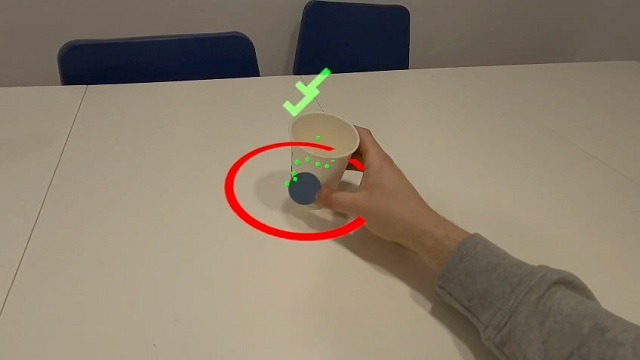
The second is virtual and mixed reality headsets. Current models recognize hands with no controllers and show the real room through their cameras, so the person sees their feet, the chair and the therapist while reaching for, picking up or dodging virtual objects. They are the tool for reaching, manipulation, attention and functional tasks in environments the room cannot offer, and the one that most engages someone who has been doing the same exercise for months. This blog explained what mixed reality offers compared with full immersion. In both cases the professional runs the session from a computer that shows the same thing the patient sees, and both record every session.
What you do not have to decide at the outset is robotics. Robots and exoskeletons have their place in specific profiles, above all the subacute phase of the severely affected neurological patient, and a cost and footprint that belong to hospital units. For a service that is starting out, software with a sensor or a headset covers far more patients with far less investment and far less space.
Step 4. Set your requirements before you look at any catalog
With the problem and the profile settled, the fourth step is to write the requirements down before seeing any demos, because demos are very persuasive and the list is what keeps the decision where it belongs. Six requirements turn up in almost every project that sets out to digitize physical therapy services and goes well.
That it is a CE marked medical device, with the manufacturer registered with the relevant agency: that is what separates clinical software from a video game or a wellness tool, with the documentation, clinical evaluation and vigilance obligations that come with it; this blog has already covered the difference between a games console and a clinical application. That it has published evidence, and that the supplier can explain in which domains it is solid and in which it is not yet. That it generates per-patient reports legible to the patient and to the referring physician, and that the data can be exported. That it meets health data protection requirements: where the data is hosted, who has access, what happens to it if the relationship ends. That it includes training and support with specific response times, because technology that goes unused is the most expensive kind there is. And that it runs on standard hardware — a computer, a sensor or consumer headsets — which can be replaced at any retailer and does not tie the center to a proprietary device.
Two more are optional depending on the goal from step 1: group activities if you are after more people per hour, and a mode for working outside the center with team follow-up if you are after continuity.
Step 5. Prepare the room, the team and the patients
The room. The physical requirements are modest and are met with what almost any service already has: a clear strip in front of a screen for the sensor, free space to move with the headset, a computer and a power outlet. The article on what a digital rehabilitation room needs works through the six questions in detail. Hygiene for headsets and sensors has simple published protocols, such as the one described in a 2022 study in JMIR on disinfecting headsets in a clinical setting.
The team. What best predicts that the technology gets used is having one person on the team who makes it their own. A 2025 qualitative study with patients, families and clinicians using virtual reality in physical therapy identified collaboration led by a champion among the facilitators and, among the barriers, the lack of clear guidance for the professional on when and how to use it. Naming that champion, giving them time in the schedule during the first few weeks, and making sure the initial training goes to the whole team and not only to them, is what makes the difference between a station that gets used and one that gathers dust.
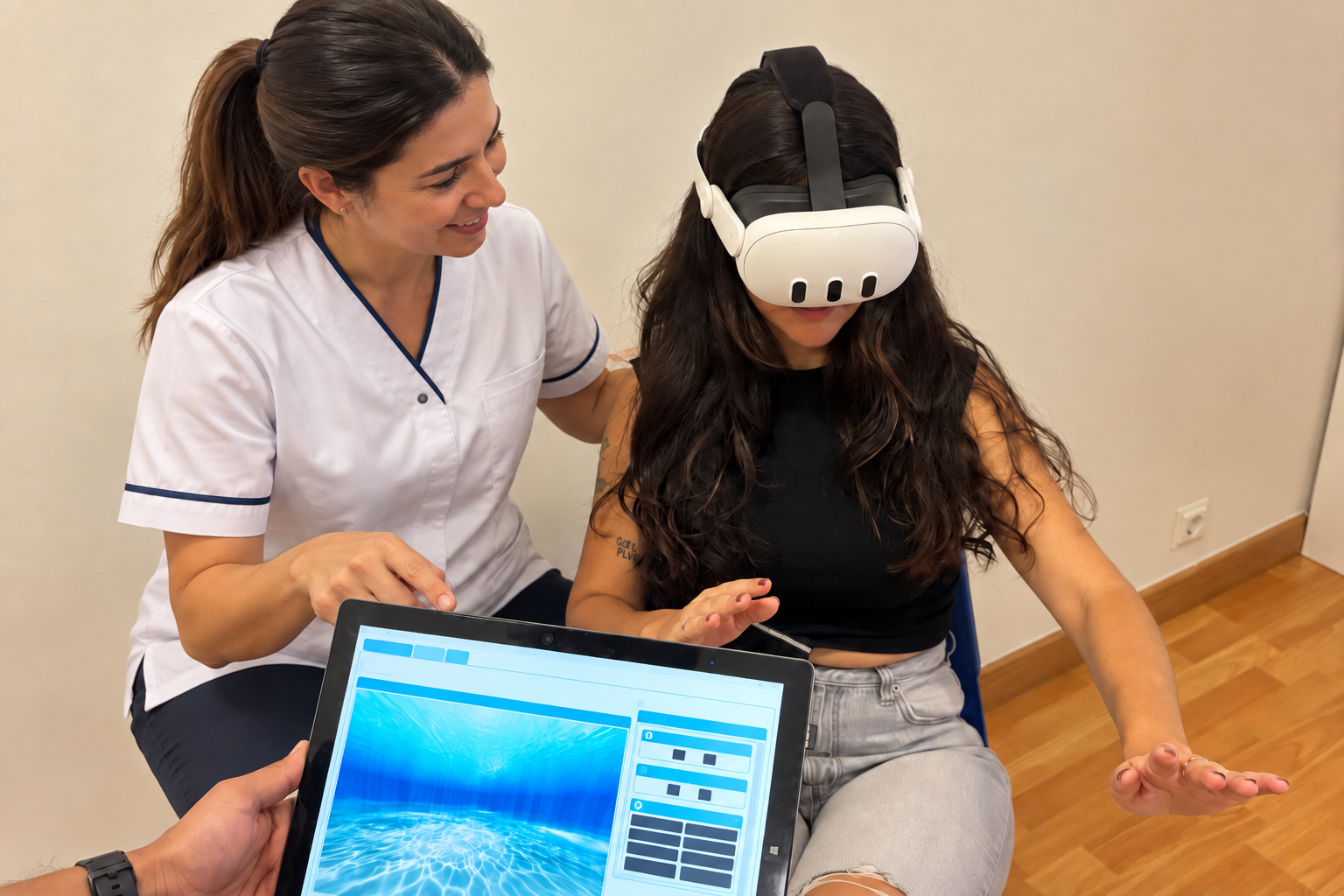
The patients. A 2024 scoping review on barriers and facilitators of virtual reality in people with chronic pain listed simple devices, exercises with a game element and the presence of a supervising therapist among the facilitators, and lack of support and difficult instructions among the barriers. Put another way: the technology is accepted when someone presents it well and stays alongside. The article on how to explain technology to patients and their families sets out what to cover before the first session.
Step 6. Measure whether it is working at three months
The last step is decided at the beginning: what you are going to look at in three months to know whether the goal from step 1 is being met. These are service indicators, not clinical ones, and the platform itself supplies most of them. How many sessions with technology have been run per week and per station, and how many different patients have been through it. How many progress reports have been generated and how many referring providers they reached. What proportion of patients completed treatment against the service's usual figure. What patients and the team say in a short survey. And how much professional time now goes on documentation compared with before.
Reading those five numbers together is what tells you whether the decision to digitize physical therapy services is paying off, and it is a far more reliable answer than the impression left by the last session you happened to watch. If the station is barely used, the cause is almost never the technology: it is in step 5, in the champion not having had the time, or in the schedule not reserving slots for patients to go through it. If it is heavily used and the indicators hold up, that is the moment for the second room, the second patient profile or the second family of technology, with the first quarter's numbers in hand.
How Rehametrics fits into this roadmap
Rehametrics is a clinical rehabilitation platform with three modules, and it covers the six steps above, which is why services that decide to digitize physical therapy services often start here. Step by step:
Step 1, the goal. Rehametrics answers all five: Rehametrics Physical records range of motion at the shoulder, elbow, hip and knee, repetitions, speed and, in balance work, center of gravity and base of support, in every exercise of every session; Rehametrics VR brings the engagement of mixed reality and hand tracking; Physical includes group activities for two to four people and Rehametrics Cognitive lets several people work at once; VR and Cognitive offer a home mode with team follow-up; and the whole, with its reports, is what the service shows patients and referring providers.
Step 2, the profile. The more than 380 exercises across the three modules cover the neurological patient, the musculoskeletal patient and the older adult, in the clinic and, where appropriate, at home, so the profile you start with does not constrain the one that comes next.
Step 3, the technology. Both families sit on the same platform: Physical is markerless motion capture with a depth sensor or, in its webcam mode, a conventional camera, running on a Windows computer and whatever screen the service already has; VR runs on Meta Quest 2, 3 and 3S with hand tracking and mixed reality, and the therapist runs the session from their computer with a mirrored screen.
Step 4, the requirements. A Class I CE marked medical device, with Rehametrics registered as manufacturer with the Spanish Agency for Medicines and Medical Devices; more than forty published clinical studies; per-patient progress reports in all three modules; standard hardware replaceable at any retailer.
Step 5, the room, the team and the patients. In Spain the sensor is provided by Rehametrics, with a seven-day trial period, and implementation includes team training and support. For the patient, mixed reality makes the first headset session feel like a normal session: they see the room and they see the therapist.
Step 6, the indicators. Every session is recorded per patient, so the first quarter's count of sessions, patients and reports comes out of the platform itself without keeping a separate spreadsheet.
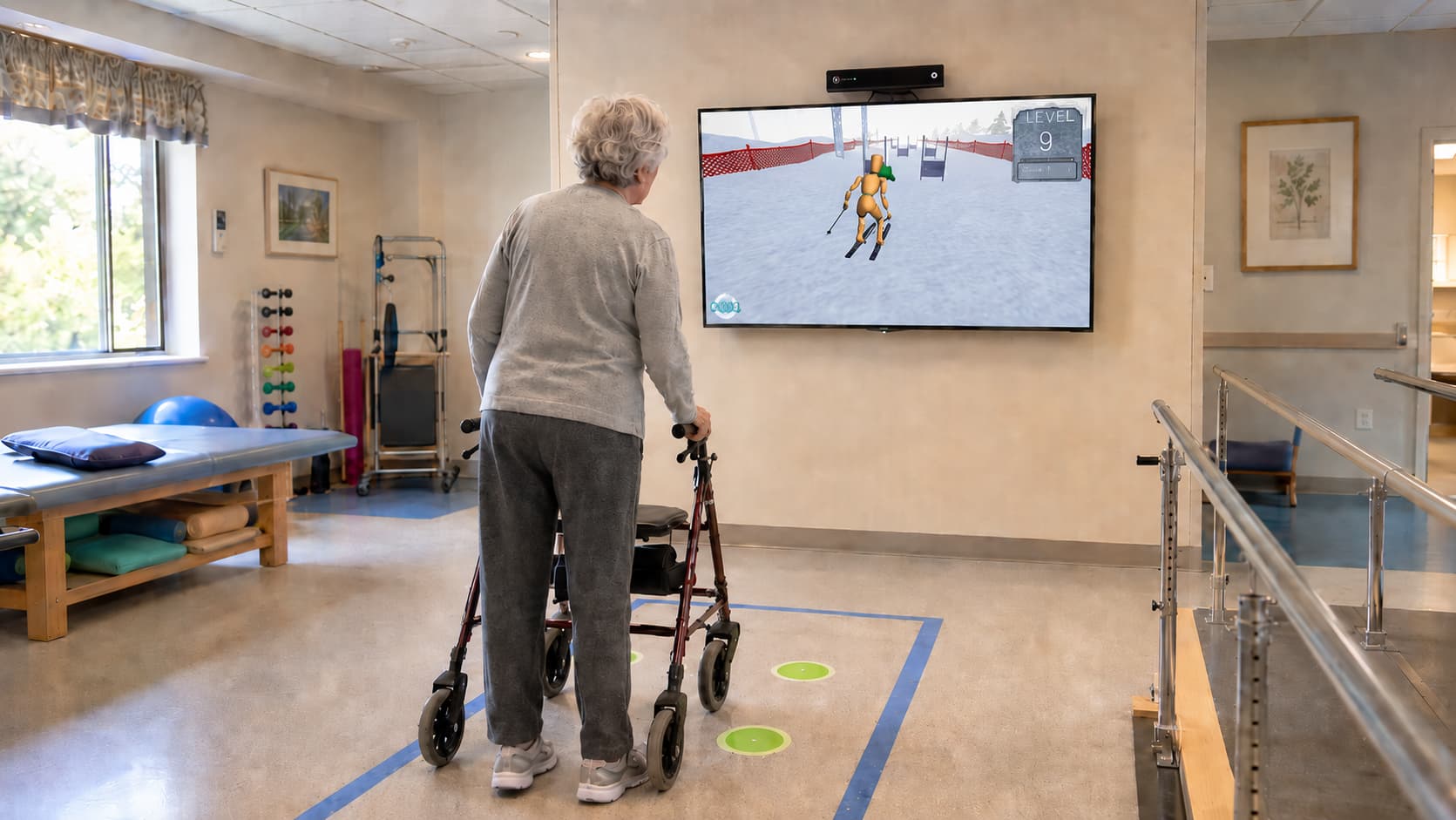
Markerless motion capture
More than 120 exercises with a sensor or a webcam, recording range of motion and balance, and group activities for two to four people.
View module →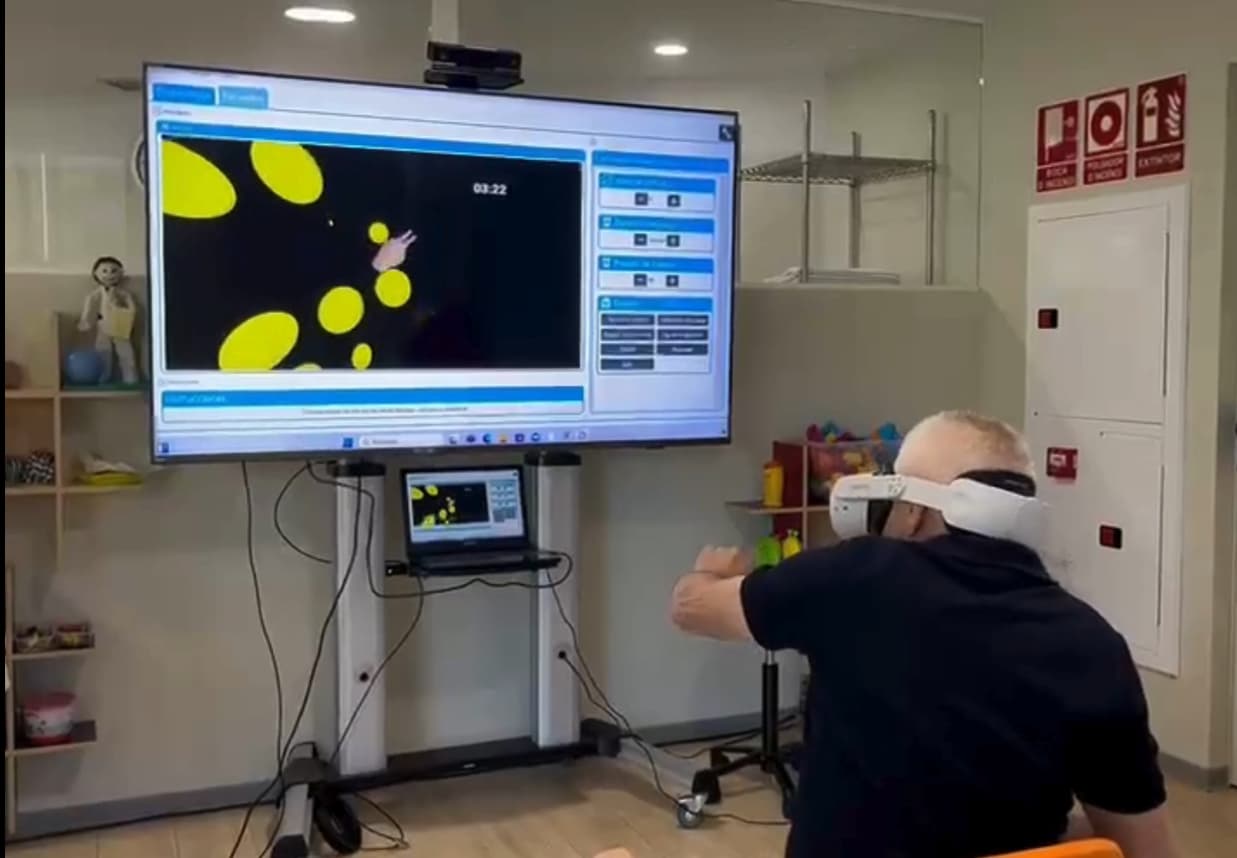
Mixed reality and hands without controllers
More than 70 activities on Meta Quest, with the room visible through the visor and control from the therapist's computer.
View module →
For the patient with cognitive impairment
More than 190 exercises on a tablet or whiteboard, with a record of every response and per-patient reports.
View module →Frequently asked questions
What does it cost to digitize physical therapy services?
It depends on the number of stations and the families of technology you contract, but the order of magnitude for a first station is an annual software license plus a computer and a sensor or consumer headsets. What weighs most on the total cost is not the purchase but the use: a station used daily pays for itself; one that is not used never does.
Do we need technical staff?
No. Current systems run on standard hardware and the physical therapist operates them from a computer. What you do need is one person on the team acting as champion during the first few weeks, and a supplier who includes training and support with specific response times.
Is it useful for musculoskeletal patients or only neurological ones?
For both. The evidence is older and more abundant in the neurological patient, but the 2025 reviews on pain and function in the knee, shoulder, lumbar spine and fibromyalgia already show favorable effects of virtual reality and exergames as a complement to conventional treatment, with the caveat that long-term data are missing. It depends, in any case, on each patient's profile and the team's judgment.
Should we start with headsets or with the sensor?
With the goal. If what you want is to measure in movement, session by session, and work standing or in groups, the sensor with a screen is the usual starting point; if you want engagement, reaching and manipulation or functional tasks in environments the room cannot offer, headsets. Many services end up with both, but starting with one and reviewing at three months gives you the arguments for the second.
What is the difference between this and using a games console?
That rehabilitation software is a CE marked medical device, designed for patients rather than healthy players, records every session as clinical data and generates progress reports. A games console is not built for any of those things, and the manufacturer does not answer for its clinical use.
Want to work through these six steps with your service?
We will help you define the goal, the patient profile and the first station, and show you motion capture, headsets and the reports in action, with examples from services like yours that have set out to digitize physical therapy services of their own.