
Digital rehabilitation trends 2027: eight changes that have already begun
Headsets controlled with your own hands that let you see the room; a camera and a computer that measure movement; robotics concentrating on the profiles where it adds most; countries that already pay for digital therapy on prescription; a European timetable with fixed dates for artificial intelligence and for health data. None of this is a prediction: all of it is on the market, in the regulations or in the literature as 2026 closes. This article sets out the eight digital rehabilitation trends 2027 will make visible in a rehabilitation centre, with the source for each one and what it changes when you come to buy, contract or organise the service.
1. Headsets drop the controllers and let you see the room
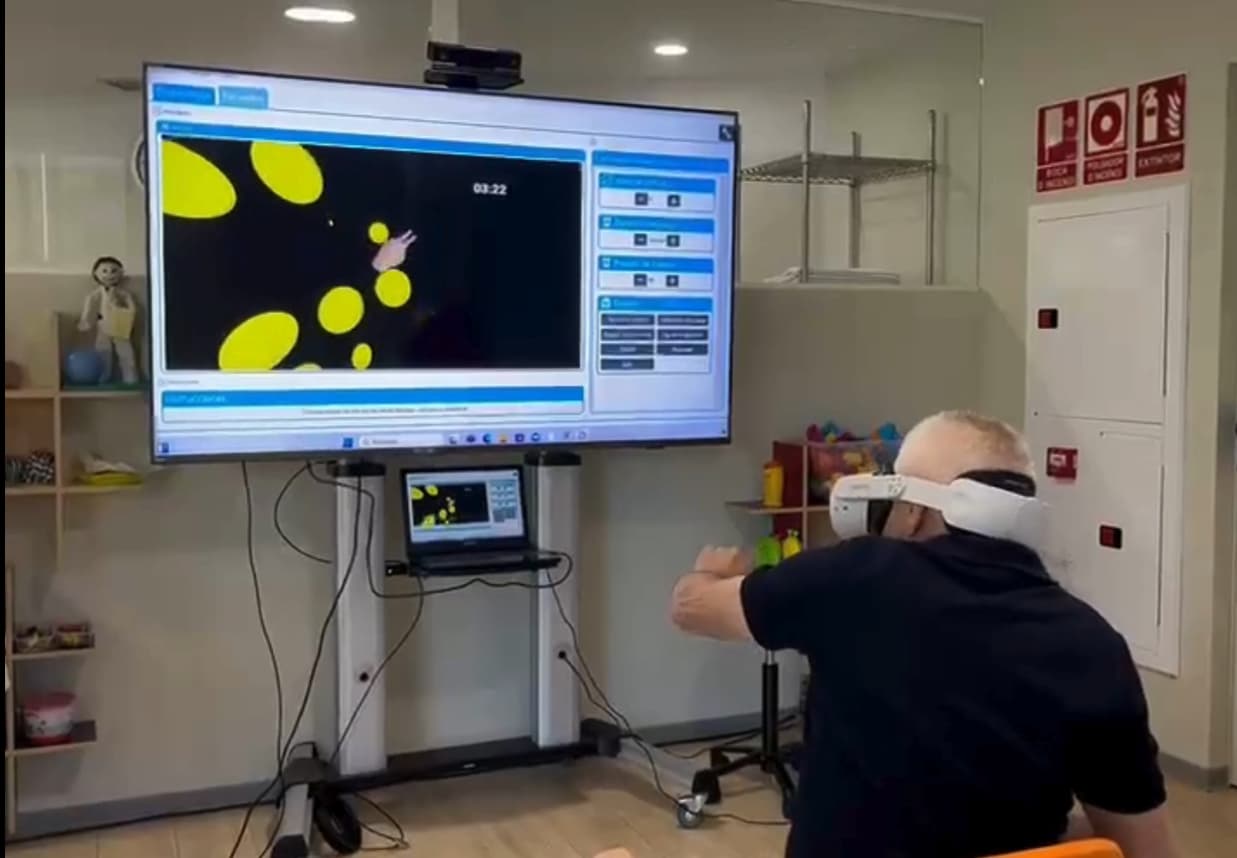
The most visible of the digital rehabilitation trends for 2027 is one you can already pick up. Meta Quest headsets, which are what the great majority of centres use, now start up showing the real room through their cameras, and they recognise hands and fingers with no controller at all: the person picks up, releases, points at and manipulates the objects in the exercise with their own hands, without losing sight of their feet, the chair, the wall and the therapist. The other manufacturers that entered the market in 2025 have gone the same way, with hands and gaze as the main form of control and controllers as an accessory. The industry has converged on one idea: a visor that does not cut you off and does not require learning a controller.
For rehabilitation, mixed reality and hand tracking stop being features you switch on for the first few sessions and become the usual way of working with headsets, with full immersion kept for the exercises that need it, such as attention work or exposure to specific environments. This blog has already explained what mixed reality offers in orientation and tolerance; hand tracking, for its part, opens headsets up to patients with hand impairment who could not hold a controller. What is new for 2027 is that both widen the profile of people who can use headsets from day one, reduce the space a session needs and remove a hygiene problem and a learning curve; the question to put to a supplier becomes whether their activities are designed to work this way or still assume controllers.
2. Measuring movement with a camera and a computer
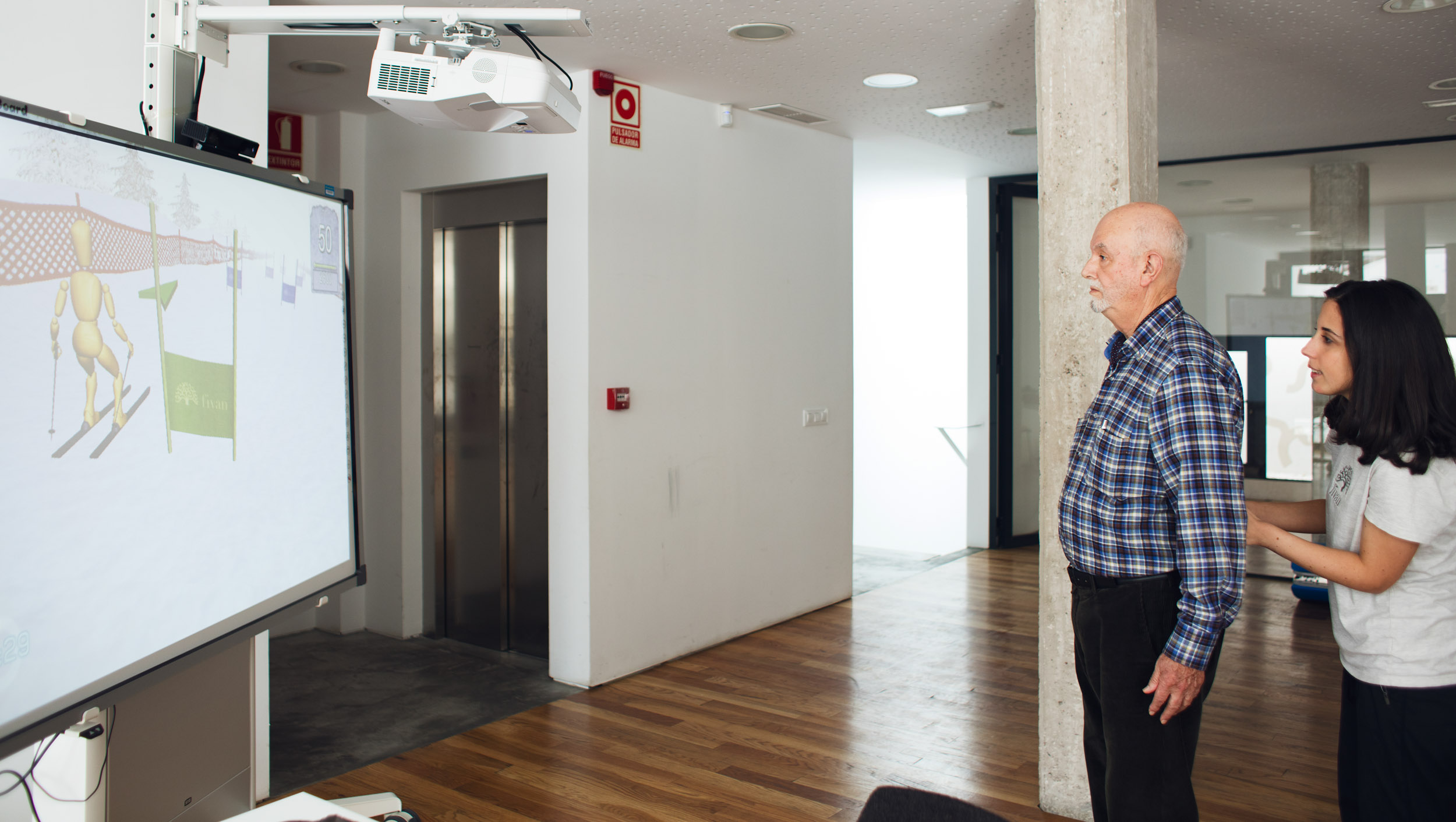
Markerless motion capture estimates joint positions from the image of a conventional camera or a depth sensor, and until recently it was a promise with one outstanding question: can you trust the measurement? The systematic reviews of 2025 and 2026 have begun to answer. A 2025 review in Frontiers in Bioengineering and Biotechnology analyses single-camera systems with a depth sensor for measuring shoulder range of motion against marker-based laboratories, and its reading is the one other recent reviews repeat: these systems already give measurements stable enough for clinical follow-up of many movements, with differences depending on the joint and the plane, while laboratory precision remains a laboratory matter.
The trend for 2027 is that measuring stops being a separate act. When the system that sets the exercise is the same one recording range of motion, repetitions, speed or centre-of-gravity displacement, every session generates its own measurement with no goniometer, no additional platform and no extra time, and the progress report writes itself. For the centre, the kit for measuring movement is increasingly a sensor or a camera and a computer, and less and less a proprietary device; the article on what a digital rehabilitation room needs works through what that changes in space and budget.
3. Robotics specialises and software spreads
Rehabilitation robotics does not drop off the map in 2027, but recent evidence is drawing a fairly precise picture of who it is worth it for. A meta-analysis published in January 2026 in Frontiers in Neurology, with 42 trials and 1,678 stroke patients, found that upper limb robotic therapy added to conventional therapy improves motor function and activities of daily living, and that the benefit concentrates in the subacute phase and in people with severe or moderate impairment; in mild impairment and in the acute phase no difference appeared, and in the chronic phase it was smaller. The authors propose exactly that: reserve the robot for the profiles where it adds most.
That is the trend. Robots and exoskeletons stay in the hospitals and units treating those profiles, where their cost per station and the space they occupy make sense, and the bulk of digital rehabilitation — the kind that reaches the mid-sized clinic, the day centre, the care home and the patient with mild impairment or in the chronic phase — is done with software, a sensor or a camera and a headset. The two complement each other and some centres combine them; the difference for anyone planning an investment among the digital rehabilitation trends for 2027 is that the second block costs a fraction, needs no room of its own and serves many more patients and more areas, from the upper limb to balance, cognition or language.
4. The evidence changes its question: for whom and how much
For years the question about virtual reality in rehabilitation was whether it worked. The literature from 2024 to 2026 has changed the question: what is now discussed is for which objectives, in which populations, at what dose and in which modality. The Cochrane review on virtual reality in stroke rehabilitation was updated in 2025, recent meta-analyses separate subgroups and compare virtual reality added to conventional therapy with virtual reality replacing it, and clinical guidelines are starting to take technology on board as a route for delivering treatment, as the 2025 European aphasia guideline did with digital models. This blog has been summarising them: upper limb after stroke, hemineglect or the enriched environment.
For a centre, the change is one of conversation: the question to a supplier is no longer "do you have evidence?" but "what does the evidence say for my patients, and how strongly?". When evidence matures, sweeping claims lose value and qualified ones gain it, and a supplier who explains in which domains their technology has solid backing and in which it is still thin is giving you better information than one who has everything settled.
5. Artificial intelligence with rules: the kind that helps, not the kind that decides
Of all the digital rehabilitation trends for 2027, this is the one with a legal deadline attached. Artificial intelligence is on every product sheet, and in 2027 it will be in the regulations too. The European AI Regulation classifies as high risk those AI systems forming part of a medical device subject to third-party conformity assessment, with additional obligations on documentation, data governance and human oversight. In July 2026 Regulation (EU) 2026/1744 set the final timetable: 2 December 2027 for most high-risk systems and 2 August 2028 for those built into products governed by sector-specific legislation, such as medical devices. The Commission also published in 2025 a set of frequently asked questions on how the two regulations fit together.
The evidence points the same way as the rule. A systematic review published in 2026 in the International Journal of Therapy and Rehabilitation brought together the studies on generative AI in exercise prescription and physiotherapy: only twelve met the criteria, AI-generated programmes proved inferior to those designed by professionals when directly compared, and the best results appeared when a clinician reviewed and adjusted what was proposed. For a centre, the words "artificial intelligence" on a product stop being a selling point and become a question: what exactly does that feature do, does it propose clinical decisions, and which category of the regulation does it put the product in? Software that adapts difficulty to the person's performance, records results and leaves the decision to the professional sits in a different, and calmer, category from one that sets out to diagnose or prescribe.
6. Paying for digital therapy: what other European countries already do
Germany has reimbursed physician-prescribed health apps through a fast-track route since 2020; France has allowed temporary reimbursement since 2023 while the manufacturer generates evidence; Belgium assesses apps through a multidisciplinary procedure. All three require the same things: CE marking, proof of clinical benefit, cybersecurity and integration with the health system. Spain does not yet have a specific route, and a comparative analysis presented at ISPOR Europe in November 2025 identified that as the main gap: there is no dedicated regulatory framework, no assessment procedure and no public directory of funded tools.
Why is this one of the digital rehabilitation trends for 2027 if Spain has no route yet? Because the conversation has already started, because the European Health Data Space Regulation pushes in that direction, and because private payers are beginning to ask for what those countries ask for: evidence, CE marking and outcome data. For a centre, it means that technology contracted in 2027 has more of a future if it already meets the requirements that will one day be the condition for someone to pay for it: a CE marked medical device, published evidence and an exportable record of results. It also means the commercial argument towards insurers and referrers changes: not "we use technology", but "we document outcomes".
7. Clinical data becomes something you can be asked for
This is the quietest of the digital rehabilitation trends for 2027 and the one with the longest reach. A platform recording every session and generating a report was until recently an advantage; it is becoming an expectation. Patients ask to see their data, referring doctors ask for reports they can read, payers ask for documented progress, and government is beginning to require that health data travels with the person. In Europe, the European Health Data Space Regulation came into force in March 2025 and its first primary-use obligations start applying in March 2029, with the patient summary and the ePrescription as the first block. There is time yet, but the systems a centre contracts in 2027 will still be in use when it arrives.
In practice, interoperability and data export join the list of questions to put to a supplier, alongside the usual ones on security and data protection. A PDF report settles today's conversation with the patient and the referrer; for 2027 it is worth also knowing what format the data comes out in, how it integrates with the centre's patient records, and what happens to it if the relationship with the supplier ends. And the record has to cover what the person does between sessions too: patients and carers consistently ask for a hybrid model, with the face-to-face session as the backbone and technological support in between, as a 2024 focus group study found, and a 2026 qualitative study with stroke survivors placed access to their own data among the things they expect from technology. What is expected in 2027 is that this work outside the centre stays on the same platform and under the same team follow-up, not in a separate app.

8. More people per professional hour: the group format
The last of the digital rehabilitation trends for 2027 is not technological but demographic, and the technology is adapting to it. Demand for rehabilitation and stimulation in older people is growing faster than the staffing available to meet it, and care homes, day centres and day hospitals are looking for formats that let one professional work with several people at once. Research with older adults supports the starting point: a 2023 review with 1,853 people over 60 found good acceptance of immersive technologies and a wish to repeat.
In 2027, group activities move from being a secondary feature to a purchasing criterion: on separate tablets, on a shared whiteboard or in front of a single sensor, with the professional leading the session. For anyone managing a care setting for older people it is the change with the most direct effect on the bottom line, because it alters how many people each professional hour serves without changing the staffing, and for the people taking part it adds a social component that individual work in front of a screen does not have.
What will not change in 2027
The list of digital rehabilitation trends for 2027 closes with what is not on it. The professional will go on deciding what is worked on, with whom and when, because none of the technologies above replaces them and because European regulation is designed precisely so that software doing so would have to prove itself at a different level of scrutiny. The evidence will go on being firmer in some domains than others, and anyone selling uniform certainties will go on running ahead of the data. And patient acceptance will go on depending more on how the technology is presented and who accompanies it than on the technology itself, as the article on how to explain technology to patients and their families set out.
Where Rehametrics sits in each trend
Taking the digital rehabilitation trends for 2027 one by one, this is where the platform stands today. Rehametrics VR runs on Meta Quest 2, 3 and 3S with hand tracking and no controllers, and allows work in mixed reality with the room visible through the visor; the therapist controls the session from an external computer with a mirrored screen. Rehametrics Physical is markerless motion capture with a depth sensor or, in its webcam mode, with a conventional camera, and records range of motion at the shoulder, elbow, hip and knee, repetitions, speed and, in balance work, centre of gravity and base of support; it includes group activities for two to four people. Rehametrics Cognitive allows several people to work at once on tablets or a group session to be led from the whiteboard.
All three modules record every session and generate progress reports for each patient, and VR and Cognitive allow the work to continue outside the centre with team follow-up. The platform is a Class I CE marked medical device, with Rehametrics registered as manufacturer with the Spanish Agency for Medicines and Medical Devices, and the evidence behind it comes to more than forty clinical studies: the three requirements that European funding routes put first. The 2026 developments cover what has most recently been added; whatever arrives in 2027 will be reported when it is available, not before.
Mixed reality and hands without controllers
More than 70 activities on Meta Quest, with the room visible through the visor and control from the therapist's computer.
View module →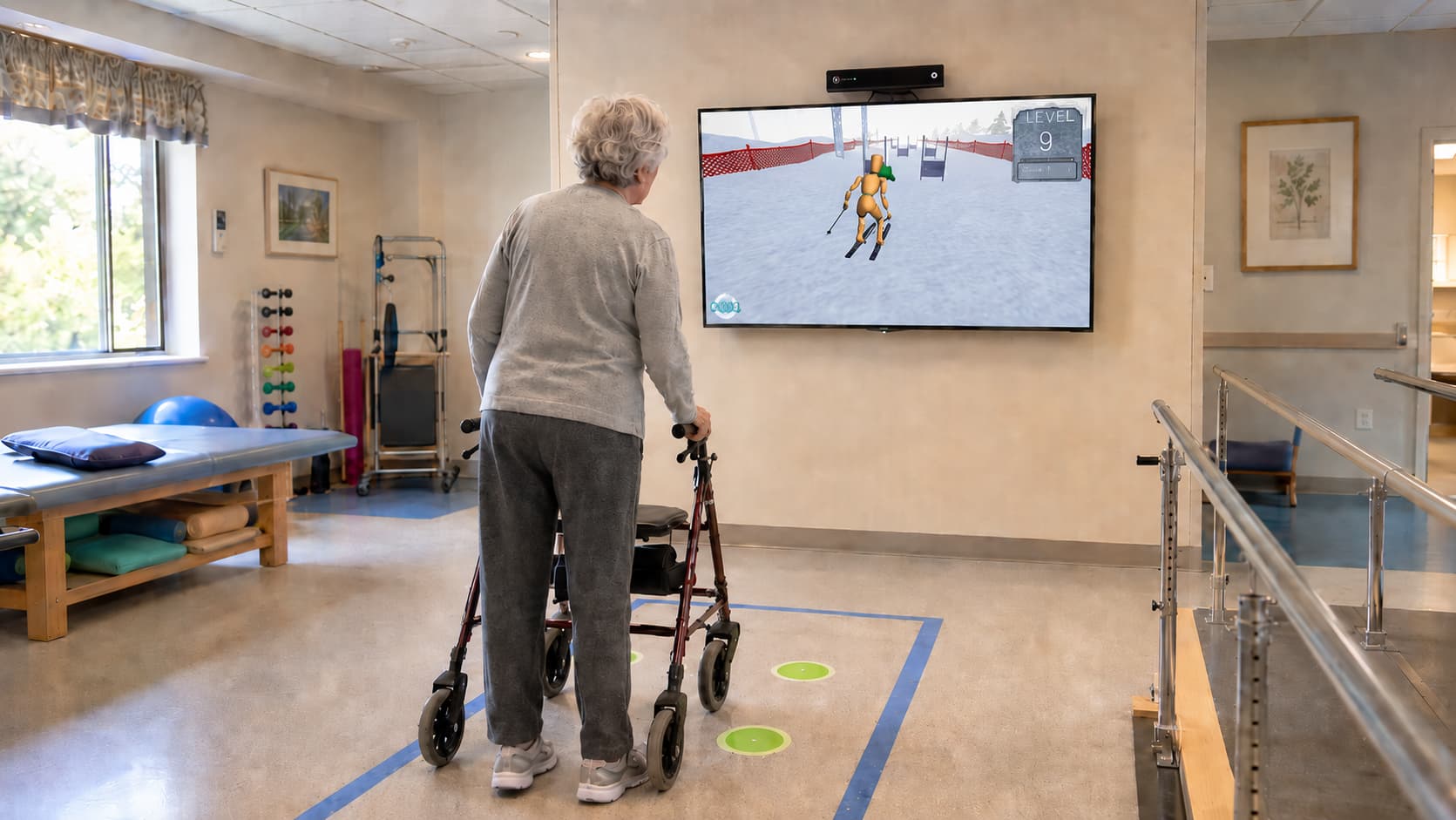
Markerless motion capture
More than 120 exercises with a sensor or a webcam, recording range of motion and balance, and group activities for two to four people.
View module →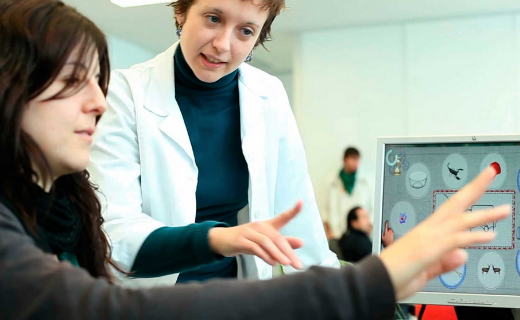
One to one, several tablets or a group session
More than 190 exercises with a record of every response and reports per patient, in the clinic or with remote follow-up.
View module →Frequently asked questions
Among the digital rehabilitation trends 2027 brings, do we need to wait for the new headsets?
No. The Meta Quest headsets on sale today already include room passthrough and hand tracking as standard; what changes in 2027 is that the models will be lighter and cheaper. What is worth asking a software supplier is whether their activities are designed to work without controllers and in mixed reality.
Is camera-based motion capture as precise as a laboratory?
No, and the 2025 and 2026 reviews say so plainly: laboratory precision remains a laboratory matter. What they show is that single-camera systems already give measurements stable enough for clinical follow-up of many movements, with differences depending on the joint and the plane.
Is artificial intelligence going to design exercise programmes?
The 2026 systematic review that gathered the available studies found that AI-generated programmes were inferior to those designed by professionals when directly compared, and that the best results appeared when a clinician reviewed and adjusted what was proposed. The AI that contributes today is the kind that adapts difficulty and records, leaving the decision to the professional.
Do robotics and virtual reality compete?
They complement each other. Recent evidence concentrates the benefit of upper limb robotics in the subacute phase and in severe or moderate impairment; software with a sensor, camera or headset covers a far wider range of patients and areas with much less investment and space. Some centres have both and use them for different profiles.
What changes for a centre under the European AI law?
That the words "artificial intelligence" on a product become a question: what does that feature do, does it propose clinical decisions, and which risk class does it put the product in? The obligations for most high-risk systems apply from 2 December 2027 and those for AI built into medical devices from 2 August 2028, under the timetable approved in July 2026.
Can digital therapy be prescribed and reimbursed in Spain as it is in Germany?
Not yet; there is no specific route, whereas Germany, France and Belgium have one. What can already be done is to choose technology that meets the requirements those routes demand (a CE marked medical device, published evidence and an exportable record of results), because they are the same ones private payers ask for today and the ones any future framework will ask for.
Will any of these trends replace the therapist?
None of them. All eight describe tools for measuring, for delivering treatment or for organising the service; who decides what is worked on and with whom remains the professional, and both the evidence on generative AI and European regulation point to it staying that way.
Want to see how these trends fit your centre?
We will show you mixed reality, hand tracking, sensor-based motion capture, group activities and the reports in action, and how centres like yours are organising around the digital rehabilitation trends 2027 is bringing.