
Digital Cognitive Rehabilitation and Stimulation
esign, adapt and measure each cognitive treatment in real time with more than 190 customisable exercises targeting attention, memory, language, executive functions and processing speed. Available on tablets, computers, interactive whiteboards and virtual reality headsets.
Try it free for 7 days · No credit card · No commitment
The limitations of conventional cognitive rehabilitation
Traditional clinical practice presents three barriers that compromise therapeutic outcomes:
Reduced adhesion
Repetitive handling tasks demotivate patients and lead to an increase in treatment non-adherence
Limited control
Assessing manipulative behaviour in real time depends on direct observation by the therapist
Slow customisation
Manually adjusting the difficulty of each task during the session disrupts the therapeutic flow
Rehametrics Cognitive addresses all three with a single integrated system.
What is the Rehametrics Cognitive Module?
Rehametrics is a professional medical device with CE marking, available on touchscreen or computer. It targets attention, memory, language, executive functions and processing speed, with exercises that adapt in real time to each patient’s cognitive profile.
It forms part of the Rehametrics integrated platform, alongside the Physical Therapy and VR modules. You can use it independently or combine all three modules according to your centre’s needs to ensure a comprehensive approach.
In five steps, from treatment to report:
Define clinical objectives based on the patient’s cognitive and functional profile
Select exercises tailored to each condition or cognitive objective
The system records answers, times and performance in real time
The difficulty level is adjusted automatically or manually during the session without interrupting it
A detailed clinical report is generated upon completion, which can be exported with objective metrics.
Result: a more immersive, more measurable form of therapy that is fully tailored to the patient.
What you can treat
Rehametrics Cognitive is suitable for a wide range of clinical profiles and conditions, whether in the clinic or at home, from the first session right through to discharge.
Stroke and acquired brain damage
Rehabilitation of cognitive deficits following a stroke, traumatic brain injury or acquired brain injury. Exercises for attention, memory, executive functions and processing speed.
Mild cognitive impairment (MCI)
Programmes designed to stimulate and maintain cognitive abilities in the early stages of cognitive decline, with automatically adjusted difficulty levels.
Alzheimer's disease
Interventions aimed at preserving cognitive functions, promoting orientation and maintaining functional independence during the various stages of the disease.
Parkinson's disease
Cognitive training focusing on executive functions, attention, working memory and processing speed, which are frequently affected in Parkinson’s disease.
Multiple sclerosis
Specific programmes designed to address difficulties with sustained attention, memory, cognitive flexibility and information processing.
Neurodegenerative disorders
Cognitive stimulation for patients with various types of dementia and neurodegenerative diseases, tailored to each patient’s clinical progression.
Paediatric neurology and neurodevelopment
Activities designed to develop attention, memory, planning and cognitive skills in children and adolescents requiring neurocognitive rehabilitation.
Active ageing and prevention
Programmes designed to maintain mental agility, memory and executive functions in older people, promoting independence and active participation.
Activities of daily living
Cognitive training applied to everyday situations: planning, problem-solving, organisation and decision-making to improve functional independence.
Cognitive functions
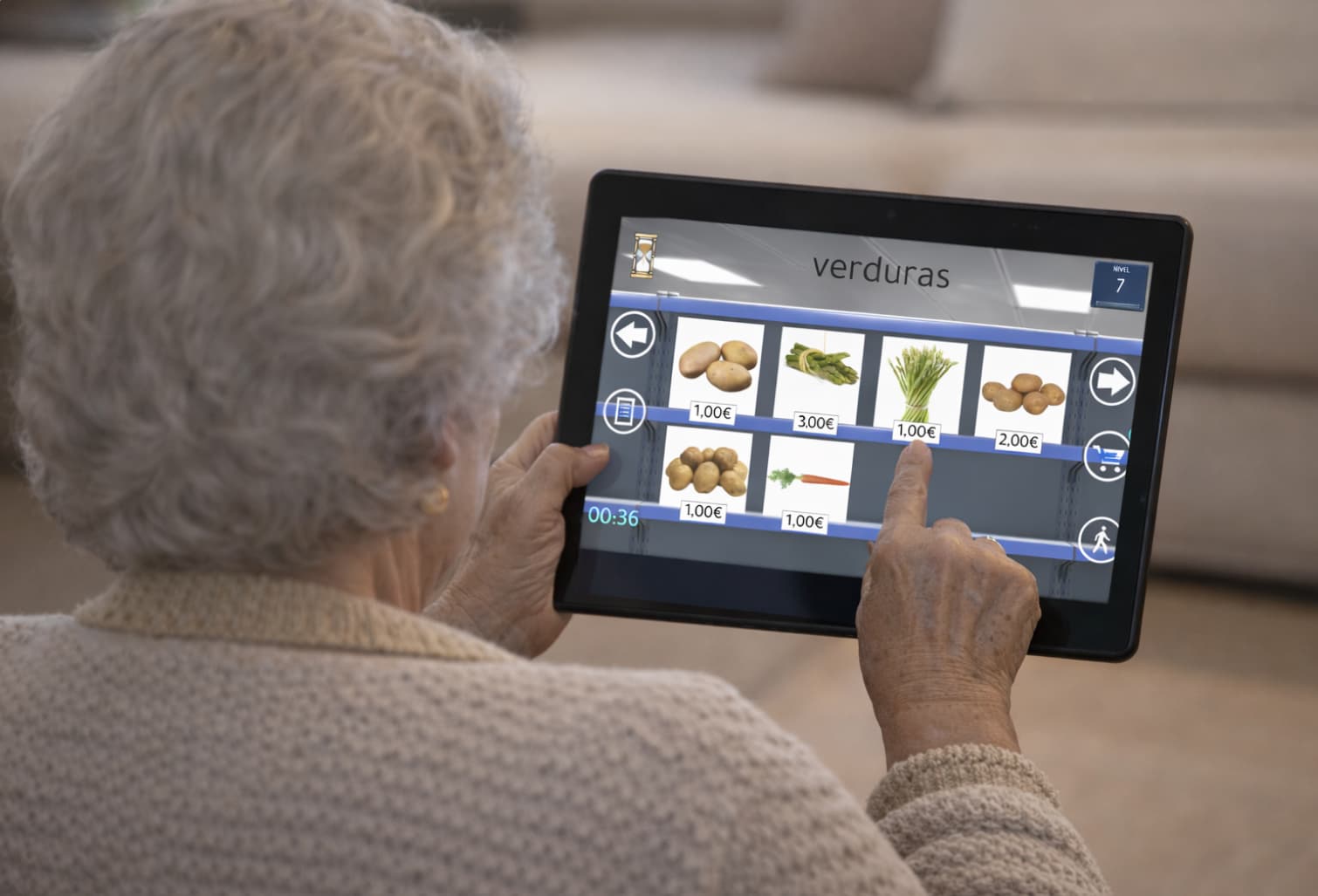
Rehametrics Cognitive in action
Find out how hospitals and healthcare professionals use Rehametrics to design personalised cognitive treatments, track progress session by session and generate automatic clinical reports, all within a single system.
Results that matter
Better adherence, objective data and faster results. That is what Rehametrics brings to both sides of the consultation.
For the patient
- Greater adherence thanks to motivation
- Immediate feedback
- Faster and more noticeable functional improvement
- Option to continue the programme from home
For professionals
- For professionals
- Ongoing monitoring
- Automatic and exportable reports for medical records
- Precise adjustment of difficulty and exercise settings
PROFESSIONAL OPINIONS
Rehametrics enables us to combine physical, cognitive and functional rehabilitation within a single therapeutic intervention. This holistic approach facilitates more personalised treatments, increases patient engagement and provides objective data for monitoring clinical progress. In our day-to-day practice, it has become a key tool for improving independence and functionality in neurological and geriatric patients.
Dr. Gemma Más
Neurologist and specialist in neurorehabilitation in La Pedrera Hospital
More than 450 centres are already using Rehametrics
A platform adopted by hospitals, rehabilitation centres and professionals in clinical settings.
















Who is it for?
Do you have any questions about compatibility? Let’s have a chat.
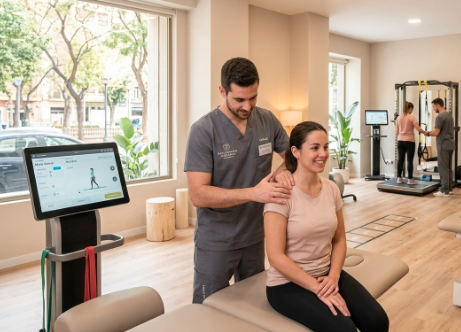
Clinics for neurorehabilitation
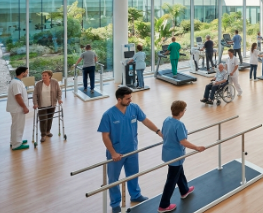
Acquired brain injury
units
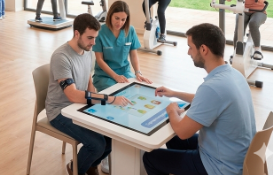
Day centres and care homes offering cognitive stimulation
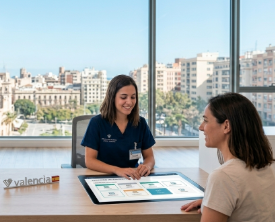
Professionals who want to elevate their clinics without losing clinical oversight
Data supporting the system
Clinicians from various specialities are already using Rehametrics Cognitivo in their daily practice.
30%
More rehabilitation sessions
Centres using Rehametrics report 30 percent more therapeutic activity per session compared with conventional rehabilitation.
89%
Greater involvement in therapy
89 percent of patients show greater motivation and active participation during exercises using Rehametrics.
100
Clinical variables per session
Over 100 variables are recorded automatically during each session, without any manual intervention by the clinician.
Hassle-free implementation
No alterations to the space or lengthy technical training are required. The system is intuitive from the very first use, for both the practitioner and the patient.
Tablet
Compatible with Windows and Android tablets for use in-clinic or at home
Computer
Windows-compatible PC or laptop for individual and group sessions
Interactive whiteboard
Designed for in-room cognitive stimulation, group sessions and teamwork
Virtual reality headset
Meta Quest 2, 3, and 3S for immersive experiences providing maximum stimulation
Individual
Private consultation or home-based use prescribed by the professional
Group
Shared cognitive stimulation room supporting multiple patients simultaneously
Scalable
Adaptable to your centre's patient volume with zero additional complexity
Start measuring what your therapy can achieve
No controlers. No calibration. No need to change the space you already have.
Talk to our team, get answers to your clinical queries and see the system in action.
Medical device with CE marking. Designed and clinically validated for use under professional supervision.
Resources for rehabilitation professionals
Clinical articles, user guides and case studies to help you get the most out of digital treatment.
Types of virtual reality in rehabilitation: immersive vs non-immersive
Intensity in therapeutic exercise: how to adjust the workload for patients with musculoskeletal pain
Virtual reality in paediatric rehabilitation: clinical applications and the use of digital platforms