
Technology and Activities of Daily Living: How to Address Function, Cognition, and Movement in Rehabilitation
Technology is playing an increasingly important role in functional rehabilitation. In the context of activities of daily living, its usefulness is not limited to simulating everyday tasks such as getting dressed, cooking, or handling objects. It can also help address the components that make these activities possible: attention, planning, working memory, motor control, coordination, reach, balance, reaction time, and exercise tolerance.
Therefore, the clinical question should not simply be whether a digital tool “supports activities of daily living.” The more useful question is: which daily living skills does it help users practice, how is the difficulty adjusted, what feedback does it provide, and what information does it offer healthcare professionals to aid in clinical decision-making?
To put this approach into context, it is worth noting that activities of daily living in rehabilitation are not isolated tasks, but rather indicators of independence, safety, and participation. This article rounds out the cluster by examining the application of technology to functional activities.
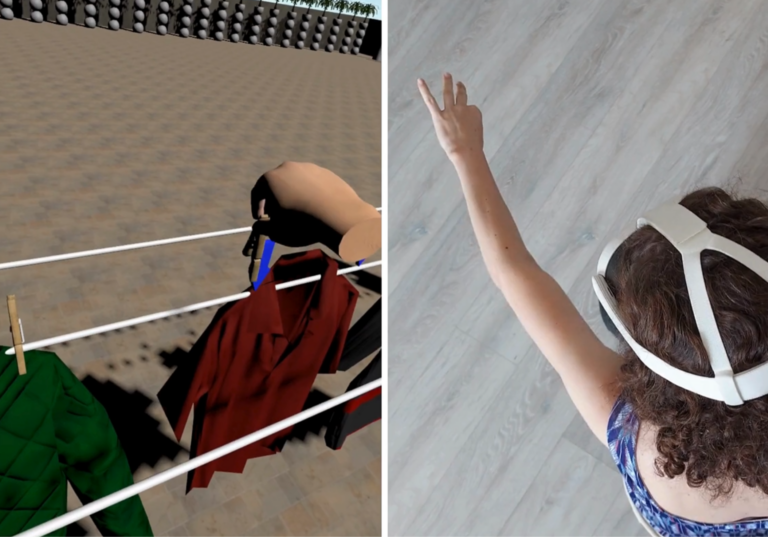
Table of contents
Technology Applied to AVD: Beyond Simulation
A digital tool can be used in various ways in work related to activities of daily living.
It can simulate functional tasks, such as selecting objects, organizing a sequence, following instructions, or responding to environmental stimuli. But it can also train specific components that must later be transferred to real-world activities.
For example, a digital reaching task might involve picking up a glass, opening a cabinet, or handling clothing while getting dressed. A visual attention exercise can help practice locating objects within a scene. An interactive balance task can be linked to transfers, walking around the home, or safety during personal hygiene.
The key is that technology should not be used as an end in itself. Its value becomes apparent when it is part of a functional plan with defined objectives and clear criteria for progress.
Reviews of technological interventions aimed at improving performance in activities of daily living among adults who have had a stroke include technologies such as virtual reality, therapeutic video games, biofeedback, robotics, electrical stimulation, and telerehabilitation. This demonstrates that the field is broad but also heterogeneous, so conclusions should be interpreted with clinical caution
Cognitive functions involved in ADLs
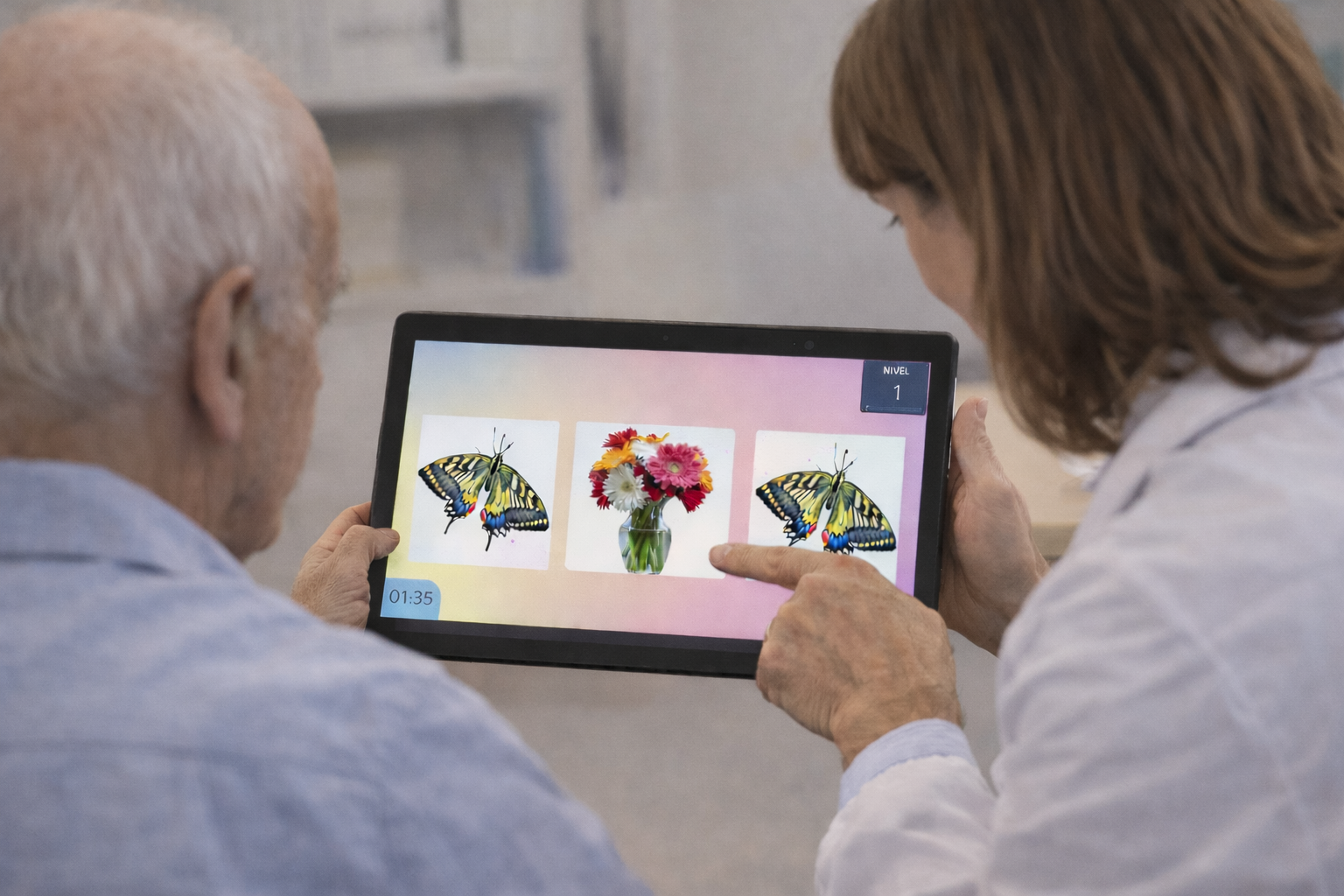
Many everyday activities require complex cognitive functions. Preparing a meal, taking medication, getting dressed, organizing a routine, or using the phone requires maintaining focus, remembering steps, planning, suppressing impulsive responses, and catching mistakes.
From this perspective, technology can help with tasks such as:
- Sustained and selective attention
- Processing speed
- Working memory
- Planning
- Sequencing
- Decision making
- Inhibition
- Awareness of the mistake.
This does not mean that an improvement in a digital task automatically translates to a functional improvement. The professional must assess whether the training relates to meaningful activities and whether the patient applies what they have learned to real-life situations.
Physical components: movement, coordination, and balance
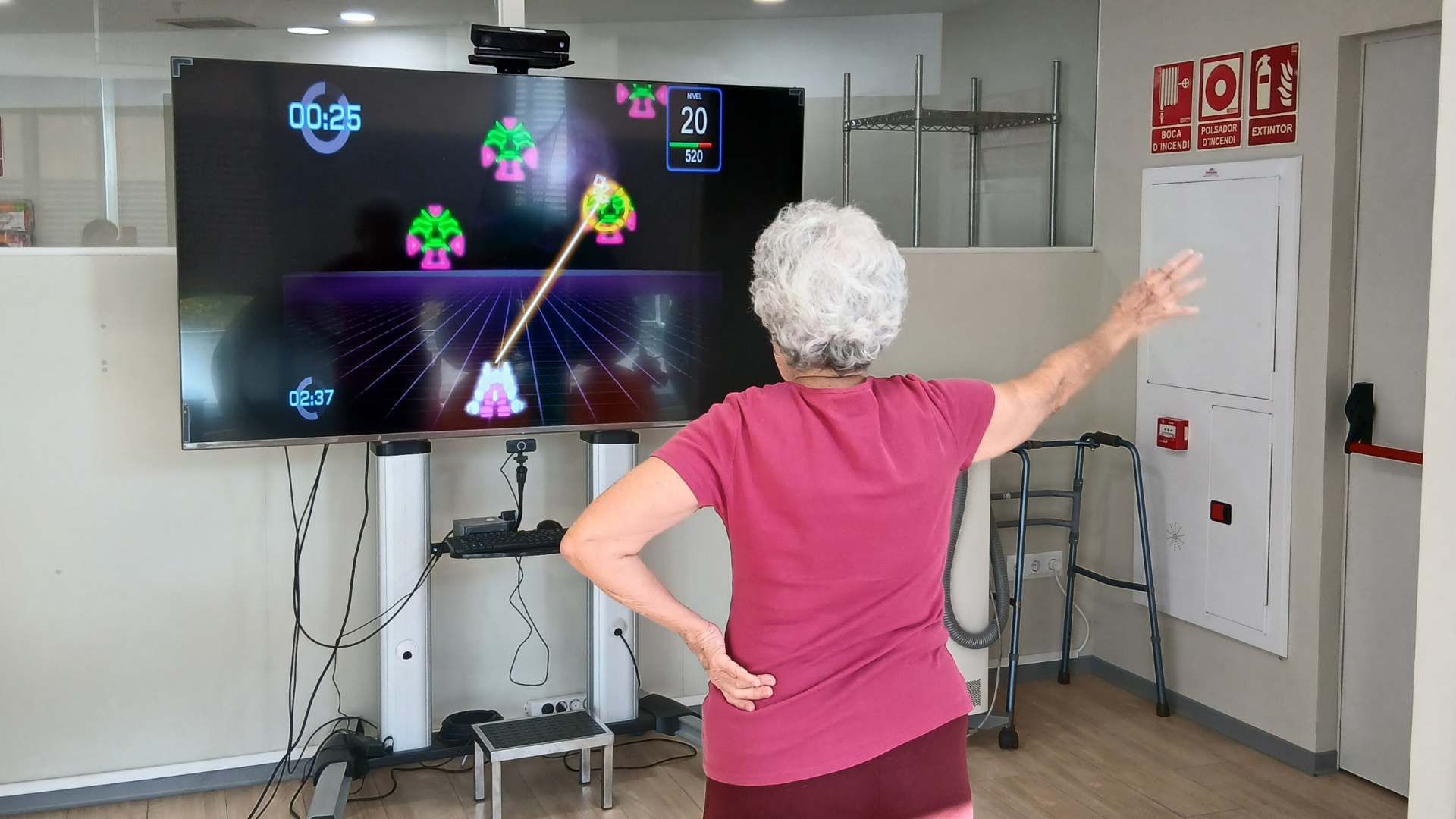
ADLs also depend on physical abilities. Getting dressed, eating, showering, cooking, and moving around the house require mobility, strength, coordination, postural control, balance, and endurance.
Technology can support the work of these components through interactive exercises that promote repetition, feedback, and progression. This can be useful for training upper-body reach, hand-eye coordination, shoulder mobility, core control, weight shifting, balance while standing, or movement speed.
The clinical goal should not be for the patient to improve their score on the assessment tool, but rather for that improvement to have functional significance. For example, increasing the range of motion in the upper limb can be meaningful if it enables the patient to reach a shelf, comb their hair, put on a T-shirt, or use utensils while eating.
At this point, technology can help make part of the treatment more repeatable and measurable. However, it is still necessary for the professional to determine whether the movement being trained is relevant to a real-life activity.
Immersive virtual reality and virtual reality headsets
Among the technologies used in rehabilitation, immersive virtual reality plays a unique role. Virtual reality headsets or goggles allow patients to be placed in simulated environments with a greater sense of presence than non-immersive systems.
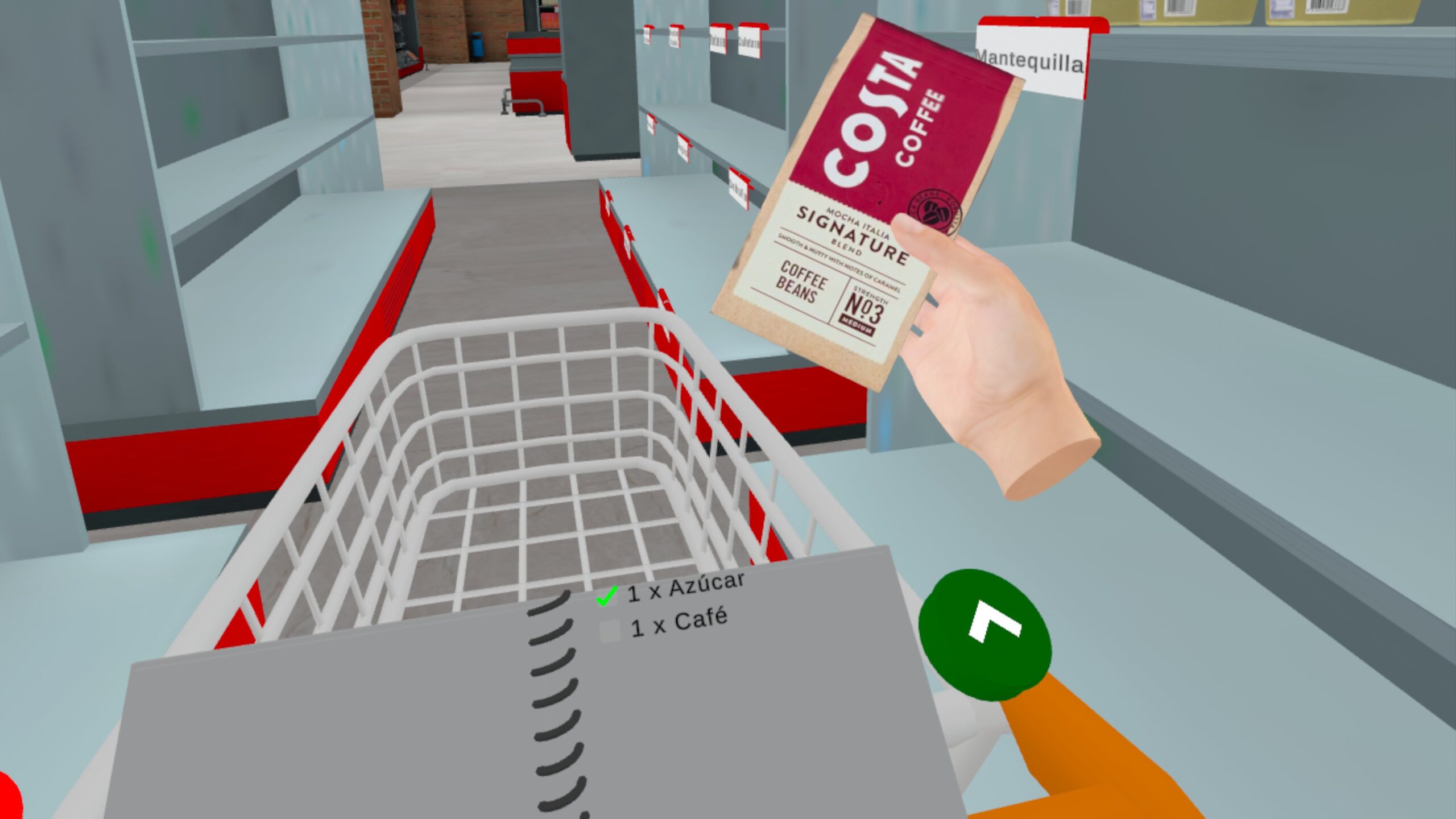
This can be useful for practicing tasks related to daily life in controlled environments: a kitchen, a store, a street, a home setting, or a situation with distractions. It can also facilitate training in visual exploration, spatial orientation, planning, decision-making, divided attention, or motor responses to stimuli.
A systematic review of virtual reality applications based on instrumental activities of daily living indicates that these interventions have been used to rehabilitate, train, or stimulate cognitive functions in healthy adults and in people with mild cognitive impairment or dementia.
In the case of acquired brain injury, another systematic review reports mixed results regarding the ability of virtual reality to improve function in activities of daily living. This nuance is important: virtual reality is a promising tool, but it should not be presented as a guarantee of functional improvement in and of itself.
In clinical practice, virtual reality headsets can be useful when the patient tolerates the immersive environment well and when the healthcare professional can ensure safety, task comprehension, and adequate supervision. For patients experiencing dizziness, eye strain, postural instability, low sensory tolerance, or significant comprehension difficulties, it may be preferable to use non-immersive technologies or to introduce immersion gradually.
Functional follow-up and clinical data
One of the advantages of technology is the ability to systematically record data. In functional rehabilitation, this data can help identify trends across sessions: completion time, correct responses, errors, repetitions, difficulty level, adherence, or tolerance.
However, not all data is equally useful. Data has clinical value when it helps answer specific questions:
Does the patient need less assistance?
Do you make fewer mistakes?
Does he handle the task better?
Does the difficulty increase without compromising safety?
Does it improve focus while working?
Is the observed improvement related to an actual activity?
Technology should complement clinical observation, not replace it. Measuring more does not always mean measuring better. What matters is that the information helps refine the treatment plan.
A multidisciplinary approach through three treatment modules
Address physical, cognitive, and occupational rehabilitation from a single, integrated solution.
The modules can be used independently or simultaneously by different members of the clinical team.
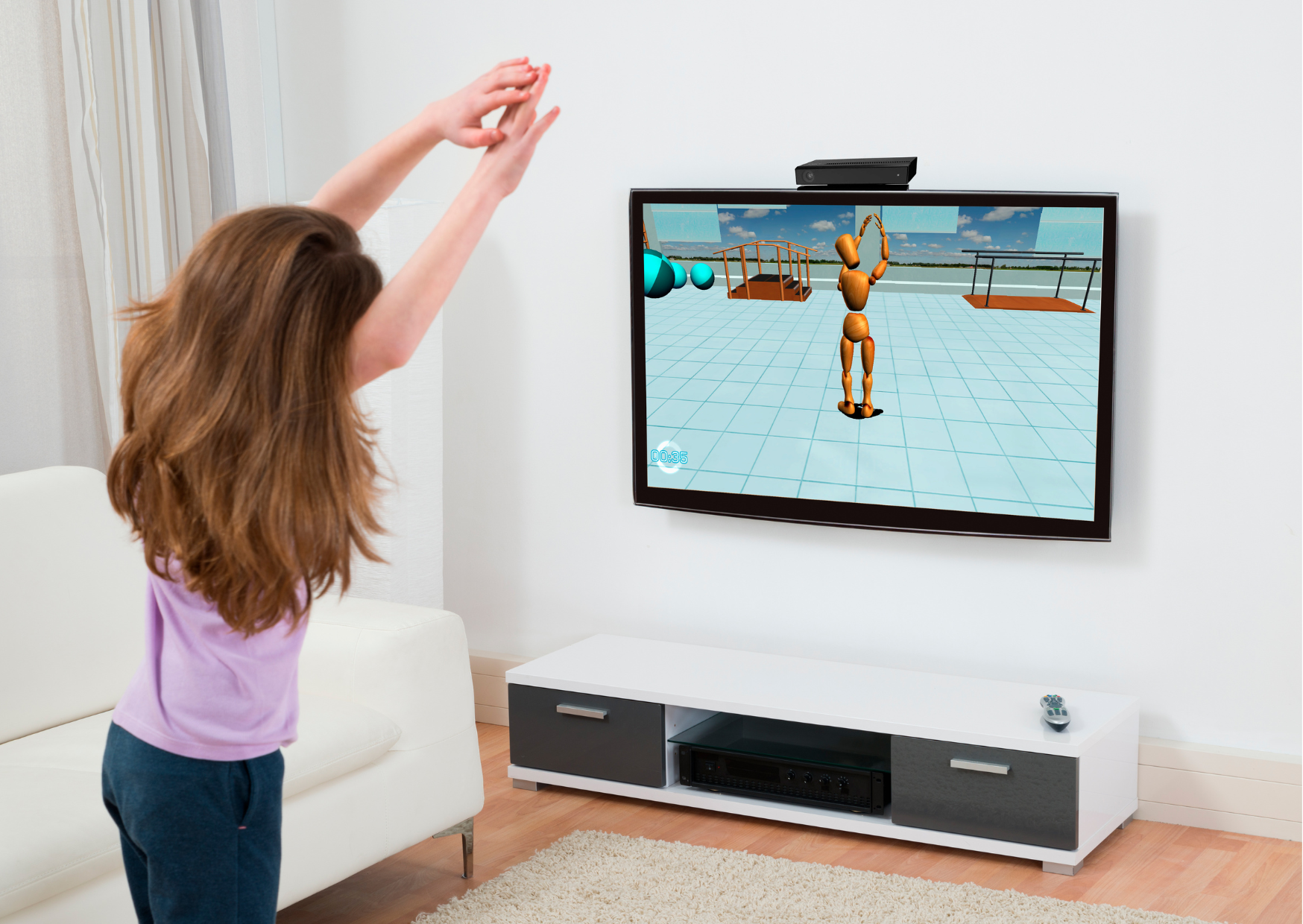
Digital support for neurological physiotherapy
Functional exercises oriented toward movement recovery.
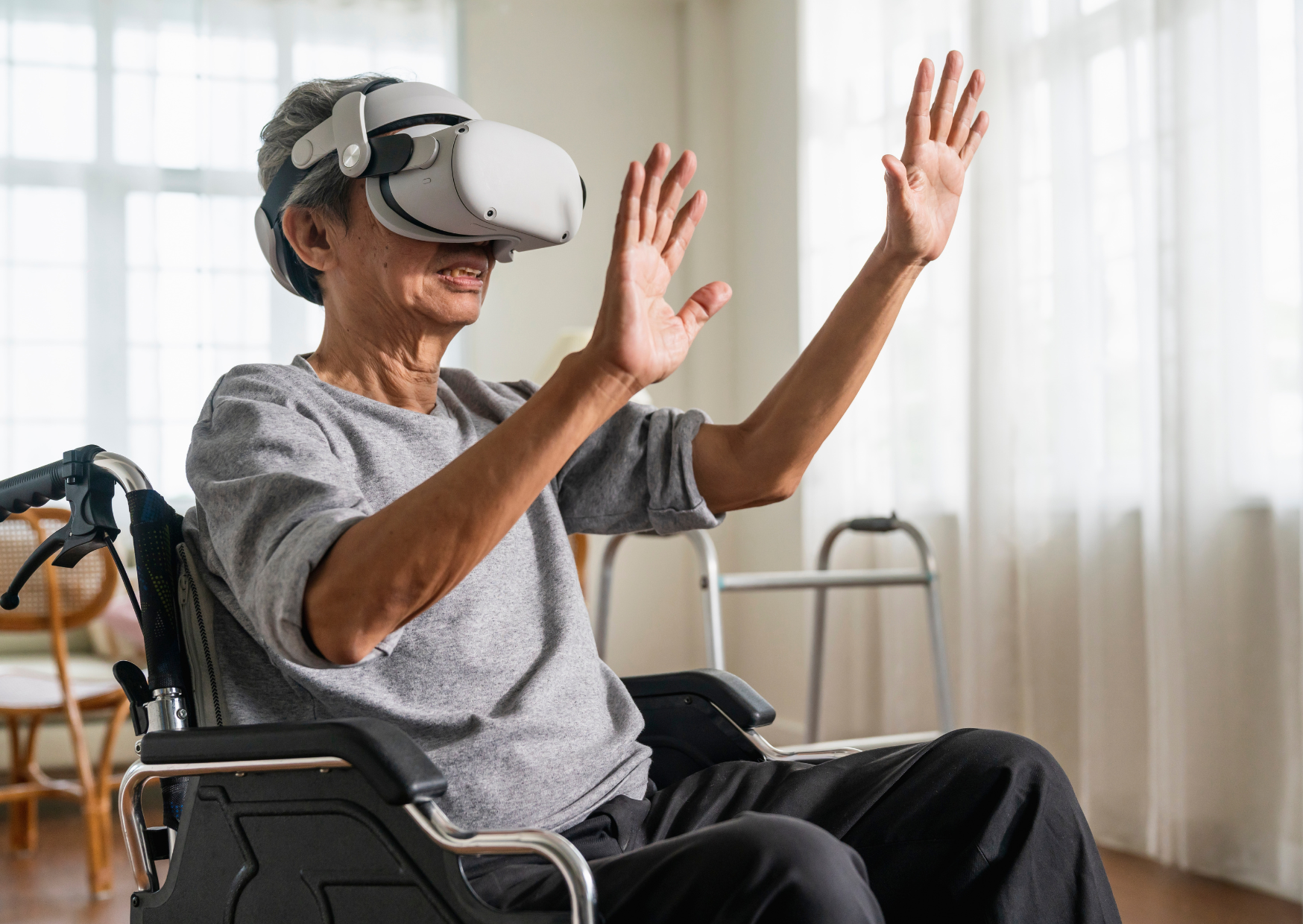
Virtual rehabilitation as a therapeutic support tool
Functional intervention aimed at the recovery of movement and cognition
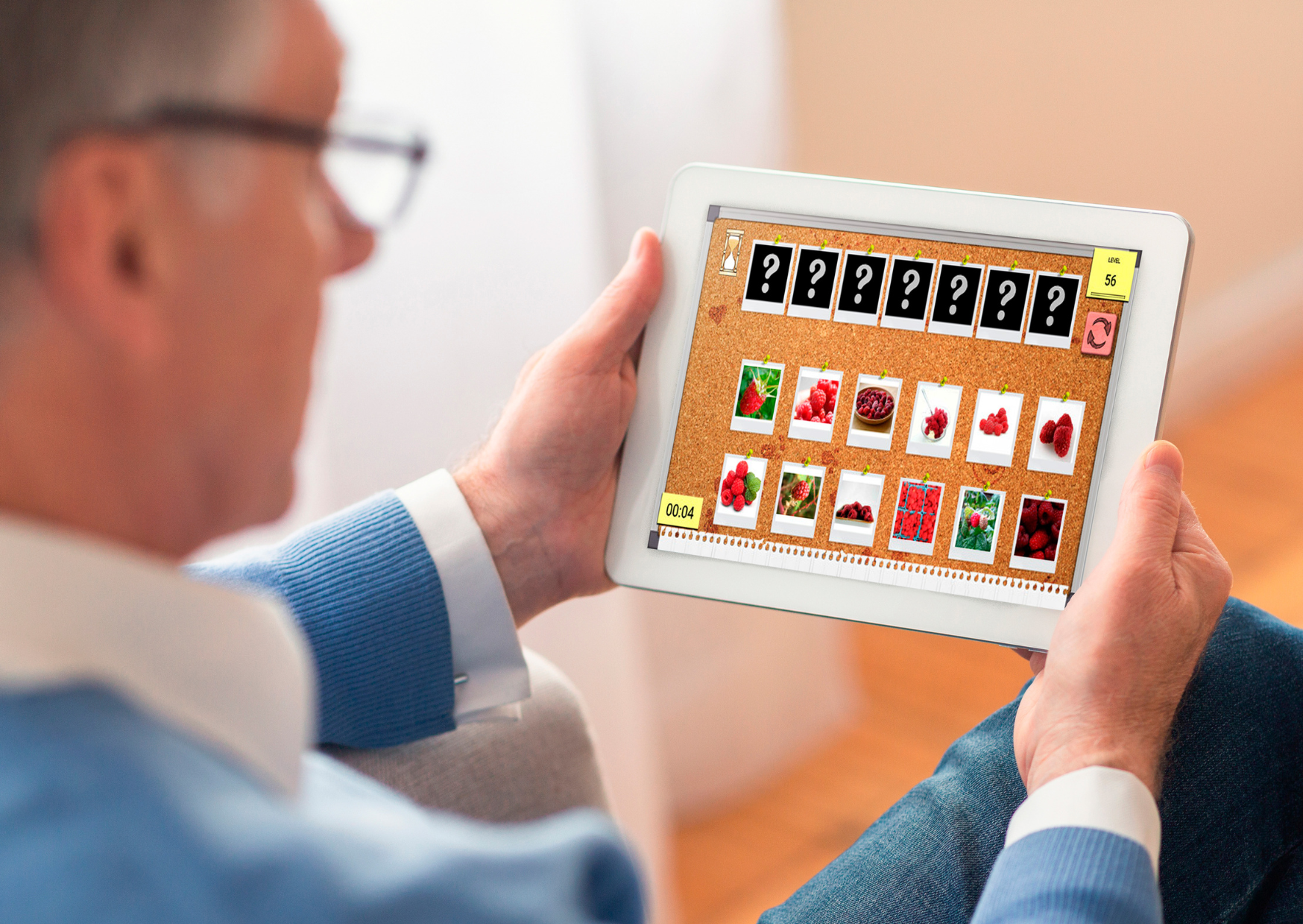
Supervised digital cognitive rehabilitation
Clinician-adapted digital cognitive rehabilitation programs for use in clinical settings.
Rehametrics as a tool for functional rehabilitation
In this context, Rehametrics can be viewed as a tool to help structure physical and cognitive rehabilitation sessions, tailor exercises, and record information useful for clinical follow-up.
When it comes to work related to activities of daily living, its value does not lie in replacing actual functional practice. Its usefulness becomes apparent when it helps the professional train the components involved in those activities: reach, coordination, mobility, attention, reaction time, planning, or tasks that require both cognitive and motor skills.
Rehametrics also offers immersive virtual rehabilitation solutions designed to address upper limb and hand function, activities of daily living, praxias, and grasping skills through virtual reality environments.
The clinically sound approach to integrating it is as follows: Rehametrics can support therapeutic decision-making when used to select tasks, adjust difficulty levels, facilitate repetition, and monitor the patient’s progress. Its usefulness always depends on professional judgment and on whether the exercises align with relevant functional goals.
Limitations and precautions
Technology can boost motivation, make repetition easier, and provide data, but it does not in itself guarantee improvements in daily life. Getting better at a digital task does not automatically mean dressing better, cooking with more confidence, or managing medication more effectively.
We must also avoid letting the tool dictate the therapeutic goal. The goal must be based on the clinical assessment: which activities are limited, which factors are interfering, what risks exist, what the patient needs, and what changes are meaningful for their independence.
In immersive virtual reality, it is also important to consider tolerance, motion sickness, eye strain, postural stability, the risk of falls, and the need for supervision. Virtual reality headsets can be a useful option, but they may not always be the best choice for all patients.
Conclusions
Technology can add value to activities of daily living in several ways. It can help simulate functional tasks, train the relevant cognitive functions, address the physical components necessary for performance, and collect data useful for clinical monitoring.
Immersive virtual reality offers a unique opportunity: training in simulated environments with a greater sense of presence. This can be particularly useful for tasks involving cognitive, perceptual, or motor demands, provided that the application is appropriate and safety is ensured.
En rehabilitación funcional, el objetivo final no es que el paciente mejore en una tarea digital, sino que gane recursos para funcionar mejor en su vida cotidiana. La tecnología, incluida la realidad virtual, tiene sentido cuando ayuda al profesional a tomar mejores decisiones y al paciente a practicar habilidades relevantes para su autonomía.