
Activities of Daily Living in Rehabilitation: How to Assess and Improve Functional Independence
Activities of daily living are one of the most important indicators of independence in rehabilitation. Eating, dressing, personal hygiene, moving around the home, preparing a simple meal, or managing medication are not merely everyday tasks. They are concrete expressions of independence, confidence, participation, and quality of life.
In rehabilitation, working on activities of daily living involves going beyond simply improving strength, mobility, balance, or cognition in isolation. The clinical goal is for these abilities to translate into actual functional performance: for the individual to be able to perform relevant activities with the highest possible level of safety, effectiveness, and independence.
The World Health Organization defines rehabilitation as a set of interventions aimed at optimizing functioning and reducing disability in people with health conditions as they interact with their environment. It also notes that rehabilitation helps people become as independent as possible in their daily activities and participate in education, work, leisure, and meaningful roles.

Table of contents
What are activities of daily living?
Activities of daily living, or ADLs, are routine tasks that enable a person to care for themselves, function in their environment, and participate in family, social, or community life.
In a clinical setting, they should not be viewed merely as a list of tasks that a patient can or cannot perform. ADLs allow us to observe how various abilities work together: movement, balance, strength, coordination, attention, memory, planning, perception, exercise tolerance, and environmental adaptation.
In occupational therapy, one of the key professional frameworks is the American Occupational Therapy Association’s *Occupational Therapy Practice Framework: Domain and Process*. This framework describes occupational therapy as the therapeutic use of activities of daily living and organizes the professional domain around activities, contexts, performance patterns, performance skills, and person-related factors.
Types of activities of daily living
Although these activities overlap in clinical practice, it is often helpful to divide them into three main groups.
Basic activities of daily living
These are the essential self-care tasks. They include eating, personal hygiene, bathing, dressing, toileting, continence, transfers, and basic mobility.
These activities are typically prioritized in the early stages of rehabilitation because they determine a patient’s need for assistance from others, safety at home, and discharge planning.
Activities of Daily Living
Instrumental activities are more complex and enable people to live more independently in the community. They include preparing meals, shopping, using public transportation, managing finances, taking medication, using the phone, doing household chores, and planning daily routines.
These activities require a broader integration of motor, cognitive, perceptual, and social components. For example, preparing a simple meal involves standing, reaching, manipulating objects, sequencing tasks, prospective memory, risk management, and adapting to the environment.
Advanced activities and participation
These include work, educational, family, community, social, and leisure activities. Although they are sometimes given lower priority in the early stages, they are essential for assessing recovery from a person-centered perspective.
The World Federation of Occupational Therapists defines occupational therapy as a discipline that promotes health and well-being by supporting participation in meaningful activities that people want, need, or are expected to perform. This idea is key: autonomy isn’t limited to being able to bathe or dress oneself, but includes participating in roles that are meaningful to the individual.
Why AVDs Should Be a Therapeutic Goal
In many rehabilitation programs, ADLs are used as an outcome measure: they are assessed at the start, throughout the course of treatment, and at discharge. However, they should also be considered a direct therapeutic goal.
For example, if a person has difficulty getting dressed, it is not enough to work on shoulder mobility, hand strength, or balance while seated in isolation. It is necessary to analyze which part of the activity is limited, what the task requires, what mistakes occur, what level of assistance is needed, and what strategies can facilitate more independent performance.
The same functional limitation can have very different causes. Two patients may fail to prepare a meal for different reasons: pain, weakness, fear of falling, memory impairment, planning difficulties, impulsivity, low exercise tolerance, or environmental barriers. The intervention will differ in each case.
That is why AVDs help formulate more precise clinical questions:
Is the patient unable to perform the activity due to a motor, cognitive, perceptual, emotional, or environmental limitation?
Do you need to regain a skill, learn a compensatory strategy, or adapt your environment?
Does the improvement observed in the clinic actually carry over to home life?
Is the activity safe, effective, and meaningful for the individual?
Factors that may limit performance in activities of daily living
Performance in activities of daily living depends on the interaction between the individual, the task, and the environment. Reducing the difficulty to a single factor often leads to interventions that lack specificity.
Motor impairments
A loss of strength, range of motion, coordination, manual dexterity, balance, or stamina can limit activities such as getting dressed, showering, cooking, getting up from a chair, or moving around the house.
In these cases, treatment may include therapeutic exercise, task-oriented practice, transfer training, balance exercises, functional strengthening, or temporary adjustments to daily activities.
Cognitive impairments
Cognition has a direct impact on ADLs. Attention, memory, planning, sequencing, inhibition, cognitive flexibility, and error awareness are necessary for safely performing daily activities.
A patient may have sufficient motor skills to prepare breakfast, but may not remember the steps, leave a task unfinished, repeat actions, fail to notice mistakes, or fail to anticipate risks. In these cases, the main difficulty lies not in the movement itself, but in the functional organization of the activity.
Sensory or perceptual deficits
Visual, somatosensory, proprioceptive, or perceptual impairments can affect performance. This can be observed when locating objects, handling utensils, navigating the bathroom, estimating distances during a transfer, or recognizing relevant elements in the environment.
Pain, fatigue, and exercise tolerance
Pain and fatigue can limit participation even when basic physical ability appears to be intact. In these cases, modifying the task, adjusting the timing, planning breaks, and prioritizing meaningful activities can be just as important as training a specific skill.
Environmental barriers
The environment can either promote or limit independence. The height of a chair, the layout of the bathroom, lighting, noise, the amount of sensory input, the accessibility of objects, or the type of assistance provided by a caregiver can significantly affect a person’s level of independence.
Rehabilitation, as defined by the WHO, is not limited to interventions focused on the individual, but rather considers how the individual functions in interaction with their environment.
How to Assess Activities of Daily Living
Assessing ADLs is not simply a matter of asking whether a patient “can” or “cannot” perform an activity. The relevant clinical question is broader: how they perform it, with what assistance, with what degree of safety, with what level of effort, with what quality, and in what context.
Clinical interview
The interview helps identify significant activities, the patient’s priorities, and perceived difficulties. It also helps identify discrepancies between what the patient considers important, what the family observes, and what the clinical team identifies as a priority.
At this stage, it is best to ask about specific activities, not just general areas. For example, asking “Can you get dressed?” is not the same as assessing whether the person can choose their clothes, put on tops, handle buttons, maintain their balance while doing so, or complete the task without verbal assistance.
Direct observation
Observing activity provides information that does not always come across in questionnaires or interviews. It allows us to identify compensatory behaviors, pauses, mistakes, uncertainty, loss of efficiency, the need for instructions, fatigue, or spontaneous strategies.
Observing a real or simulated activity makes it possible to determine whether the difficulty arises when starting the task, maintaining focus, organizing the steps, handling objects, controlling posture, correcting errors, or completing the activity.
Functional scales
Scales help to objectively assess the level of independence, document progress, and communicate results among professionals. They should be used as a tool to support clinical judgment, not as a substitute for it.
The Barthel Index, described by Mahoney and Barthel in 1965, is one of the classic scales used to assess independence in activities of daily living. It evaluates tasks such as eating, bathing, personal hygiene, dressing, toileting, transfers, mobility, stair climbing, and continence.
Its main purpose is to provide a simple measure of functional independence. However, as with any global scale, it does not always explain why the patient is experiencing difficulty or which specific component should be addressed in treatment.
Task Analysis
Task analysis allows an activity to be broken down into steps, requirements, and conditions for execution. It is a particularly useful tool for designing specific interventions.
For example, the following elements may be incorporated into the dress:
- Appropriate choice of clothing;
- Garment orientation;
- Shoulder and trunk mobility;
- Balance while sitting or standing;
- Bimonthly coordination;
- Sequencing;
- Exercise tolerance;
- Ability to correct mistakes.
This analysis helps determine whether it is advisable to work on a physical ability, simplify the task, modify the environment, introduce external aids, or practice a compensatory strategy.
How to Incorporate Activities of Daily Living into Rehabilitation
Training in activities of daily living should be specific, progressive, and meaningful. Repetition may be necessary, but it is not sufficient unless guided by a clear functional goal.
Task-based training
Task-oriented training involves practicing real-life activities or functional components that are directly related to the patient’s goals.
For example, if the goal is to improve eating skills, it may be helpful to practice reaching, grasping, hand-mouth coordination, postural control, and using utensils as part of a functional task, rather than focusing solely on isolated upper-body exercises.
This approach allows patients to practice skills relevant to their daily lives and facilitates the transfer of those skills to real-life situations.
The integration of platforms such as Rehametrics makes it possible to provide objective support for these interventions, transform the therapeutic experience into useful clinical information, and strengthen outcomes-based care models.
In this way, immersive technology moves beyond being an isolated element to become a structural component of the modern rehabilitation process.
Difficulty level
Adapting an activity means adjusting its demands so that it is therapeutic, safe, and achievable. The difficulty can be modified in many ways: reducing or increasing the number of steps; changing the working posture; modifying the weight, size, or position of objects; increasing or reducing distracting stimuli; varying the time available; introducing dual tasks; changing the level of verbal or physical assistance; moving from a controlled environment to a more realistic one, etc.
Grading doesn’t always mean choosing the most difficult task. In the early stages, simplifying may be necessary to promote confidence, learning, and participation.
Compensatory strategies
In some cases, the goal is not to fully restore a particular ability, but to enable the person to function better by using alternative strategies.
This may include assistive devices, structured routines, step-by-step instructions, visual cues, energy-saving techniques, rearranging the environment, or caregiver training.
The clinical judgment lies in deciding when to prioritize recovery, when to focus on compensation, and when to emphasize environmental adaptation. In many cases, these three strategies coexist.
Practical application
A task performed correctly in the clinic does not always translate to the home setting. The clinic is typically a more controlled environment: less noise, fewer objects, less time pressure, and greater supervision.
Therefore, whenever possible, training should be tailored to the patient’s real-life context. This may involve using everyday objects, simulating home environments, incorporating distractions, training with family members, or planning tasks for the home.
Patient and Family Involvement
ADLs have a personal dimension. The way people dress, cook, manage their medication, or bathe depends on their habits, preferences, culture, environment, and roles. Therefore, care must incorporate the patient’s perspective and, when necessary, that of the family or caregivers.
It’s not just about getting the person to perform an activity “correctly,” but about ensuring they can do so safely, efficiently, and in a way that fits into their daily life.
What role can technology play in AVD's work?
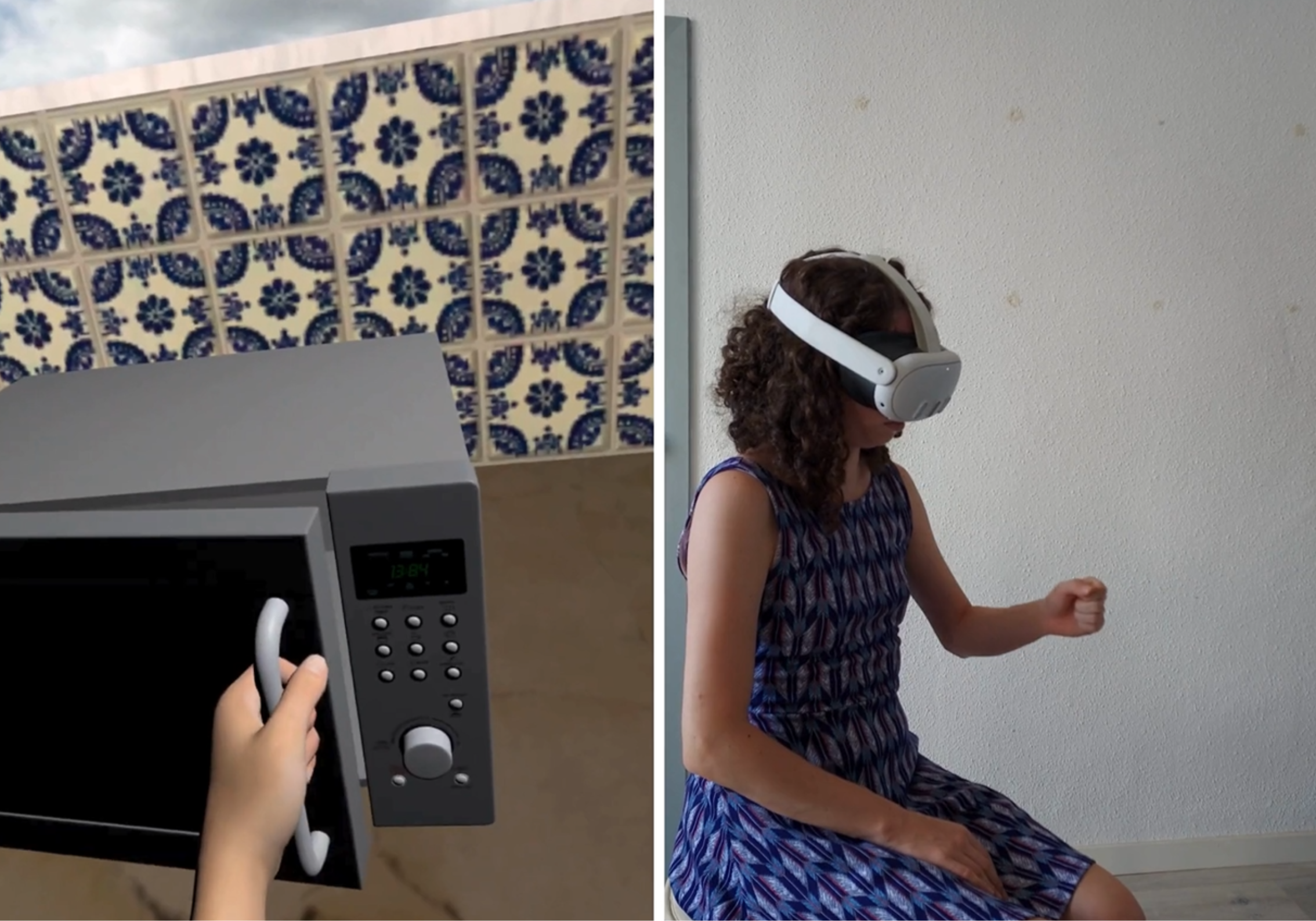
Technology can add value when integrated into a clear clinical framework. It does not replace professional judgment or make a task functional on its own, but it can help structure the intervention, increase consistency, provide feedback, and track progress.
When working on activities of daily living, a digital tool can be useful for:
- Design exercises linked to functional goals;
- Provide visual or auditory feedback during performance;
- Adjust the difficulty level based on performance;
- Record repetitions, errors, times, or tolerance;
- Encourage engagement through more interactive activities;
- Support communication among professionals through comparable data.
The key point is that the data should answer a clinical question. Measuring more does not always mean measuring better. In functional rehabilitation, metrics should help inform decision-making: whether to maintain a task, simplify it, advance it, modify the environment, or revise the therapeutic goal.
Conclusions
Activities of daily living are a central focus of rehabilitation because they are directly linked to independence, safety, and participation. Assessing and working on ADLs requires integrating motor, cognitive, sensory, emotional, and environmental skills into activities that are meaningful to the individual.
For the clinician, the goal is not merely for the patient to improve a single skill, but for that improvement to translate into functional performance. For this reason, direct observation, task analysis, gradual progression in difficulty, and systematic measurement of progress are essential elements.
Technology can be a useful tool when it helps organize tasks, provide feedback, and track progress. However, its value always depends on the clinical judgment with which it is integrated into the rehabilitation process.
In short, working on activities of daily living is not the final stage of treatment. It is a way to focus the entire rehabilitation process on what really matters: helping the person function better in their daily life.