
Objective Metrics in Digital Cognitive Therapies for Mild Cognitive Impairment: How to Measure Progress Beyond Screen-Based Performance
The incorporation of digital therapies into the management of mild cognitive impairment has transformed the way we record and analyze cognitive interventions. Today we have continuous data on accuracy, reaction times, variability, and response patterns that were previously inaccessible in routine practice. However, the availability of metrics does not guarantee their clinical relevance. In this context, a central question arises for the neuropsychologist: how to interpret digital data to determine whether there is real, functional cognitive progress, beyond improvements in on-screen performance?
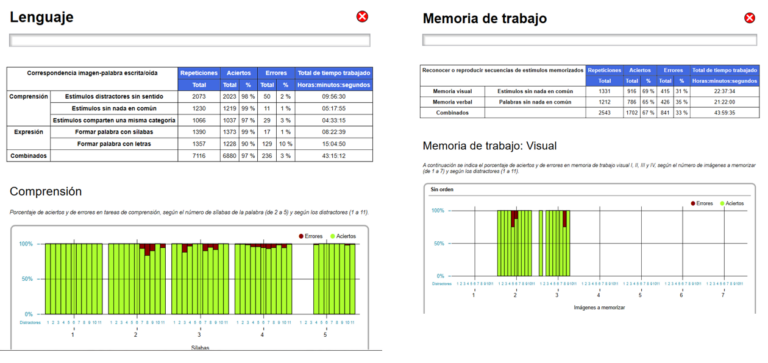
Table of contents
The risk of confusing digital improvement with clinical improvement
The incorporation of digital cognitive therapies into the treatment of mild cognitive impairment (MCI) has made it possible to collect a volume of data that would have been unthinkable just a decade ago. Accuracy, reaction times, scores achieved, and the number of errors are automatically recorded session after session.
However, in clinical practice, a recurring question arises: Is the patient actually improving, or are they simply learning to perform the task more effectively?
In DCL, where the therapeutic goal is not always “recovery” but rather stabilization or slowing of decline, the interpretation of data takes on critical importance. An improvement in the digital score may reflect:
-
Getting familiar with the interface.
-
Automation of response dynamics.
-
The algorithm gradually adjusts the difficulty level.
-
A temporary increase in motivation or adherence.
On its own, a single performance metric is not a sufficient clinical indicator. We need indicators in digital cognitive rehabilitation that go beyond the screen and provide information about the patient’s actual functioning.
What Does “Progress” Really Mean in Mild Cognitive Impairment?
In the DCL, the concept of progress needs to be redefined. It does not always mean improving scores; in many cases, it means:
-
Maintain stability in the face of an expected downward trend.
-
Reduce yield variability.
-
Improve compensatory strategies.
-
Increase independence in daily living activities.
Therefore, when analyzing the results of digital cognitive therapy, it is worth asking:
-
Is the observed change consistent over time?
-
Can you handle multiple tasks at once?
-
Is it accompanied by observable functional changes?
-
Does it affect clinical decision-making?
Clinically meaningful progress in DCL is typically subtle, gradual, and multifactorial. Digital metrics can capture this progress, but only if they are interpreted judiciously.
A multidisciplinary approach through three treatment modules
Address physical, cognitive, and occupational rehabilitation from a single, integrated solution.
The modules can be used independently or simultaneously by different members of the clinical team.
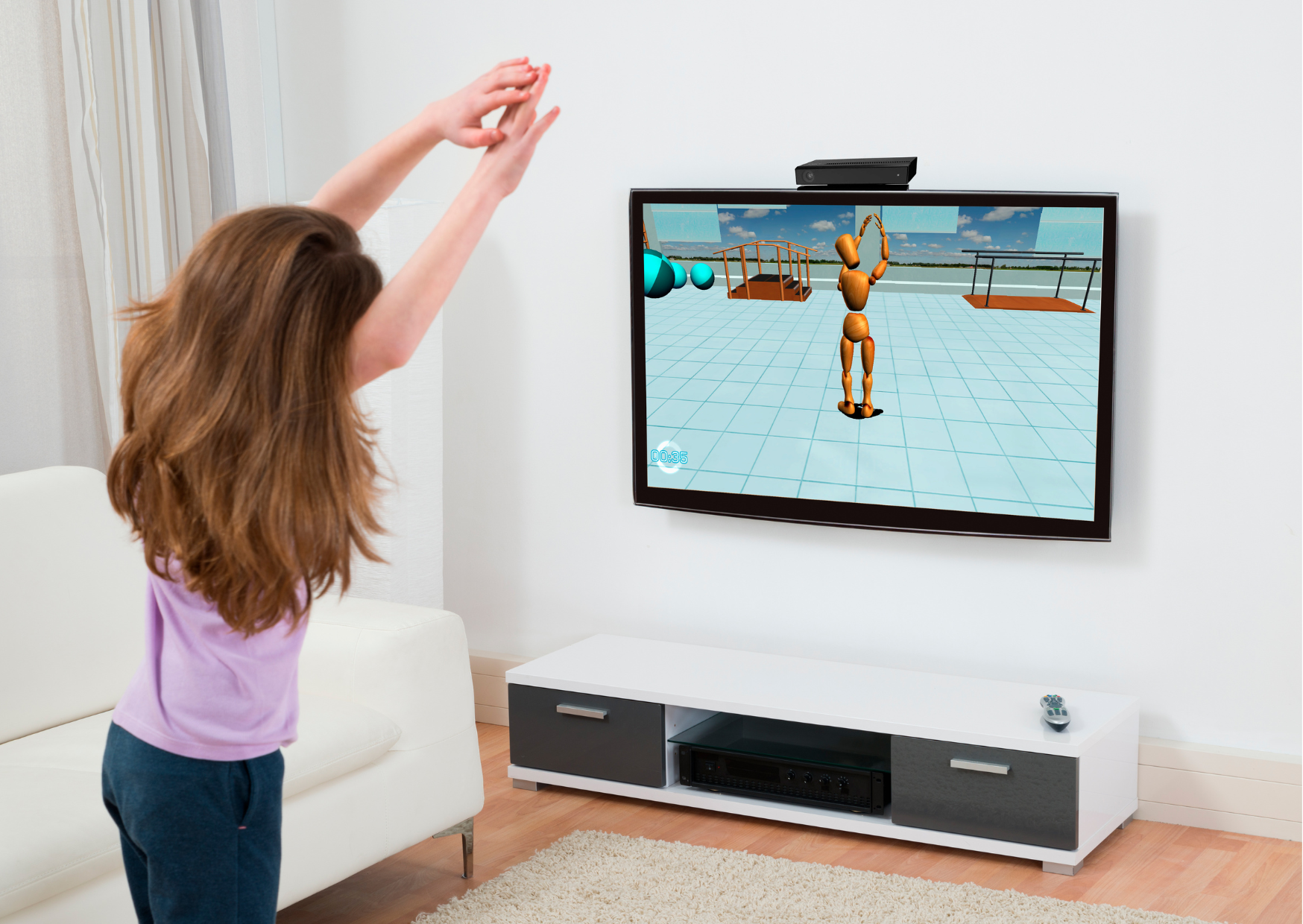
Digital support for neurological physiotherapy
Functional exercises oriented toward movement recovery.
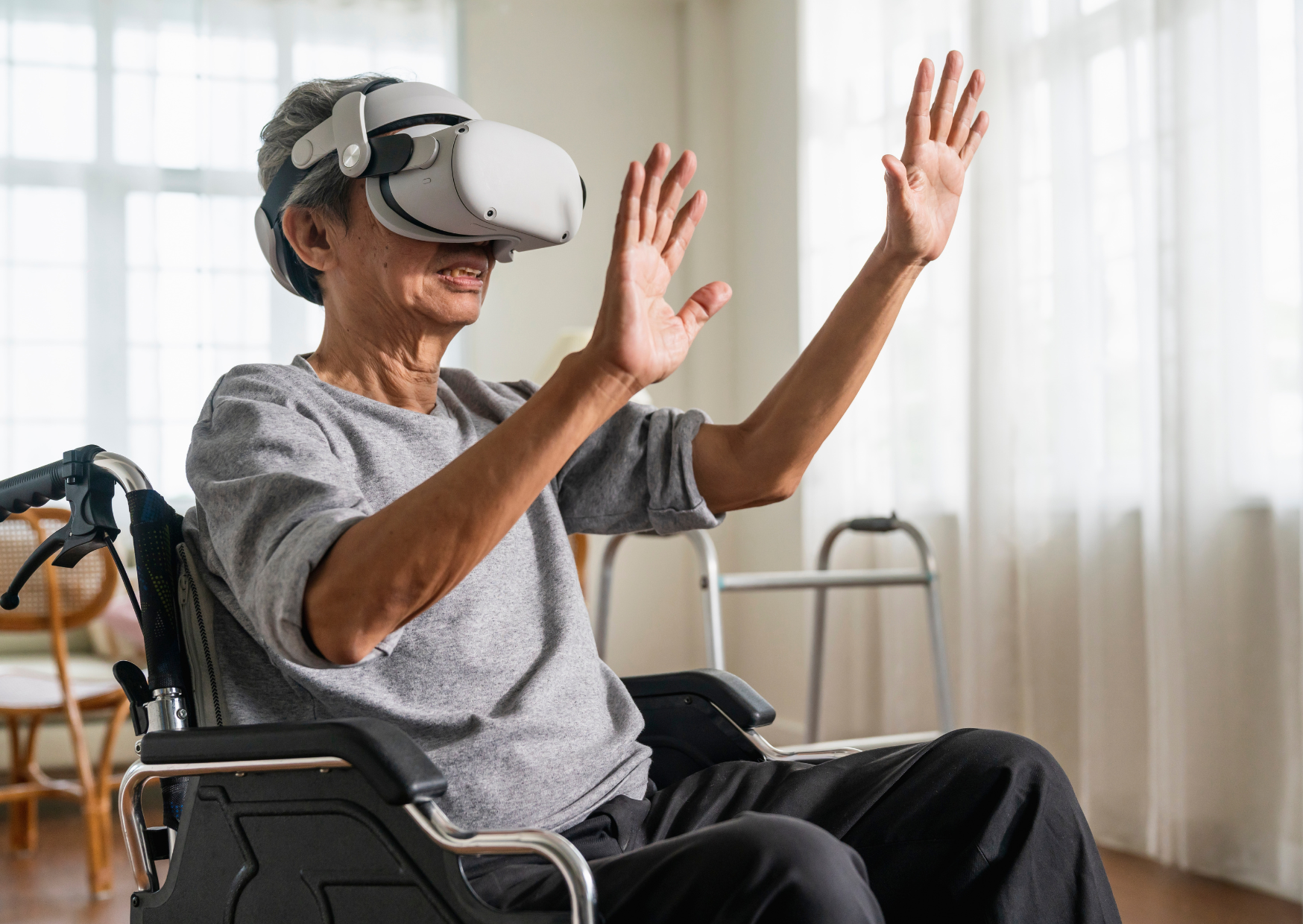
Virtual rehabilitation as a therapeutic support tool
Functional intervention targeting motor and cognitive recovery

Supervised digital cognitive rehabilitation
Clinician-adapted digital cognitive rehabilitation programs for use in clinical settings.
Indicators in digital cognitive rehabilitation that do provide clinical value
Not all metrics carry the same clinical weight. In clinical practice, the following categories are particularly useful:
1. Longitudinal trend across sessions
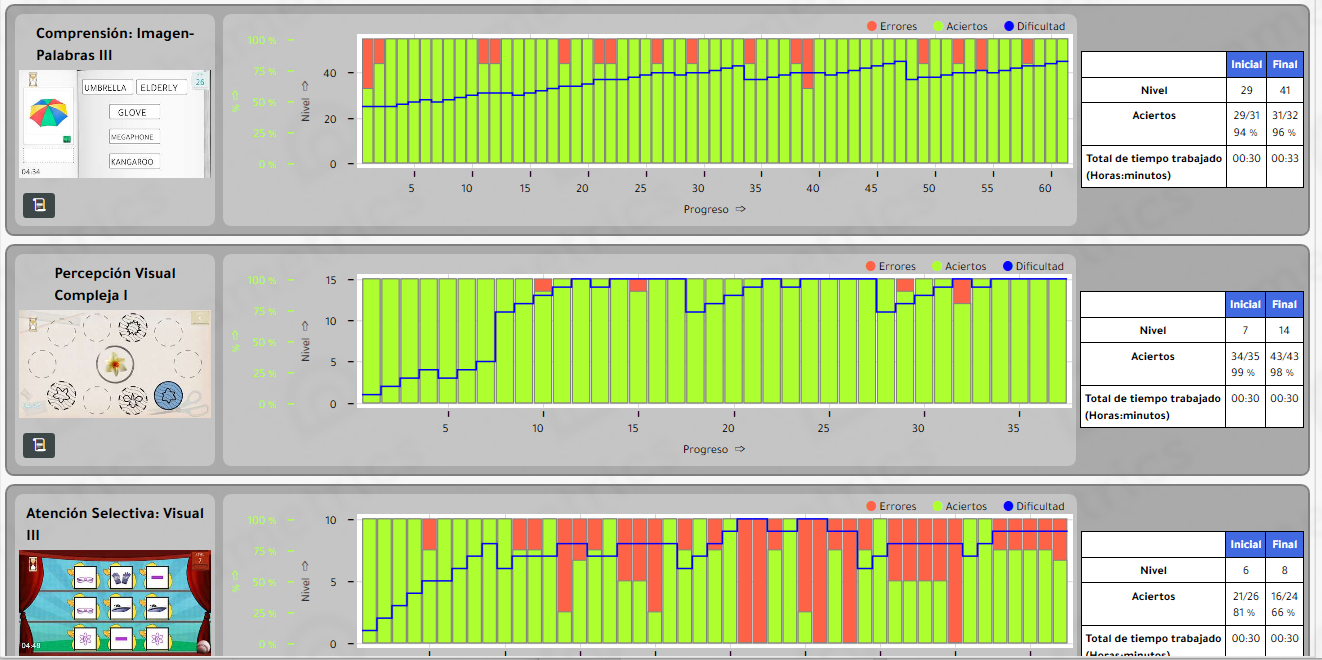
What matters more than a single score is the overall track record:
-
A steep learning curve.
-
Performance stability after reaching a certain level.
-
Reduction in inter-session variability.
In DCL, a gradual reduction in performance variance may be more significant than a sudden increase in accuracy.
2. Indicators of qualitative adherence and self-regulation
In mild cognitive impairment, it is not only the patient’s performance that matters, but also how they engage with the task and the therapeutic process. Digital platforms allow us to observe variables that, when properly interpreted, provide insights into cognitive self-regulation and executive engagement.
Among the indicators with the greatest clinical value are:
-
Regular attendance and completion of sessions.
-
A tendency to give up on tasks when they become more difficult.
-
Excessive or appropriate use of aids.
-
Modulation of response time in response to previous errors.
-
Persistence after an initial failure.
These parameters provide indirect information on:
-
Frustration tolerance.
-
Error monitoring capability.
-
Behavioral flexibility.
-
Level of initiative and planning.
3. Transfer indicators
The true clinical value becomes apparent when the following is observed:
-
Generalization to untrained tasks.
-
Improved organization of core activities.
-
Less need for supervision in daily tasks.
-
Changes identified by the interdisciplinary team.
Sin transferencia funcional, el rendimiento digital pierde relevancia clínica.
How to Interpret Results in Digital Cognitive Therapy
Normal fluctuation vs. actual deterioration
In DCL, it is common to observe variability related to:
-
Sleep quality.
-
Emotional state.
-
Stress load.
-
Cognitive fatigue.
For this reason, it is better to analyze blocks of sessions rather than compare individual sessions.
Early detection of stagnation
A typical pattern in DCL is:
-
Rapid initial improvement due to the practice effect.
-
Extended plateau.
-
A gradual increase in variability.
Identifying this pattern early on makes it possible to adjust goals, modify the intensity, or introduce tasks that require greater executive function.
What data is truly useful in a clinical setting?
In an acute care unit or in outpatient care for chronic liver disease, digital data should address specific clinical questions:
-
Is the patient cognitively stable?
-
Are there any early warning signs of a worsening condition?
-
Is it justified to continue the program?
-
Is it necessary to adjust the intensity or type of intervention?
The following are particularly useful for clinical committees:
-
Quarterly trends.
-
Variability indices.
-
Changes in inhibitory control.
-
Longitudinal within-subject comparison.
It’s not about collecting data, but about selecting the data that influences decision-making.
From Data to Clinical Judgment
Technology does not replace the neuropsychologist’s judgment. It enhances it.
Objective metrics in digital cognitive therapies make it possible to:
-
Continuous monitoring.
-
Detection of microchanges.
-
Dynamic target adjustment.
-
Objective documentation of the follow-up.
But the data needs clinical context. A decrease in reaction time may indicate improved processing… or increased impulsivity. An increase in accuracy may reflect learning… or strategic simplification.
The true value of metrics in digital cognitive rehabilitation lies not in the numbers themselves, but in their interpretation in conjunction with:
-
Conventional neuropsychological assessment.
-
Functional observation.
-
Information about the family environment.
-
Global medical developments.
Conclusion
When it comes to mild cognitive impairment, measuring progress requires looking beyond test scores.
Digital therapies offer a unique opportunity to obtain objective, longitudinal metrics, especially in the executive domain. However, they only acquire clinical significance when:
-
They are analyzed in terms of trends.
-
They are integrated through functional evaluation.
-
They are interpreted from a neuropsychological perspective.
-
They contribute to actual treatment decisions.
The challenge is not to generate more data, but to turn it into useful clinical knowledge. That is where digital cognitive rehabilitation ceases to be a technological tool and becomes a clinical tool.