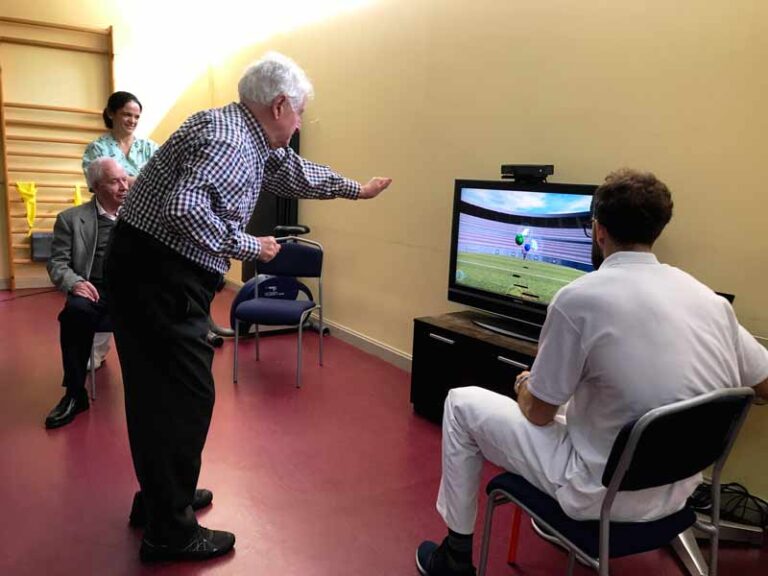
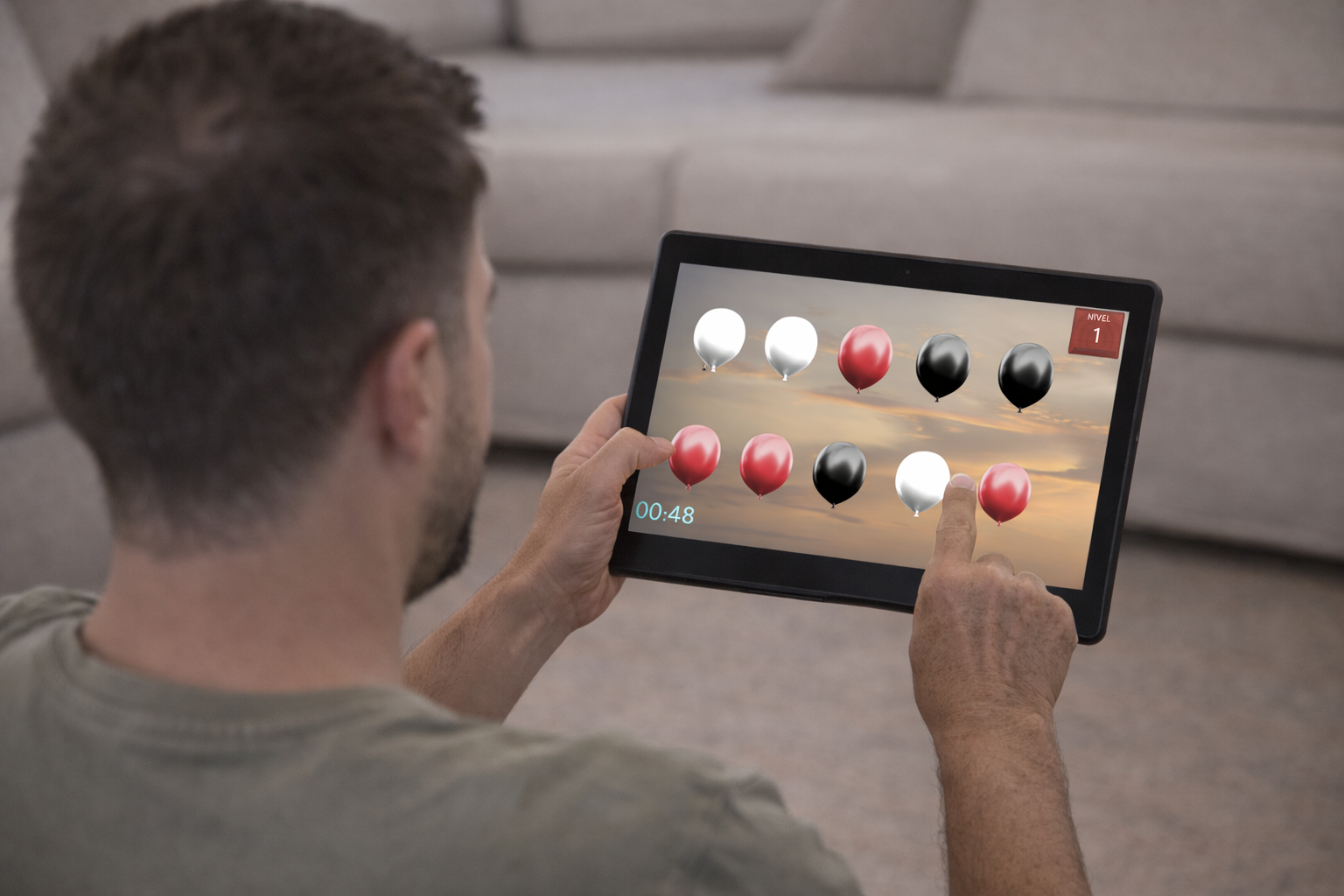
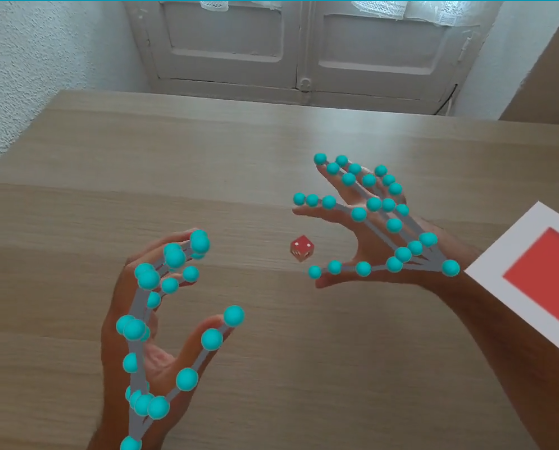
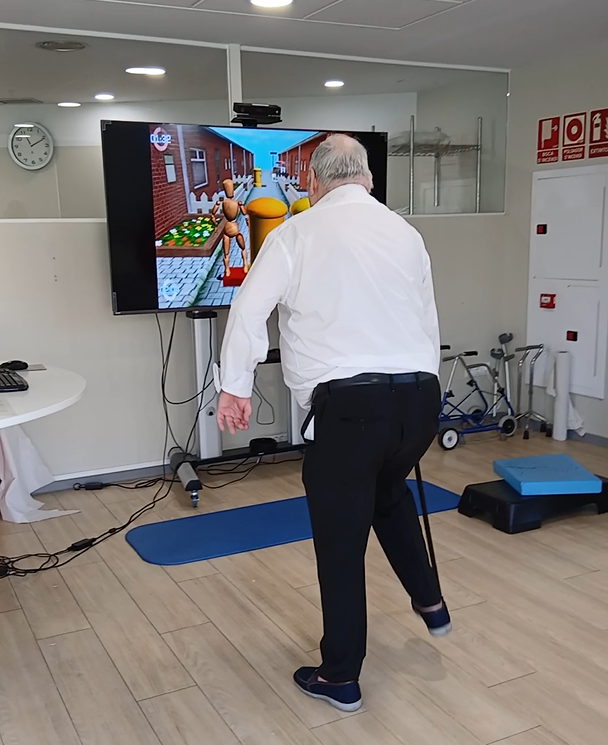
In the clinical setting, the therapeutic approach goes far beyond conventional physical exercise. It is about connecting with the patient, motivating them and getting them to actively participate in their recovery process. The application of virtual reality for elderly patients motivates, rehabilitates and connects generations.
How virtual reality is used with older patients during physical therapy sessions
Virtual reality in rehabilitation uses simulated environments that allow patients to interact in an active and personalized way with tasks specifically designed to address their therapeutic needs. With devices such as VR headsets, motion sensors and software platforms like Rehametrics, professionals can create controlled and monitored rehabilitation experiences.
A physiotherapist shares how using Rehametrics has transformed the way she works in her clinic and improved her patients ‘ engagement.
“When a patient arrives, I always explain what Rehametrics is, the objectives we are going to work on and how we will do it in a fun and visual way. Many come in thinking that certain movements are impossible for them, such as simple squats. But when I propose to them to move a helicopter in the game, they suddenly do it… and at the end they realize that they have done squats.”
Motivation thus becomes an essential driver of treatment:
“I have three patients who come in on Mondays and compete with each other to see who wins the crown in the ranking. They ask for it! They feel competitive, involved and proud of their accomplishments.”
This change in perception is key to progress in rehabilitation. The therapist explains how she structures her sessions:
“First I work conventionally for half an hour, and in the last 15-20 minutes I use Rehametrics as motivation and a tool to consolidate what they have learned. Sometimes it’s hard to introduce new exercises, but with virtual reality they do it without realizing it.”
One of the most striking aspects is the use of virtual reality for elderly patients:
“Many are surprised to be using technology like they see their grandchildren using. Seeing their avatar move or score points gives them a brutal sense of accomplishment. For me, Rehametrics is fundamental to rehabilitation.”
Beyond motivation, virtual reality also favors adherence to treatment in the elderly, a group that traditionally presents greater difficulties in maintaining prolonged therapeutic routines. The recreational component, together with the immediate feedback offered by platforms such as Rehametrics, stimulates the continuity of the exercises and improves the patient ‘s self-esteem. In addition, working in safe and controlled environments , reduces the fear of falling or excessive fatigue, which increases confidence in their own functional abilities.
Also noteworthy is the emotional impact that technology has on the relationship with their family environment. For many older patients, the use of virtual reality is not only a therapeutic novelty, but a way to connect with their grandchildren. Sharing digital experiences, talking about video games, or even showing them what they do in their sessions, creates a generational bridge that improves their mood and strengthens family bonds. In some cases, the grandchildren become the first to take an interest in the grandparent’s progress, which brings an extra dose of motivation and personal pride.
This experience demonstrates that the combination of technology, motivation and personalized therapy can make a big difference. Rehametrics not only enhances physical results, but also improves the patient’s emotional engagement with their recovery and reconnects them with their social and family environment.