
Contraindications for virtual reality in rehabilitation: safety, indications and how to assess each patient
Virtual reality headsets are used today with older adults, with neurological patients and with people in chronic pain, and the question that comes up most before starting is still the same: is this safe for this patient? The answer has three layers. What the literature says about adverse effects, which is reassuring; what the headset manufacturer warns about, which the team needs to know; and what the professional assesses in each person before the first session, which is where almost everything is decided. This article goes through all three and sets out the indications and the contraindications for virtual reality in rehabilitation that Rehametrics brings together in its clinical guide to using headsets with patients.
What the evidence says about the safety of virtual reality
Concern about the safety of headsets comes largely from experience with consumer video games, with artificial motion, long sessions and nobody alongside. Clinical virtual reality bears little resemblance to that, and the literature reflects it. The Cochrane review of virtual reality in stroke rehabilitation, updated in 2025 with 190 trials and more than 7,000 participants, describes adverse effects as few and mild. In older adults, a systematic review published in 2023 in the Journal of the American Geriatrics Society, covering 39 studies of immersive virtual reality, found that almost all of them reported only mild cybersickness, and its authors conclude that the benefits appear to outweigh that risk in this population; and a 2023 review of 1,853 people over 60 documented good acceptance and a wish to repeat.
There is one caveat the same literature points out: cybersickness has almost always been measured with questionnaires designed for healthy people, and a systematic review published in 2025 in the Journal of Clinical Medicine on these assessment instruments warns that very few are validated in neurological populations such as brain injury, multiple sclerosis or vestibular disorders. Put practically: the available data are reassuring, and precisely for that reason the individual assessment beforehand and the observation during the session remain the main safety tool, rather than any list of contraindications for virtual reality in rehabilitation on its own.
What the headset manufacturer warns about
The manufacturer of the headsets most centres use publishes a set of health and safety warnings that the team should have read, because they are the reference a patient or a family may come across on their own. Three parts of it matter in rehabilitation. The first is seizure risk: patterns or flashes of light can cause intense dizziness, seizures or blackouts in a very small proportion of people, which the manufacturer puts at around one in four thousand, with or without any history, and it asks that a doctor be consulted by anyone who has had seizures, loss of consciousness or other symptoms linked to epilepsy. The second is the list of situations in which it recommends prior medical consultation: pregnancy, advanced age, abnormalities of binocular vision, pre-existing psychiatric disorders, heart disease or another serious health condition. The third is the magnetic components in the headset and the controllers, which can interfere with pacemakers, defibrillators and hearing aids, with a recommendation to keep them at a distance and to consult the doctor or the manufacturer of the implanted device.
Those warnings are written for domestic use of the visor, with any content at all. In rehabilitation, what defines the session is the clinical software running on the headset: a programme that is a medical device with CE marking, is designed for patients, does without the flashes and the artificial motion typical of video games, and is directed from outside by a professional. This blog has already set out the contraindications for virtual reality in rehabilitation when using headsets and how to avoid motion sickness; what follows updates and expands both.
Who it is indicated for
Before reaching the contraindications for virtual reality in rehabilitation, it helps to be clear about what headsets are actually for. They serve specific goals, and the indication comes from the goal rather than from the diagnosis. In physical rehabilitation: reaching, coordination, shoulder range of motion and motor speed; in occupational therapy: simulated activities of daily living, praxis and hand work; in cognitive rehabilitation: attention, processing speed and inhibition. These are tasks in which virtual reality adds something the room does not have: a controllable environment, a kitchen or a supermarket nobody has to build, stimuli that appear where the therapist wants them, and a record of every repetition.
The profiles in which they are most used, according to the experience Rehametrics has gathered with its centres, are chronic shoulder pain and kinesiophobia, where the task draws attention away from the pain; stroke in the subacute and chronic phases, with directed activities and the option of personalising the task for the affected side; mild cognitive impairment, with simple stimuli and plenty of orientation; generalised chronic pain, with pleasant sensory experiences and guided relaxation; the older adult with reduced mobility, always seated and in calm environments; and multiple sclerosis and Parkinson's disease, with fatigue and dual tasking as the variables to watch. In every case the decision to use them, with what goal and for how long, depends on each patient and on the team's judgement; these are starting points, not fixed protocols.
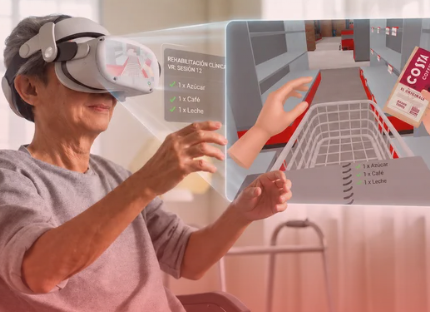
Contraindications for virtual reality in rehabilitation: absolute and relative
The Rehametrics clinical guide separates the situations in which headset use is not recommended from those that call for a case-by-case decision. Among the first are diagnosed photosensitive epilepsy; severe motion sickness with previous experiences of it; severe uncompensated vestibular disorders; moderate or severe cognitive impairment with disorientation or agitation; intense claustrophobia or an unwillingness to wear a device on the head; and active medical crises, whether neurological, cardiac or respiratory. Among the second are mild to moderate anxiety, uncorrected visual disorders, recent acute pain, and extreme fatigue or a compromised general condition.
Two of them deserve a clarification, because they are the two most often misread as blanket contraindications for virtual reality in rehabilitation. Vestibular disorders appear on the list when they are severe and uncompensated; virtual reality is in fact used in vestibular rehabilitation in selected patients, so the line is drawn by the state of compensation and by the judgement of whoever is treating, not by the diagnosis in itself. And cognitive impairment is a contraindication when there is disorientation or agitation, not because of the diagnosis: the document includes mild cognitive impairment among the usual profiles of use, with simple stimuli and plenty of orientation. To these lists are added the manufacturer's warnings from the previous section, in particular implanted devices and a history of seizures.
The initial assessment: is this patient a candidate?
Before the first session, the guide proposes going through six variables, which fit into a minute of conversation and a glance at the notes. The clinical history, with no photosensitive epilepsy and none of the other contraindications above. Cognitive state: the person understands instructions and shows no confusion or severe disorientation. Physical state: they can sit without risk of falling, which is the position you start in. History of motion sickness: no record of severe sickness in a car, on a boat or with screens. Emotional state: no severe anxiety or claustrophobia. And clinical state: a stable phase, with no acute pain.
There is also one piece of advice beforehand that has more effect than it sounds: that the professional try the experience themselves before using it with patients, to get to know the scene, the type of interaction, the duration and the physical or cognitive load it involves. Someone who has felt what the patient feels anticipates reactions better, explains what is going to happen better, and responds better when something goes wrong. The article on how to explain technology to patients and their families develops what to cover before starting.
The first sessions, and what to do if discomfort appears
Most of the safety is decided by how you start, which is why the contraindications for virtual reality in rehabilitation are only half the picture. The recommended progression begins with the gentlest option: the headset is fitted with the patient seated, well adjusted to the head, because a correct fit improves sharpness and reduces the risk of motion sickness; the first contact is made with no application running at all, with the room visible through the cameras, so the person gets used to the sensation of the device; the first activities are set up in mixed reality, with the real room visible, or calm visual-tracking environments are chosen; and the initial sessions are short, with continuous supervision and verbal encouragement, before moving on to tasks that demand more. For the most sensitive people, a phased escalation is described, from passive exploration to simple visual tracking and from there to a brief functional activity with no time pressure, repeating each phase if any discomfort appears. This blog explained why mixed reality can reduce motion sickness compared with full immersion.
If discomfort does appear even so, the protocol is simple and the whole team should know it: pause the scene immediately, remove the headset gently, reorient the person verbally ("you are here with me, it has finished"), validate what they have felt ("that felt strange, it is normal, take a rest") and do not resume in that session, leaving a more gradual progression for the next one. At the end of any session, with or without incidents, asking how the person felt and writing it down is what makes it possible to adjust the next one.
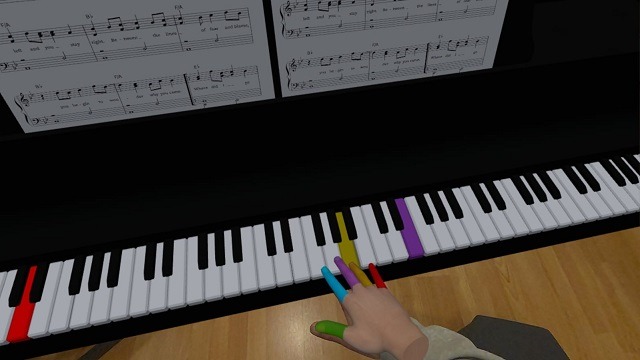
Hygiene, prescription glasses, hearing aids and other practical details
The questions that come after the contraindications for virtual reality in rehabilitation are more domestic, and they count towards safety too. Prescription glasses fit inside a Meta Quest without any trouble, and the image has to look sharp before you start, because a blurred image tires the eyes and encourages motion sickness. Hearing aids can be worn, bearing in mind the magnetic components the manufacturer flags and checking that the head strap is not pressing on them. Hygiene between patients has simple published protocols, such as the one described in a 2022 study in JMIR on disinfecting visors in a clinical setting, with washable or disposable facial interfaces and cleaning of lenses and controllers between uses; the manufacturer's warnings include a section on contagious illness and skin irritation that points the same way. And space: the first sessions are done seated, and when the person works standing you need a clear area and the therapist nearby, as with any other balance task.
How Rehametrics VR approaches it
Rehametrics VR is a Class I medical device with CE marking, with Rehametrics registered as manufacturer with the Spanish Agency for Medicines and Medical Devices, and it runs on Meta Quest 2, 3 and 3S. Several of its features answer the points above directly: activities can be set up in mixed reality, with the room visible through the visor, which is what the guide recommends for the first sessions and for sensitive patients; hand tracking removes the controllers, so the person interacts with their own hands without learning a control scheme; activities can be done seated and can be personalised, for example by disabling the unaffected hand in order to work the affected one; and the therapist runs the session from an external computer with a mirrored screen, seeing at all times exactly what the patient sees, which is the condition for catching any sign of discomfort in time. Every session is recorded, so observations about tolerance are kept alongside performance.
The indications, the contraindications for virtual reality in rehabilitation and the initial assessment criteria in this article come from the clinical guide to using virtual reality headsets with patients that Rehametrics provides to the centres it works with, along with team training. More than 70 physical, cognitive and functional activities, with more than forty clinical studies behind the platform.
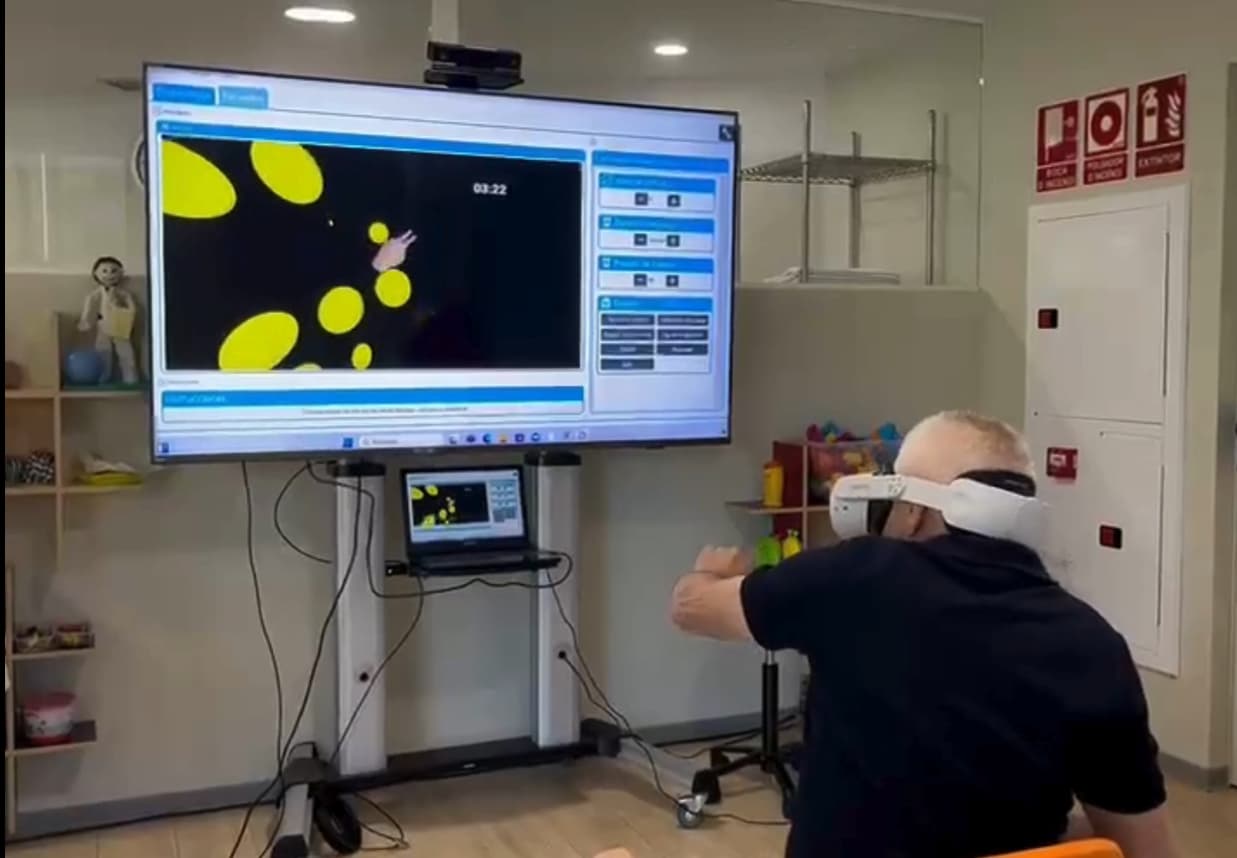
Mixed reality, hands without controllers and a mirrored screen
More than 70 activities on Meta Quest, configurable in mixed reality and directed from the therapist's computer.
View module →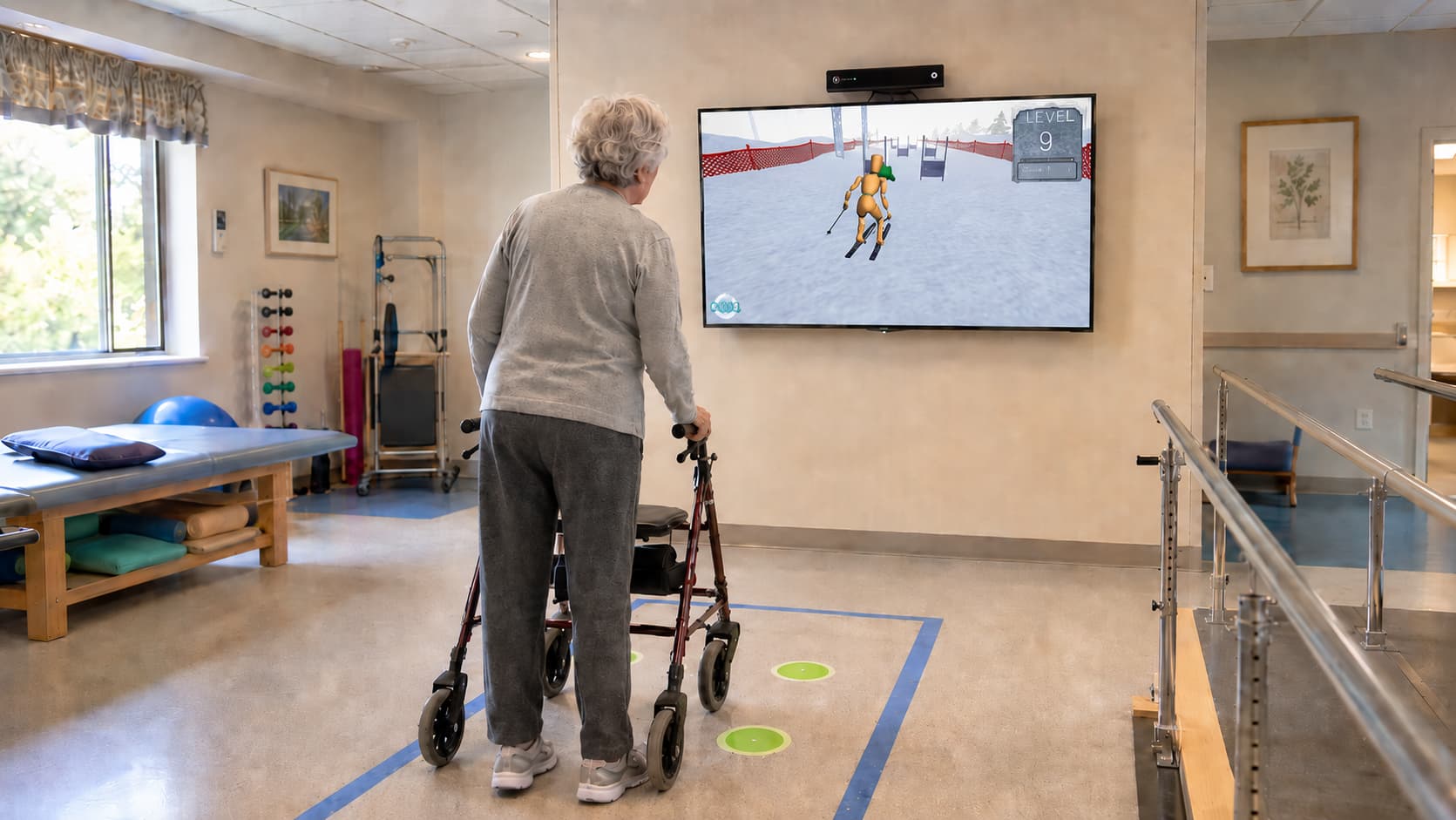
No headset: motion capture in front of the screen
More than 120 exercises with a sensor or a webcam, for anyone with a contraindication to headsets or who would rather start without them.
View module →
Cognitive stimulation on tablet and whiteboard
More than 190 exercises with every response recorded and per-patient reports.
View module →Frequently asked questions
Do virtual reality headsets make older patients feel sick?
The 2023 review of immersive virtual reality in older adults found that almost all studies reported only mild cybersickness, and acceptance in this population is high. Starting seated, with the headset well fitted, in mixed reality and with short sessions is what reduces the risk most; the person with a history of severe motion sickness is the one to assess most carefully.
Can they be used with a pacemaker or hearing aids?
The manufacturer warns that the headset and controllers contain magnets that can interfere with pacemakers, defibrillators and hearing aids, and recommends keeping them at a distance and consulting the doctor or the manufacturer of the implanted device before use. With hearing aids, use is routine, checking that the head strap is not pressing on them; with an implanted device, the decision belongs to the doctor.
Can they be used with cognitive impairment?
It depends on the degree and, above all, on how the person is. Rehametrics includes mild cognitive impairment among the usual profiles, with simple stimuli and plenty of orientation, and lists moderate or severe impairment as a contraindication when there is disorientation or agitation. What gets assessed is the ability to understand instructions and to say if something is uncomfortable.
What are the contraindications for virtual reality in rehabilitation if the patient has epilepsy?
Diagnosed photosensitive epilepsy is an absolute contraindication, and the manufacturer asks for prior medical consultation in the case of any history of seizures or loss of consciousness. Clinical software avoids the flashes and patterns that create that risk in video games, but the decision in a person with epilepsy belongs to their doctor.
Does the therapist need to be present for the whole session?
In the first sessions, yes, with continuous supervision. After that, the degree of autonomy depends on each patient and each team, and the mirrored screen lets the professional see the same thing the person sees from their own computer, which is how to catch any sign of discomfort in time without hovering.
Want to see what a safe first session looks like?
We will show you mixed reality, hand tracking and the mirrored screen in action, and tell you how the centres already working with Rehametrics VR assess and support their patients.