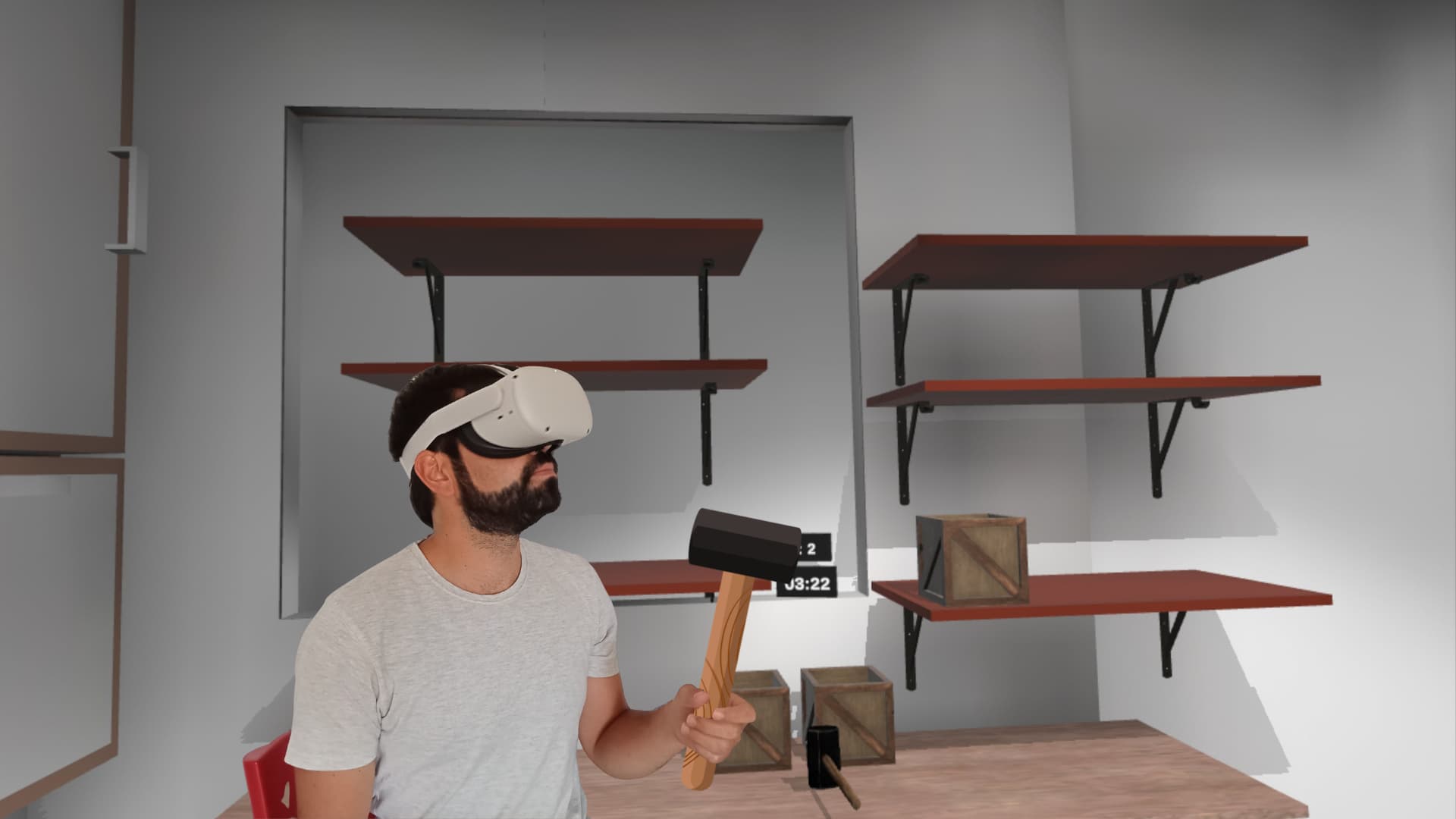
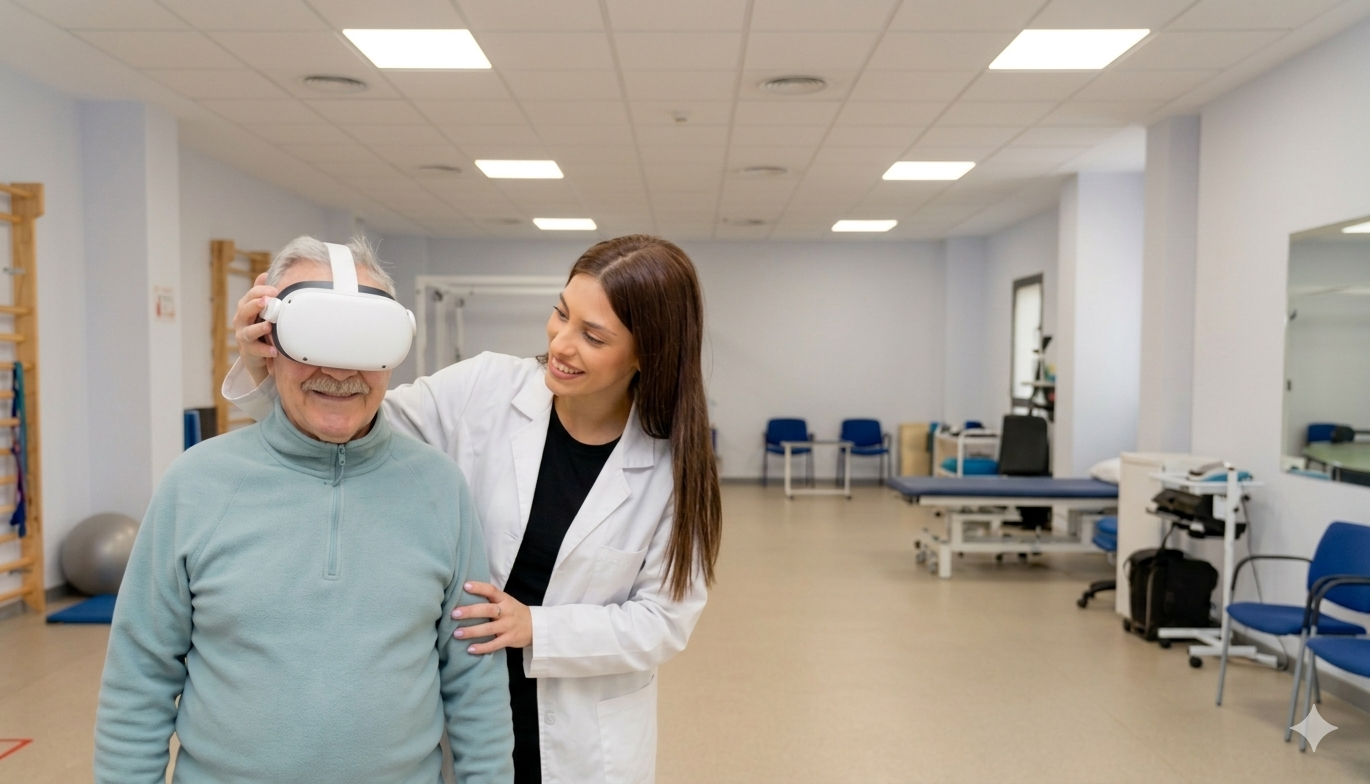
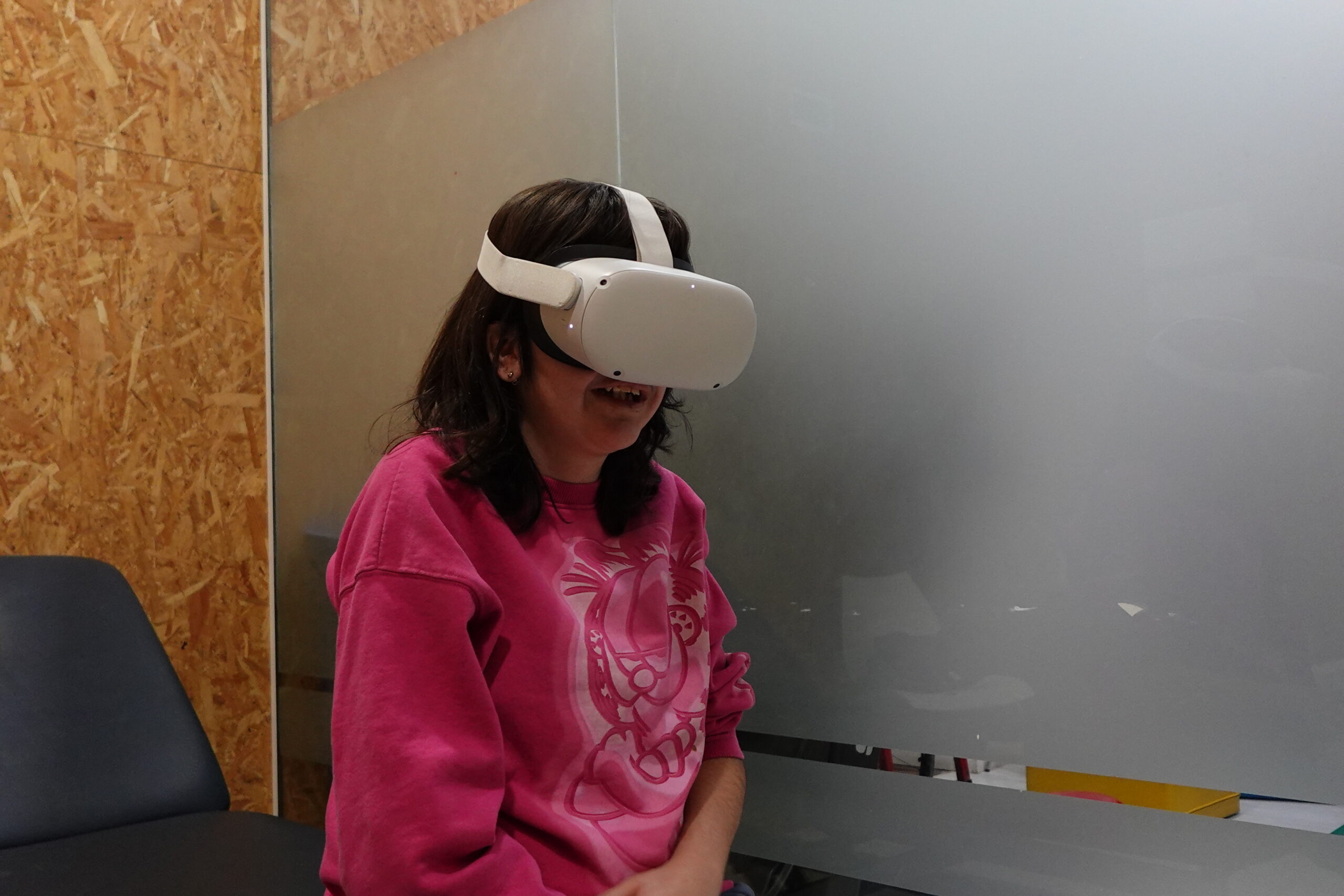
Immersive virtual rehabilitation in healthcare: clinical applications of virtual reality
Immersive virtual rehabilitation is a therapeutic approach that uses virtual reality headsets to immerse the patient in three-dimensional environments where they perform exercises designed according to clinical criteria. This immersion simultaneously activates the neural networks involved in motor learning, balance and cognition, and enables objective performance metrics to be recorded in real time.
- More than a decade of scientific evidence
- Applications in stroke, Parkinson’s disease, balance and musculoskeletal rehabilitation
- Compatible with standalone headsets such as the Meta Quest
- Increasing use in hospitals and rehabilitation centres
What is immersive virtual rehabilitation?
In rehabilitation, the term ‘virtual reality’ encompasses a range of technologies with varying levels of immersion and different clinical applications. The headset immerses the patient in a three-dimensional environment where each exercise is designed according to clinical criteria, rather than for entertainment purposes.
| Technology | Features | Common clinical use |
|---|---|---|
| Immersive virtual reality | Use of virtual reality headsets and fully immersive experience | Neurorehabilitation, upper limb, pain, motor training |
| Mixed reality (MR) | Combines real environment and virtual elements | Functional and cognitive rehabilitation |
| Non-immersive virtual reality | Interaction via conventional screen | Balance, gait, lower limbs |
The choice depends on the patient’s profile, the therapeutic objectives and the clinical context.
Mixed reality, driven by devices such as the Meta Quest 3, is becoming particularly important in therapies where maintaining a visual reference to the surroundings improves safety and functionality.
From consumer virtual reality to clinical rehabilitation
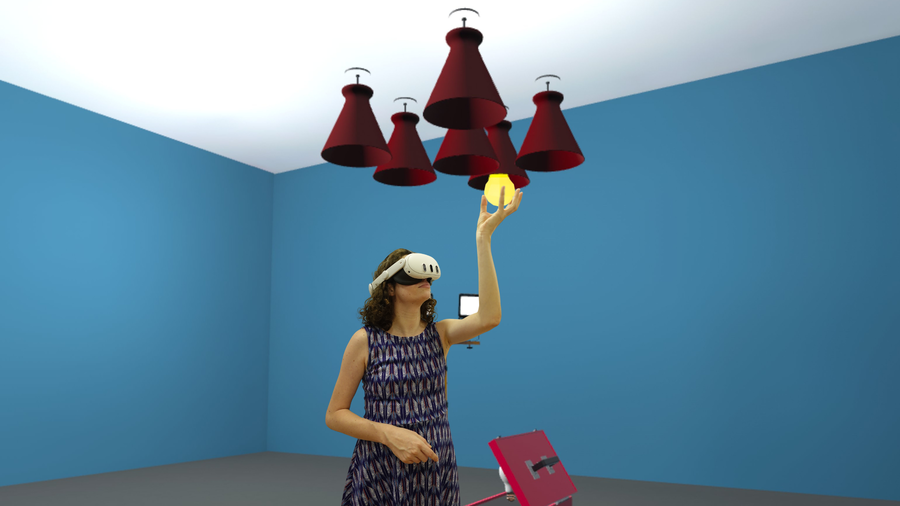
The popularization of standalone headsets like Meta Quest has accelerated the adoption of virtual reality in healthcare. However, hardware alone does not constitute a therapeutic solution.
Clinical utility depends on the software used, the capacity for therapeutic customization, the collection of objective metrics, and integration into the center's clinical workflow. Currently, two types coexist:
Recreational applications or adapted video games
Designed for entertainment, without clinical objectives or therapeutic metrics.
Platforms designed specifically for clinical rehabilitation
With clinical criteria, therapeutic customization, and objective metrics, such as Rehametrics.
Platforms like Rehametrics belong to the second group and allow for the transformation of consumer devices into tools applicable to neurological, physical, and home-based rehabilitation.
How does virtual reality therapy work?
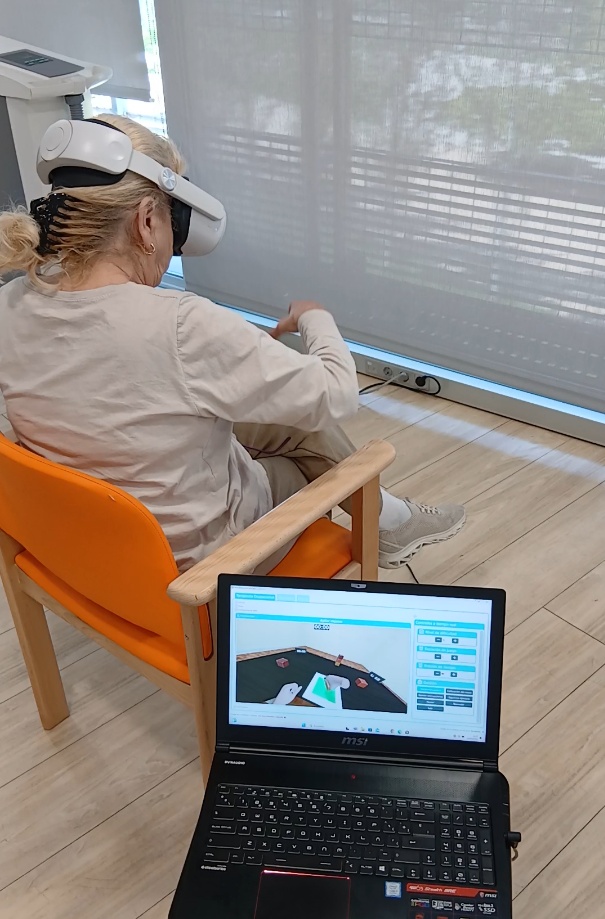
A functional therapy room can now be set up using virtual reality headsets and specialised clinical software. The patient performs functional exercises, such as a simulated shopping trip in a virtual supermarket, whilst the software records repetitions, accuracy and times in real time.
🥽
Virtual reality headsets
Devices such as Meta Quest 2, Meta Quest 3, and 3s have become the most widespread standard thanks to:
Wireless and computer-free operation
Integrated head and hand tracking
Hand tracking without external sensors
Relatively accessible cost for healthcare centers
Meta Quest 3 and 3s also add advanced mixed reality capabilities.
💻
Specialised clinical software
Virtual reality headsets alone are not therapy. Clinical functionality depends on the software used. Platforms like Rehametrics incorporate:
Therapeutic exercise libraries
Customization by pathology and patient
Real-time objective metrics
Clinical dashboards
Continuity between the clinic and home
What is an immersive rehabilitation session with Rehametrics like?
Sessions usually last between 20 and 40 minutes, although this may be adjusted depending on the patient’s condition, functional level, cognitive or motor fatigue, and the therapeutic objectives set by the clinical team.
The therapist selects the exercises in accordance with the individual treatment plan, adjusts parameters such as difficulty, duration and range of motion, and monitors performance via the clinical dashboard whilst the patient interacts with the virtual environment.
At the end of the session, Rehametrics records objective metrics and performance data that facilitate clinical monitoring and tracking of the patient’s functional progress.
Selection of exercises in accordance with the treatment plan
Adjustment of difficulty, duration and working ranges
Real-time monitoring via the clinical dashboard
Automatic logging of metrics upon completion
A detailed clinical report is generated at the end of the session
View the Rehametrics VR module »
Benefits of immersive virtual reality
Immersion, immediate feedback and the automatic recording of metrics are what set virtual reality apart from conventional approaches.
Greater patient adherence and motivation
The immersive nature and controlled recreational element of virtual reality significantly increase adherence.
Real-time feedback and objective metrics
The software automatically records every movement: range of motion, speed, symmetry, reaction times and effective repetitions. This converts the patient’s progress into comparable longitudinal data.
Stimulation of neuroplasticity and motor learning
Immersive environments fulfil the three recognised principles for inducing practice-guided neuroplasticity: high repetition, immediate feedback and task specificity
Reduction in treatment times and costs
A room equipped with VR headsets and clinical software can be used by different patients simply by changing the hygiene pad, without any downtime for set-up, and allows the treatment plan to be adjusted with greater precision and less administrative burden.
Clinical applications
Immersive virtual reality is now used across a wide range of clinical settings.
🧠
Stroke and acquired brain damage
This is the field with the greatest volume of published scientific evidence, particularly regarding upper limb motor function and activities of daily living.
🧬
Parkinson’s and neurodegenerative diseases
Applications in gait training, balance training and cognitive-motor dual-task training.
🦴
Musculoskeletal rehabilitation
For use on the shoulder, hand and in post-surgical rehabilitation.
⚖️
Balance and fall prevention
This is particularly relevant in geriatrics and for patients with vestibular or neurological conditions.
🧒
Paediatrics and neurodevelopment
Interactive environments increase patient engagement and adherence to treatment.
🏠
Potential for home-based rehabilitation
The portability of virtual reality headsets makes it easier to hold sessions at home.
Use cases and centres of excellence
Immersive virtual reality is now used across a wide range of clinical settings.
SEE MORE
Virtual reality in neurorehabilitation: clinical indications, limitations and criteria for use
Read the article →
Virtual reality versus conventional therapy in geriatrics and care homes: evidence and clinical application
Read the article →
Work-based training for people with brain injuries: VR workplace simulation and functional tasks
Read article →
Frequently asked questions about immersive virtual rehabilitation
It is a therapy that uses virtual reality headsets to immerse the patient in three-dimensional environments where they perform clinically designed exercises, with real-time objective metrics. It is used as a complement to conventional treatment, not as a substitute.
Mainly stroke, acquired brain injury, Parkinson's disease, orthopedic rehabilitation (knee, hip, shoulder, hand), chronic pain, anxiety, and neurodevelopmental disorders in pediatrics. The strongest evidence is concentrated in neurorehabilitation.
For the Physical Module, you need a computer with Windows 10 (64-bit), a display of at least 42 inches, and a Kinect camera or webcam, depending on the version. For the Cognitive Module, a computer or tablet is sufficient. For Immersive Rehabilitation, a Meta Quest 2, 3, or 3S headset is also required. No special infrastructure or complex integration is needed.
Contraindications are limited: uncontrolled photosensitive epilepsy, severe vertigo, or certain active vestibular conditions. During prolonged sessions, mild eye fatigue or motion sickness may occur, which can be managed by adjusting the duration and type of exercise.
No, it complements it. Evidence supports its use as a high-intensity, high-repetition addition to conventional treatment, not as a replacement for the therapist's work.
Yes. Adoption among the elderly population is high when the software is well-designed and the therapist assists during the first uses. Lightweight headsets with pancake lenses, such as the Meta Quest 3, are especially comfortable for prolonged use.
Serious clinical platforms (including Rehametrics) comply with GDPR and the requirements applicable to medical devices. The headset alone is not a medical device; the combination of hardware + validated clinical software is.
Yes. One of the great advantages of the standalone headset is its portability: the same software allows for extending therapy to the home under the clinician's remote supervision, significantly increasing the patient's volume of practice.
Would you like to introduce immersive virtual rehabilitation at your centre?
Request a personalised demo with a Rehametrics clinical specialist. We’ll show you live how the software integrates with a Meta Quest headset and how it can be tailored to the types of patients you treat at your clinic.