
VR MODULE
Virtual reality software for rehabilitation
Deliver immersive rehabilitation through virtual and mixed reality with objective tracking. Access 70+ exercises for upper limb, hand, cognitive training and functional activities, with markerless hand tracking and no controllers, sensors or gloves. Designed for physiotherapy, occupational therapy and neurorehabilitation.
Try it free for 7 days · No credit card · No commitment
https://youtu.be/02g0_iQDjuY
The limitations of conventional therapy
Traditional clinical practice presents three barriers that compromise therapeutic outcomes:
Reduced adherence
Repetitive manipulation tasks demotivate patients and increase treatment dropout
Limited monitoring
Assessing manipulative performance in real time depends on the therapist’s direct observation
Slow personalisation
Manually adjusting the difficulty of each task during a session disrupts the therapeutic flow
Rehametrics VR addresses all three with a single integrated system.
What is the Rehametrics VR Module
The Rehametrics VR Module is designed for immersive upper limb rehabilitation and activities of daily living (ADL) training. It combines therapeutic exercises, functional tasks and standardised assessments to support sensorimotor recovery, coordination, manual dexterity, motor control and patients’ functional independence in meaningful real-world contexts. It is designed for use in occupational therapy, neurorehabilitation and physiotherapy.
Through immersive virtual reality and mixed reality, patients interact naturally with virtual objects and environments using hand tracking – no controllers, sensors or gloves required. Compatible with Meta Quest 3 and Quest 3S, the system automatically adapts exercise difficulty to the patient’s performance to maintain an optimal level of therapeutic challenge.
In five steps, from assessment to report:
Define clinical objectives based on the patient’s motor and functional profile
Select exercises adapted to their condition and manipulative capacity
The patient works with the headset, the therapist visualises in real time from their computer exactly what the patient sees
Difficulty adjusts automatically or manually during the session without interrupting it
A detailed clinical report is generated at the end of the session, including standardised assessments (BBT and 9HPT)
Result: more immersive, more measurable therapy, fully adapted to the patient.
What you can treat
Rehametrics VR adapts to multiple clinical profiles and conditions, in-clinic or at home, from the first session to discharge.
Stroke and Acquired Brain Injury
Functional recovery of the upper limb in patients with hemiparesis following stroke, traumatic brain injury or acquired brain injury. Immersive environments support intensive repetition of goal-directed movements and enhance treatment adherence.
Spinal Cord Injury
Training of reach, manipulation, coordination and upper limb function in patients with cervical or incomplete spinal cord injury. Exercises can be adapted to each patient’s motor level and preserved abilities.
Parkinson’s Disease
Specific programmes to address range of motion, speed of execution, coordination and manual dexterity. Virtual reality enables more intensive and motivating practice to address bradykinesia and functional limitations.
Multiple Sclerosis
Interventions aimed at improving coordination, motor precision, movement control and upper limb function, with automatic difficulty adaptation to the patient’s clinical status.
Hand Trauma and Hand Surgery
Recovery following fractures, tendon injuries, nerve injuries or surgical procedures. Exercises promote fine dexterity, digital mobility, precision and functionality in everyday activities.
Upper limb sports injuries and tendinopathies
Rehabilitation of shoulder, elbow, wrist and hand following surgery, trauma or degenerative conditions. The system enables work on mobility, coordination and functional recovery through progressive, measurable exercises.
Cerebral Palsy and Paediatric Neurology
Functional upper limb training through gamified activities adapted for children and adolescents. The immersive experience increases motivation and facilitates active participation during therapy.
Active Ageing and Functional Prevention
Programmes aimed at maintaining manual dexterity, eye-hand coordination and functional independence in older adults, promoting healthy active ageing.
Activities of Daily Living (ADLs)
Targeted work on functional tasks such as reaching, object manipulation, bimanual coordination and motor sequencing, with the goal of improving independence in everyday activities.
What Does the VR Module Cover?
The VR Module works on sensorimotor recovery of the upper limb, manipulative dexterity and functional independence – with objective monitoring of every variable, no prior calibration, without interrupting the session.
Digital pinch
Eye-hand coordination
Gross and fine motor skills
Activities of daily living
Praxis
Attention and memory
Executive functions
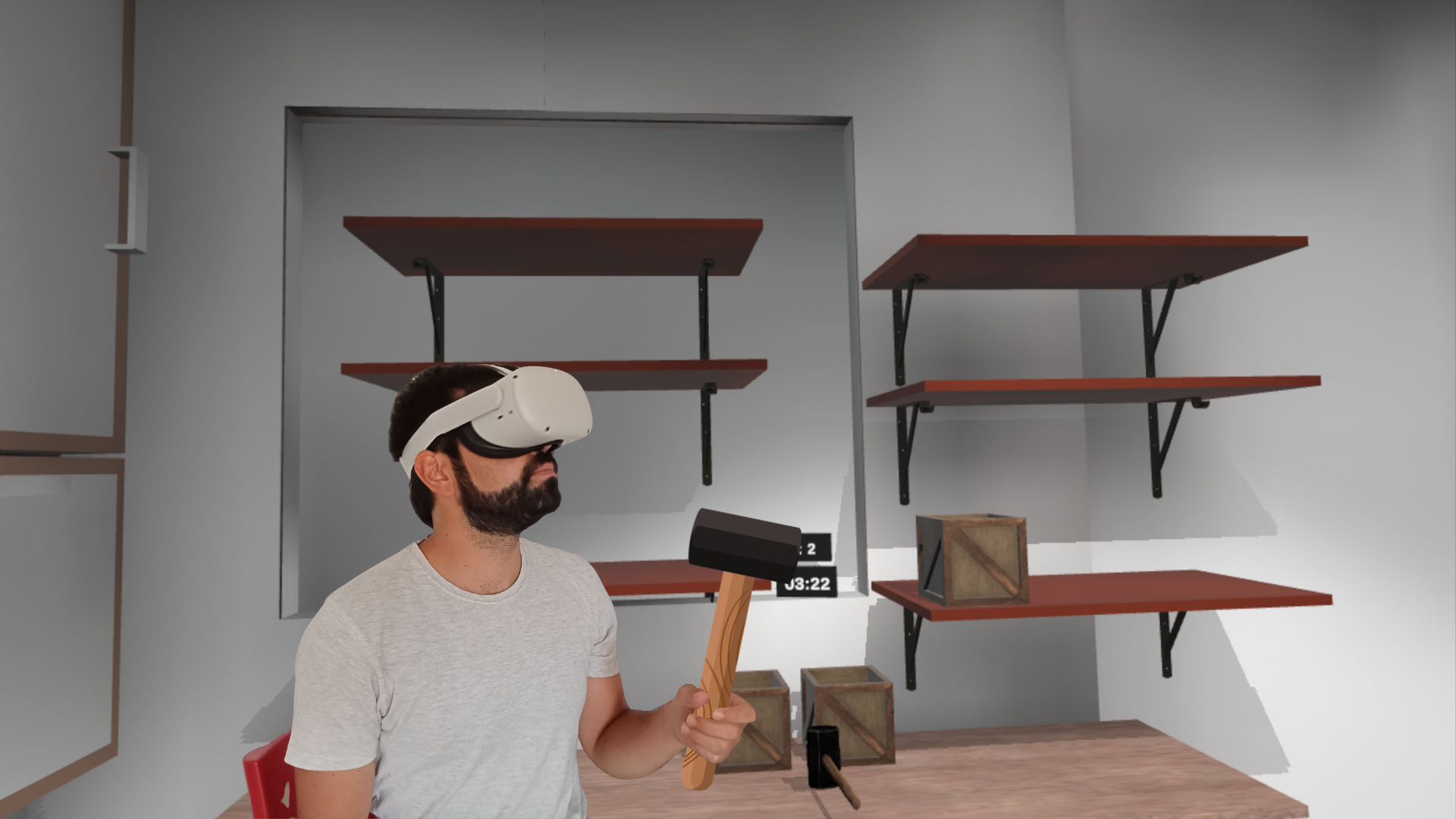
See Rehametrics VR in action
Discover how occupational therapists and neurorehabilitation professionals use the virtual reality headset to design personalised sessions, record motor performance and generate automatic clinical reports, all in real time.
Request your free demo
https://www.youtube.com/watch?v=DLGiYeSgDq0
Results that matter
Every session becomes data. Every data point, a better-informed decision.
For the patient
-
Greater adherence thanks to motivation -
Immediate feedback -
Faster, more visible functional improvement -
Pain and Kinesiophobia management
For the professional
-
Objective data every session, no manual recording -
Continuous and exportable monitoring -
Automatic reports ready for the clinical record -
Precise adjustment of difficulty and exercise parameters
https://www.youtube.com/watch?v=cUtEFcD7AE0&t=114s
Professional opinions
“Digital rehabilitation and virtual reality have become an essential part of our frailty programme. The technology helps patients stay engaged with rehabilitation both inside and outside the clinic, improving adherence while allowing us to personalise therapy to each person’s functional, cognitive and emotional needs. We’ve seen meaningful improvements in mobility, balance and independence, even in patients with cognitive decline, Parkinson’s disease and severe disability.”
Marta Pasciasio Roura
Physiotherapist · Fundación Sanitaria de Mollet
More than 450 centres already work with Rehametrics



















Who it’s for
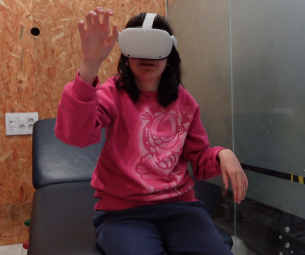 Occupational therapists in private clinics or hospital units
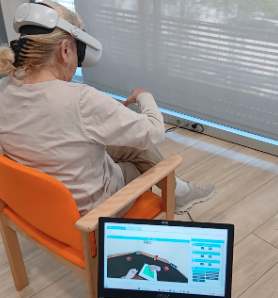 Acquired brain injury and neurorehabilitation units
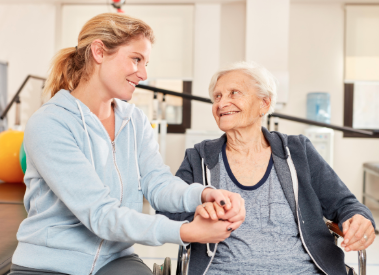 Upper limb musculoskeletal rehabilitation services
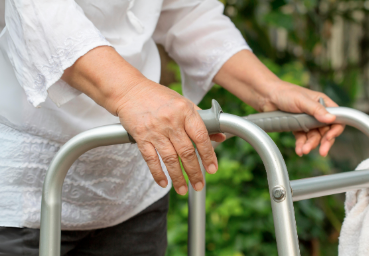 Day centres and care homes with functional stimulation programmes
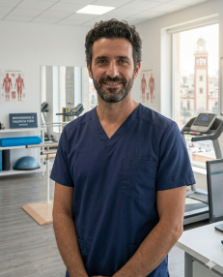 Professionals looking to differentiate themselves with high clinical-impact technology
Request a demo
Data that supports the system
Clinicians across specialities already use Rehametrics VR in their daily practice.
30%
Increase in therapeutic activity
Centres using Rehametrics report 30% more therapeutic activity per session compared with conventional rehabilitation.
89%
Greater engagement in therapy
89% of patients show greater motivation and active participation during Rehametrics exercises.
100
Clinical variables per session
More than 100 biomechanical and functional variables recorded automatically in every session, with no manual input from the clinician.
Straightforward implementation
No need to renovate your space or undergo extended technical training. The system is intuitive from the very first use, for the professional and for the patient.
🥽
Virtual reality headset
Meta Quest 2, Quest 3 or Quest 3S, no controllers, no gloves, no additional accessories
Therapist’s computer
Real-time visualisation and control of the session from the professional’s screen
No additional infrastructure
Quick to install, compatible with the space you already have: clinic room, therapy room or home
BBT
Box and Block Test
Standardised manual dexterity assessment included in the system
9HPT
Nine-Hole Peg Test
Objective measurement of fine coordination integrated into every report
💡
Practical recommendation
Suitable for patients at any level of mobility, whether standing, seated, or lying down.
Start measuring what your rehabilitation can achieve
No controllers. No calibration. No changes to the space you already have. Talk to our team, get your clinical questions answered and see the system in action in a live demo tailored to your patient profile.
CE-marked medical device. Clinically designed and validated for supervised professional use.
Resources for rehabilitation professionals
Clinical articles, usage guides and case studies to get the most out of digital treatment.
Types of virtual reality in rehabilitation: immersive vs non-immersive
Read more
Exercise intensity in digital therapy
Virtual reality in paediatric rehabilitation: clinical applications and use of digital platforms
Frequently asked questions
Yes. Rehametrics VR is a CE-marked medical device, clinically designed and validated for use under the supervision of healthcare professionals.
No. The system guides the patient with simple instructions throughout the session — no prior knowledge or learning curve required.
Yes. The professional prescribes the programme and the patient can continue from home with the headset, maintaining remote monitoring from the platform.
Range of motion, manual dexterity, response time, performance in activities of daily living (ADLs), and progress from session to session, including results from the standardised Box and Block Test (BBT) and Nine-Hole Peg Test (9HPT).
No. It complements and enhances conventional therapy — adding immersion, objective data and greater therapeutic intensity without replacing the clinician’s judgement.