
How virtual reality enriches the therapeutic environment
The idea that the environment in which someone rehabilitates influences how much they recover has been in the basic research for decades, and it has begun to reach stroke units and neurorehabilitation centres, with plenty of questions still open. We review what is meant by an enriched environment, what the recent literature says about applying it with patients, and why a virtual reality enriched environment is increasingly seen as a practical way to bring it into the therapy room.
What an enriched environment is
The concept comes from experimental neuroscience. An enriched environment is one that offers more sensory stimulation, more opportunities for movement, more cognitive challenge and more social interaction than the standard setting. In animal models, subjects recovering from a brain lesion in a space with objects to explore, wheels, tunnels and company show more cortical plasticity and better functional recovery than those recovering in an empty cage.
Translating that idea to people has a fairly direct reading. The standard environment of a stroke unit or a rehabilitation centre is, for the patient, a room, a corridor and a therapy room where they spend part of the day; the rest of the time is often spent sitting or lying down, with no stimulation and no activity. Enriching it means giving access to more physical, cognitive and social activities outside the formal sessions, and making the space itself invite people to use them.
From the laboratory to the stroke unit
The leap from the laboratory cage to the hospital is not straightforward, and the recent literature is honest about it. A systematic review by Anåker, Kevdzija and Elf (2024), published in HERD, analysed how the enriched environment has been defined and applied in stroke units. Of 336 studies reviewed, only 11 met the criteria, and the main conclusion is that the concept is hard to pin down: in practice it almost always comes down to giving access to individual and communal equipment for doing activities, with no shared definition and no clear theoretical basis. The authors call for more precise definitions and for broader interventions that include the design of the built and natural space.
A more recent review by Norwood and colleagues (2025), in Disability and Rehabilitation, summarises what the research attributes to environmental enrichment in rehabilitation after brain injury: greater engagement in rehabilitation, fewer disruptive behaviours and fewer depressive symptoms, more social relationships, better cognitive functioning, less stress and less boredom. The authors also note that, despite those benefits, actual implementation in neurorehabilitation is still scarce, and that current healthcare design prioritises safety and efficiency over an environment that supports recovery.
What the recent literature shows in patients
Putting the two reviews above together, the picture in patients has three features. The first is that the available studies mostly measure how active the patient becomes and how they feel, and less often how much they recover. The second is that the interventions described share a pattern: they put within the patient's reach activities they can do on their own or in a group between therapy sessions, from board games and reading to consoles, tablets and communal spaces. The third is that the effect depends heavily on someone on the team driving it; equipment alone, sitting in a room, changes nobody's behaviour.
There is also a practical consideration that appears in almost every paper. An inpatient's day has many hours outside the formal session, and it is those hours that an enriched environment sets out to use. Formal therapy stays as it is; what changes is that the hours around it stop being empty time.
The virtual reality enriched environment
The link between virtual reality and environmental enrichment is made explicit by the researchers themselves. In the systematic review by Hao and colleagues (2023) on virtual reality in the first month after stroke, published in Physiotherapy Theory and Practice, the starting point is precisely that virtual reality can create an enriched environment, support task-specific training and deliver multimodal sensorimotor feedback, which are the ingredients neuroscience associates with experience-dependent plasticity. Across 17 good-quality trials, virtual reality proved feasible in the acute phase and obtained functional results comparable to conventional rehabilitation, with no significant differences in upper limb function, activities of daily living, balance or cognition.
The same group had earlier reviewed what happens in the brain. Hao and colleagues (2022), in Archives of Physical Medicine and Rehabilitation, brought together 27 studies with neuroplasticity measures before and after virtual reality interventions in people with stroke. The most frequently repeated findings were improved interhemispheric balance, greater cortical connectivity, larger cortical representation of the muscles on the affected side and more activation of frontal regions, and those changes correlated with functional improvement. These are small studies (232 participants in total) with heterogeneous designs, so they describe a plausible mechanism rather than definitive proof.
For the clinical effect, the reference is the Cochrane review by Laver and colleagues, updated in 2025, with 190 trials and 7,188 participants with stroke. Its reading fits the idea of a virtual reality enriched environment well: virtual reality adds little when it replaces another therapy at equal time (SMD 0.20 for the upper limb, low certainty) and considerably more when it is added to usual therapy (SMD 0.42, moderate certainty; 0.68 for balance, low certainty). It pays off above all when it extends what the patient does, which is exactly what an enriched environment is after.
What a virtual reality enriched environment adds, compared with a room containing board games and a console, is that the extra activity can be therapeutic, gradable and recorded all at once. A board game entertains; a task in virtual reality entertains and, on top of that, demands a reach at a particular height, a response to a stimulus or the maintenance of balance, and leaves a record of what happened. That said, the studies also show that novelty wears off if the content does not vary, and that technology on its own does not replace the social side of enrichment.
What changes in the therapy room
Beyond the studies, there are some effects that centres working with virtual reality describe in similar terms, and that fit the logic of the enriched environment. Each team will decide how much weight to give them within their own organisation.
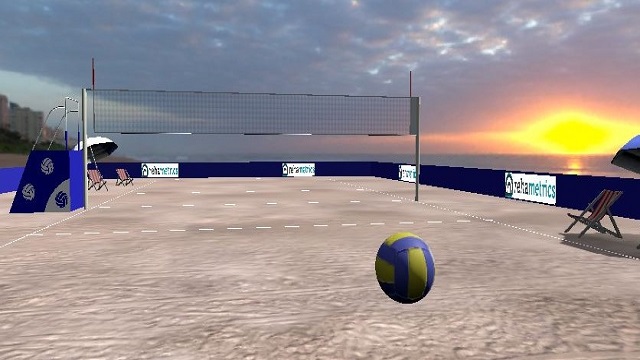
The first is variety. A session of reaching exercises in a therapy room is always the same room; in virtual reality, the same movement can be performed on a beach, in a kitchen or in a garden, and that change of setting holds attention for longer. The second is motivation, which comes up repeatedly in the testimonials of professionals using the platform, with treatment adherence as the benefit they cite most, including in complex profiles such as patients with severe mental disorders or in frailty programmes. The third is active time: a task that instructs, counts and corrects by itself allows the patient to be doing something useful while the therapist attends to another person, which widens the number of hours in the day in which real practice happens.
The fourth is the most debatable and deserves careful handling. A virtual environment can reduce fear of movement in people who have developed it after their injury, because the movement is performed in a context perceived as safe and playful; there is more on this point in the article on kinesiophobia in neurological rehabilitation. Whether that effect carries over outside the headset is something each professional weighs with each patient.
How Rehametrics fits in
The platform's two movement modules are built on the same idea: that exercise should happen inside a setting that means something, rather than facing a wall.
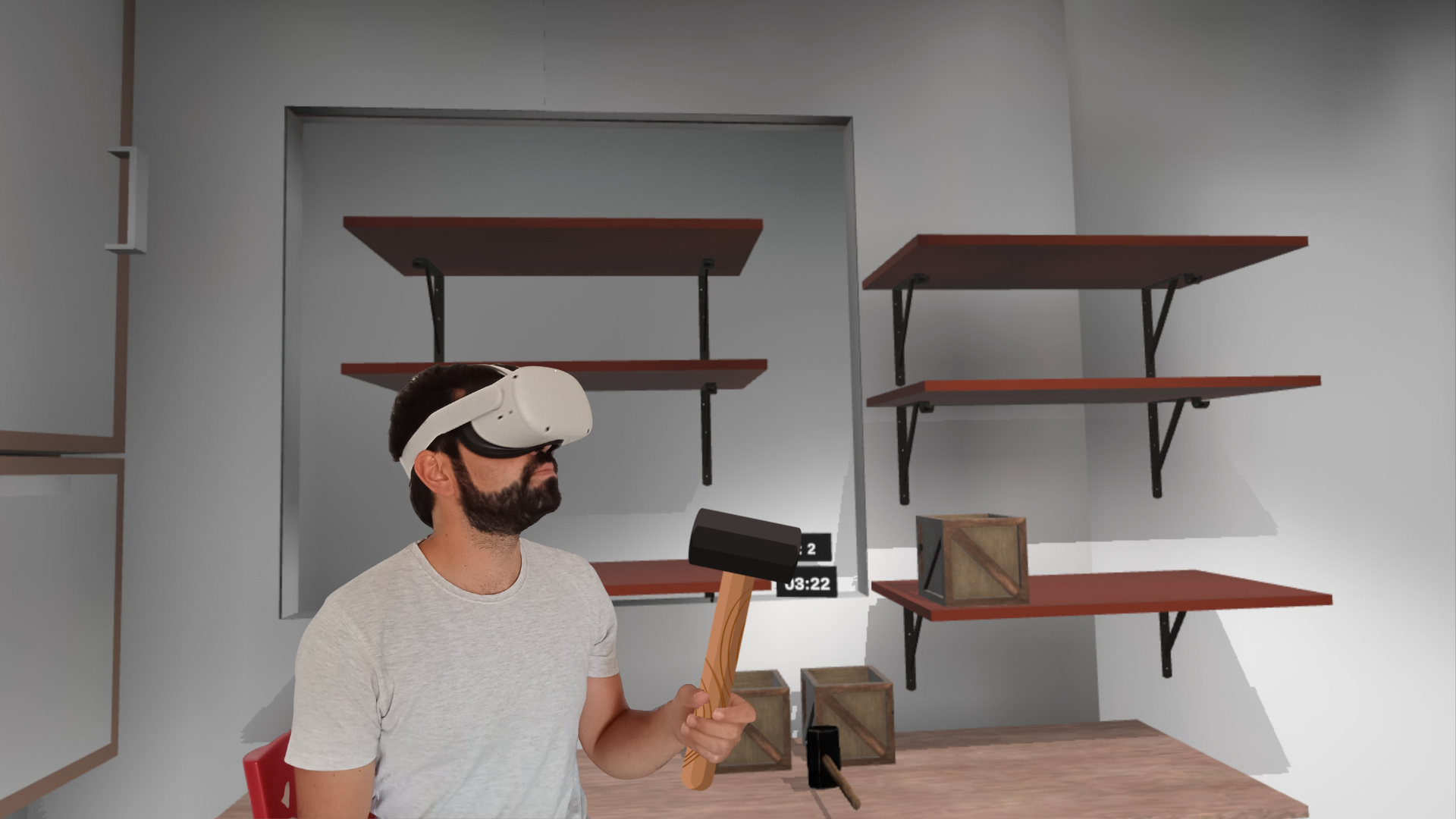
In Rehametrics VR, more than 70 exercises for the upper limb, hand, cognition and functional activities take place in immersive and mixed reality environments on Meta Quest 2, 3 and 3S headsets, with hand tracking and no controllers. There are activities of daily living (cooking, doing the shopping, putting on a load of washing), dual-task exercises that combine movement with a cognitive challenge, and settings that change from one exercise to the next. Mixed reality keeps the real room visible while overlaying the elements of the task, a useful option in early sessions or with sensitive patients. The professional prescribes the programme and the patient can continue it at home with the headset, with remote follow-up from the platform, which extends the virtual reality enriched environment beyond the centre.
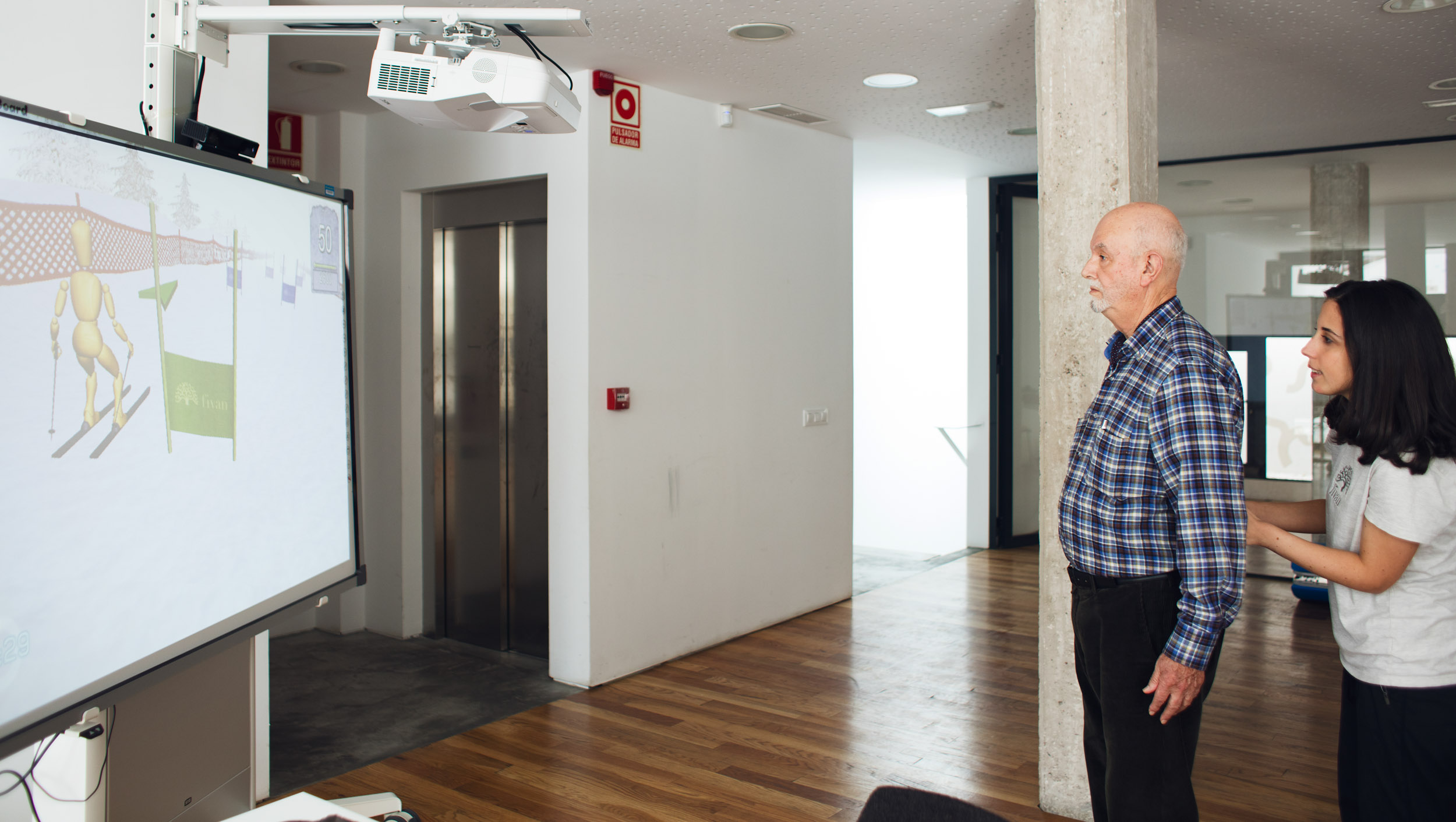
In Rehametrics Physical, camera-based motion capture, with no sensors or controllers, brings the same logic to the screen: more than 120 exercises for balance, reaching, coordination and gait in varied settings, with difficulty adjusting automatically across all of them according to the patient's success rate. It is the format that best suits group work in a communal room or in a care home, where several people can take turns in front of the screen without having to put anything on.
In both cases, every session is recorded (repetitions, speed, range of motion at the shoulder, elbow, hip and knee, centre of gravity and base of support in the balance exercises, correct answers and response times in the cognitive tasks), and the report is generated automatically. That is the practical difference between enriching the environment with a console and doing it with a clinical tool: what the patient does on their own between sessions becomes part of their record.
And one qualification worth stating. The platform covers the physical, cognitive and variety components of enrichment; the social component, which the literature considers just as important, still depends on how the team organises the room and the patient's day. There is more on the relationship between environment, practice and plasticity in how to boost brain neuroplasticity, and on the role of virtual reality in the arm and hand in virtual reality for the upper limb after stroke.
Immersive and mixed reality environments
More than 70 exercises for the upper limb, hand, cognition and daily life on Meta Quest, with hand tracking and continuity at home.
View module →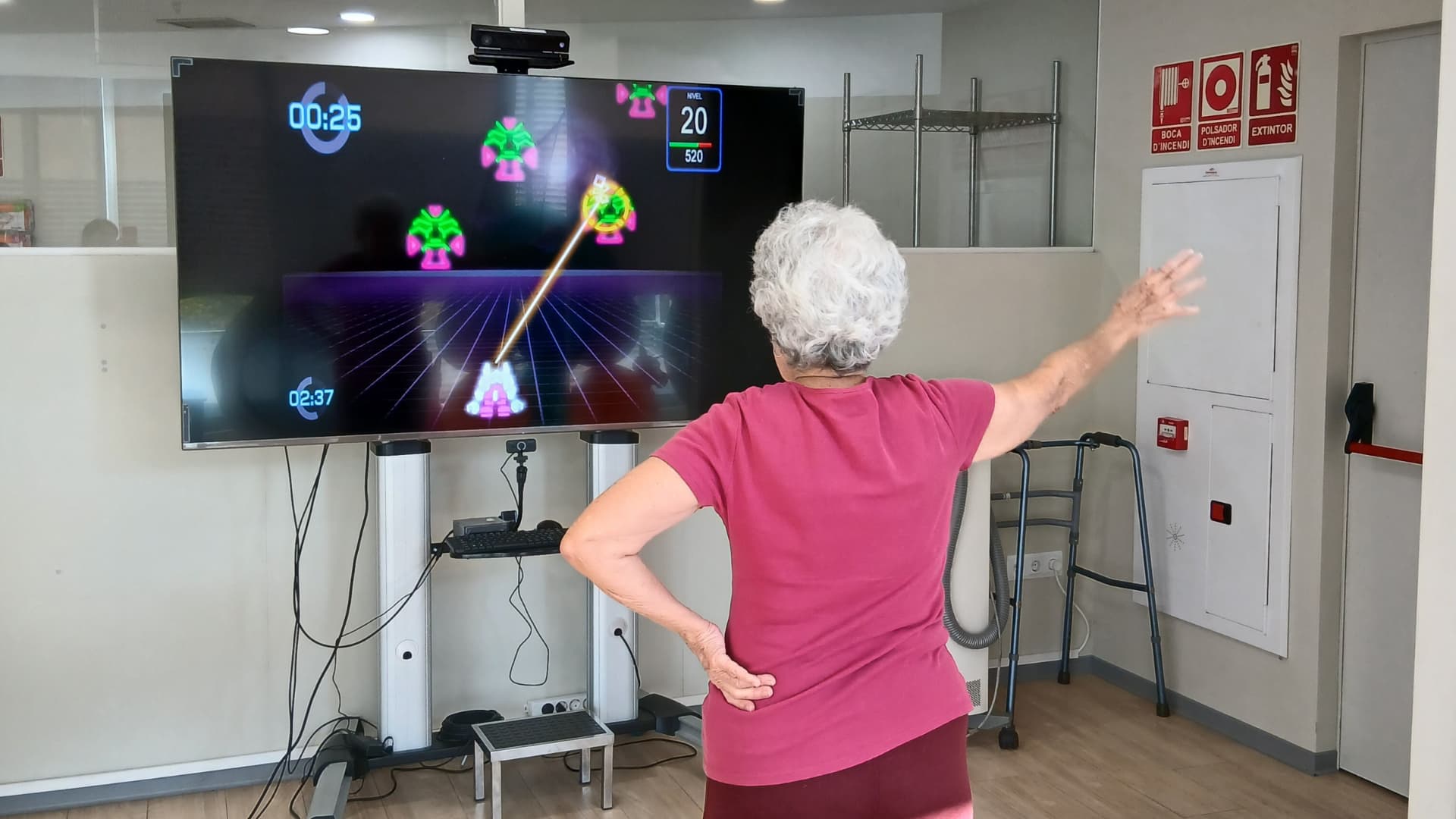
Varied on-screen settings, with no sensors
More than 120 exercises for balance, reaching, coordination and gait with camera-based capture and difficulty that adjusts itself across every task.
View module →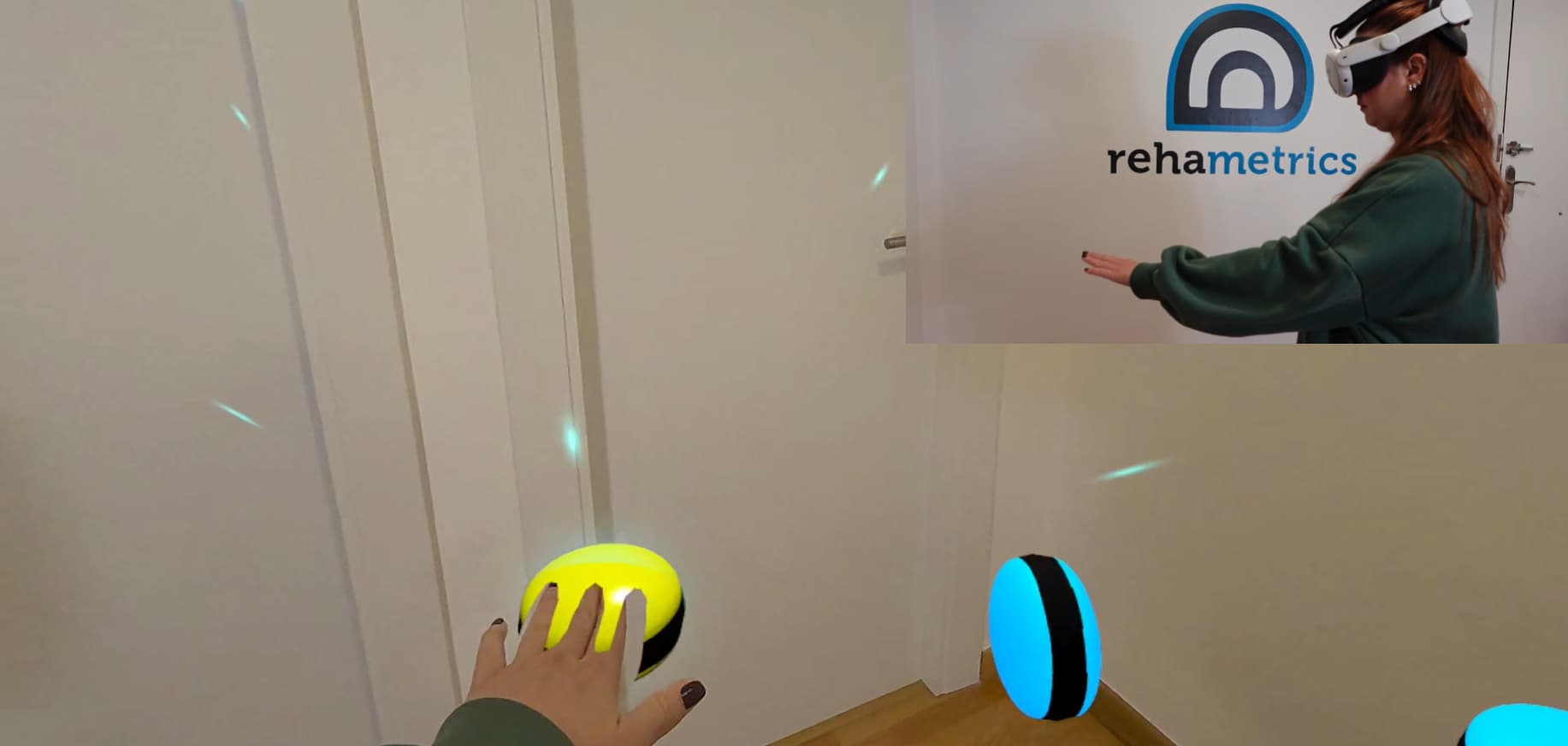
Movement and cognitive challenge in one task
Reaction lights with stepping, hanging out the washing, cognitive volleyball or working memory: exercises that add a cognitive demand to the motor task.
View dual-task exercises →Frequently asked questions
Is it established that an enriched environment improves recovery in people?
In animal models, yes, consistently. In patients, recent reviews find greater engagement, better mood and more activity, with less data on functional outcomes measured rigorously, and they note that the concept itself is poorly defined in clinical studies. It is a promising line of work with a good many open questions.
Does a virtual reality enriched environment count as a true enriched environment?
It provides several of the ingredients: sensory stimulation, a task with a goal, variety and immediate feedback. It does not cover the social dimension, which the studies consider just as important, and that part depends on how the team organises the room and the patient's day.
Does it work in the acute phase?
The review by Hao and colleagues (2023) on virtual reality in the first month after stroke found it feasible and with results comparable to conventional rehabilitation. With the usual precautions (short sessions, seated, with the professional alongside and contraindications reviewed beforehand), it is used from early phases onwards.
What is the difference between putting a console in the room and using a clinical platform?
A console entertains and can get the patient moving. A clinical platform makes that activity a therapeutic task as well, configured by the professional, with the difficulty matched to the patient and with a record of what happened, so that the time between sessions becomes part of the follow-up.
Does the effect fade once the novelty wears off?
It can, if the content does not vary. That is why the variety of settings and tasks, and the ability to raise the demand as the person improves, are the features that count most in the medium term, more than the surprise of the first few sessions.
Want to see it with your own patients?
We will show you the environments in Rehametrics VR and the Physical module, what gets recorded in each session, and how other centres are integrating it into their patients' daily routine.