
New Activities in Rehametrics VR 2026: Clinical Applications in Rehabilitation
What new activities are included in the 2026 update?
The Rehametrics VR 2026 update introduces new activities in immersive virtual reality, mixed reality, and augmented reality, expanding the range of therapeutic options available in rehabilitation.
Specifically, the following are added:
- New activities in immersive virtual reality
- New activities in mixed reality
- Augmented reality activities using real objects
- Incorporating mixed reality into existing exercises
This change is not merely quantitative. It involves expanding the ways in which motor and cognitive functions are addressed in various intervention settings.
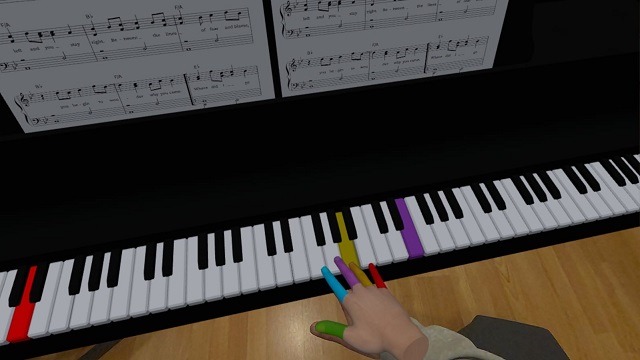
Table of contents
What features do the new activities offer?
The new activities allow for the training of motor, cognitive, and mixed functions in environments with varying levels of interaction and spatial reference.
Motor functions
- Upper Limb Coordination
- Joint Range of Motion
- Movement dissociation (including fingers)
- Handling objects
In this context, augmented reality introduces a unique element:
- direct interaction with physical objects
- performing the task on a real surface
This allows for the development of motor skills in a context that more closely resembles real-life activities
Cognitive functions
- Attention
- Processing speed
- Working memory
- Executive functions
These functions are integrated into both immersive tasks and environments where the patient retains a sense of real-world orientation.
Mixed functions (motor + cognitive)
- Hand–eye coordination
- Perceptual-motor integration
- Decision-making while moving
In activities involving real objects, these skills are developed through:
- interpretation of instructions
- stimulus selection
- motor skills involving physical objects
Clinical examples of new activities
The new activities allow for working on specific objectives in different clinical settings.
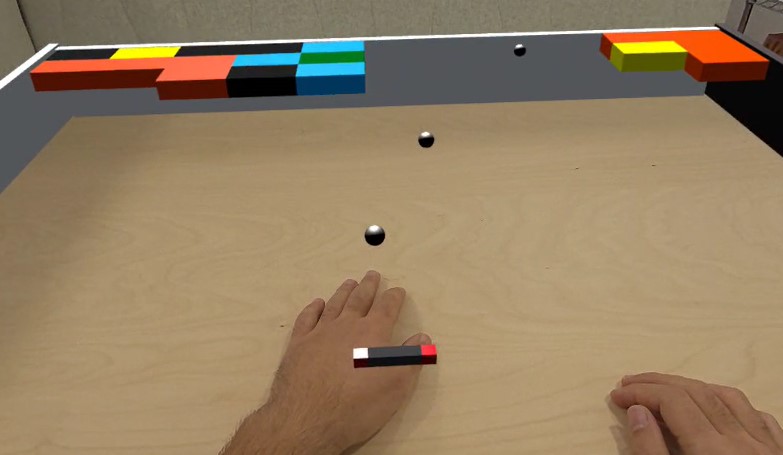
Hand–eye coordination
The patient should:
- locate stimuli
- respond with movement
- adjust the action in real time
Finger separation and disociation
Activities focused on:
- selective activation
- accuracy
- fine motor control
Important in hand rehabilitation.
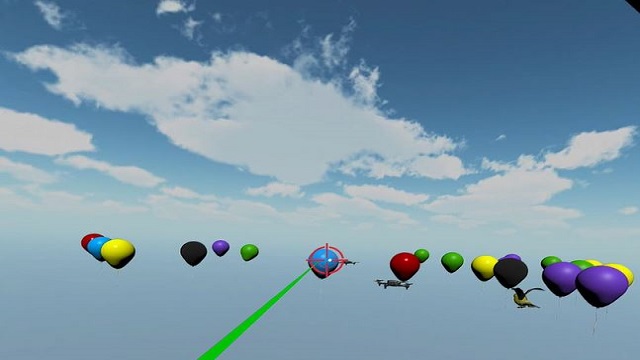
Head control and attention
The patient:
- looks
- maintains focus
- responds to visual stimuli
Useful in the early stages or for patients with poorer postural control.
Handling and understanding with real objects
In augmented reality activities, the patient:
- select physical objects
- arranges them according to instructions
- executes instructions
Example: Place the correct object in a specific area
These tasks allow to work on:
- coordination
- understanding
- perceptual-motor integration
- activities related to daily life
What does mixed reality bring to these activities?
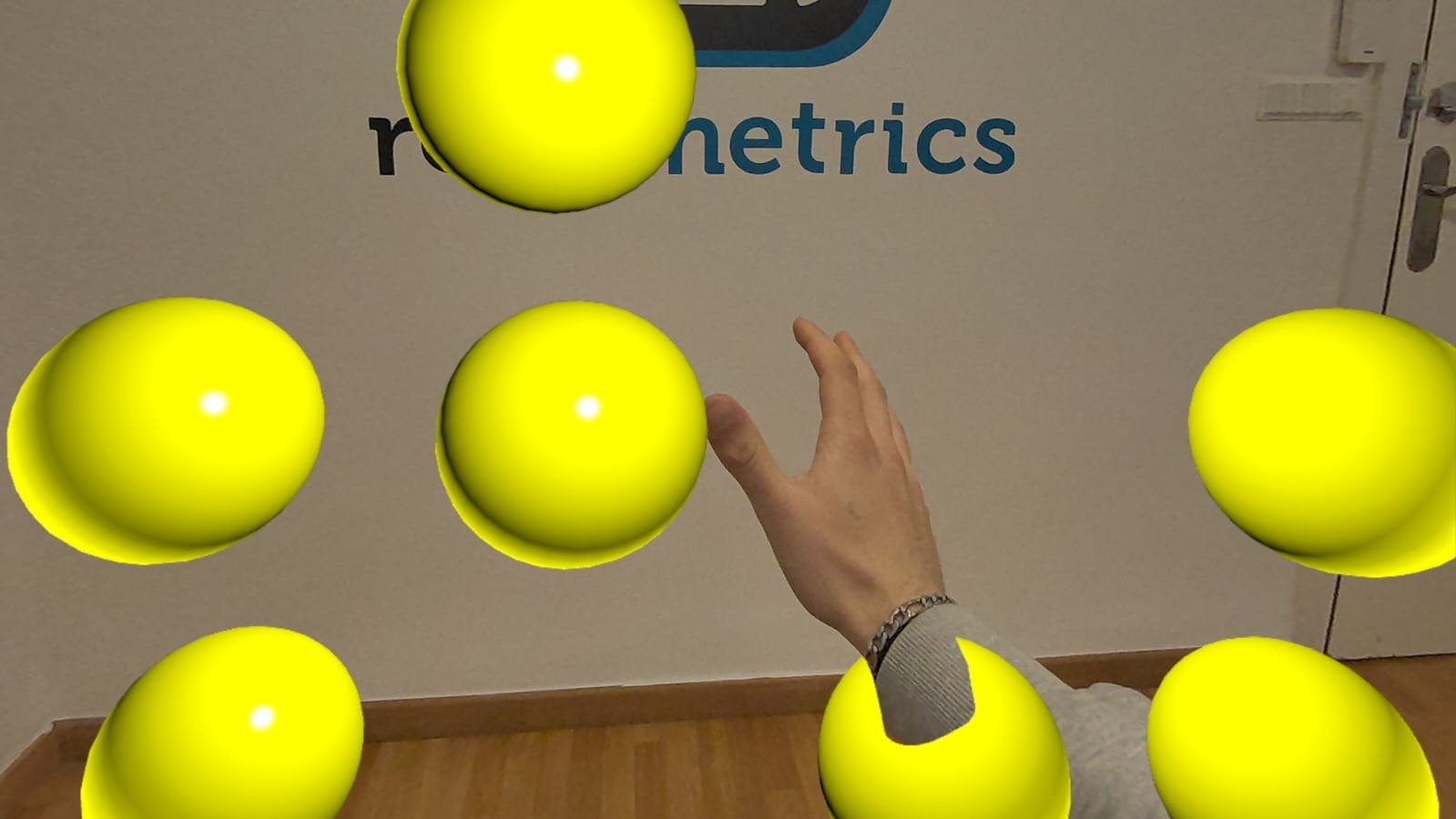
Mixed reality allows users to perform virtual activities while keeping the real environment visible.
This introduces changes to the execution:
- greater spatial reference
- ability to move around the room
- better postural control
- less disorientation
- less dizziness or cyber sickness
The therapeutic goal remains the same, but the context in which the task is performed has changed.
Rehametrics’ mixed reality feature is available for Meta Quest 3, Meta Quest 3s, or higher virtual reality headsets.
Existing activities that incorporate new formats
The update not only adds new activities, but also enhances existing ones by incorporating mixed reality.
This allows you to:
- keep familiar tasks
- change the environment of the application
- add progression without changing the exercise
How to Select Activities Based on Therapeutic Goals
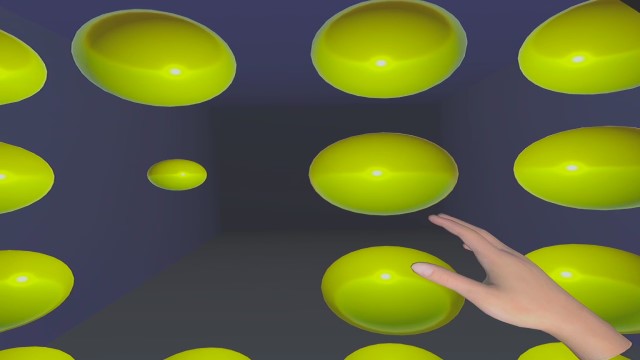
The selection should be based on the function to be performed, not on the technology used.
Examples:
- Coordination → reaction or scope activities
- Attention → tasks involving multiple stimuli
- Executive function → decision-making activities
- Manipulation → tasks involving real objects
The type of environment (immersive, mixed, or using real objects) is tailored to the patient and the therapeutic context.
Discover all the latest news from Rehametrics VR 2026
- 8 new activities in immersive virtual reality
- 8 new mixed reality activities
- 15 existing activities are also available in mixed reality
- Augmented reality
- Improvements to the interface, functionality, and user experience for patients and healthcare professionals
Frequently Asked Questions About Virtual Reality Activities
What kinds of exercises can be done in virtual reality during rehabilitation?
You can do motor, cognitive, and mixed exercises that combine movement, attention, and decision-making.
Does mixed reality change the purpose of activities?
No. It changes the treatment setting while maintaining the therapeutic goal.
When is it better to use mixed reality rather than immersive virtual reality?
Mixed reality is particularly useful when:
- Better spatial awareness is needed
- The patient is working while standing
- there is a risk of disorientation
- The goal is to introduce VR gradually
What is the difference between an immersive virtual reality activity and a mixed reality activity?
Immersive virtual reality takes place in a completely digital environment, whereas mixed reality allows users to interact with virtual stimuli while keeping the real environment visible.
How is the difficulty level of the activities adjusted?
These activities allow you to adjust settings such as:
- stimulus rate
- complexity of the task
- required range of motion
This makes it easier to tailor the intervention to the patient's needs.
Are activities involving real objects part of virtual reality?
Not exactly. They involve augmented reality, where the patient interacts with physical objects with digital assistance.
What types of patients can benefit from these activities?
They can be used in various applications, including:
- neurological patients
- musculoskeletal patients
- older adults
- functional rehabilitation processes
Do the new activities replace other forms of treatment?
No. They are used as a supplementary tool to structure the intervention and increase the intensity of practice.