
Musculoskeletal Rehabilitation: From Pain Management to Functional Recovery
The clinical challenge is rarely a lack of exercises. The real challenge lies in maintaining the appropriate load, managing the fear of movement, and demonstrating that the patient is truly making progress. This guide takes you on that journey—from pain to function and back to activity—and positions technology where it adds value: supporting the professional’s judgment, not replacing it.
In the day-to-day practice of a clinic or rehabilitation center, few decisions come down simply to choosing the right exercise. The professional needs to adjust the intensity, observe how the patient responds, manage the patient’s fear of moving, and, above all, know whether what they’re doing is producing real change. When pain persists or recovery stalls, it’s almost never because there aren’t enough exercises available—it’s because it’s difficult to precisely adjust the intensity, keep the patient engaged, and objectively assess progress.
This article presents a framework that applies across different regions and musculoskeletal conditions, organized around a recognizable progression: from pain management to functional recovery and, finally, to a return to activity. Throughout the text, there are links to specific guidelines by region and clinical situation, and only at the end does the article address how technology can support this process.
What We Mean by Musculoskeletal Rehabilitation Today
Beyond Pain Relief: The Goal Is Function
Pain is the most common reason for seeking medical care, but it is rarely the ultimate goal of treatment. Reducing pain without regaining the ability to move, carry weight, and return to normal activities leaves the process incomplete and increases the likelihood of relapse. That is why the current approach prioritizes function: what the patient needs to be able to do again and what abilities must be regained to achieve that.
The three main phases: pain management, functional recovery, and return to activity
Although each condition has its own specific characteristics, most treatment processes follow a common sequence. The first phase focuses on controlling pain and inflammation while restoring movement without triggering flare-ups. A second phase focuses on regaining strength, control, and range of motion, with a planned progression of load. And a third phase involves readaptation to the actual movement—whether work-related or sports-related—during which the return to activity is prepared for and decided upon.
Why a phased approach prevents stagnation and relapses
Working in phases helps you make clearer decisions: when to move forward, when to maintain the status quo, and when to take a step back. Skipping stages or moving forward without careful consideration often leads to flare-ups; staying in a conservative phase for too long leads to stagnation and a loss of adherence. The balance between these two extremes is, to a large extent, what defines effective treatment.
Why Many Patients Don't Make the Progress They Should
Kinesiophobia and Fear of Movement
The fear of moving is one of the most common barriers—and often the most underestimated. A patient who associates movement with pain tends to avoid it, which perpetuates the loss of function and the pain itself. Addressing this aspect—by providing reassurance and demonstrating that movement is possible and tolerable—is often just as crucial as the exercise regimen. We discuss this in detail in the article on kinesiophobia and confidence in movement.
Inappropriate dosage of the load
Both insufficient and excessive load limit results. A treatment plan that is too conservative does not provide the necessary stimulus to promote adaptation; one that is too aggressive leads to flare-ups and mistrust. Getting the dosage right requires observing the patient’s response and making continuous adjustments, a topic we cover in the articles on therapeutic exercise dosing and intensity and load adjustment.
Lack of feedback and clear goals for the patient
When patients don’t see progress, their motivation drops, and with it, their adherence. Clear feedback—seeing concrete improvement in range of motion, control, or repetitions—helps sustain their effort and transform their subjective experience into useful information. Without that visible benchmark, many give up before completing the process.
In practice
These three factors rarely occur in isolation. A patient with a fear of movement is often given loads that are too low, and, seeing no progress, loses adherence. Addressing all three at once—safety, intensity, and feedback—is what breaks the impasse in many cases that have reached a standstill.
Principles of a Well-Planned Load Progression
How to Decide When to Move Forward and When to Slow Down
Progression should not depend solely on the schedule. It is best to base it on the patient’s response: pain tolerance during and after exercise, quality of movement, ability to complete the prescribed volume, and recovery between sessions. These indicators, when assessed consistently, allow for more confident decision-making than a simple clinical impression.
Key variables: load, volume, frequency, and intensity
Adjusting a training program involves changing several variables at once. Modifying just one—for example, increasing the load while maintaining volume and frequency—makes it easier to interpret the response. Changing everything at once makes it harder to determine what worked. A structured and documented progression is easier to review and communicate to the patient and the team.
The Role of Objective Measurement in Decision-Making
Having data—range of motion, number of repetitions achieved, movement control—reduces uncertainty. It does not replace professional judgment, but it supports it: it helps distinguish real progress from a momentary sense of improvement and makes it easier to justify decisions regarding progression or discharge.
Functional Recovery by Region and Situation
The general framework—from pain to function to return to activity—is implemented differently in each region and clinical situation. The priority variables, decision points, and criteria for progression vary depending on the region and the condition. Below, we review the most common situations in private practice, mutual health insurance settings, and hospitals.
Knee: Post-ACL, Osteoarthritis, and Knee Replacement
Knee surgery involves a large number of patients with very different profiles: cruciate ligament reconstruction requires a very structured, phased progression; osteoarthritis requires careful management of weight-bearing to avoid exacerbating the condition; and knee replacement combines restoring range of motion with readaptation to walking. In all three cases, the key is to increase weight-bearing and control based on clear criteria for progression rather than a set timeline.
Spine and Chronic Lower Back Pain
In chronic low back pain, the challenge is rarely purely mechanical: fear of movement and avoidance perpetuate the loss of function. The approach involves gradual exposure and pacing exercise so that the patient regains confidence in moving, which ties directly into what we’ve already discussed regarding kinesiophobia and pacing.
Ankle After a Sprain
An ankle sprain is one of the most common injuries in sports and the workplace, and it is also one of the injuries most likely to recur when recovery is limited to pain management. Proprioceptive and postural control retraining—focusing on balance and stability—is what reduces the risk of recurrence and prepares the patient for functional rehabilitation.
Post-surgical and Elective Orthopedic Surgery
After surgery, recovery is typically guided by phased protocols and the need to regain joint range of motion without compromising the healing process. In this context, systematic monitoring of progress and objective measurement of range of motion are particularly useful for determining when to move forward. Shoulder rehabilitation in workers’ compensation programs is a good example of how these criteria are applied in a specific region.
Criteria for Discharge and Return to Activity
Deciding when a patient can return to work or sports is one of the most delicate decisions, especially in the insurance industry. Basing this decision on objective data—and not just on the patient’s subjective feelings—allows for a safer and more well-founded return to work or sports, a central aspect of rehabilitation for work-related injuries.
How to Demonstrate Progress: Measuring What Matters
Range of Motion, Strength, Pain, and Function
Assessing musculoskeletal recovery involves combining several indicators: changes in joint range of motion, the ability to generate and tolerate load, the intensity of pain in different situations, and, above all, the degree of functional recovery relative to the patient’s goals. No single indicator tells the whole story; taken together, however, they do.
Why Objective Data Improves Adherence and Discharge Decisions
Showing patients measurable improvement strengthens their engagement and confidence in the process. And when it comes to the team and third parties—families, insurance providers, and facility management—objective data allows us to justify both the progress of treatment and the decision to discharge patients with solid arguments that go beyond clinical impressions.
The purpose of measurement is not to accumulate numbers, but to make better decisions and communicate them clearly. A good record-keeping system turns each session into useful information for adjusting treatment and demonstrating results.

The Role of Technology in Musculoskeletal Rehabilitation
All of the above is a matter of clinical judgment: it is decided and interpreted by the professional. Technology comes into play when it helps apply that judgment more precisely. A rehabilitation platform can add value in the three critical areas we’ve discussed: providing immediate feedback that reduces fear of movement and maintains engagement; helping to pace the program and track progress session by session; and objectively measuring range of motion and movement control to support decisions regarding progression and discharge.
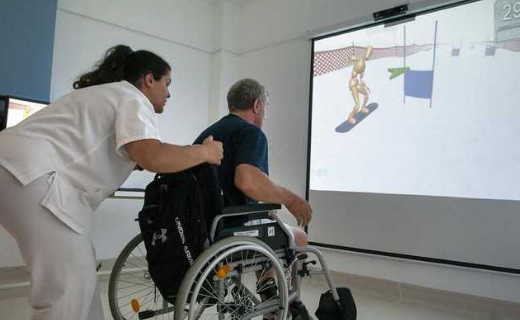
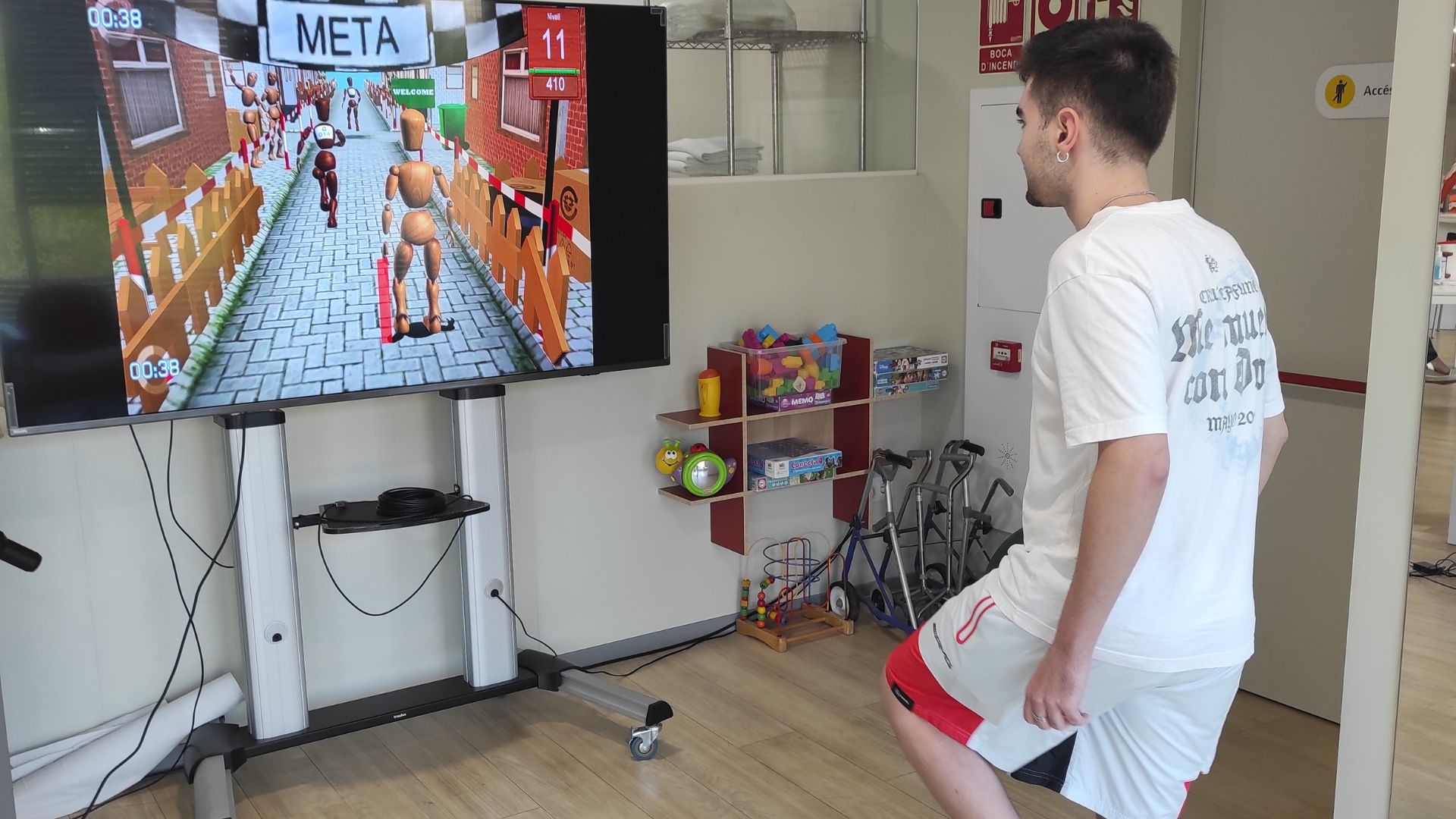
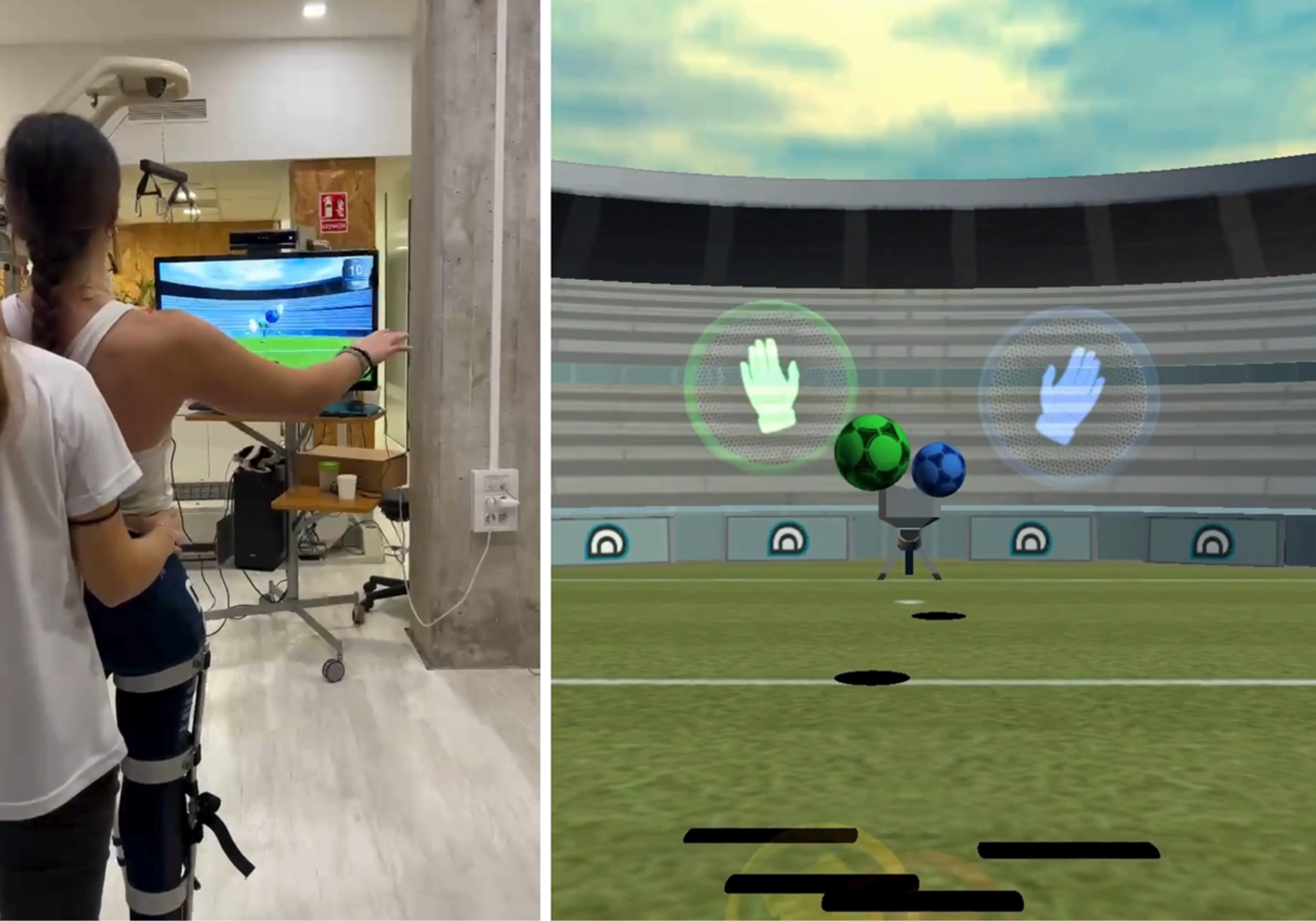
In the case of Rehametrics, the platform relies on real-time motion capture and analysis: the patient interacts with the activity by moving their own body—without the need for controllers or sensors—and receives visual biofeedback during the exercise. This motion detection also makes it possible to record and objectively assess what happens during each session.
The platform combines two types of virtual reality depending on the patient's goal and profile:
- Semi-immersive virtual reality (Rehametrics Physical): The patient works in front of a screen and sees their movements reproduced, without being isolated from their surroundings. It forms the basis for physical exercises—joint range of motion, balance, coordination, gait, trunk and lumbar control, and body schema—and is particularly accessible for beginners and sensitive patients.
- Immersive virtual reality (Rehametrics VR): Using a headset, the patient is immersed in a virtual environment to perform more functional and motor tasks with hand tracking. It is useful for rehabilitation of movement and activities of daily living, and allows for a more gradual approach during the initial sessions.
In both cases, the professional continues to lead the session, adjust the difficulty level, and interpret the automatic logs and reports—which are exportable and customizable—that can help track progress and communicate it using data. This resource expands the therapist’s options; it is especially useful for selected patients and is always used at the professional’s discretion.
Rehametrics Physical
Exercises for balance, coordination, gait, joint range of motion, and body control with immediate biofeedback.
View module →Rehametrics VR
Functional and motor skills exercises using hand tracking, useful for rehabilitation of movement and activities of daily living.
View module →Reports and Metrics
Automatic, exportable, and customizable records and reports to track the patient's progress.
View module →Would you like to see this with your own patients?
Request a demo, and we'll show you how to objectively assess load progression, range of motion, and movement control in musculoskeletal rehabilitation.
Request a demoFrequently Asked Questions
What distinguishes musculoskeletal load progression from neurological load progression?
In the musculoskeletal field, progression typically revolves around the mechanical tolerance of the tissue and pain management, adjusting load, volume, and frequency. In neurorehabilitation, motor control, fatigue, and movement variability carry greater weight. The principle of progressing based on the patient’s response is common, but the priority variables differ.
How do you decide when to increase the load for a patient with pain?
It is important to monitor pain tolerance during and after exercise, the quality of movement, the ability to complete the prescribed volume, and recovery between sessions. When these indicators remain consistently favorable, it is usually reasonable to progress. The decision is always clinical and is evaluated on a case-by-case basis.
What role does feedback play in musculoskeletal recovery?
Feedback helps the patient understand what they are doing and see an immediate result of their effort, which can reinforce their engagement and reduce their fear of movement. For the professional, it provides useful information about range of motion, control, or precision.
How can improvement be objectively measured beyond the patient's subjective experience?
By combining indicators such as joint range of motion, weight-bearing capacity, pain progression, and functional recovery relative to the goal. Data-tracking tools allow these metrics to be monitored session by session and compared over time, which supports decisions regarding progression and discharge.
What is the difference between semi-immersive and immersive virtual reality in rehabilitation?
In the semi-immersive approach, the patient works in front of a screen and sees their movements reproduced without being isolated from their surroundings, which makes it very accessible for beginners. In the immersive approach, using goggles, the patient is immersed in a virtual environment and performs more functional tasks with hand tracking. The choice depends on the therapeutic goal, the patient’s profile, and their tolerance.
Does technology replace the physical therapist's judgment?
No. Technology is a tool that supports the professional’s work: it provides feedback, records, and objectivity. The therapist remains the one who decides which exercise to use, how to tailor it, and how to interpret the results.