
Rehabilitation of occupational injuries using virtual reality and new technologies
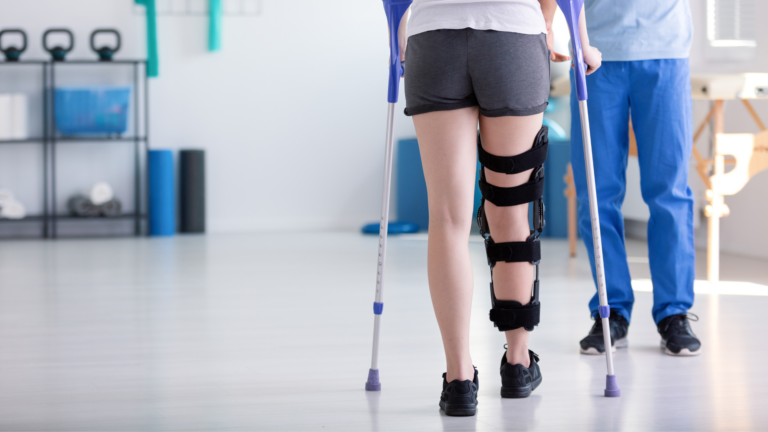
In the rehabilitation of occupational injuries, restoring functionality and reducing return-to-work times are priority objectives.
Patients often arrive with physical limitations, pain, or a certain degree of uncertainty when resuming movement. In these cases, the key is to combine active treatment, clinical monitoring, and motivation.
With Rehametrics, the integration of the physical module and virtual reality allows for the design of rehabilitation programs for rehabilitation of occupational injuries using virtual reality which are adapted to each phase of the process and provide objective information about the progress of the patient.
Technology in physical rehabilitation and occupational traumatology
The Physical module of Rehametrics uses a camera with a depth sensor to capture and analyze the movements of the patient without the need for sensors or controls.
Each session automatically records data objectives of the performance, such as the number of repetitions performed, execution time, and the range of movement detected by the camera.
In addition, the therapist can observe aspects such as the quality of postural control or compensations, relying on visual feedback from the system.
This data is included in clinical reports that can be exported exportable, which facilitates the traceability of the progress and communication with insurance companies or services for injury prevention.
The professional can demonstrate with objective evidence the functional progression and adjust the load of the treatment according to the response of the patient.
Retraining movement without pain: safety and confidence in recovery
In patients with musculoskeletal or post-surgical pain, the beggining of rehabilitation is usually accompanied by apprehension and fear of movement.
The digital environment of Rehametrics allows exposure in a safe and gradual manner to motor tasks, in a controlled and threat-free context.
Visual feedback on the screen acts as a constant guide: the patient sees what they are doing well, corrects errors without negative judgment, and regains confidence in their abilities. and regains confidence in his/her own body.
As the patient progresses, you can check how range and accuracy improve, which reinforce the perception of control and the anxiety associated with pain.
Virtual reality therapy in occupational rehabilitation
As the patient progresses, the therapist can incorporate the virtual reality (VR) module to work in a more immersive and functional way. Virtual environments allow for the simulation of real-life or work tasks (such as reaching, pushing, turning, or maintaining balance) in safe and motivating conditions.
VR promotes involvement of the patient and the transfer of the leaned to the real environment, since the exercises are designed to stimulate coordination, postural control, and functional strength.
In addition, it allows the intensity of the work to be adapted to each phase of recovery, maintaining motivation and avoiding overexertion.
Clinical applications in occupational injuries and traumatology
The combined use of Rehametrics Physical and VR is applied in different injuries resulting from work-related accidents or from postural overload:
-
Mechanical low back pain and neck pain: improvement of mobility and postural control through interactive tasks.
-
Injuries to the shoulder or elbow: increase in range of motion and strength through exercises of progressive reach.
-
Sprains and fractures: objective monitoring of range and the accuracy of the movement during recovery.
-
Stiffness or residual pain after immobilization: work on mobility guided, with positive reinforcement and constant visual monitoring.
In all cases, the therapist can adjust the level of difficulty and workload according to the clinical progress of the patient, ensuring a safe and personalized progression.
Document progress accurately: clinical data in digital rehabilitation
Insurance companies and prevention services value objectivity in clinical documentation.
Rehametrics automatically generates reports with clear metrics and graphs of progress that support therapeutic decisions.
This facilitates communication between physical therapists, doctors and managers responsible for return to work programs, reduces the administrative burden and provides transparency and traceability to the process of rehabilitation.
Occupational rehabilitation that is more efficient and measurable
The combination of Rehametrics Physical and virtual reality offers professionals a tool that integrates objective measurement, personalization and motivation of the patient.
This approach allows reducing the time needed for recovery, improve adherence to treatment and provide clinical reports with real data.
In a field as demanding as occupational traumatology, digitizing rehabilitation is not just about innovation: it is guaranteeing a functional recovery that is more secure and sustainable.