Shoulder Pain and Fear of Movement: How to Approach Gradual Exposure in a Session
Not all cases where a patient is unable to raise their arm are due to a significant tear. For many patients, what really hinders progress is the fear of repeating the movement that caused pain. Carefully adjusting the level of exposure—and not just the intensity of the exercise—is often the missing piece.
Why Is Fear of Movement Such a Major Factor in Shoulder Pain?
A patient with rotator cuff tendinopathy, subacromial syndrome, or post-traumatic shoulder limitation typically presents with a recognizable pattern: they have stopped raising their arm above their head, avoid using the affected side when dressing or carrying weights, and describe the movement as something “that shouldn’t be forced.” In many of these cases, the physical examination reveals no structural injury that would justify that degree of restriction; what does frequently appear, however, is a sensitized alarm system and avoidance behavior that has gradually taken hold session after session.
This does not mean that the structural component is unimportant—in cases of significant acute tears or pseudoparalytic shoulder, the management is different—but rather that, once these conditions have been ruled out, much of the functional limitation observed in the clinic has more to do with the fear of repeating the painful movement than with the actual condition of the tissue. The weight each professional assigns to this component versus the strictly mechanical one depends on the specific case, the training of each team, and the clinical judgment of the treating physician.
We’ve already discussed the role of adherence in shoulder rehabilitation in the context of workers’ compensation, where kinesiophobia emerges as one of several barriers. Here, we’ll focus specifically on this aspect: what to do when progress is limited not only by adherence to the program but also by the patient’s own fear of moving the shoulder, and how to justify gradual exposure during sessions. We also discuss the general framework of this issue in the article on kinesiophobia, dosage, and feedback.
How Does Kinesiophobia Manifest in Patients with Shoulder Pain?
In practice, shoulder kinesiophobia follows fairly recognizable patterns. The most typical is the avoidance of overhead elevation: the patient finds alternative ways to reach high objects, rotates the trunk to avoid rotating the shoulder, or simply gives up on tasks that they used to perform without a second thought. In patients with a history of instability or dislocation, the pattern is different but equally limiting: many do not have a clear sense of their shoulder’s position at any given moment, leading them to systematically avoid any range of motion they perceive as “risky,” even when that range would actually be safe to move through.
This should not be confused with a simple lack of strength or available range of motion. A patient may have nearly full passive range of motion and yet still be unable to use it actively because the anticipation of pain—or failure—causes them to stop the movement before reaching their actual limit. The Tampa Kinesiophobia Scale can provide guidance during the consultation regarding the significance of this factor; however, like any questionnaire, it should be interpreted in conjunction with the clinical evaluation and not in isolation.
This ties directly into the issue of therapeutic exercise dosing, which we’ve already discussed in this cluster: if the starting point for determining the dose fails to account for the patient’s fear of movement, it’s easy to overestimate what the patient is willing to attempt outside the clinic, even if they perform the exercise without apparent difficulty in front of the therapist during a session.
Principles of Gradual Exposure for the Shoulder
Gradual exposure does not involve “forcing” the patient to raise their arm to the point where they feel afraid, but rather building a hierarchy of movements—from least to most threatening according to their own perception—and progressing through it based on objective criteria, not just on how they feel on a given day.
1. Start with a range of motion and a position that the patient can control
The first exercise in the progression should be one that the patient can already perform with reasonable confidence, even if the range of motion is limited or the position is stabilized (for example, with the elbow supported rather than the arm extended freely overhead). This provides a point of reference and prevents the first experience of the session from being, once again, one of failure or pain.
2. Calibrate by exposure, not just by load
For the shoulder, the axis of progression isn’t always “more weight”: it can be a greater range of motion, a less protected position (from lying down to sitting, from sitting to standing), less external support, or a faster movement speed. For patients with a history of instability, this typically involves progressing from safe positions—mid-range of motion, scapular plane—to positions the patient perceives as more “dangerous”—such as external rotation during abduction—in a controlled, step-by-step manner. Each of these axes can be adjusted independently, allowing for continued progress even when increasing the load is not the priority.
3. Provide the patient with a visible measure of their own progress
When patients rely solely on their perception of pain to judge whether they are “doing well,” they tend to interpret any discomfort as a warning sign. Showing them the range of motion achieved, the number of repetitions completed, or the quality of the movement in successive sessions helps shift their focus from “how I feel today” to “how much progress I’ve made this week”—a framework that is much less susceptible to daily fluctuations in pain.
These three principles serve as a general guide, not a fixed formula: the order, pace, and emphasis placed on each should be tailored to the patient, the stage of the process, and the judgment of each professional. Not all teams agree on how to combine them—some prioritize the psychosocial component first, while others prioritize workload management—and this diversity of approaches is reasonable within the same general framework.
What Does the Evidence Say About Interactive Technology and the Fear of Movement?
The evidence on virtual reality and musculoskeletal pain is, overall, promising but inconsistent depending on the specific application. A systematic review and meta-analysis published in Musculoskeletal Care (2024/2025, DOI 10.1002/msc.70041) concludes that virtual reality shows potential for pain management in musculoskeletal conditions, particularly consistently for the knee when using specialized non-immersive virtual reality, but it highlights high heterogeneity among other regions—including the shoulder—which limits the ability to make broad recommendations. It is important to be honest about this nuance: the evidence specific to the shoulder is, at present, more limited and heterogeneous than that for other joints, and should not be treated as a definitive conclusion.
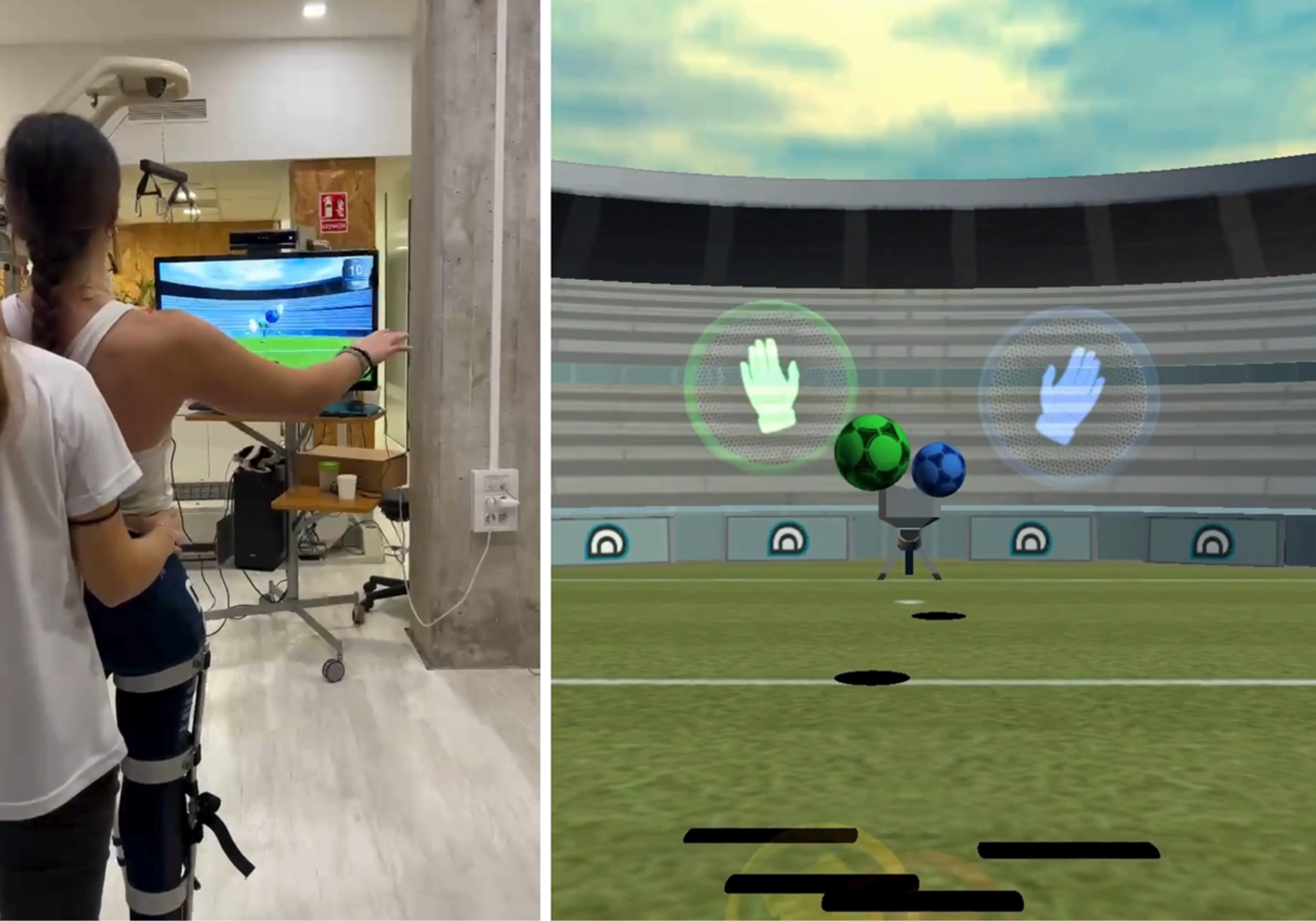
Perhaps even more interesting is what physical therapists themselves have to say. A qualitative study published in PLOS ONE (2023;18(4):e0284445), based on focus groups with physical therapists who tried virtual reality tools, identifies several themes relevant to this issue. On the one hand, several professionals described how immersion can reduce the perception of fear of movement—one of them reported that, during the activity, “I was rotating, moving, and turning much more” than expected—and explicitly mentioned patients with rotator cuff injuries who avoid raising their arms as a group for whom this attentional distraction effect could be useful. On the other hand, physical therapists specifically pointed to patients with recurrent instability and poor proprioceptive awareness of the shoulder as a group that could practice in safe positions within a virtual environment and gradually progress toward positions they perceive as riskier—a description that essentially aligns with the logic of gradual exposure outlined in this article.
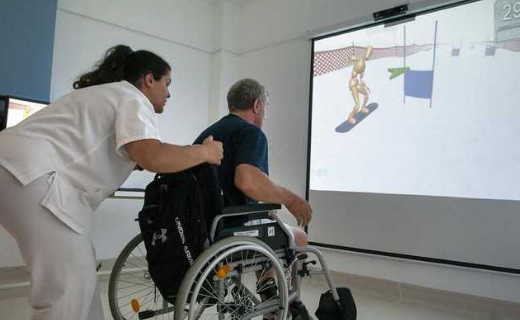
At the same time, the same study highlights a point of caution that should not be overlooked: several physical therapists were hesitant to recommend virtual reality without close supervision, concerned about the risk of tripping or falling during immersion and skeptical about whether patients would follow safety instructions without direct oversight. This caution is consistent with what is observed in clinical practice: not all physical therapists agree on the value of these tools, and this diversity of opinion is reasonable as long as the evidence remains limited. It should be noted, however, that much of the risk described by physical therapists in the study is linked to unsupervised at-home use. Rehametrics is a CE-marked medical device, designed for use during sessions under direct clinical supervision, which significantly mitigates that risk. In addition, shoulder exercises on the platform can be performed while seated, further limiting any balance concerns during sessions.
How to Work on Gradual Shoulder Exposure During a Session
In practice, this usually translates into three overlapping areas of focus throughout the treatment plan, although the order, emphasis, and pace of each depend on the individual case and the team’s judgment:
- Scapular and rotator cuff control. Exercises for scapulohumeral dissociation and rotator cuff activation before progressing to functional overhead tasks.
- Specific control of range, speed, and position. Start with short arcs in protected positions, gradually increasing range of motion and exposure to "risky" positions before increasing speed in most patients with high kinesiophobia.
- High-quality visual feedback on movement. Showing the patient, either in real time or at the end of the session, how they are moving—not just how much—helps correct compensatory patterns (compensatory elevation of the scapula, trunk rotation) that persist even after the pain has subsided. We have already discussed this principle in depth in the article on biofeedback in rehabilitation.
The goal of these three phases is no different from that of any well-structured therapeutic exercise program: the key difference with the shoulder is that the starting point almost always involves managing the fear of raising the arm before it is possible to progress normally with load and functional range of motion.

The Role of Rehametrics in Gradual Shoulder Exposure
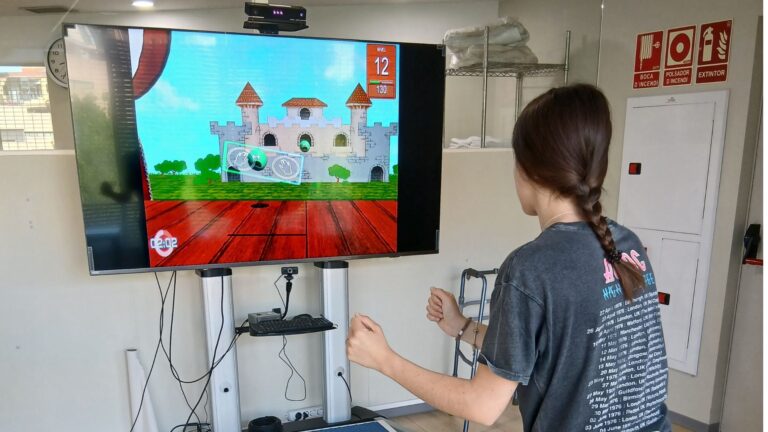
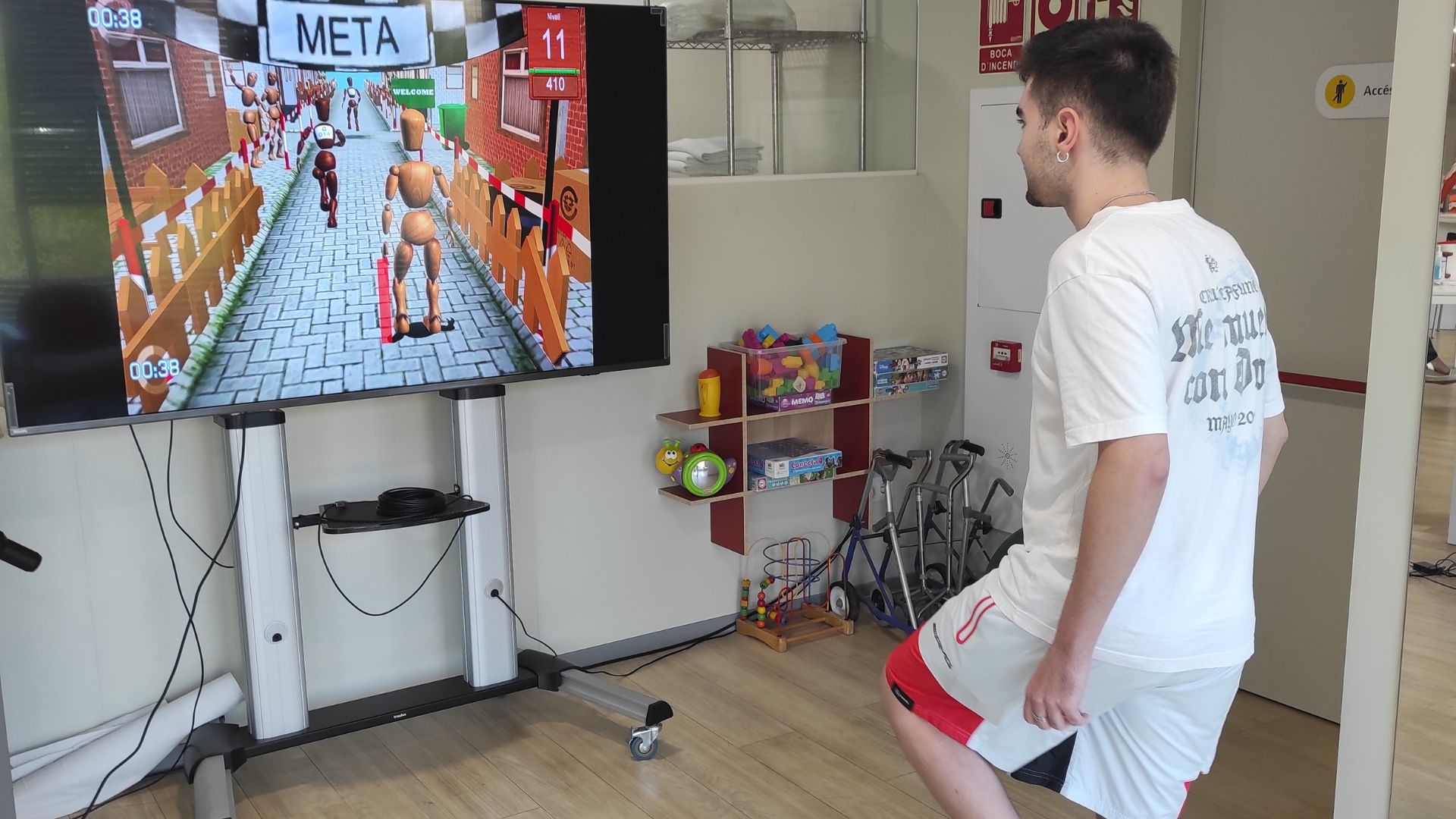
Once the clinical criteria have been established—which movement to work on, in what order, and with what progression—technology can help translate those criteria into a more specific session experience for the patient. Rehametrics Physical includes upper-limb joint range-of-motion and body control exercises among its categories, with tasks that track range, repetitions, and movement consistency without the need for sensors or controllers: the patient sees the result of their own movement on the screen, which provides precisely that objective measure of progress we mentioned earlier.
For more complex functional tasks—such as replicating everyday movements that the patient has begun to avoid, like reaching for a high object, getting dressed, or carrying a weight over the shoulder—interactive tasks allow these movements to be practiced within a controlled and adjustable environment, which aligns well with the exposure hierarchy described above and may prove particularly useful, at the discretion of the healthcare professional, for patients with a significant fear of movement.
In terms of follow-up, having objective data on progress from session to session—not just the patient’s subjective assessment on that particular day—helps the team decide when to increase the dose and makes it easier to explain to the patient, using numbers rather than just words, that their shoulder is moving more and better than it did three weeks ago.
This does not replace clinical judgment or the physical therapist’s recommendations: technology provides data collection and visual stimulation; the professional remains the one who decides what to work on, when to do so, and for which patients this approach makes sense. We’ve already explored this same logic of support—not replacement—in the article on the patient’s experience with virtual reality in rehabilitation.
Modules relevant to gradual shoulder exposure
Scapular Control and Range of Motion
Exercises for motor control and upper limb range of motion using sensorless, controller-free motion capture, with tracking of range and repetitions from session to session.
View module →
Adjustable functional tasks
Interactive environments for replicating everyday overhead movements—reaching, getting dressed, carrying weight—within a controlled exposure hierarchy.
View exercises →
Progress Reports
Quantitative tracking of range of motion, repetitions, and movement quality, which helps determine when to increase the intensity of the exercise and communicate progress to the patient.
See clinical validation →Frequently Asked Questions
How can you tell whether shoulder pain is mechanical or requires referral before considering gradual exposure?
How is gradual exposure applied to a patient who is afraid to raise their arm above their head?
Does virtual reality replace conventional therapeutic exercise for the shoulder?
How long does it take to see an improvement in shoulder kinesiophobia with this approach?
For which patients with shoulder pain should we exercise greater caution when using this type of technology?
Would you like to see this with your own patients?
We'll show you how to plan gradual shoulder exposure using Rehametrics, with real-life cases of rotator cuff injuries, subacromial syndrome, and instability.
Request a demo