
The dual role in rehabilitation: what it is and why it matters in clinical practice
In everyday life, few activities are performed in isolation. A person walks while talking, maintains their balance while looking for an object, gets dressed while recalling the steps of their routine, or crosses the street while staying aware of their surroundings. These situations involve a combination of motor, cognitive, and perceptual demands.
The dual task in rehabilitation stems precisely from this reality: many functional activities require performing a motor action while simultaneously paying attention, making decisions, recalling information, calculating, responding, or processing information.
For this reason, dual-task training can be beneficial when the goal is not merely to improve a single skill, but to prepare the patient for situations that more closely resemble their daily life.
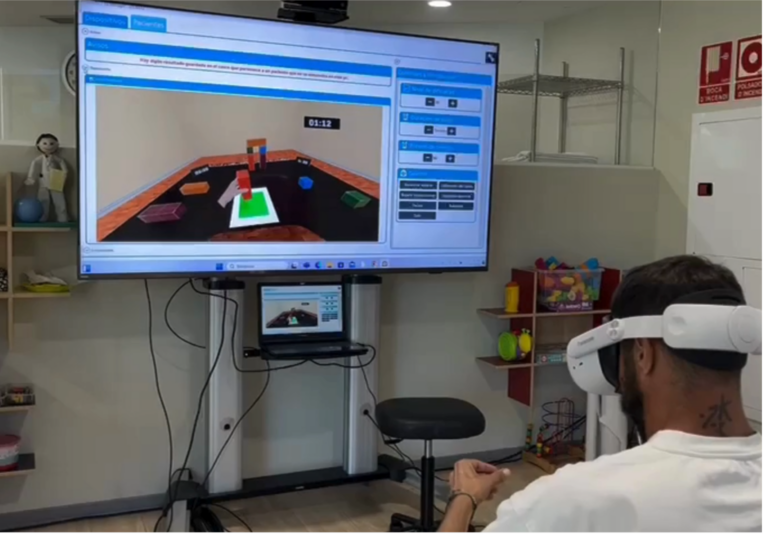
Table of contents
What Is Dual Tasking in Rehabilitation?
Dual-tasking involves performing two tasks at the same time. In rehabilitation, it is often used to observe or train how a secondary demand affects performance on a primary task.
For example:
- walking while counting backward;
- maintain balance while responding to visual cues;
- reaching for objects while making a decision;
- move while following a verbal instruction;
- handling objects while recalling a sequence.
In many cases, the primary task is motor-based and the secondary task is cognitive. This is often referred to as a cognitive-motor dual task. However, there can also be motor dual tasks, such as walking while carrying an object, or complex functional tasks, such as preparing for an activity while engaging in conversation.
Why multitasking is closer to real life
Traditional rehabilitation can address strength, balance, mobility, gait, and coordination in controlled settings. While this is necessary during many phases of treatment, it does not always reflect the real-world demands of the environment.
A patient may be able to walk normally in a quiet room, yet lose their balance when they have to speak, watch for cues, avoid obstacles, or respond to a command. They may also maintain their balance during a clinical test, but have difficulty in the bathroom, the kitchen, or on the street, where their attention is divided among multiple demands.
The dual-task test allows us to explore the interaction between movement and cognition. In this sense, it not only assesses “whether the patient can do two things at once,” but also how their performance changes when the attentional or executive load increases.
In older adults, recent reviews suggest that dual-task training may improve balance; however, the interpretation must take into account the patient’s profile, the type of intervention, and the quality of the available evidence.
What is multitasking interference?
When a person performs two tasks at the same time, performance may decline in one or both tasks. This phenomenon is called dual-task interference.
Clinically, it can manifest in various ways:
- Reduced walking speed;
- Shorter or uneven steps;
- Increased postural fluctuations;
- Loss of accuracy;
- More errors in the cognitive task;
- Greater need for supervision;
- Increased fatigue;
- Poorer movement quality.
For example, if a patient walks steadily in a simple situation but significantly slows down, loses balance, or stops responding when a cognitive task is added, that information may be clinically relevant.
The concept of “dual-task cost” is used to quantify the difference in performance between a single-task condition and a dual-task condition. However, dual-task cost metrics must be chosen with care, as not all of them have the same reliability or clinical validity.
A multidisciplinary approach through three treatment modules
Address physical, cognitive, and occupational rehabilitation from a single, integrated solution.
The modules can be used independently or simultaneously by different members of the clinical team.
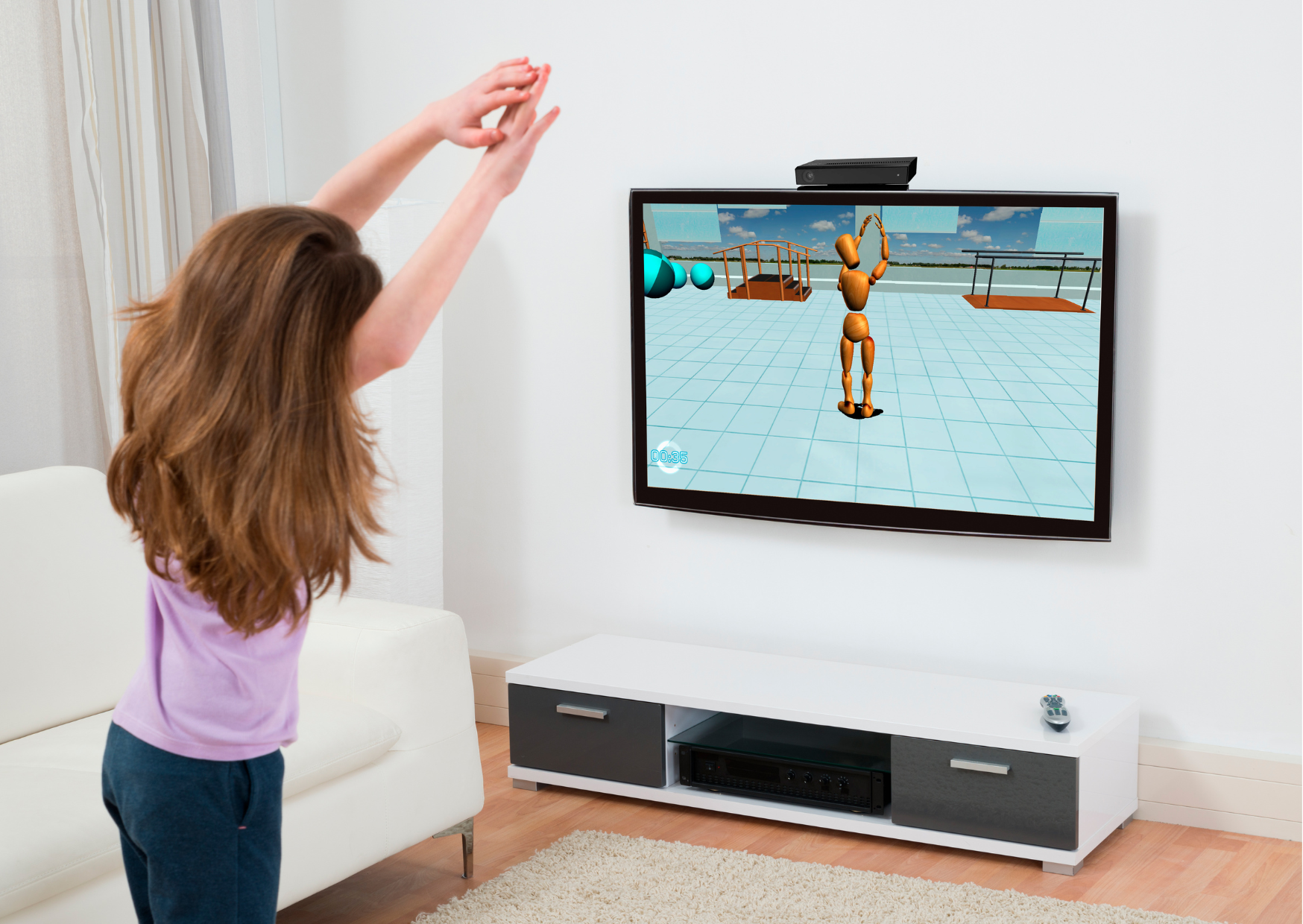
Digital support for neurological physiotherapy
Functional exercises oriented toward movement recovery.
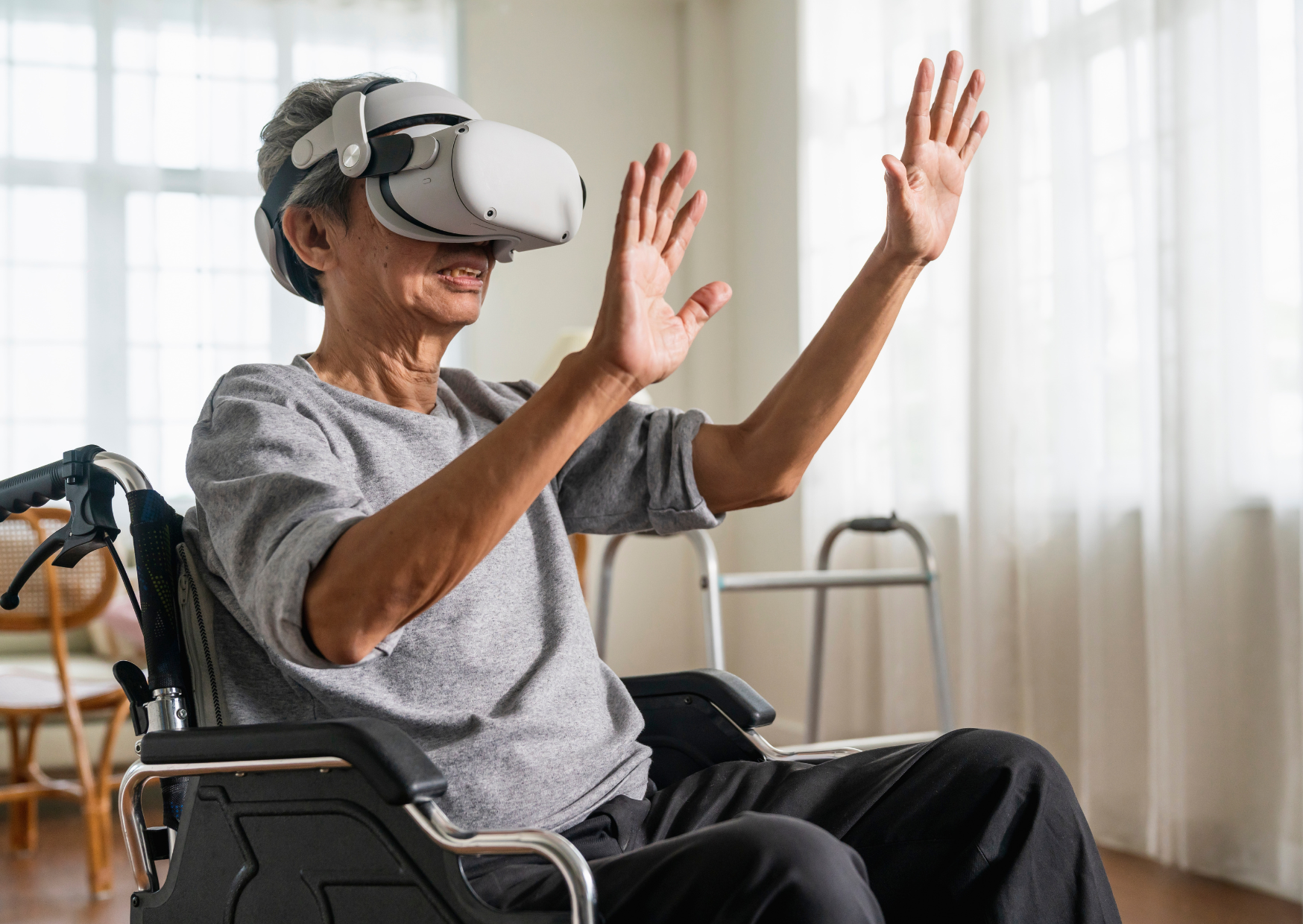
Virtual rehabilitation as a therapeutic support tool
Functional intervention targeting motor and cognitive recovery
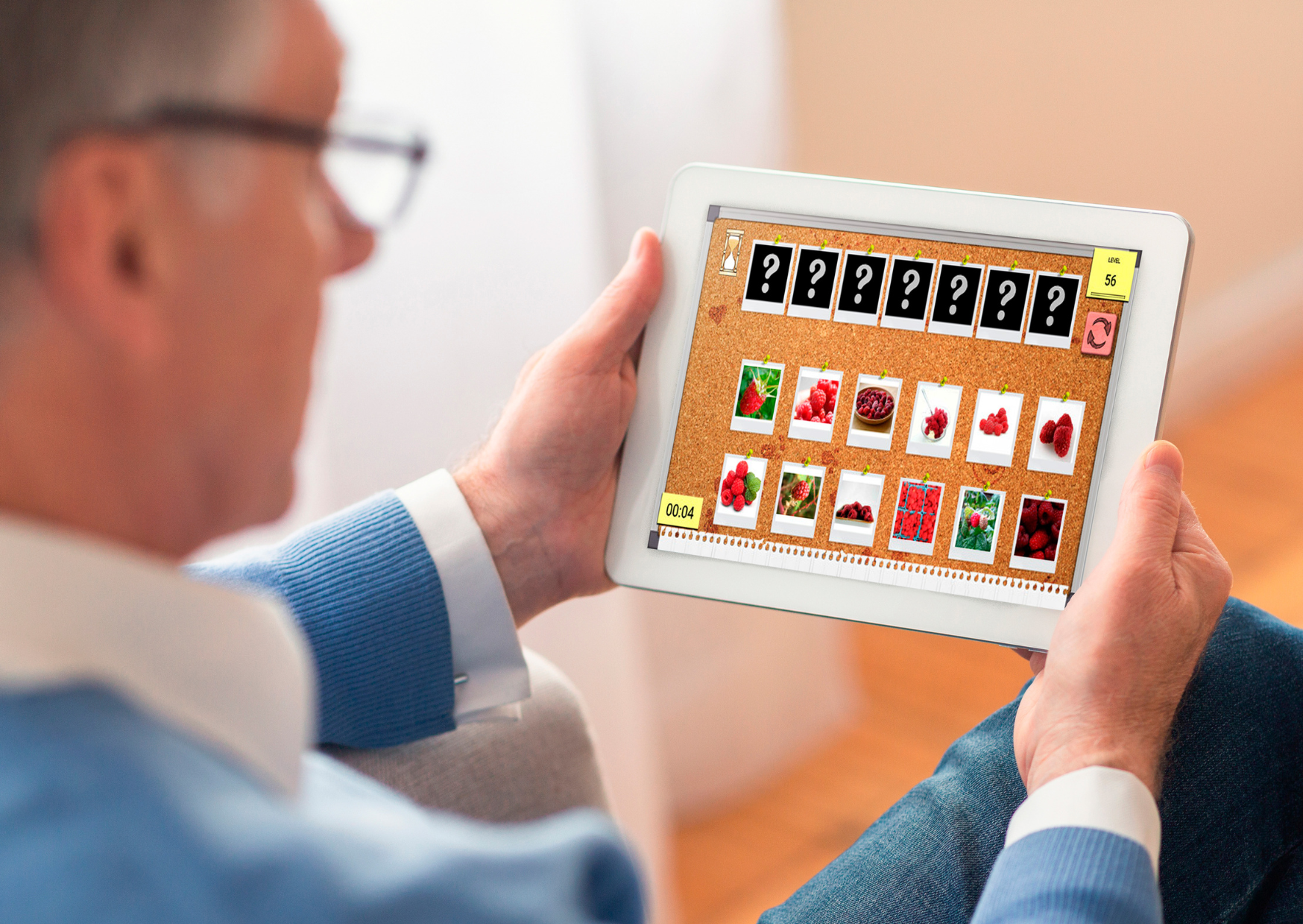
Supervised digital cognitive rehabilitation
Clinician-adapted digital cognitive rehabilitation programs for use in clinical settings.
Types of dual tasks in rehabilitation
The dual task can be designed in various ways depending on the therapeutic goal.
Dual motor-to-motor task
Combine two motor tasks. For example, walking while carrying a tray, maintaining balance while reaching for an object, or shifting your weight while handling a ball.
It can be useful when the goal is to work on postural control, coordination, dynamic balance, or functional movement integration.
Dual cognitive-motor task
Combine a motor task with a cognitive challenge. For example, walking while naming words from a specific category, standing still while responding to visual cues, or reaching for objects according to instructions.
This type of dual-task exercise helps develop divided attention, processing speed, working memory, decision-making, and executive control in relation to movement.
Dual functional role
It more closely resembles real-life activities. For example, moving around a room to find an object, organizing a sequence of actions while maintaining proper posture, or performing a manual task while following changing instructions.
This type of task can be particularly beneficial when the goal is to improve independence, safety, and participation in daily activities.
Which patients can benefit from dual-task training?
Dual therapy may be beneficial for various clinical profiles, provided it is prescribed judiciously and safety is ensured.
It may be helpful for patients with balance issues, gait difficulties, a risk of falling, slowed movement, coordination problems, attention deficits, or difficulties functioning in stimulating environments.
It may also apply to people who function well under simple conditions but struggle when additional demands arise. This pattern is common in everyday situations: walking while talking, turning while listening to instructions, handling objects while recalling a sequence, or maintaining balance while paying attention to one’s surroundings.
In stroke patients, a review and meta-analysis found that dual-task training can improve certain gait parameters, such as step length, cadence, stride length, and the 10-meter walk test; however, its potential benefits for balance require further investigation.
When to introduce double assignments
Dual tasks should not be introduced automatically or too early. It is advisable to first assess whether the patient can perform the primary task with a sufficient level of safety and control.
For example, if the patient is not yet able to stand safely, adding a cognitive task may increase the risk. On the other hand, if the patient can already perform the basic motor task with stability, it may be appropriate to introduce a secondary task of low complexity and progress gradually.
Some useful clinical criteria include:
- the main task is carried out safely;
- the patient understands the instructions;
- there is sufficient oversight;
- the secondary task does not compromise stability;
- the difficulty can be reduced if errors occur;
- the impact of multitasking can be measured;
- The objective is linked to a functional situation.
Progression must be tailored to the individual. The goal is not to make the task more complex as a matter of course, but rather to adjust the cognitive and motor demands so that the exercise is therapeutic, safe, and functionally relevant.
Technology and multitasking: when it can add value
Technology can add value to dual-task training because it allows for the gradual combination of motor, cognitive, and perceptual stimuli. It can also provide immediate feedback and record useful information for monitoring.
On a digital platform, the professional can adjust variables such as response speed, accuracy, number of stimuli, execution time, errors, repetitions, or difficulty level. This can help determine whether the patient is improving, becoming fatigued, losing motor skills, or needs to simplify the task.
Virtual reality, whether immersive or non-immersive, can be particularly useful for training responses to stimuli, spatial orientation, divided attention, decision-making, or simulated real-world scenarios. In this context, virtual reality headsets can enhance the sense of presence and enable more immersive environments, although it is important to assess tolerance, postural stability, the risk of motion sickness, and comprehension ability.
Rehametrics is a virtual rehabilitation platform designed to address physical and cognitive aspects, offering exercises that can help professionals structure sessions, adjust difficulty levels, and track progress.
In addition, its immersive virtual rehabilitation solutions enable patients to work on upper limb function, hand function, activities of daily living, praxias, and grasping skills through virtual reality environments.
The prudent approach to these types of tools is not to view them as a substitute for clinical judgment, but rather as a tool to help design more controlled, repeatable, and measurable tasks. The decision to use them, their progression, and the interpretation of the data still depend on the professional.
Conclusions
Dual-task training in rehabilitation allows therapists to address the interaction between movement, attention, and executive control in situations that more closely resemble real life. Its clinical value lies in observing how performance changes when the patient must attend to more than one demand.
It can be useful for gait training, balance, upper-body strength, coordination, functional activities, and fall prevention, provided it is prescribed safely and with appropriate progression.
Technology can facilitate this process through graded tasks, feedback, virtual reality, and data logging. However, the goal is not for the patient to improve at a digital task, but rather to acquire the skills needed to function better in real-world settings.
In short, dual-task training should not be viewed as an isolated technique, but rather as a way to align rehabilitation with the cognitive and motor demands of daily life.