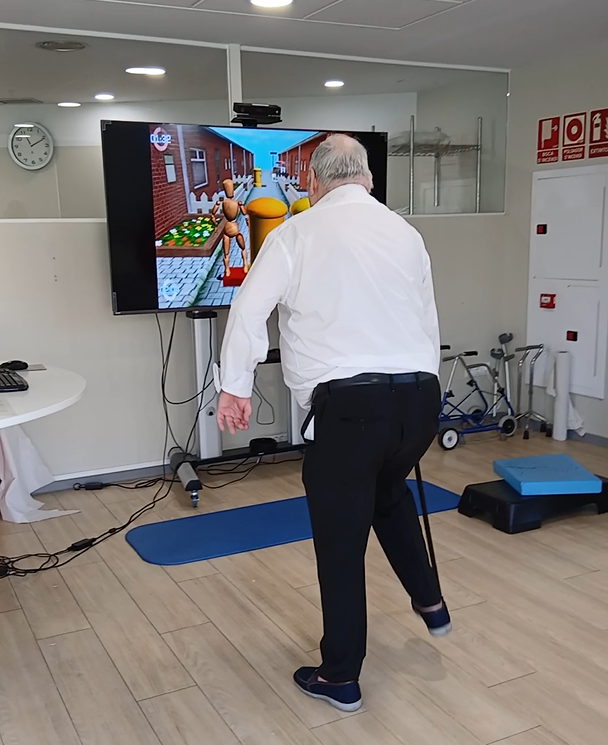
Digital cognitive rehabilitation is transforming the way professionals approach cognitive impairment. Digital tools enable more accurate monitoring, improve patient motivation and make more personalized care possible.
The aging of the population and the increase in cases of cognitive impairment pose a growing challenge for social and health care teams. Maintaining functionality, autonomy and quality of life requires sustained therapeutic strategies, based on data and adapted to the patient’s evolution.
In this context, digital cognitive rehabilitation has become an essential support tool for both professionals and patients.
Continuous monitoring and data with clinical value
Digital rehabilitation platforms make it possible to collect accurate information on cognitive performance during sessions, which is difficult to achieve with traditional methods.
Rehametrics, for example, records parameters such as reaction time, accuracy or processing speed. Analyzed over time, these data help the professional to detect small variations in attention, memory or executive functions.
This not only improves clinical follow-up, but also facilitates communication between professionals and family members, providing objective evidence of the patient’s progress.
Thanks to digitalization, cognitive rehabilitation becomes a more measurable, adaptable and transparent process.
Motivation and adherence in digital cognitive rehabilitation.
One of the biggest challenges in patients with cognitive impairment is to maintain their interest and commitment to therapies.
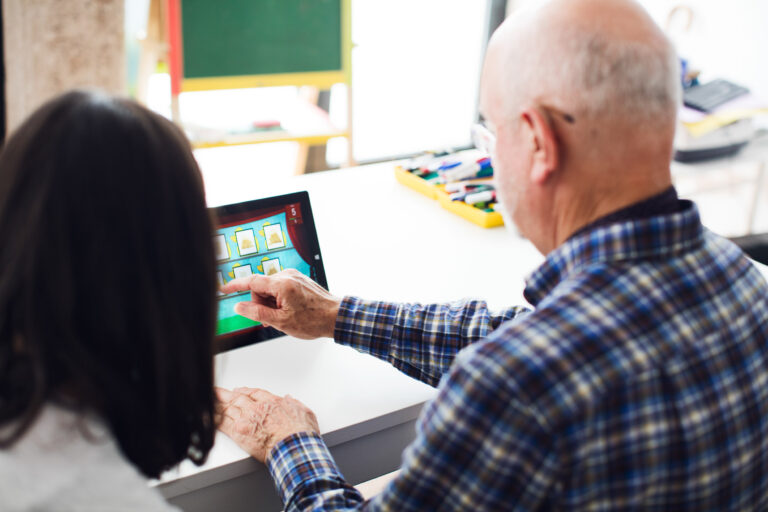
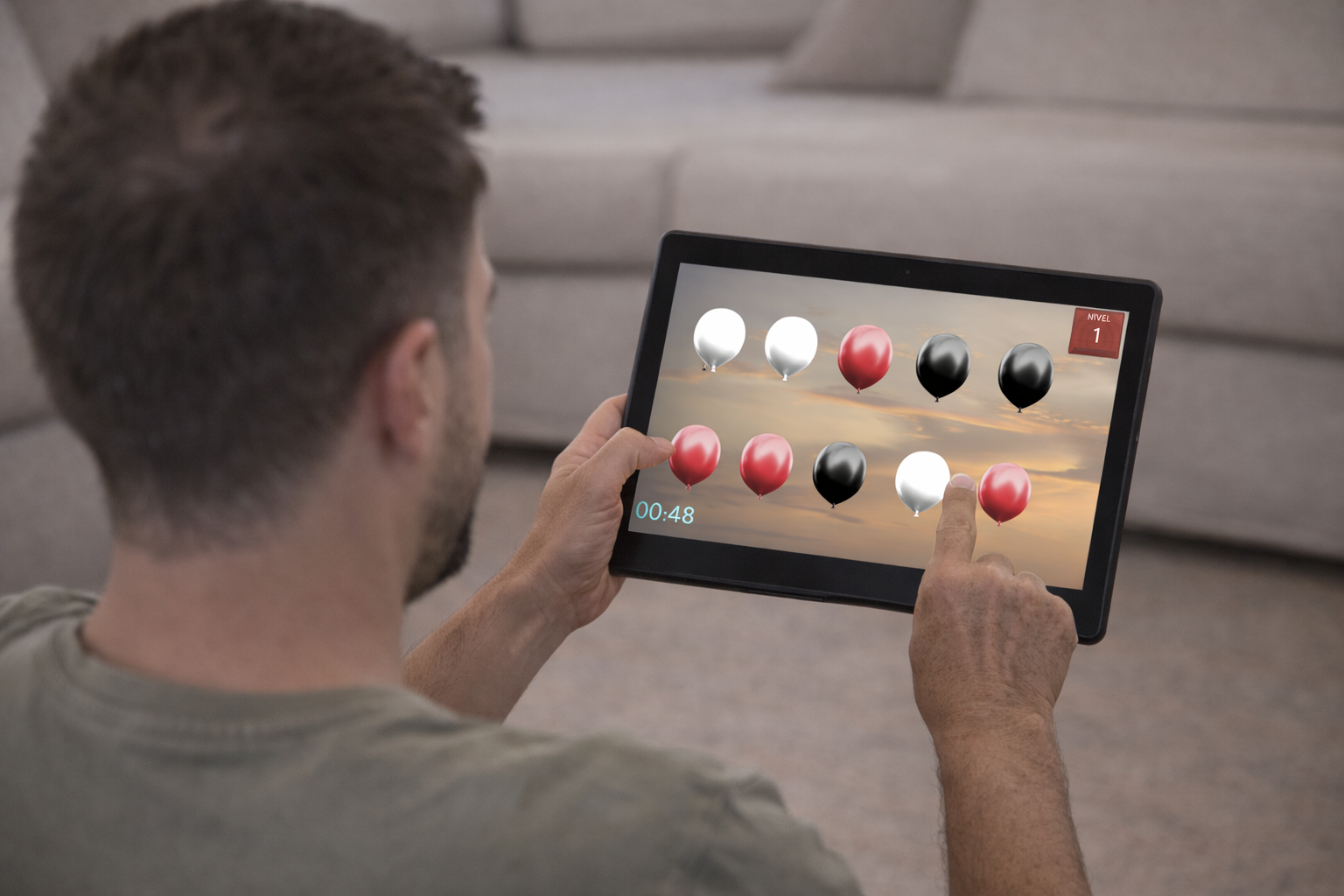
Digital platforms incorporate gamification elements that increase user involvement: interactive visual environments, symbolic rewards, immediate feedback and gradual progression of difficulty.
These strategies stimulate brain reward systems and generate a sense of constant achievement, which reinforces therapeutic adherence.
In elderly or mildly impaired individuals, this sense of progress contributes to sustaining self-esteem and long-term motivation, factors directly linked to neuroplasticity and functional recovery-
Benefits for healthcare professionals
Digitization also brings clear advantages to clinical teams.
Automatic recording of results, immediate reporting and the ability to view progress graphs reduce the administrative burden and optimize treatment time.
In addition, the objective information obtained during sessions allows more personalized interventions to be planned and data to be easily shared between physiotherapists, occupational therapists and neuropsychologists.
In a busy care setting, these tools improve efficiency, continuity and therapeutic consistency.
Functional transfer and generalization of learning
Digital cognitive rehabilitation not only seeks to improve memory or attention in isolation, but also to promote the transfer of learning to everyday life.
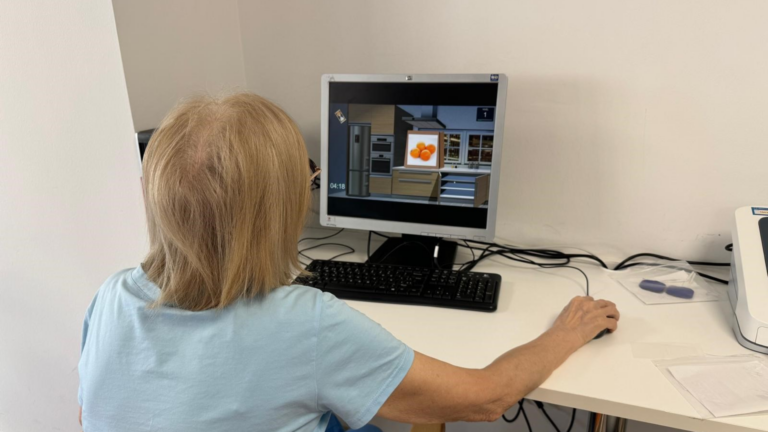
The interactive activities propose planning, orientation or problem-solving tasks in simulated environments, helping to reinforce the patient’s autonomy.
By continuously recording the evolution, the therapist can observe how these skills are maintained or generalized over time, adjusting the therapeutic plan in an interdisciplinary manner.
Digital rehabilitation beyond the cognitive aspect
The impact of digitalization extends beyond the cognitive sphere.
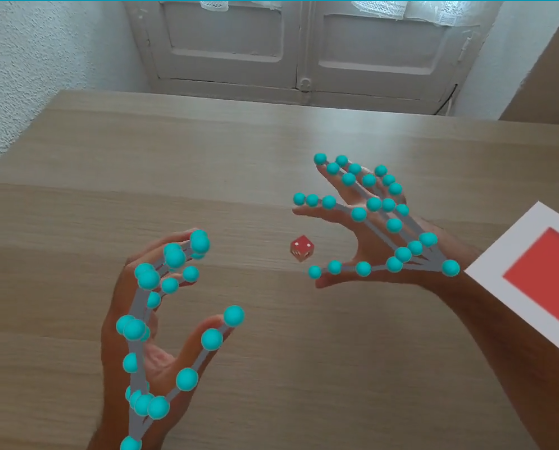
In physical rehabilitation and occupational therapy, Rehametrics offers exercises that work on mobility, strength, balance and joint range, with automatic adaptation of difficulty and continuous data recording.
This integration between physical, cognitive and functional areas creates a unified therapeutic environment that favors treatment continuity and a global vision of the patient’s progress.
In hospitals, nursing homes and day centers, this integrated approach improves coordination between professionals and the quality of care.
Conclusion: towards a more personalized and motivating cognitive rehabilitation.
The use of digital tools in cognitive impairment care is changing clinical practice.
Thanks to the combination of objective data, sustained motivation and therapeutic personalization, digital cognitive rehabilitation is consolidating as one of the most promising strategies to improve adherence and functional outcomes in older people.
In this process, the professional’s experience remains the central axis: technology expands the therapeutic possibilities, but the clinical decision and the human link remain irreplaceable.