
Rehabilitation following ACL reconstruction: phases and progression criteria
A post-ACL protocol does not advance by weeks, but by criteria the patient has to meet in each phase. We review that three-phase criterion-based model, what to look at before introducing plyometrics, what the evidence says about return to sport, and what role objective recording with Rehametrics can play across a protocol that lasts between 9 and 12 months.
Why the protocol is organised by criteria, not by calendar
The clinical practice guideline by van Melick et al. (2016), produced for the Royal Dutch Society for Physical Therapy (KNGF) from a systematic review of 90 studies and multidisciplinary consensus, proposes a post-ACL rehabilitation model with a prehabilitation phase and three criterion-based postoperative phases: impairment-based, sport-specific training and return to play. Progression between phases depends on a battery of strength tests, hop tests, movement quality and psychological tests, not on a fixed number of weeks having passed.
Full rehabilitation usually extends over 9 to 12 months. That long timeframe, and the fact that it advances by criteria rather than by calendar, is precisely what makes objective recording of each session necessary: without data, deciding whether a patient is ready to move to the next phase rests on nothing but the clinical impression of the moment.
Phase 1: symptom control and range of motion
The initial objective is to control effusion and pain, reverse arthrogenic quadriceps inhibition and restore passive and active range of motion at the knee. The van Melick guideline specifically reviewed the role of cryotherapy and of electrical stimulation/EMG biofeedback in this phase, among the nine clinical topics analysed.
A normalised gait pattern, without obvious compensations, usually marks the end of this phase, together with the absence of significant effusion and a range of motion that is functional for basic activities.
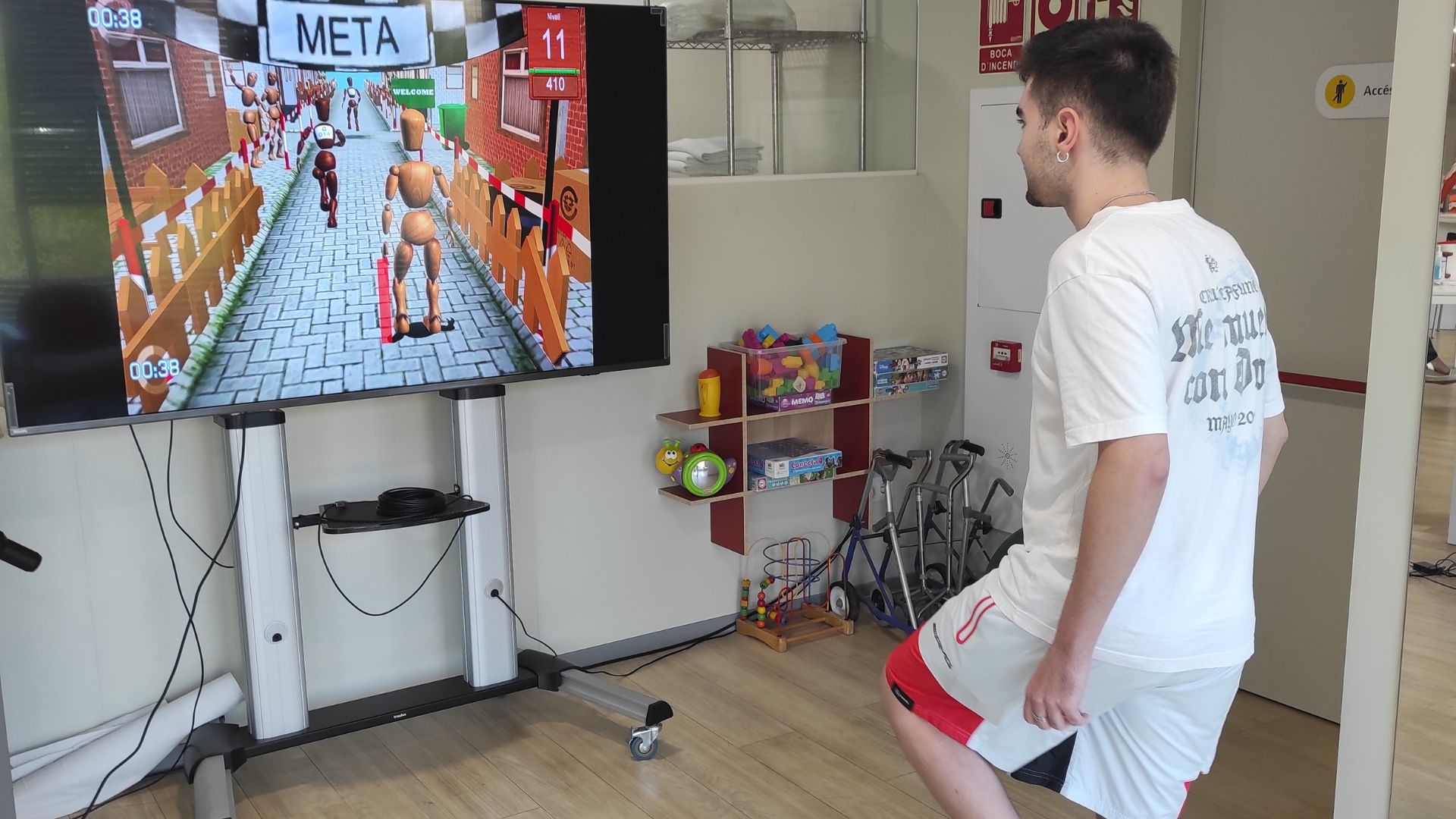
This is also the phase where objective recording of range of motion delivers the most operational value: Rehametrics Physical captures knee range of motion in flexion-extension session by session using camera-based vision, with automatic difficulty adjustment according to the patient's success rate. For the physiotherapist reviewing the case between in-person visits, having that data accumulated makes it easier to spot early whether progress in range has stalled.
Phase 2: strength, neuromuscular control and gait pattern
With range of motion already restored, the focus shifts to strength and neuromuscular control. The guideline reviewed open and closed kinetic chain quadriceps exercises separately, given that each plays a different role depending on the phase and the state of the graft, and recommended strength and neuromuscular training as the central component of this stage.
Balance and proprioception work is also introduced at this point, along with correcting any residual compensations in gait or squat pattern left over from the previous phase.
This is the phase where the most Rehametrics modules come into play at once: the recording of repetitions and movement speed in kinetic chain exercises, and the balance module, which adds centre of gravity and base of support for proprioception work. Difficulty is adjusted automatically across all exercises, so the patient does not stall at a workload they have already mastered while the physiotherapist is not present.
Phase 3: sport-specific training
This phase introduces plyometrics, changes of direction and agility tasks that progressively come closer to the real demands of the patient's sport. It is also where it starts to make sense to apply the first hop tests to compare the operated limb with the healthy one, in preparation for the full battery of return criteria.
Moving on to this phase without having consolidated strength and neuromuscular control in the previous one is one of the most frequently cited progression errors in the literature on ACL re-injury.
Return-to-sport criteria: what the evidence says
The Delaware-Oslo cohort study (Grindem et al., 2016), with 106 patients playing pivoting sports and two years of follow-up, provides two concrete figures worth bearing in mind when deciding on clearance to return to sport. First: those who passed a battery of return criteria (quadriceps strength symmetry, hop test symmetry, the KOS-ADLS functional questionnaire and a global rating of function) before going back to sport had a re-injury rate of 5.6%, compared with 38.2% among those who did not pass those criteria and returned anyway.
Second: delaying return until 9 months after surgery reduced the risk of re-injury by 51% for each additional month of waiting, with no further risk reduction observed beyond that point. Both findings align with van Melick's recommendation to use a battery of tests (strength, hop tests, movement quality and psychological readiness) instead of a single criterion or a fixed date.
What objective recording contributes across a 9–12 month protocol
A protocol this long and this dependent on criteria raises a practical problem: for most of the time between phases, the patient trains without the physiotherapist present. Rehametrics Physical records, through camera-based motion capture, range of motion at the knee, hip (flexion-extension and adduction-abduction) and shoulder, along with repetitions, movement speed and which zones of the range the patient has worked on more or less frequently. Difficulty is adjusted automatically across all exercises according to performance, so the system itself demands a little more as the patient improves, without waiting for the next review.
In balance exercises, it adds centre of gravity and base of support, data relevant to the neuromuscular control work of phase 2. For the physiotherapist, this translates into a dashboard with each patient's history between in-person sessions: how many repetitions they have done, with what consistency, and how their range of motion has progressed week by week, instead of reconstructing that progression from memory or from scattered notes.
None of this data replaces the hop tests or the strength dynamometry that the return-to-sport battery requires; it complements them with a continuous record, which is precisely what is missing when progression depends on criteria and in-person visits are weeks apart.
The role of Rehametrics
Which phase each patient belongs in, when to introduce plyometrics and when to clear a return to sport remains a decision for the physiotherapist or the team coordinating the case, supported by the specific tests each stage of the protocol requires. What changes with Rehametrics is where the information behind that decision comes from: instead of relying solely on the impression from the last visit, the physiotherapist arrives at each review with range of motion, repetitions and balance data accumulated since the previous session.
That matters especially in phases 1 and 2 of this protocol, where the volume of independent exercise between visits is high and where a difficulty setting that falls short, or a range that stops progressing for several weeks, can go unnoticed until the next review if nobody is recording it.
Resources related to this protocol
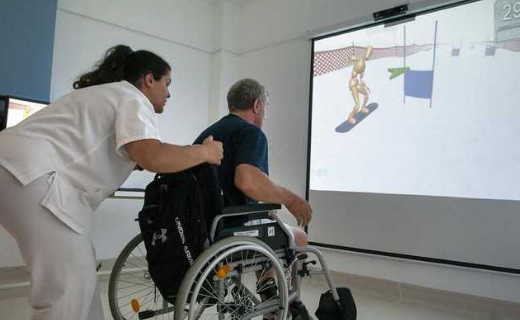
Range of motion, repetitions and speed
Camera-based motion capture to record range of motion at the knee, hip and shoulder, repetitions and consistency of execution.
View module →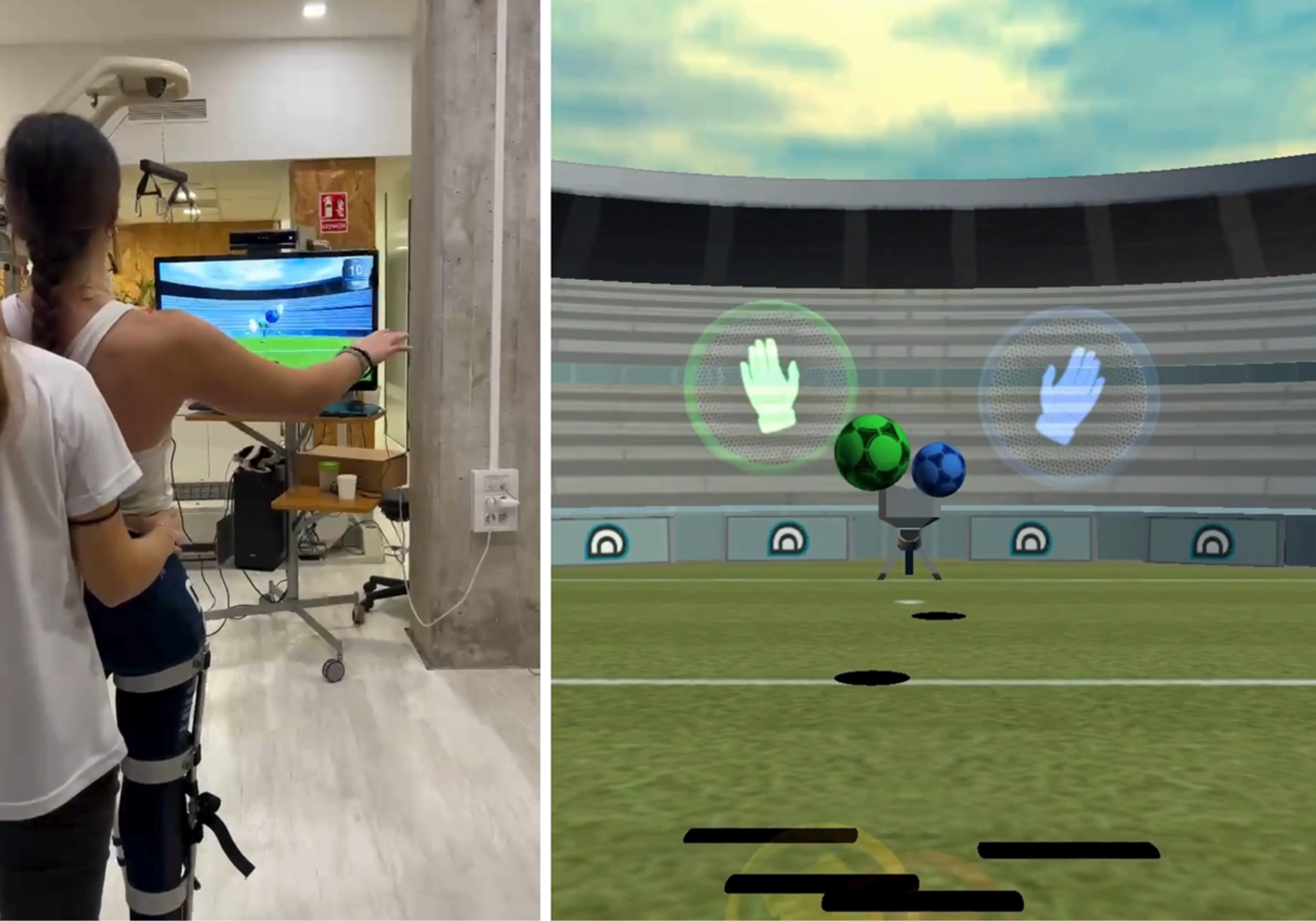
Centre of gravity and base of support
Neuromuscular control data relevant to phases 2 and 3 of the protocol, when proprioception work takes on more weight.
View exercises →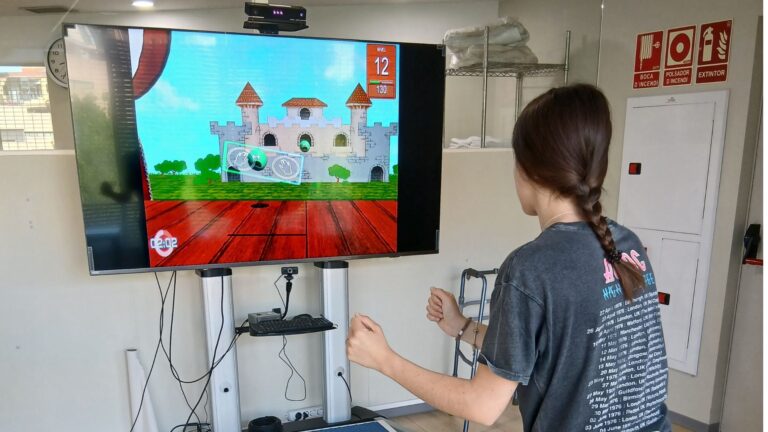
Prescribing therapeutic exercise
Prescribing therapeutic exercise properly means making sure the patient receives a stimulus that is sufficient and matched to their capacity.
Read →Frequently asked questions
How long does the full post-ACL reconstruction protocol last?
Does Rehametrics allow quadriceps muscle strength to be measured?
Want to see how Rehametrics helps in your rehabilitation protocols?
Try our physical rehabilitation software and discover how to keep objective track of your patients' progress.
Request a demo