
Mixed Reality and dizziness in rehabilitation: when it can help compared with immersive VR
With software designed to minimise it, most patients tolerate Rehametrics immersive activities well. For the most sensitive group, in a first session, or in tasks where it helps for the patient to see their own real body, mixed reality adds one more resource: keeping the surroundings visible can ease the sensory conflict that causes dizziness, without replacing the clinical criteria already applied to decide who is a candidate for VR.
What cybersickness is and why it appears in session
A patient puts on the virtual reality headset for the first time. Two or three minutes in, while walking down a virtual corridor or reaching for an object in mid-air, they say something feels off: a mild sensation of dizziness, a bit of warmth, an urge to take the headset off. The professional stops the activity and that first session ends earlier than planned.
This scene is common in clinics starting out with immersive virtual reality, and it has a clinical name: cybersickness. It is a set of symptoms (dizziness, nausea, disorientation, headache, eye discomfort or postural pain) that can appear during the session or, less frequently, in the hours or days that follow, as a delayed effect described in the literature as reliving the virtual immersion episode once back in the real world.
This risk is neither fixed nor inevitable: it depends largely on how the software is designed. We have already devoted a full article to the seven technical factors that most influence dizziness in VR headsets (refresh rate, latency, movement speed, device type, among others) and how Rehametrics mitigates them through the design of its activities: how to avoid motion sickness in virtual reality. With those mitigations already built in, few patients need to cut an immersive session short because of dizziness. Here we focus on an additional resource for the most sensitive group or for first sessions, one that does not depend on adjusting technical parameters but on the design of the experience itself: how much of the real environment the patient continues to see while the activity lasts.
Why the body does not interpret what the eyes see in the same way
The most widely accepted explanation for cybersickness is sensory conflict theory. The visual system tells the brain that the body is moving, because the virtual environment changes, rotates or shifts, while the vestibular system of the inner ear reports that the body is staying still, seated or standing in the same place. When those two signals do not match, the brain may interpret the discrepancy as an alarm signal, which translates into nausea and dizziness. An article in Frontiers in Human Neuroscience on visual-vestibular mismatch in virtual reality develops this hypothesis in more detail.
The degree of immersion influences the intensity of that conflict, though not in isolation from the content and design of the activity itself. A study with 89 participants comparing low-immersion environments (computer screen), semi-immersion (CAVE) and full immersion (Oculus Rift headset), published in the journal Virtual Reality, found that more than half of the participants in the fully immersive condition had to interrupt the test before 10 minutes due to cybersickness symptoms, compared with no interruptions in the computer screen group. That figure should be read with some nuance: the study used generic content, not necessarily designed with the same mitigation criteria (seated tasks, moderate movement, high refresh rate) that clinical software designed to minimise dizziness from the outset does apply. Even so, the general principle holds: the fewer visual references to the real environment that remain available, the more the brain depends on what it sees matching what the body feels.
What mixed reality is and how it differs from full immersion
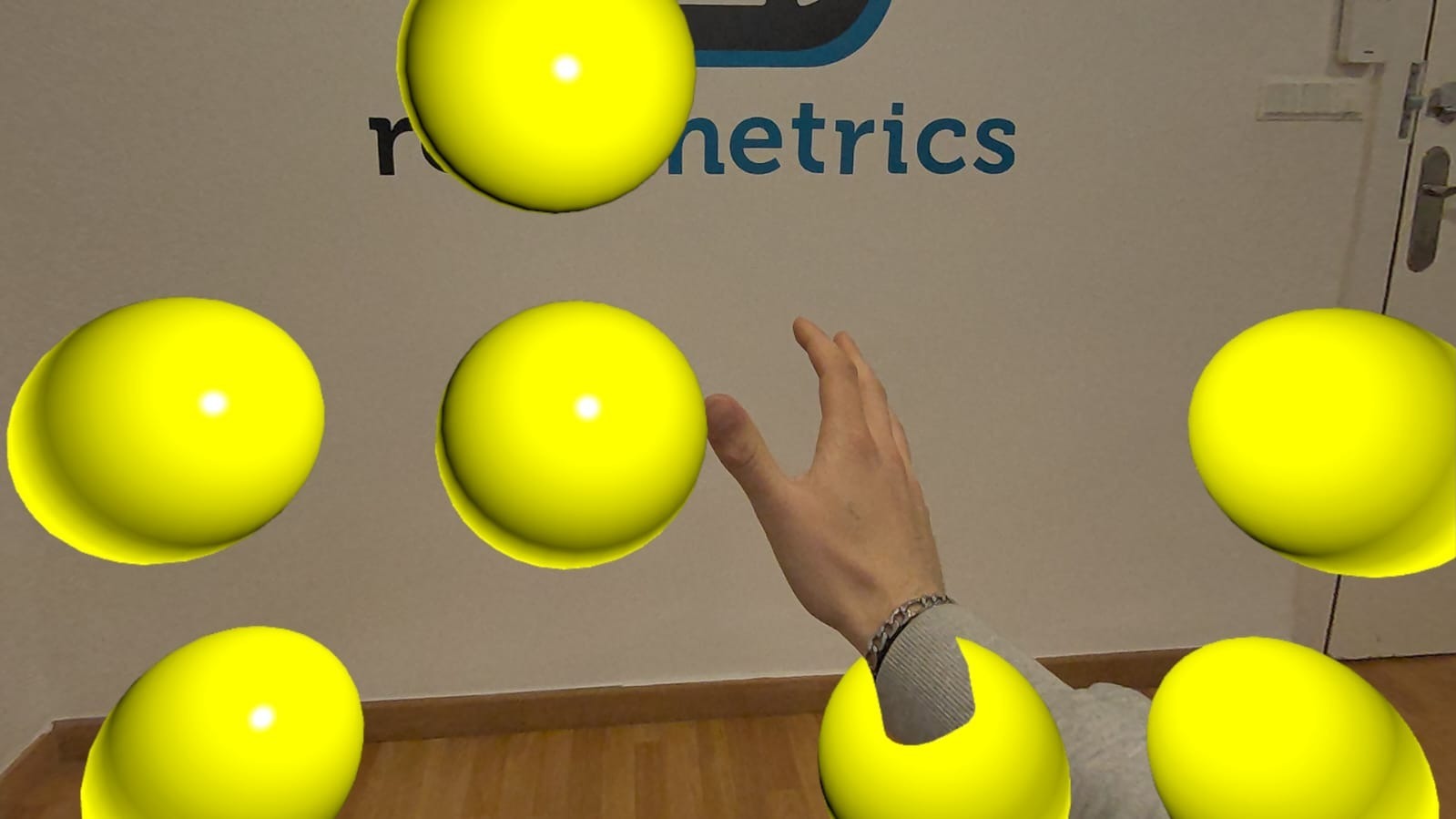
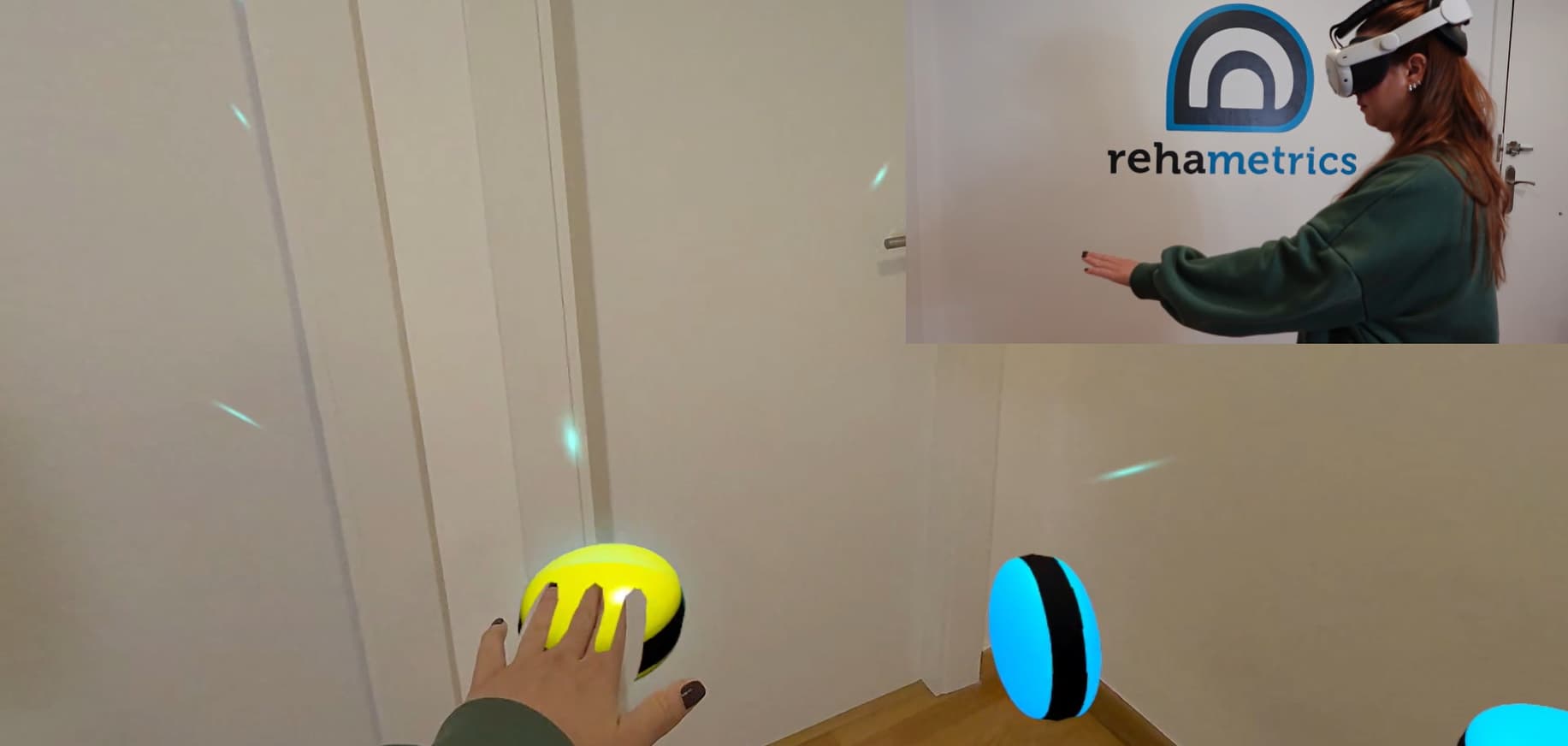
Mixed reality combines virtual stimuli with the real physical environment. Instead of completely occluding the patient's vision, the headset uses cameras to display the real space (the clinic room, the floor, their own body) and superimposes virtual elements onto that image for the patient to interact with. The patient continues to see the room they are in, the plinth or the physiotherapist, while at the same time working with virtual objects or obstacles integrated into that image.
It is worth clarifying that terminology in this field is not always consistent: some scientific papers use "augmented reality" to describe systems that in practice work as semi-immersion, and not all manufacturers or all studies draw the same distinction between mixed, augmented and non-occlusive VR. For practical purposes in this article, we use mixed reality to mean the mode in which the patient keeps a continuous visual reference to the real physical space while the therapeutic activity lasts, as opposed to immersive VR, where that reference disappears entirely.
Why it may produce less dizziness
If cybersickness arises largely from the mismatch between what the eyes see and what the vestibular system feels, keeping the real environment visible during the activity can act as an anchor that reduces that mismatch. The patient continues to see their own body, the floor beneath their feet and stable objects in the room, a reference that matches what their vestibular system is registering, even while interacting with a superimposed virtual element.
It reduces one of the mechanisms that produce dizziness, not all of them. Rehametrics immersive activities, with the software mitigations already built in, are well tolerated by most patients from the first session. Where the additional margin of mixed reality shows most is in the group with greater vestibular sensitivity, or in a first encounter with the headset: keeping the real environment visible can make that first experience easier. Factors such as latency, brightness, passthrough camera quality or session duration still play a part, and some patients may notice some discomfort even in mixed mode. Recent research on "passthrough" systems with geometric reconstruction of the environment explores precisely this avenue as an additional way of mitigating cybersickness, although this is still work in progress (published as a preprint, without full peer review) rather than a settled finding.
In the internal clinical protocol for using Rehametrics VR, mixed reality is framed as a starting point for that group of patients, not as a substitute for immersive tasks: a way for them to get used to the sensation of wearing the headset before moving on, when the therapeutic objective calls for it, to activities that completely occlude the real environment. For other patients, who usually tolerate full immersion well from the first session, dizziness is no longer the reason to consider mixed mode, although the type of task or the specific therapeutic objective may justify it just the same, as explained in the next section. How much weight to give each approach depends, as with almost everything in the progression of a session, on each professional's judgement and each patient's response.
When it makes sense to use it in session
In practice, mixed reality tends to fit best at specific points in the process, although each team may prioritise these uses differently depending on the patient in front of them:
- First encounter with the headset. Very brief sessions, of one or two minutes, in mixed mode or with the outward-facing view enabled, simply so the patient gets used to the weight and feel of the device before being asked to perform any task.
- Patients with some sensitivity to movement. This is not about patients with severe motion sickness, which remains a contraindication requiring particular caution, but about people who report some sensitivity and for whom starting in mixed mode can make a first experience smoother.
- Older patients or those with less prior experience of screens and video games. Keeping the room visible helps with orientation and reduces part of the initial uncertainty that full immersion can generate.
- Progression towards immersive tasks. Once the patient tolerates mixed mode well, moving on to activities with a greater degree of immersion can be considered if the therapeutic objective requires it.
It also has value in patients with no tendency towards dizziness
Choosing mixed reality does not depend solely on whether the patient has a tendency towards dizziness. Keeping the real body visible, instead of replacing it with a fully virtual avatar, offers something different: in tasks focused on body schema, spatial orientation or dual tasking, seeing their own arm, their own leg or their real posture integrated into the activity can help the patient connect the virtual movement with the sensation of their own body.
Rehametrics Physical already works on body schema as one of its exercise categories, and some teams value mixed reality precisely for this in patients with no particular sensitivity to movement: it is not a tolerance measure, but a question of which visual reference best suits the specific therapeutic objective. Choosing between mixed and immersive mode may depend as much on the patient's sensitivity profile as on the type of task being worked on at that point in the plan.
The role of Rehametrics
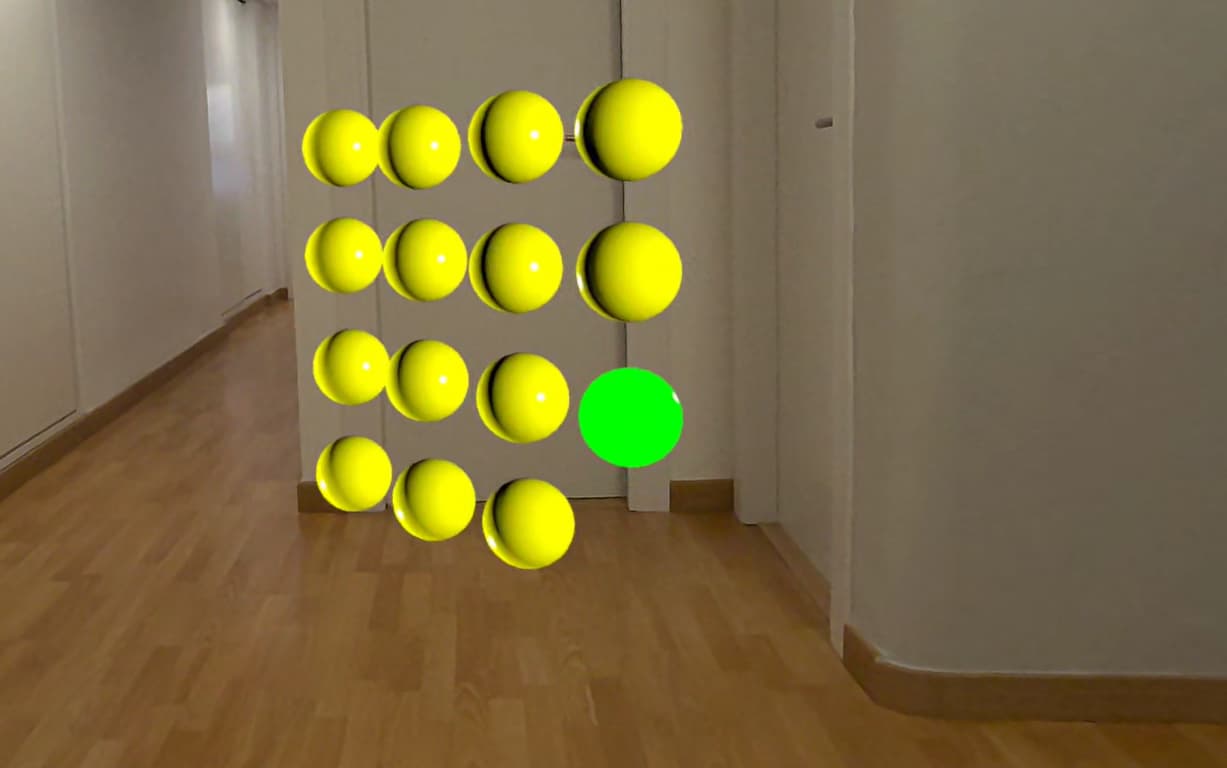
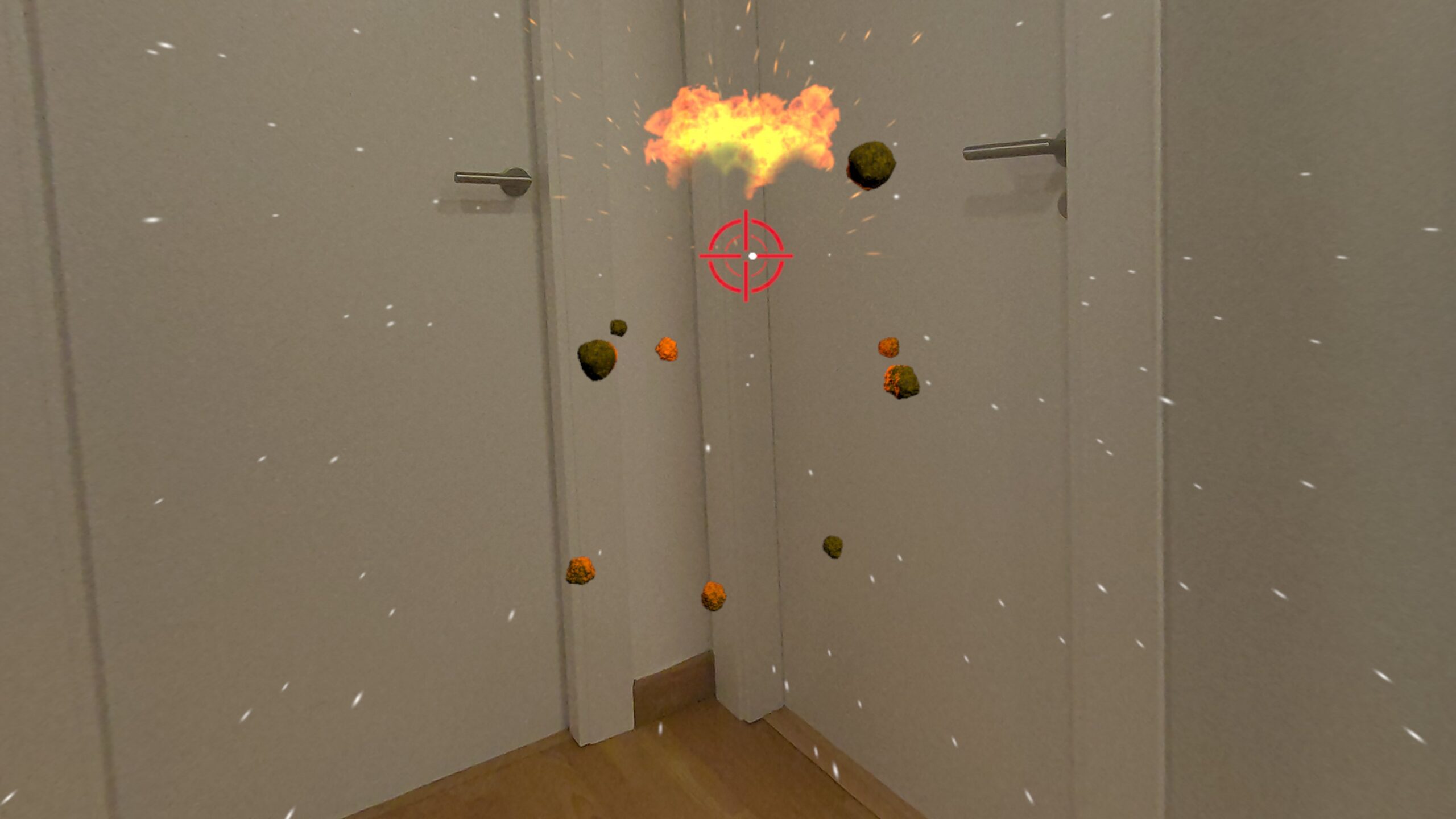
Rehametrics currently has more than 20 activities specific to mixed reality, as well as automatic detection of the patient's posture. That is the 2026 figure: the catalogue expands with each update, so that number will keep growing. Immersive activities remain the bulk of the catalogue and the default option for most patients; mixed reality is an additional route, not a replacement. The professional decides, activity by activity, whether the patient works with the real environment visible or with full immersion, and can switch modes between sessions, or even within the same session, depending on how the patient responds.
Control of the session remains with the therapist: they decide which activity to use, how to grade it and when to progress towards more immersive or more demanding tasks. Mixed reality widens the room for manoeuvre with patients who might otherwise abandon the session because of dizziness, but the decision about which patient needs it and for how long remains with the professional handling the case. We covered this same idea, technology as support rather than a substitute for professional assessment, in the article on the patient experience with virtual reality in rehabilitation.
Modules relevant to mixed reality and VR safety
Mixed reality and immersive activities
Catalogue of tasks that can be graded between mixed mode and full immersion, with automatic posture detection and session control from the computer.
View module →
Contraindications of using VR headsets
Which clinical histories, medical conditions or ages call for greater caution when considering a virtual reality session.
Read article →
Progress reports
Quantitative follow-up of each patient's tolerance, range and progression, session by session.
See clinical validation →Frequently asked questions
Does mixed reality eliminate the risk of dizziness in VR sessions?
It reduces one of the main mechanisms of cybersickness, the mismatch between what the eyes see and what the vestibular system feels, by keeping the real environment visible. It does not, however, act on other factors such as latency or each patient's individual sensitivity, so some people may notice discomfort even in mixed mode.
Which patients benefit most from starting with mixed reality?
It tends to be useful in first sessions, in patients with mild sensitivity to movement, in older people or in those with little prior experience of immersive screens. The decision, in any case, depends on the professional's assessment for each individual patient.
How does mixed reality differ from augmented reality?
Terminology varies from source to source. In this article, mixed reality refers to keeping a continuous visual reference to the real physical environment while virtual stimuli are integrated, something that in certain scientific papers is also described as augmented reality or semi-immersion, depending on the system used.
Do you always have to start in mixed mode before moving on to immersive tasks?
It is a common progression for sensitive patients or in first sessions, though not a compulsory step in every case: the professional may choose to start directly in immersive mode if the patient already has prior experience and there is no relevant history of dizziness.
Does mixed reality change the exclusion criteria for using VR headsets?
The patient selection criteria, such as a history of severe motion sickness, serious uncompensated vestibular disorders or diagnosed photosensitive epilepsy, remain the same whichever mode is chosen; mixed reality does not change that prior assessment.
Are Rehametrics immersive activities risky for the patient?
Not particularly. Rehametrics builds into its immersive activities the software mitigations that reduce cybersickness (high refresh rate, low latency, moderate movements, seated tasks where appropriate), which we review in the article on how to avoid motion sickness in virtual reality. Most patients tolerate them without any significant incidents; mixed reality adds one more resource for the group with greater sensitivity or for first sessions, not a necessary alternative for everyone.
Want to see how it works in session?
We will show you the mixed reality activities in Rehametrics VR and how they fit into each patient's clinical progression.