Scientific Evidence on Virtual Reality in Musculoskeletal Rehabilitation: What the Research Says
The most recent systematic reviews do not conclude that virtual reality “works” across the board for physical rehabilitation. They conclude that it works for some conditions and some metrics, but not for all, and that much of what raises concerns in clinical practice—dizziness, headsets, safety in older patients—depends on the type of technology, not on virtual reality in general.
Immersive and Non-Immersive Virtual Reality: A Distinction That Matters
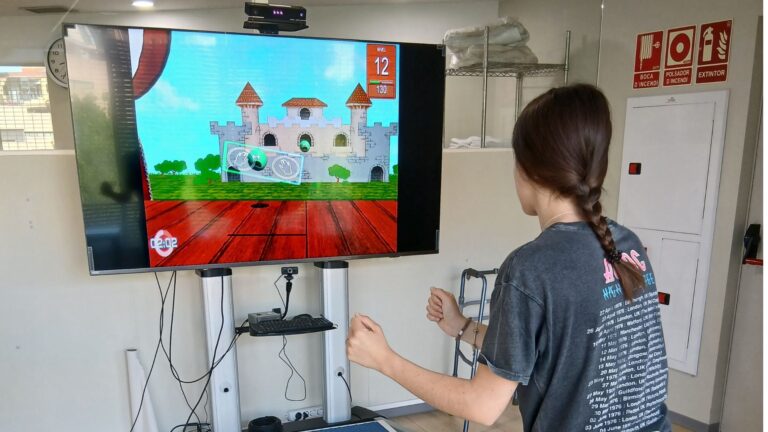
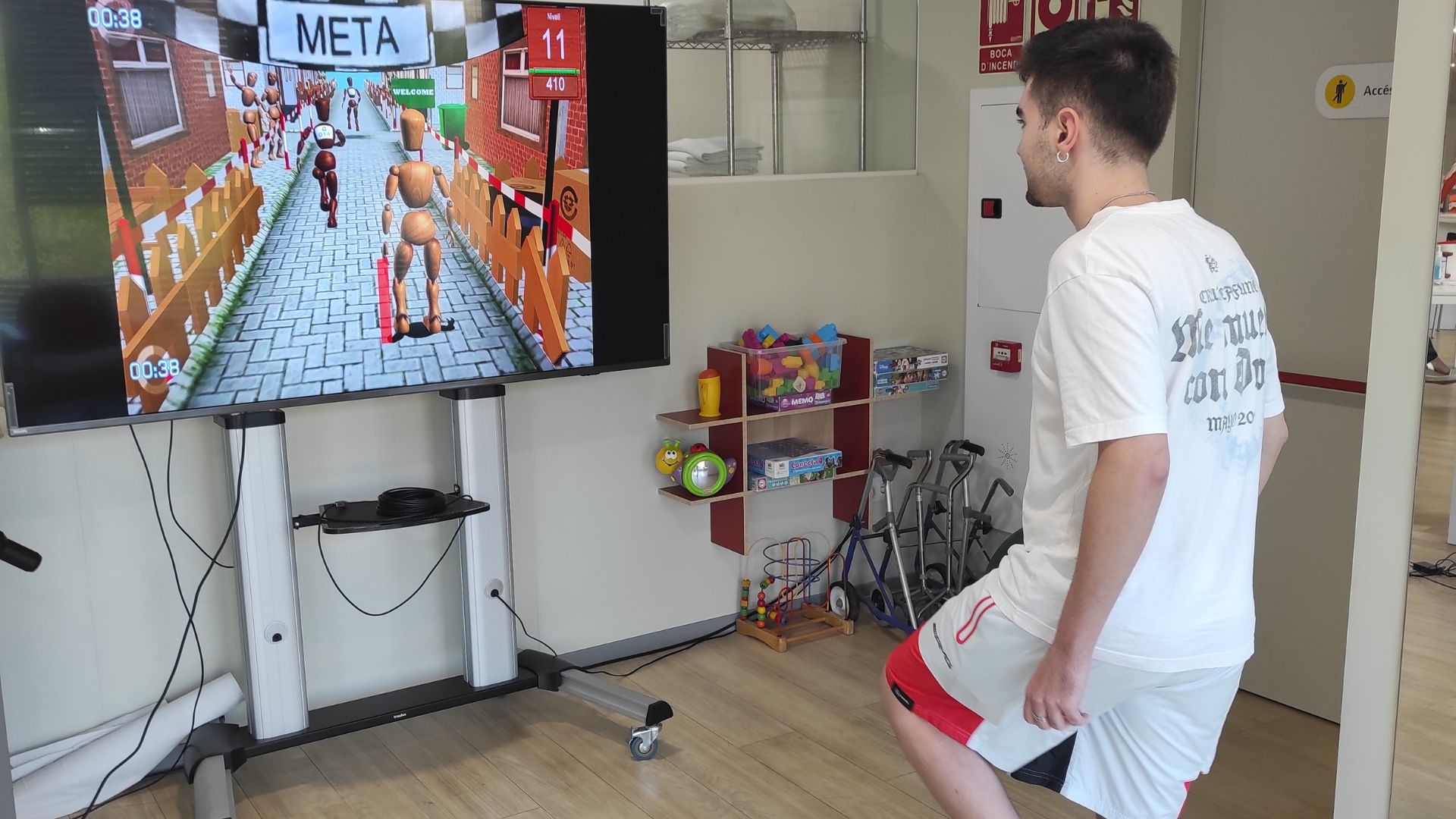
When a skeptical physical therapist hears “virtual reality in rehabilitation,” they typically think of a headset, a 360° environment, and, perhaps, the risk of motion sickness. That image is accurate, but it only describes part of the field. The scientific literature groups two quite distinct concepts under the same term: immersive virtual reality, which uses a headset or goggles that replace the patient’s field of view, and non-immersive virtual reality, in which the patient views a screen or projection and a camera system captures their actual movements, without goggles, controllers, or body sensors.
This distinction is not a minor one: in the most comprehensive review we examine in this article, 7 of the 14 included meta-analyses focused exclusively on immersive VR, while the rest combined studies of both types. When a headline states “virtual reality improves X,” it’s worth asking which specific technology the included studies are referring to, because the results—and, as we’ll see, the risks—are not interchangeable between one modality and another.
What Does the Most Recent Evidence Say About Musculoskeletal Pathology?
The most comprehensive review available to date is an umbrella review published in the Journal of Medical Internet Research in 2025, which synthesizes 14 meta-analyses published between 2019 and 2024—involving a total of 13,184 patients—on the use of virtual reality for various musculoskeletal conditions. An umbrella review does not generate new data: it compiles and compares the findings of other meta-analyses, making it particularly useful for gaining an overall picture without relying on a single study.
The most significant aspect of their findings is not a single conclusion, but rather that the results vary greatly depending on the condition and metric under consideration:
- Knee pain: Immersive virtual reality reduces pain and improves balance compared to traditional rehabilitation, but shows no significant differences in walking speed or range of motion.
- Low back pain: Significantly reduces immediate pain (mean difference –1.43; p < .001).
- Neck pain: The evidence here is the weakest of all those analyzed: several of the included meta-analyses found no significant differences compared to conventional rehabilitation, either in pain intensity or in range of motion.
- Hip or knee arthroplasty: Better results on specific functional scales (HSS, WOMAC), but no significant differences on the 6-minute walk test.
Beyond this umbrella review, several more recent individual clinical trials provide a more detailed picture for specific joints, even though they are not meta-analyses. For adhesive capsulitis of the shoulder (“frozen shoulder”), a randomized controlled trial published in 2025 involving 36 patients found significant improvements in pain and range of motion after 4 weeks of virtual reality exercise, consistent with the results obtained with conventional physical therapy. Regarding balance and fall prevention in older adults, the V-TIME trial, published in The Lancet (302 patients), combined treadmill training with a non-immersive virtual reality system—a camera and projection, without goggles—and found a significant reduction in falls compared to treadmill training alone (incidence rate ratio 0.58; 95% CI 0.36–0.96; p = .033). This is a significant finding because it confirms, through a large, independent trial, that the non-immersive modality has its own evidence and is not merely “the glasses-free version” of the immersive approach.
We should also be honest about the quality of this evidence: when evaluated using the GRADE system, the vast majority of the results were classified as being of low or moderate quality, and only one was rated as high quality. This does not invalidate the findings, but it does call for caution before presenting them as an established truth.
A case with more consistent evidence: the anterior cruciate ligament
Within this heterogeneous landscape, rehabilitation following anterior cruciate ligament (ACL) reconstruction is one of the areas with the most consistent results. A meta-analysis published in PLOS ONE in 2025, which included 6 randomized clinical trials involving 387 patients, found a significant improvement in the IKDC knee functional score (mean difference 4.23; 95% CI 1.76–6.71; p < .01) in the group treated with virtual reality technology compared to the control group, as well as improvements in walking ability, gait function, and knee muscle strength.
A single clinical trial clearly illustrates the nuances hidden behind a meta-analysis: in a randomized study involving 30 patients following ACL reconstruction, adding immersive virtual reality (PlayStation VR) to conventional rehabilitation significantly improved pain (p = .012) and the subjective IKDC knee score (p = .024), but there were no significant differences compared to the control group in limb loading, balance, range of motion, or functional jumping tests. This does not contradict the meta-analysis: it serves as a reminder that it is important to examine each variable individually, and that with small sample sizes, some real improvements may not reach statistical significance.
The contrast with neck pain is instructive: both are common musculoskeletal conditions, but the evidence is strong for one and weak for the other. This suggests that the decisive factor is not “whether virtual reality is used,” but rather the type of injury, the joint mechanism involved, and the variable being targeted for improvement.
Safety: What the Research Says About the Risks
The most commonly cited cause for caution among professionals is what is known as “cybersickness”: dizziness, nausea, disorientation, or temporary impairment of postural control associated with the use of virtual reality. The available research confirms that it exists, but it also narrows down the circumstances under which it occurs.
A systematic review and meta-analysis published in Applied Sciences (2023) on cybersickness in rehabilitation using immersive virtual reality concludes that, in most studies involving older adults, symptoms are mild and infrequent, although a feasibility study in nursing homes found an 11% dropout rate associated with dizziness when using fully immersive systems. Session duration also matters: 20-minute sessions were associated with more symptoms than 10-minute sessions in older adults.
In the specific case of immersive virtual reality, the literature also identifies other exclusion criteria to consider: photosensitive epilepsy, severe hypertonia, severe cognitive impairment, or the patient’s refusal to use the technology.
How to Interpret This Evidence in Daily Clinical Practice
Faced with a mixed body of evidence, there are two equally simplistic interpretations: dismissing the technology because “not all the evidence is positive,” or adopting it uncritically because “there are studies that support it.” Neither seems to align with what the reviews actually show.
A more useful—and more realistic—interpretation involves several ideas: the indication depends on the condition and on which variable matters for that specific patient (seeking pain relief is not the same as regaining range of motion); technology is integrated as a complement to conventional physical therapy, not as a substitute—a point we already made when discussing why many patients with musculoskeletal pain do not improve; and it is important to consider the quality of the evidence (GRADE, sample size) before accepting a striking conclusion from a single study at face value.
This also ties in with something we discussed regarding how to objectively assess a patient’s progress: regardless of what meta-analyses say about groups of patients, the data on each individual patient’s progress—their range of motion, repetitions, and consistency from session to session—remains the most direct criterion for determining whether, in that specific case, the tool is working.
The Role of Rehametrics in This Evidence Framework
Rehametrics Physical falls under the non-immersive category described in this article: camera-based motion capture, without goggles, controllers, or body sensors, which avoids the specific mechanism of cybersickness associated with head-mounted display systems. It tracks the range of motion of the shoulder, hip, elbow, and knee, as well as repetitions and execution speed; for balance exercises, it measures the center of gravity and base of support, compiling this data into automatic progress reports that are exportable and customizable.
This does not make Rehametrics an exception to all of the above: like any technology of this kind, its use depends on the patient and the injury; it does not replace a physical examination or the professional’s judgment; and its value is based on the same logic we advocate in this article—using available data, with its limitations, rather than making decisions based solely on subjective impressions.
The platform has more than 30 published clinical studies and is CE-marked as a medical device. None of these studies replace the independent systematic reviews we have discussed here; we consider them complementary: some validate the tool itself, while others position virtual reality, in general, within the range of options available in rehabilitation.
Related Resources
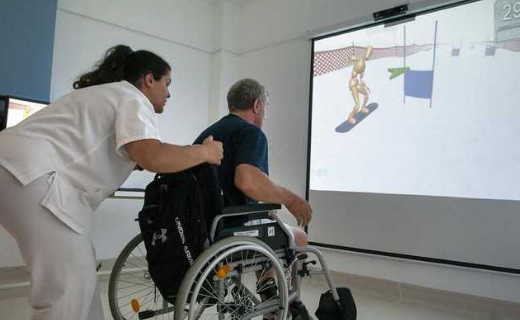
Motion capture without glasses or sensors
Rehametrics' non-immersive module: joint range of motion, repetitions, speed, and balance—no headset or controllers required.
View module →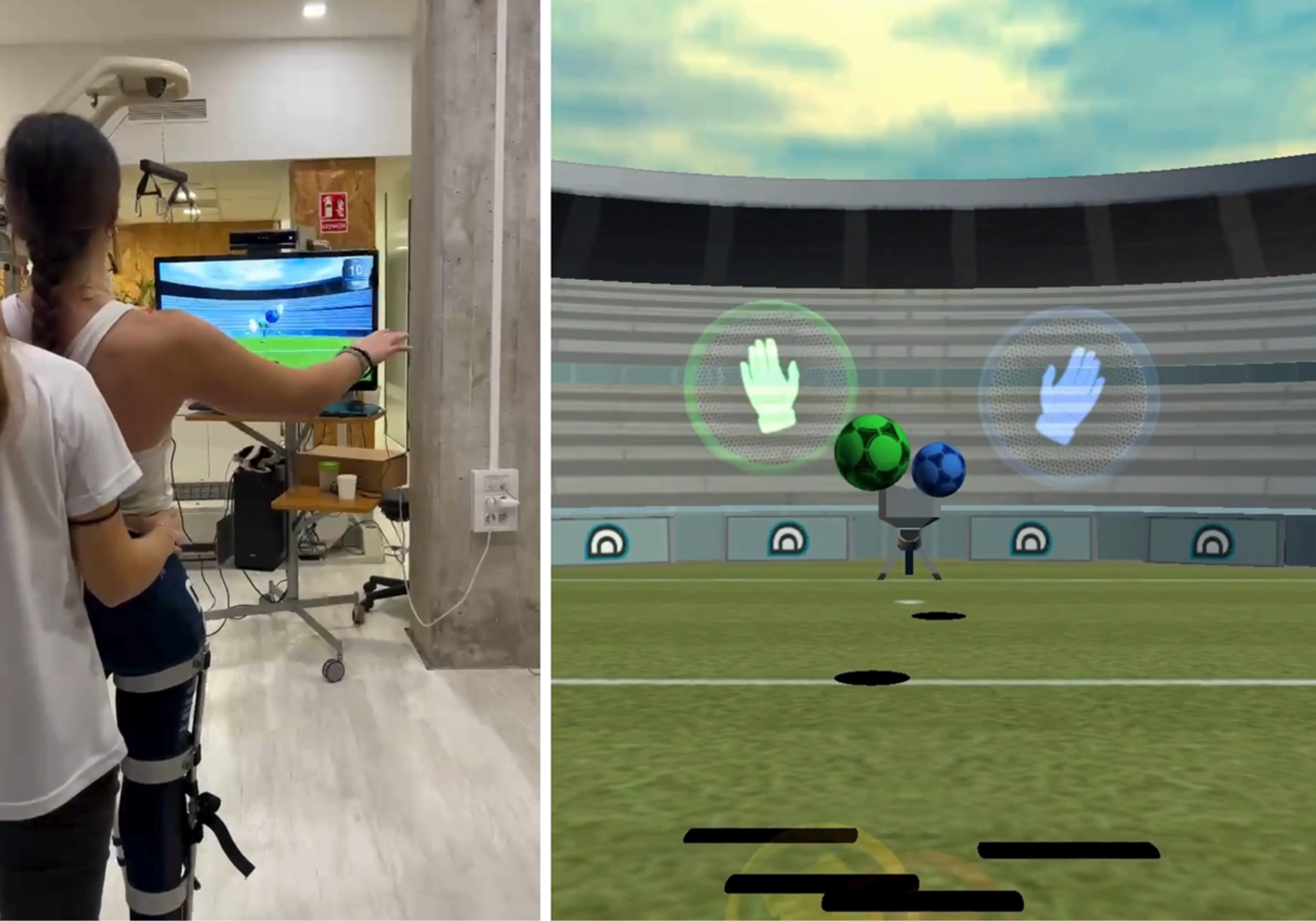
Center of gravity and base of support
Neuromuscular control and stability evaluation for fall prevention and gait re-education.
View exercises →
+30 published clinical studies
Scientific publications that specifically validate the Rehametrics platform.
See clinical validation →Frequently Asked Questions
Does virtual reality work the same way for all musculoskeletal injuries?
Is immersive virtual reality (with a headset) the same as a motion capture system without a headset?
Is virtual reality safe for older patients or those with underlying medical conditions?
What does the evidence specifically say about the anterior cruciate ligament?
Does this evidence mean that technology can replace conventional physical therapy?
Would you like to see how Rehametrics applies this evidence in a session?
We'll show you how motion capture works without glasses or sensors, and what specific data is recorded during each session.
Request a demo