
Cognitive frailty: what works in prevention and treatment
Physical frailty and cognitive decline share modifiable risk factors, which opens a real window to act before they progress and to treat them once they are already present. This article brings together what carries the most weight in prevention, what the evidence shows about multidomain treatment, and what role technology can play in sustaining it over time.
What cognitive frailty is and why it pays to act early
Physical frailty has had a known operational definition for more than two decades: the Fried phenotype (2001) describes it through five criteria (unintentional weight loss, self-reported exhaustion, muscle weakness, slow gait speed and low physical activity). Three or more criteria define frailty; one or two, prefrailty.
Cognitive frailty adds a second component. The international consensus of the International Academy on Nutrition and Aging and the International Association of Gerontology and Geriatrics (Kelaiditi et al., 2013) defines it as the coexistence of physical frailty, measured with a validated scale, and objectively demonstrable cognitive impairment, in the absence of a dementia diagnosis. The consensus itself treats it as a state with room to be reversed, unlike dementia that is already established.
In clinical practice, this identification usually comes through the routine comprehensive geriatric assessment, using frailty scales and brief cognitive tests the team already knows (Fried, MMSE, MoCA, among others). This article does not dwell on that assessment stage: it focuses on what comes next, prevention and treatment, which is where the patient's prognosis is really decided.
Prevention: the modifiable factors that matter most
A good share of the factors associated with cognitive frailty are modifiable, and that is where the room for manoeuvre lies before the condition fully sets in:
- Multicomponent physical exercise. Programmes combining strength, balance and aerobic work reduce the risk of physical frailty more than aerobic exercise alone.
- Regular cognitive stimulation. Keeping attention, memory and executive functions active is associated with a lower risk of decline, especially when combined with physical activity.
- Nutritional status. Poor nutritional status influences sarcopenia, one of the mechanisms connecting physical and cognitive frailty. Nutrition is usually part of a prevention plan, although which specific nutrients matter most is for the nutrition specialist to assess, not this article.
- Psychosocial support and regular social contact. Isolation is consistently associated with a higher risk of cognitive decline in older people.
- Reviewing polypharmacy and sleep quality. Both factors, barely visible in a short consultation, weigh on the patient's accumulated risk.
What the evidence says about treatment
A meta-analysis published in Age and Ageing (Zheng et al., 2022) reviewed 13 randomised controlled trials with 1,089 participants already diagnosed with cognitive frailty. The interventions studied showed statistically significant improvements in frailty score, global cognitive function, mobility, muscle strength and several markers of nutritional status. The authors themselves rate the overall certainty of the evidence as low to moderate, and call for more research before these results are considered conclusive.
One example of how a treatment of this kind is designed is the WE-RISE trial (Subramaniam et al., 2020, Frontiers in Public Health), a six-month randomised controlled trial protocol in Malaysia. It combines multicomponent physical exercise, cognitive training, dietary counselling and psychosocial support in a single programme: the first three months with an in-person instructor, the following three with a version adapted to continue at home. It is a protocol paper, not a results paper, so it describes the treatment design rather than what it ultimately found.
Programmes combining physical exercise, cognitive training, nutritional support and psychosocial support are the ones these two works back, over treating a single component in isolation.
What a multidomain treatment programme looks like in practice
Translated to a real centre, a multidomain programme divides responsibilities among several professionals under the geriatrician's coordination: physiotherapy handles the strength and balance work, neuropsychology or occupational therapy handles cognitive stimulation, and nutrition steps in when the centre has that resource available. Psychosocial support may fall to social work, psychology or the direct-care team itself, depending on each centre's resources.
WE-RISE's six-month duration is just one example among several published protocols; each centre adapts duration and frequency to its actual capacity. What does recur across programmes is the phased logic: a more intensive, supervised initial period, followed by a maintenance period with less direct supervision, in which sustaining the patient's adherence becomes the main challenge.
What technology contributes to sustaining treatment
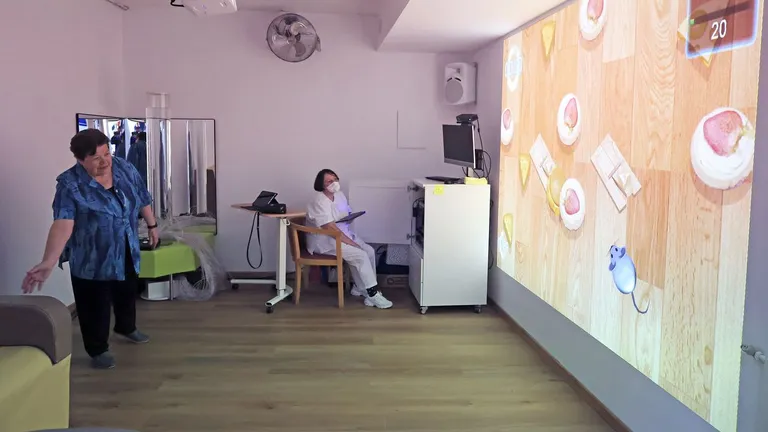
Sustaining a programme over several months is, in practice, the point where most patients drop out of treatment: motivation falls, sessions become less frequent, and documenting every gain by hand takes time the team does not always have. Rehametrics Cognitive works on six domains (attention, memory, working memory, processing speed, language and executive functions), records hits, errors and response time in each exercise, and adjusts difficulty automatically according to the patient's performance, which keeps the exercise demanding without becoming frustrating as the patient improves.
The physical module records range of motion at the shoulder, hip, elbow and knee, and in balance exercises it adds centre of gravity and base of support, covering the strength and balance part of the treatment when the centre also works with it. In this article the focus is on the cognitive component, which is usually handled by the neuropsychologist or the occupational therapist within the programme.
Progress reports, printable and accumulated session by session, give the team an objective figure with which to review whether the patient is responding midway through treatment, instead of waiting until the end of the programme to discover that they were not.

The role of Rehametrics
Designing the treatment (which combination of exercise, nutrition and stimulation, at what frequency and with what goals) remains the work of the geriatrician and the team coordinating the case. Rehametrics contributes the delivery and recording side: cognitive stimulation sessions and, if the patient also needs it, physical work, with progress data the team can review at any point in the programme without depending on scattered notes.
The session guided from a touchscreen tablet makes it easy to use with older patients who have no prior experience with technology, including those with already advanced frailty, and the protocols designed for older adults and cognitive impairment avoid building every stimulation plan from scratch.
Modules relevant to frailty treatment
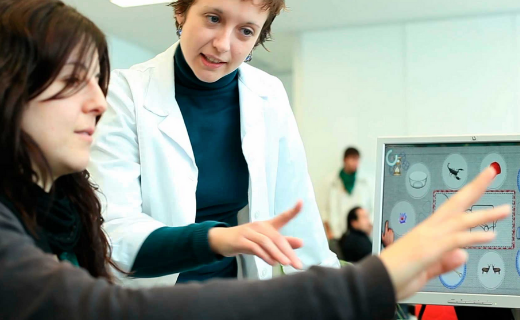
Attention, memory and executive functions
Cognitive stimulation exercises with automatic difficulty adjustment and protocols specific to older adults and cognitive impairment.
View module →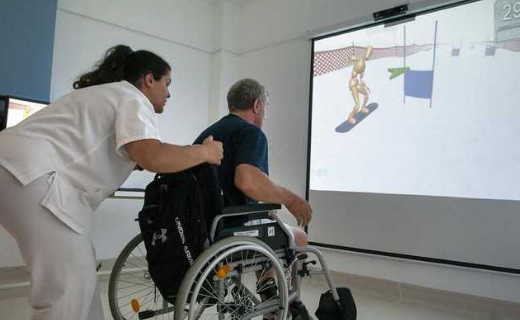
Strength, range of motion and balance
Recording of range of motion at the shoulder, hip, elbow and knee, and of balance through centre of gravity and base of support.
View module →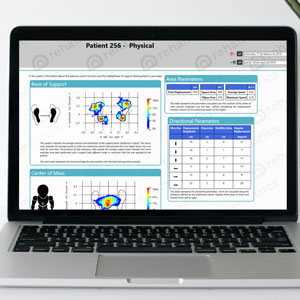
Progress reports to follow the treatment
Automatic recording of performance in each session, compiled into printable reports ready for a mid-programme review.
See clinical validation →Frequently asked questions
What type of exercise helps most to prevent cognitive frailty?
How long does a typical treatment programme last?
Is cognitive frailty reversible with treatment?
What role does nutrition play in prevention and treatment?
How does technology help sustain a treatment lasting several months?
Would you like to see how Rehametrics supports cognitive frailty treatment?
We will show you what data each session records, cognitive and physical, and how it translates into reports you can use to follow the programme.
Request a demo