
Cognitive stimulation on the iPad how to work on cognitive rehabilitation in clinic and at home
More and more centres are bringing the iPad into their daily clinical practice. We explain what a good cognitive stimulation programme should offer to work well on this device, and how Rehametrics Cognitive delivers it, both in clinic and in the patient's home.
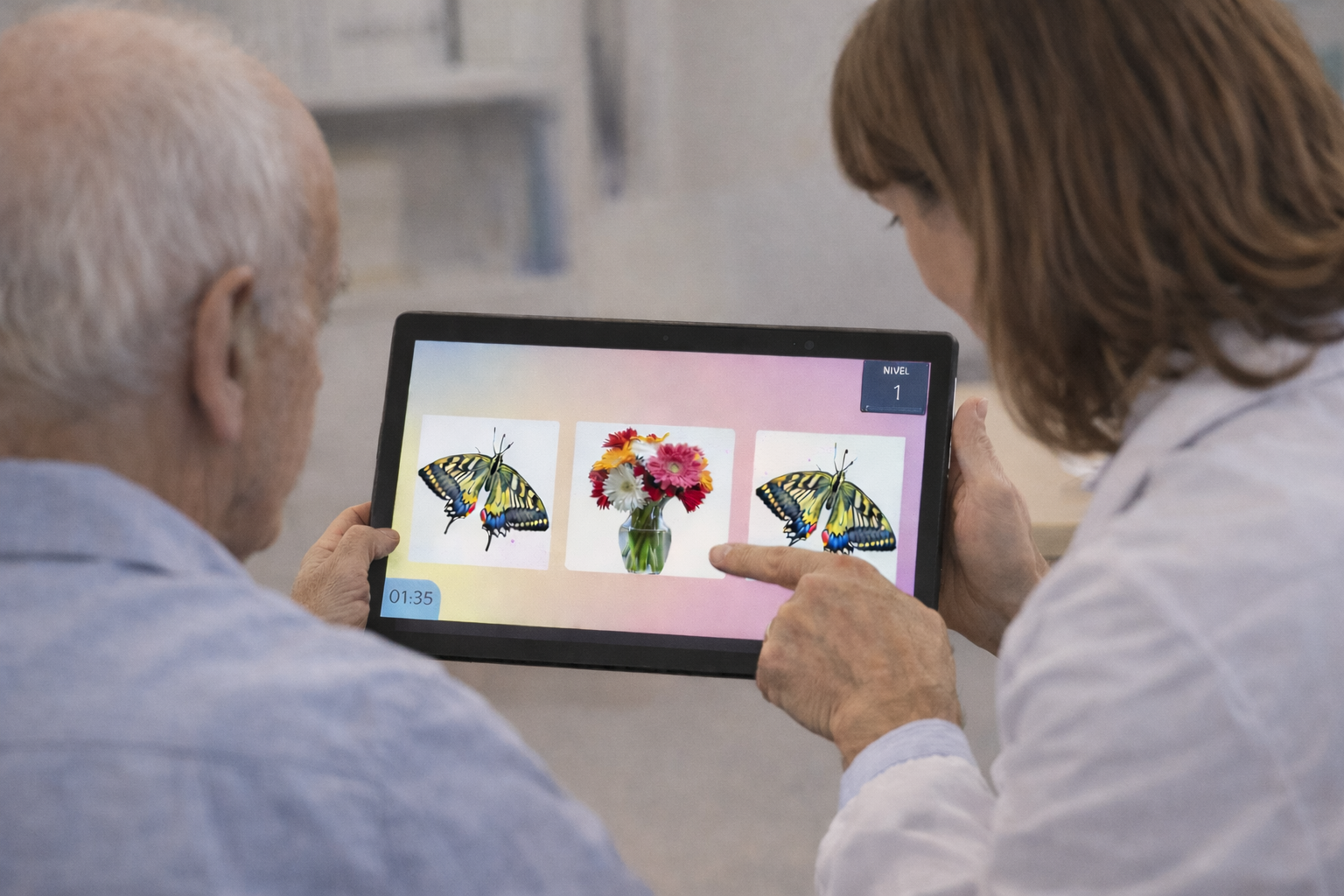
The device you deliver cognitive stimulation on matters more than it might seem: it affects how easily the patient interacts with the exercise, whether they can continue the programme outside the clinic, and whether the team can share access among several professionals without friction. The iPad brings together several of those conditions, which is why it features more and more often in day-to-day work in neuropsychology, occupational therapy and speech and language therapy.
This article covers what a cognitive stimulation platform should offer to make good use of that device, what role the Rehametrics Cognitive Clinic and Cognitive Home apps play, and what is worth assessing before choosing a solution.
Why more and more centres deliver cognitive stimulation on the iPad
A device that is already part of daily clinical work
Many centres already use the iPad for clinical records, scales, questionnaires or video calls with the patient. When the cognitive stimulation platform is compatible too, there is no need to maintain a separate device just for that part of the treatment: the same iPad covers everything.
Touchscreen and portability, key to adherence
Touch interaction makes the work easier with patients who have fine motor difficulties or who tire with unintuitive interfaces. And the portability of the iPad makes it possible to work across different rooms, floors or even homes without depending on a fixed computer workstation.
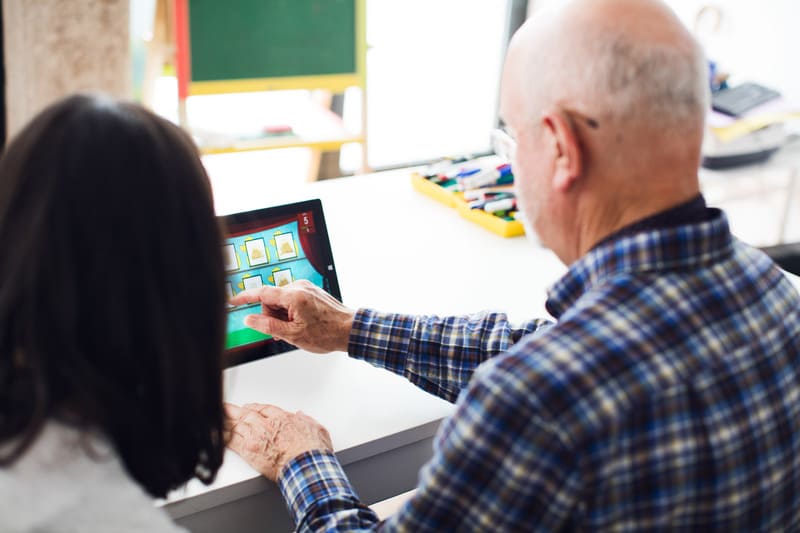
A natural gateway to telerehabilitation
A good share of patients doing cognitive rehabilitation already own an iPhone or an iPad. Having the platform work on those devices reduces the friction for the patient to continue the programme at home, always following the professional's prescription and supervision.
What a cognitive stimulation programme needs to work well on iPad
Exercises designed for touchscreens, not adapted after the fact
A programme designed for tablet from the outset is not the same as repurposed desktop software. The difference shows in how fluid the interaction feels, in the size of the elements, and in whether the exercises still make clinical sense when handled with a finger instead of a mouse.
Customisation by cognitive domain and difficulty level
A good programme should make it possible to work specifically on attention, memory, executive functions, language, perception and activities of daily living, and to adjust the difficulty of each exercise to each patient's profile, rather than offering a single generic level.
Automatic performance recording and objective reports
Working on a tablet should not mean losing clinical traceability. Every session should be recorded automatically — correct answers, errors, response times — so the patient's progress can be documented without relying on handwritten notes.
In short
A cognitive stimulation platform properly adapted to iPad should combine exercises designed for touchscreens, genuine clinical customisation and automatic recording of results, without giving up any of the three just because the work happens on a tablet.
Two apps, two roles: Cognitive Clinic and Cognitive Home
Rehametrics Cognitive Clinic — for delivering exercises in clinic
Cognitive Clinic is the app used at the centre to run cognitive exercises with the patient during the session and to prescribe which exercises to work on in clinic. It also allows you to create patients and define the weekly plan, although that management side is usually more comfortable from Rehametrics Clinic Manager, the clinical management software for Windows where patient planning and follow-up are centralised. Cognitive Clinic is available on iPad.
Rehametrics Cognitive Home — for the patient, at home
Cognitive Home is the app that lets patients continue their physical and cognitive treatment from home, always following the prescription and supervision of their lead professional. The professional sets up the programme and adjusts the difficulty according to performance, and the patient completes it on their own device: it is available for iPhone and iPad.
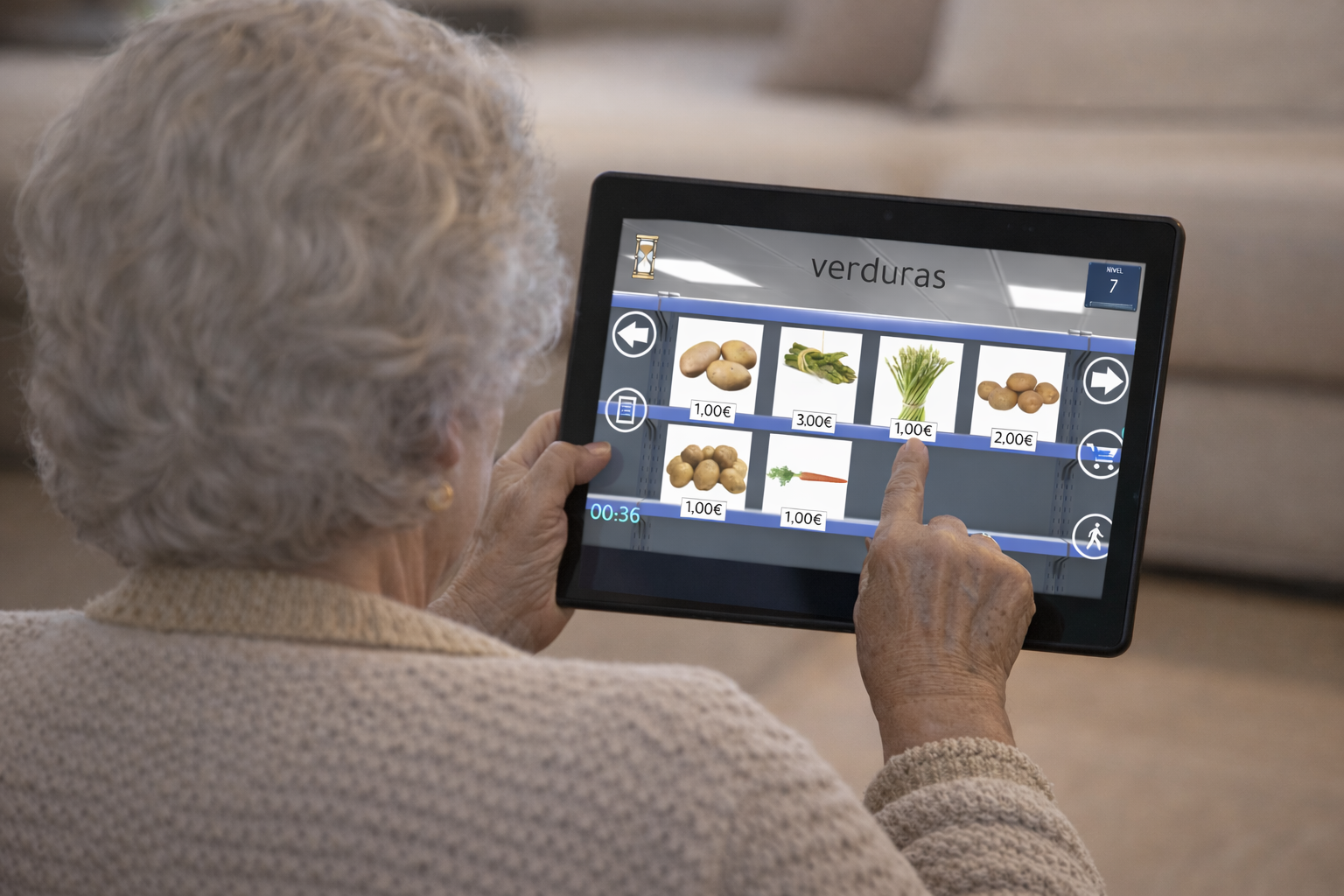
Use cases: when the iPad is the best option for your team
The iPad is not the only way to deliver cognitive stimulation, but it is particularly useful in these situations:
Centres already working with iPads for other tasks
If your organisation already has iPads for clinical records, other therapeutic tools or internal administration, you can make use of that same infrastructure for cognitive stimulation.
Teams with several therapists sharing devices
The more professionals who need access to the cognitive module — across different rooms or even different centres — the more useful it is not to depend on a single tablet model to share that access.
Patients who want to continue treatment at home
When the patient already owns an iPhone or an iPad, following the telerehabilitation programme on that same device supports adherence and reduces the learning curve.
What to assess before choosing a cognitive stimulation platform
Clinical validation and CE marking
It is worth checking that the platform is validated by clinical studies and carries CE marking as a medical device, not simply that it "works well" anecdotally.
Genuine variety and customisation of exercises
A broad catalogue of gamified exercises, organised by cognitive domain and difficulty level, makes it possible to tailor treatment to each patient instead of applying a standard programme.
Continuity between clinic and home
Allowing the professional and the patient to work from their own devices — including iPhone and iPad — without losing the thread between in-person sessions and work at home is key to long-term adherence.

Rehametrics Cognitive meets these criteria: it is a medical device with CE marking, validated by more than 27 clinical studies, with a catalogue of more than 190 gamified, customisable cognitive exercises, and compatible with iPhone and iPad as well as the rest of the supported devices.
How to start working with Rehametrics Cognitive on iPad
The professional works from Rehametrics Cognitive Clinic on their iPad to run and prescribe exercises in clinic, and patients continuing treatment at home do so from Rehametrics Cognitive Home on their iPhone or iPad. Both apps require iOS/iPadOS 15.0 or later and share the same account and the same programmes managed from Rehametrics Clinic Manager.
Rehametrics Cognitive Home
Available for iPhone and iPad. The patient continues their cognitive rehabilitation programme from home, following their professional's prescription.
View on the App Store →Rehametrics Cognitive Clinic
Available on iPad. Run cognitive exercises in clinic and prescribe your patient's sessions.
View on the App Store →Cognitive Module
Discover the other compatible devices and all the features of the Rehametrics cognitive module.
View module →Want to see it on your own iPad?
Request a demo and we will show you how Rehametrics Cognitive Clinic and Cognitive Home work on your Apple devices.
Request a demo