
Mixed reality in rehabilitation: interacting with virtual environments without losing touch with the real world
What is mixed reality in rehabilitation
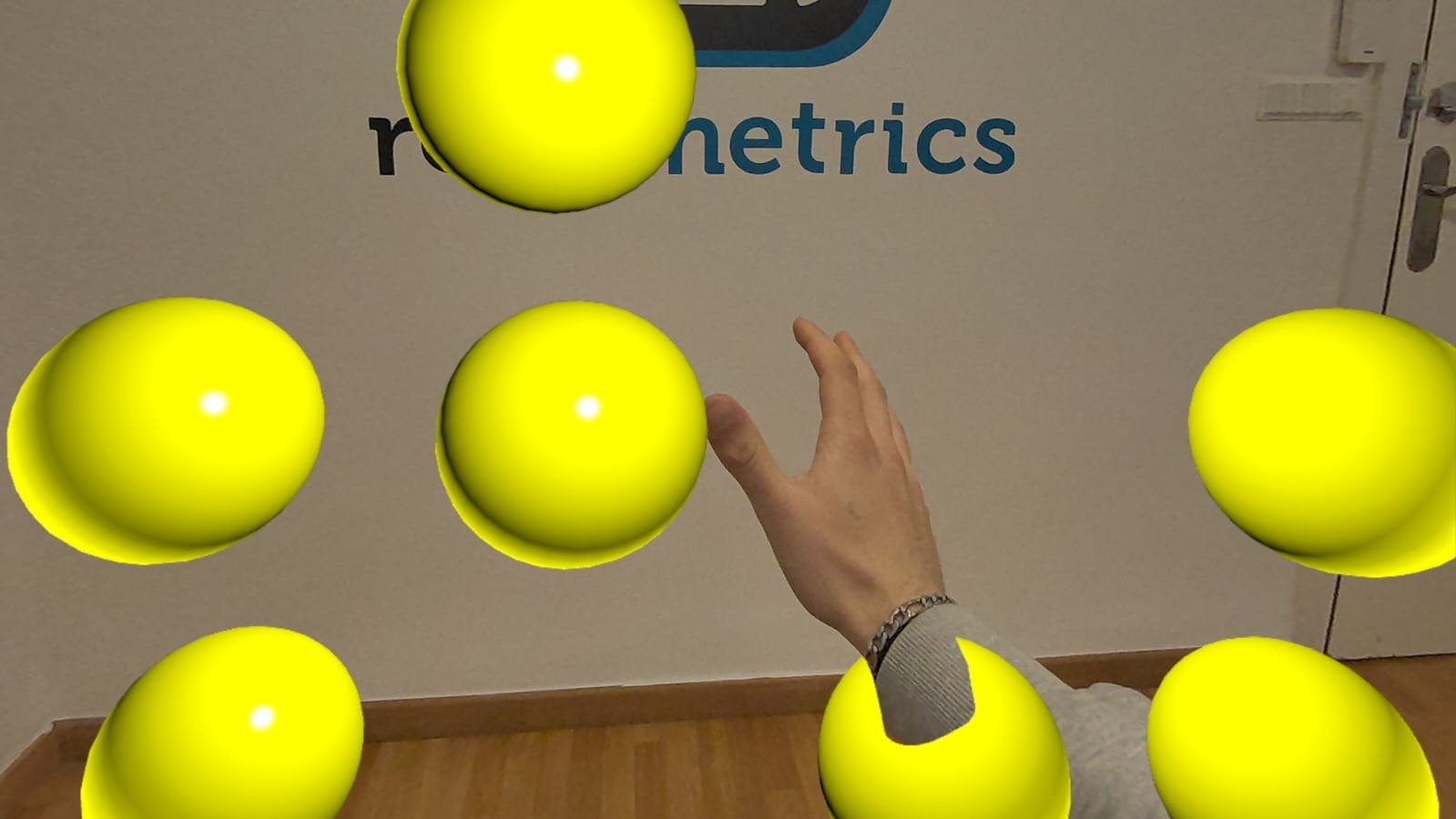
Mixed reality in rehabilitation is a form in which the patient interacts with virtual elements whilst keeping their physical environment visible.
Unlike immersive virtual reality, where the environment is entirely digital, mixed reality enables the performance of therapeutic tasks whilst maintaining spatial references a14> therapeutic tasks whilst maintaining real spatial references.
In the update 2026 of Rehametrics VR, this modality is introduced as a new environment for intervention within the clinical activities .
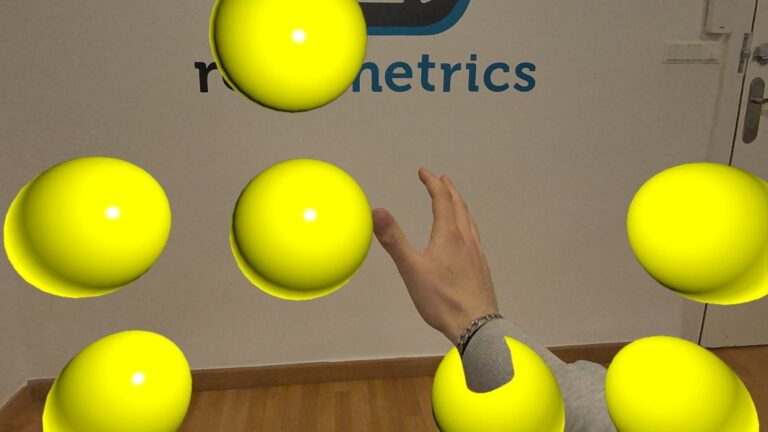
Table of contents
The difference between immersive virtual reality, mixed reality and augmented reality
In this update, it is advisable to distinguish clearly between three types of environment:
| Type of environments | What does the Patient see | What does the Patient interact with | Clinical Application |
|---|---|---|---|
| Environment completely virtual | Virtual Objects | Training structured and tasks simulated | |
| Mixed Reality | Real environment + virtual elements | Virtual objects | Tasks with spatial reference in the real world |
| Real environment | Real objects + digital support | Manipulation and tasks with physical objects |
The 2026 update incorporates both mixed reality as well as augmented reality, expanding the environments available for intervention .
Why seeing the real environment changes the intervention
Keeping the physical environment visible alters the performance of the task and the way in which the patient interacts with the stimuli.
Spatial orientation
The patient retains references:
- seating arrangement
- distances
- relationship with the environment
This facilitates tasks that require spatial awareness and movement in space.
Postural control and safety
The actual visual reference allows you to:
- greater stability when standing
- less disorientation
- better adaptation in patients with poorer motor control
In addition, the system automatically detects whether the patient is sitting or standing, adjusting the activity to the context .
Perception–action integration
The patient perceives virtual stimuli but acts within a real physical environment.
This promotes a more direct relationship between:
- visual perception
- planning motor
- execution of the movement
Applications in clinical settings of mixed reality technology
Mixed reality expands the possibilities of immersive virtual reality without replacing it.
Rehabilitation musculoskeletal
- Range in real space
- Control of directed movement
- Work on mobility with a focus on spatial aspects
Neurological rehabilitation
- Attention and processing speed
- Hand–eye coordination
- Cephalic control
Geriatrics and balance
- Working in a standing position with greater safety
- Reaction training
- Reduction of fear of movement
Functional rehabilitation
- Dynamic exercises involving movement
- Integration of movement and decision-making processes
- Progression towards environments that are more complex
Mixed reality activities in Rehametrics VR 2026 release
The update introduces this feature to both new activities and existing exercises.
New activities in mixed reality
The following tasks are included focusing on:
- reaction speed time
- coordination
- attention
- movement in space
These activities enable patients to work with virtual stimuli whilst moving around in their real-world environment
Activities that already exist which incorporate a blended learning environment blended learning
This feature is being added to several exercises that were already available.
This allows you to:
- maintain treatment goals
- change the environment of the application
- make progress without changing the core task
Mixed reality versus immersive virtual reality
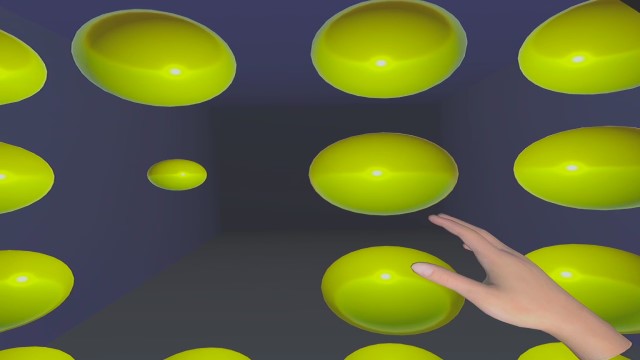
Both settings are complementary and should be chosen according to the therapeutic objectives.
Mixed reality enables:
- keep in mind the real-world context
- facilitate tasks whilst standing
- reduce disorientation
- work in settings closer to the clinical environment
Immersive virtual reality allows you to:
- create environments that are fully controlled
- isolate stimuli
- work on complex simulated tasks
How treatment planning changes
Option 1: Configuration of the environment for the functional transfer
The introduction of mixed reality allows the environment to be adjusted without necessarily modifying the activity.
One possible clinical course is:
- Immersive Virtual reality → learning of the task
- Realidad mixta → ejecución con referencia real
- Real-world environment → functional application
This facilitates a more gradual transition to real-life situations.
Option 2: how to introduce virtual reality
The incorporation of virtual reality can be viewed as a progression according to the level of tolerance of the patient.
Phase 1: Mixed reality
Enables starting the work with virtual stimuli whilst keeping the real environment visible.
- Greater security
- Better spatial awareness
- Useful in early sessions
Phase 2: Immersive virtual reality
Enables greater control over the environment and the complexity of the task.
- Greater intensity
- Greater cognitive load
- Simulated environments
Phase 3: Functional transfer
Application of what has been learnt in real-life situations.
- Integration into functional tasks
- Generalisation of learning
Interaction with augmented reality in this update
In addition to mixed reality, the update includes augmented reality, designed for tasks involving real-world objects.
The key difference is:
- Mixed reality → interaction with virtual objects in a real environment
- Augmented reality → interaction with real objects using digital technology
Both approaches allow you to work in contexts that are closer to real-world practice, but with different focuses.
Frequently Asked Questions
No. They are complementary environments that are used depending on the therapeutic objective.
Not necessarily. The patient interacts with virtual objects, even though they see the real environment.
Mixed reality maintains the structure of virtual tasks, whilst augmented reality introduces physical objects as part of the activity.
It can be particularly useful when:
- there is instability or a risk of imbalance
- there are difficulties with spatial orientation
- the patient does not cope well with immersive environments
- Virtual reality is first introduced
Yes, particularly in patients with:
- disturbances in balance
- risk of disorientation
- lower tolerance to immersion
Yes, especially in profiles where:
- spatial orientation is key
- Total immersion can lead to confusion
- se requiere un entorno más reconocible