
What’s new in virtual reality for rehabilitation in 2026?
By 2026, virtual reality in rehabilitation will have evolved towards more flexible environments, with greater integration of the real-world context and greater clinical adaptability.
The main new features include:
- integration of mixed reality
- use of augmented reality with real objects
- expansion of the range of activities
- improvements in clinical management and personalisation
These trends are reflected in the Rehametrics VR 2026 update.
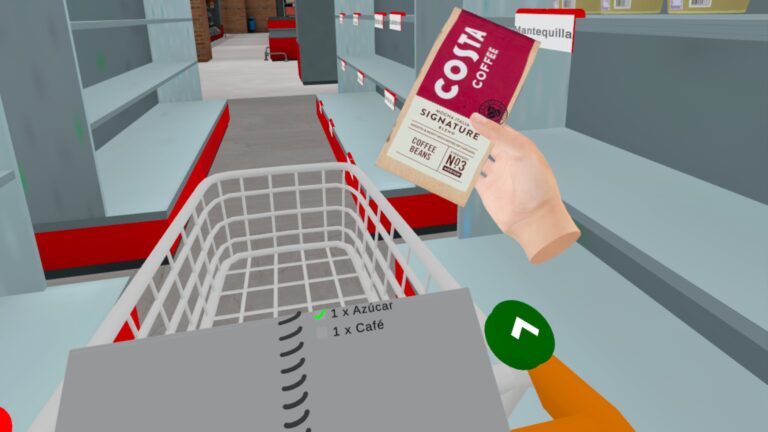
Table of contents
Why these changes are relevant in clinical practice
The evolution of virtual reality is not limited to adding content.
Each improvement changes the way the clinician tailors the intervention, selects tasks and adapts the therapy to the patient.
This affects:
- treatment planning
- treatment progression
- load adjustment
- efficiency during the session
New intervention environments: beyond immersive virtual reality
One of the main changes is the expansion of workspaces.
Mixed reality
Allows interaction with virtual objects whilst keeping the real environment visible.
Provides:
- greater spatial orientation
- better postural control
- possibility of working while standing
Augmented reality
Introduces activities using physical objects guided by digital prompts
Allows:
- actual manipulation
- tasks close to functional activities
- perceptual-motor integration of objects
More therapeutic options with new activities
The increase in activities broadens the options for intervention without changing the tool.
The update includes:
- new activities in immersive virtual reality
- new activities in mixed reality
- activities with real objects
- expansion of existing activities into new areas
This allows for more targeted work on motor and cognitive functions
Improvements in clinical control, patient experience and operational use
The new release includes improvements that affect both treatment planning and the patient experience, as well as day-to-day use in the clinic.
Clinical monitoring
| Tool | Clinical application |
|---|---|
| Rest scheduling | Allows breaks to be introduced based on patient fatigue|
| Automatic detection of position | Adapts the activity if the patient is sitting or standing |
| New scheduling interface | Makes it easier to select activities and adjust settings |
Patient experience
| Element | Impact on the patient|
|---|---|
| In-headset feedback | Improves understanding of performance after each activity |
| Full-body avatar | Enhances body awareness during the task |
Clinical and operational use
| Improvement | Application in clinical practice|
|---|---|
| Improvements in connectivity | Reduces interruptions during the session |
| Rehametrics Academy | Provides access to training, manuals and support |
What actually changes in day-to-day clinical practice
The update not only adds new features, but also enhances the therapy’s adaptability.
In practice, it allows you to:
- more options without changing the tool
- faster adaptation of the patient
- less time spent setting up
- greater flexibility during the session
How are these new developments incorporate into clinical practice
The new features in the update are not used in isolation, but rather they allow you to adjust the type of environment and task according to the nature of the moment of the intervention.
In practice, the change that is most relevant a4> is that the clinician can decide not only what to work on, but also in what kind of setting to do so.
Adjustment of the environment according to the objective
The same therapeutic goal can be addressed in different settings:
- In immersive virtual reality, when stimulus control or interference reduction is required
- In a mixed reality, when it is important to maintain spatial orientation or work whilst standing
Adjustment during the session
Rather than completely overhauling the approach, it is more common to make adjustments:
- change the environment (immersive → blended)
- adjust the patient’s position (sitting / standing)
- intorduce breaks depending on fatigue of the patient
This allows you to adjust the load without changing the type of task.
Therapeutic continuity
The introduction of new approaches to existing activities makes it possible to:
- keep familiar exercises
- change the execution context
- introduce progression without redesigning the intervention
Clinical example: adjustment of the environment, parameters and strategy of treatment
Patient with upper limb impairment, difficulties in eye-hand coordination and limited hand mobility
A session is planned focusing on coordination, outreach and engagement with members.
- Select an activity that already exists in Rehametrics VR and the parameters are adjusted such as range of movement, speed and number of stimuli.
- It begins in mixed reality, to facilitate spatial orientation and enable work in a standing position with greater safety.
- A restriction strategy is applied to a member who is not affected by the restriction a7> of the limb is not affected by means of the blocking of the virtual hand, encouraging the use of the affected limb.
- In tasks that require manipulation, the virtual hand can complete the gesture by making contact with the object, facilitating the execution even when there is a limitation on mobility.
If the patient is able to perform the task:
- progress can be made to immersive virtual reality, maintaining the same therapeutic goal while increasing the attentional load and environmental control
During the session:
- the patient’s position is adjusted (sitting or standing)
- the activity parameters are modified
- Pauses are inserted according to fatigue
The new developments in virtual reality in Rehabilitation in Rehametrics VR 2026
The use of virtual reality in rehabilitation enables the development of exercises that are more interactive, motivating and tailored to the patient. By 2026, the main developments will focus on improving clinical usability, expanding the range of activities available, and making it easier for professionals to integrate the technology into actual physical, cognitive or occupational therapy sessions.
No. Virtual reality activities are designed to be used under professional supervision. It is still the therapist who sets the objectives, adapts the intervention, observes the patient’s response and decides how to integrate each activity into the treatment plan.
Rehametrics VR can be used with patients who need to work on upper limb mobility, head control, coordination, attention, planning, interaction with the environment or functional activities. Its use must always be tailored to the patient’s clinical profile, their tolerance of virtual reality and the objectives set by the healthcare professional.
It is not essential. The update is designed to make it easier for professionals to use, with guided activities and simple setup. Furthermore, the system allows the exercises to be tailored to the patient’s level, which helps to integrate it gradually into clinical practice.