
1st Virtual Reality in Rehabilitation Conference: Why digitalization in physiotherapy requires deep clinical reflection.
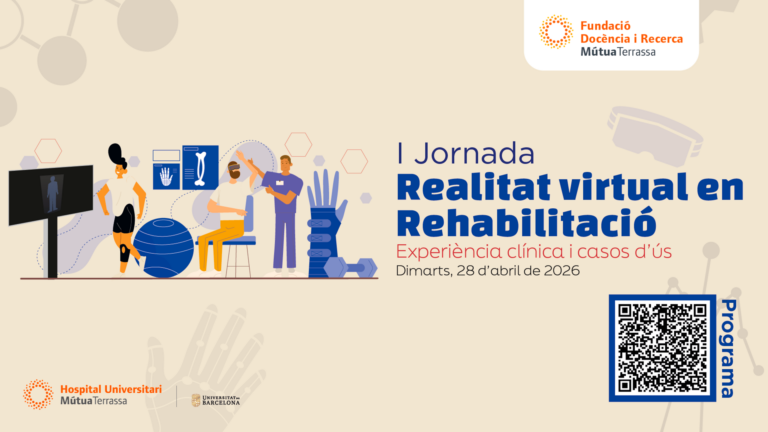
Table of contents
1. The current context of digitalization in rehabilitation.
Digitalization in physiotherapy and rehabilitation is no longer perceived as an emerging trend, but as a structural transformation of the care model. Various sectoral reports in Spain rank virtual reality, artificial intelligence, and telerehabilitation among the key trends that will define clinical practice in the coming years. The focus is no longer solely on the adoption of technology, but on its ability to personalize treatments, increase therapeutic intensity, and generate objective clinical data.
In parallel, the European market for digital and remote rehabilitation systems is experiencing sustained growth, driven by the need for scalable solutions in response to population aging, the rise of neurological pathologies, and healthcare pressure. Regional healthcare innovation ecosystems, such as the Catalan one, explicitly include immersive technologies within their digital health strategies, consolidating virtual reality as part of the contemporary clinical environment.
2. Why this program and why MútuaTerrassa.
The value of innovation is consolidated when it is tested in real clinical environments, with real patients and under the typical healthcare pressure of a hospital.
In this context, the Hospital Universitari MútuaTerrassa. occupies a particularly relevant position. For over a year, the centre’s Rehabilitation Service has collaborated as a clinical partner in the implementation and validation of digital solutions applied to physiotherapy and neurorehabilitation, working directly with tools like Rehametrics in real care settings.
This is a hospital environment that adopts innovation by subjecting it to continuous clinical contrast. This bidirectional validation process allows a digital tool to be transformed into a structured therapeutic resource.
Furthermore, MútuaTerrassa has a track record in digital health transformation projects, ranging from process automation to training through virtual environments and improvement of care continuity. This ecosystem ensures that the incorporation of new tools is part of a global organizational strategy.
The 1st Conference “Virtual Reality in Rehabilitation. Clinical experience and use cases” arises from this accumulated experience and is proposed as a space to share lessons learned from real-world implementation.
3. A program oriented toward applied clinical experience.
One of the distinguishing features of this conference is its practical approach.
- The session on the clinical use of virtual reality in the management of balance in patients with severe mental disorders introduces a demanding field where therapeutic precision and safety are top priorities.
- Integration in medium- and long-term care hospitals addresses the continuity of care in patients with prolonged stays and frailty profiles, requiring adjustments in intensity and supervision.
- The program also includes management of frailty from hospital-based physiotherapy, analyzing how digitalization can be inclusively integrated through proper clinical selection.
- Finally, the application in neurological physiotherapy and occupational therapy allows for in-depth exploration of motor retraining, dual-tasking, ecological simulation, and functional transfer.
4. Hands-on workshops: understanding before deciding
Digitalization requires direct experience.
The workshops will address immersive, semi-immersive, and cognitive virtual reality.
- The immersive modality allows for greater control, but requires clear selection criteria.
- The semi-immersive modality facilitates progressive integration into conventional therapy rooms.
- Cognitive virtual reality expands the focus toward executive functions, attention, and visuomotor coordination.
Experiencing these differences provides a more solid foundation for making organizational decisions. By directly comparing the clinical and logistical implications of each modality, healthcare managers and clinicians can better align technology choices with their specific operational needs.
5. Speakers with real-world implementation experience in hospital environments.
The credibility of the event is based on professionals with direct clinical experience. Their insights come from day-to-day practice in hospital settings, ensuring that the information shared is grounded in actual patient outcomes and operational realities.
Dr. Luis Guirao Cano, the Head of the Rehabilitation Service at Hospital Universitari MútuaTerrassa provides a structural vision for technological integration in high-demand departments. Over the past year, his team has actively worked on implementing Rehametrics into daily clinical practice, evaluating its applicability across different patient profiles, adjusting protocols, and providing continuous feedback to optimize the tool based on real hospital experience.
Dr. Tere Clanchet , the Director of the Outpatient Area at Fundació Assistencial MútuaTerrassa contextualizes digitalization within the organizational model and healthcare sustainability. Her perspective ensures that the adoption of digital tools aligns with broader strategic goals and efficient resource management.
Dr. Gemma Más Sesé , neurologist from Hospital La Pedrera comes from a center with a long history of using virtual reality for acquired brain injury, contributing an interdisciplinary vision for medium- and long-term care. This approach highlights the importance of integrating neurological expertise with digital tools to enhance functional recovery in complex cases.
Luís Lomba de Teresa, a physiotherapist at Hospital Universitario Dr. Rodríguez Lafora, addresses the application in severe mental disorders based on his experience in complex neurological rehabilitation. His work focuses on integrating digital tools to improve motor control and functional autonomy in patients with challenging neuropsychiatric profiles.
Marta Pascasio Roura, coordinator at the Fundació Sanitària Mollet, reinforces the focus on frailty and the organization of clinical services. Her expertise centers on how digital integration can support the management of vulnerable patient populations while optimizing healthcare delivery workflows.
Alex Ibars Gordillo and David López Guerra, from HUMT, represent the practical application in occupational therapy and hospital-based physiotherapy. Their clinical work focuses on implementing digital tools like Rehametrics to achieve functional goals and enhance patient recovery in acute and subacute settings.
Carmen Schenk, from the Rehametrics team, completes the approach by integrating the cognitive component into digital rehabilitation programs. Her contribution focuses on how software can simultaneously target executive functions and motor skills to achieve a more comprehensive recovery.
6. Relevance for the physiotherapist and the service manager.
Attending this conference allows participants to acquire the clinical judgment necessary to evaluate the integration of virtual reality within a hospital service. By analyzing real implementation data, professionals can better determine which technologies effectively support therapeutic goals and departmental workflows.
- For the physiotherapist, it means expanding therapeutic resources based on proven experiences. This approach ensures that digital tools are used effectively to enhance patient recovery and motor learning.
- For the service manager, it offers key insights into leadership, protocolization, and the evaluation of clinical outcomes.
- For the service manager, it offers key insights into leadership, protocolization, and the evaluation of clinical outcomes.
7. Practical information
The conference will be held on April 28, 2026, at the MútuaTerrassa Teaching Building in Terrassa, with an option for remote attendance.
Registration is free, with limited spots available, and the activity is currently pending accreditation by the relevant continuing education bodies.
Do you want to lead digitalization in your rehabilitation center?
Learn how leading hospitals are integrating Virtual Reality into their daily clinical practice.