Digital tools for stroke: a multidisciplinary approach
From the beginning, the FIVAN team applied an intensive and coordinated approach, combining different techniques with Rehametrics as the digital backbone of the treatment. The plan included:
-
Restrictive therapy of the healthy side.
-
Progressive functional therapeutic exercise.
-
FES in upper and lower limb.
-
Aquatic therapy and home training.
-
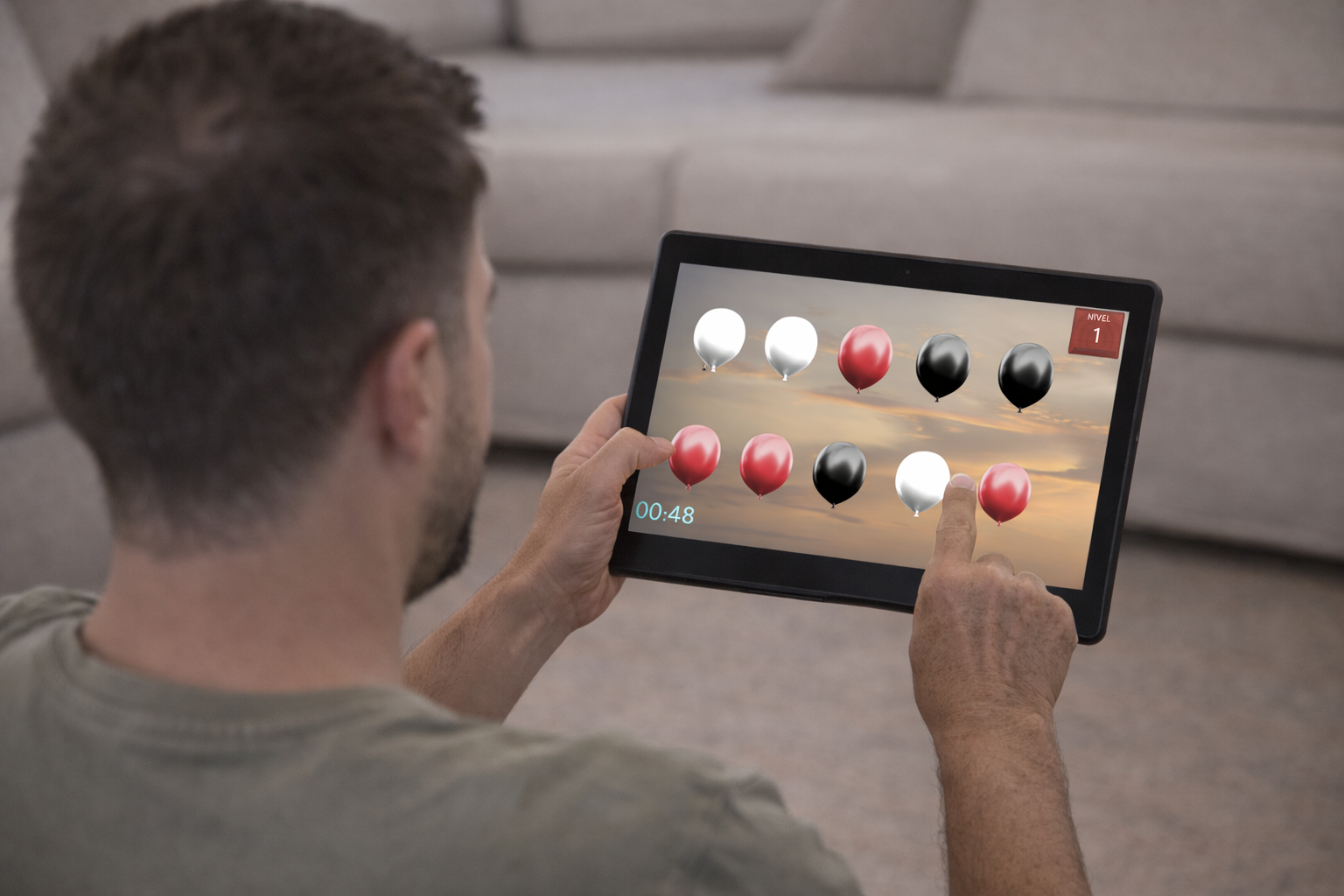
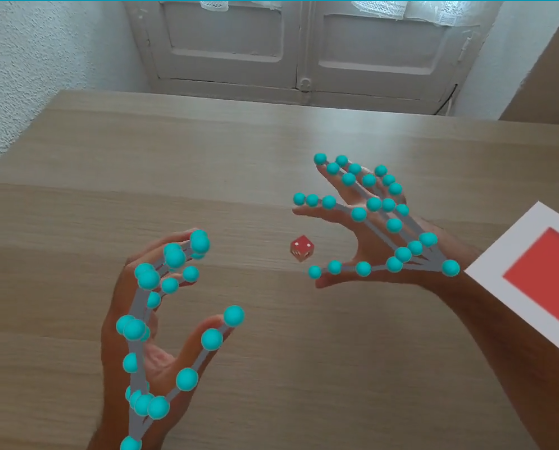
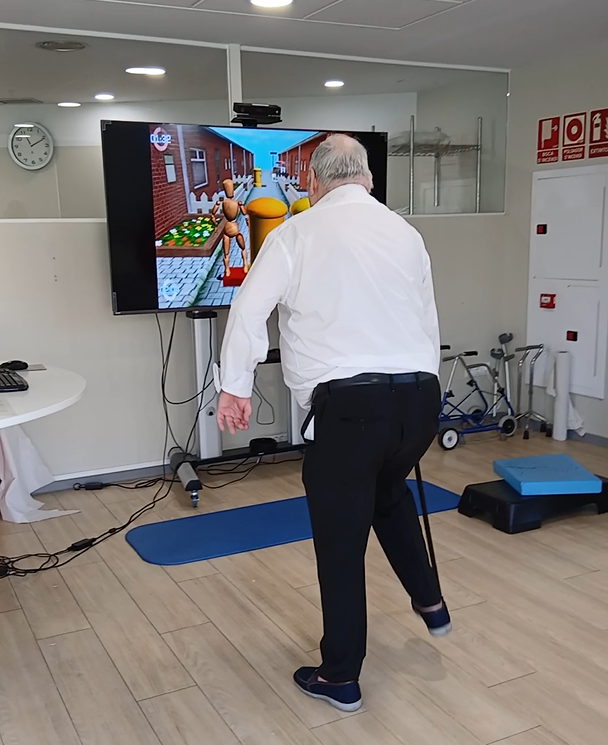
Immersive and semi-immersive virtual reality with Rehametrics.
“We combined FES with Rehametrics on functional tasks and load-bearing games. It was a perfect mix: she got active, had fun… and improved.” Ruth comments.
The use of Rehametrics made it possible to train the upper limb, gait and postural control in a motivating way and with objective recording of progress in each session.
Clinical outcomes: towards full autonomy
Over months of intensive intervention:
-
The patient regained mobility of the left hand, including pincer gesture.
-
She improved her monopodal control and was able to walk in sandals and heels.
-
Overcame kinesophobia, gaining gait confidence and improving fluidity.
-
She returned to work as a dentist and fully regained her functional autonomy.
“One day she brought me a pair of 10 cm heels and said, ‘I want to wear this again.’ And she got it.” In addition, an improvement in the patient’s emotional and motivational attitude was observed, linked to the regular use of Rehametrics in structured sessions. “There were days when she would come from work exhausted, but she would say to me, ‘Put me on Rehametrics, I ‘m having a great time.’ And that’s when we knew something was really working.”
What does Rehametrics provide as a digital tool in stroke cases?
From a clinical perspective, Rehametrics offers a number of fundamental advantages in neurological rehabilitation:
-
Personalized functional training
Each exercise can be adapted to the patient’s motor and cognitive level, selecting activities aligned with their therapeutic goals.
-
High adherence to treatment
Rehametrics games increase patient motivation. In this case, even on difficult days, the patient asked “put me on Rehametrics, I ‘m having fun”.
-
Objectivemeasurement of clinical performance
Without sensors, the platform automatically records joint ranges, reaction times, balance control and number of repetitions.
-
Combination with other techniques
The integration with FES, weights or unstable surfaces allowed to perform sessions with a high functional load, without interfering with the software.
-
Ease of clinical integration
Rehametrics was used both in face-to-face sessions and in home assignments, helping to maintain therapeutic continuity between sessions.
“Rehametrics does not replace the therapist. It allows us to go further. It gives us data, saves us time, and most of all engages the patient with their own improvement.”
Digital tools for stroke: an effective clinical approach
This clinical case demonstrates how a patient with significant neurological sequelae can achieve full recovery when conventional therapies are combined with stroke-specific digital tools such as Rehametrics.
Virtual reality, properly applied and supervised by professionals, does not replace the therapist, but rather enhances his or her ability to generate functional change and maintain patient motivation.
Combining conventional therapy with digital stroke tools not only optimizes outcomes, but also improves the patient experience during the recovery process.
Do you work with neurological patients? Rehametrics can help you
If you are part of a clinical team and treat patients with stroke, Parkinson’s, multiple sclerosis or other neurological pathologies, Rehametrics can be the tool that boosts your clinical outcomes.
Discover how our digital platform can help you design customized sessions, record objective data and improve patient adherence throughout treatment.