
Virtual reality for musculoskeletal physical therapy: a practical guide for clinics
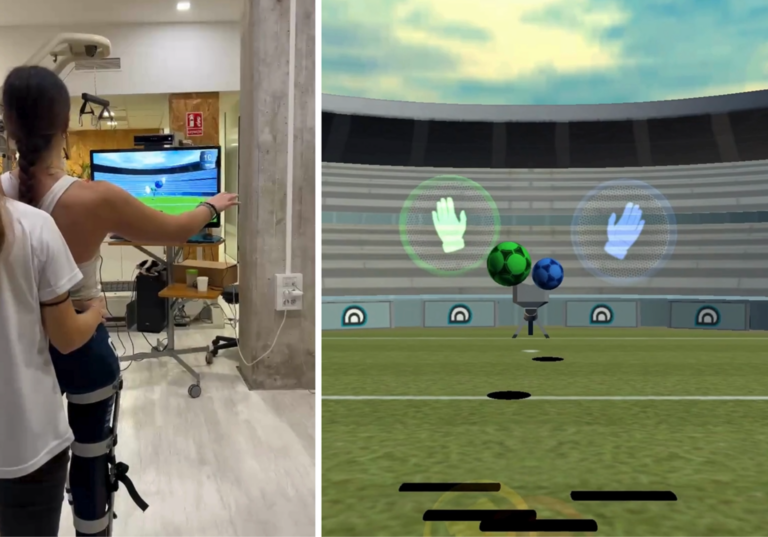
The incorporation of virtual reality for musculoskeletal physical therapy has begun to open up a clear space in the approach to pain, mobility, and functionality. For many clinics, it is no longer just an innovative tool, but a a25> resource that allows working in a more efficient way, adapted and safe with patients who suffer from lower back pain, neck pain, injuries of the shoulder, knee or other pathologies musculoskeletal.
Este artículo resume de forma práctica cómo funciona, qué beneficios aporta y en qué momentos clínicos tiene más sentido integrarla.
What does virtual reality contribute to musculoskeletal treatment?
Virtual reality introduces a controlled, repeatable, and non-threatening environment where the patient can explore movement with less fear and less anticipation of pain. This allows to treat:
-
Motor control
-
Proprioception
-
Coordination
-
Functional activities
-
Goal-oriented tasks
Immediate visual feedback facilitates movement correction without causing frustration. The patient sees what they are doing and understands how to progress.
Why use virtual reality in patients with musculoskeletal pain?
In patients with chronic or persistent pain, it is common to find fear, hypervigilance, and negative expectations regarding movement. When exercise appears in a environment that is different, more playful, safe and guided, the emotional burden associated with pain is reduced.
Virtual reality allows:
-
Gradual exposure to movement
-
Reduction of apprehension
-
Greater adherence
-
Better tolerance to exercise
-
More repetitions without increasing symptoms
This approach is particularly useful in cases of mechanical low back pain, neck pain with a proprioceptive component, post-operative cases with loss of mobility, or patients who experience stiffness and excessive protection against movement.
Evidence available on pain, mobility and functionality
Current studies show that virtual reality:
-
Improves mobility in shoulder injuries, neck pain, and lower back pain
-
Reduces pain perception through sensory modulation and distraction
-
Increases adherence to therapeutic exercise
-
Helps improve function when combined with conventional therapy
It does not replace physical therapy or scheduled exercise. It complements and reinforces them.
Where does virtual reality fit best in musculoskeletal physical therapy?
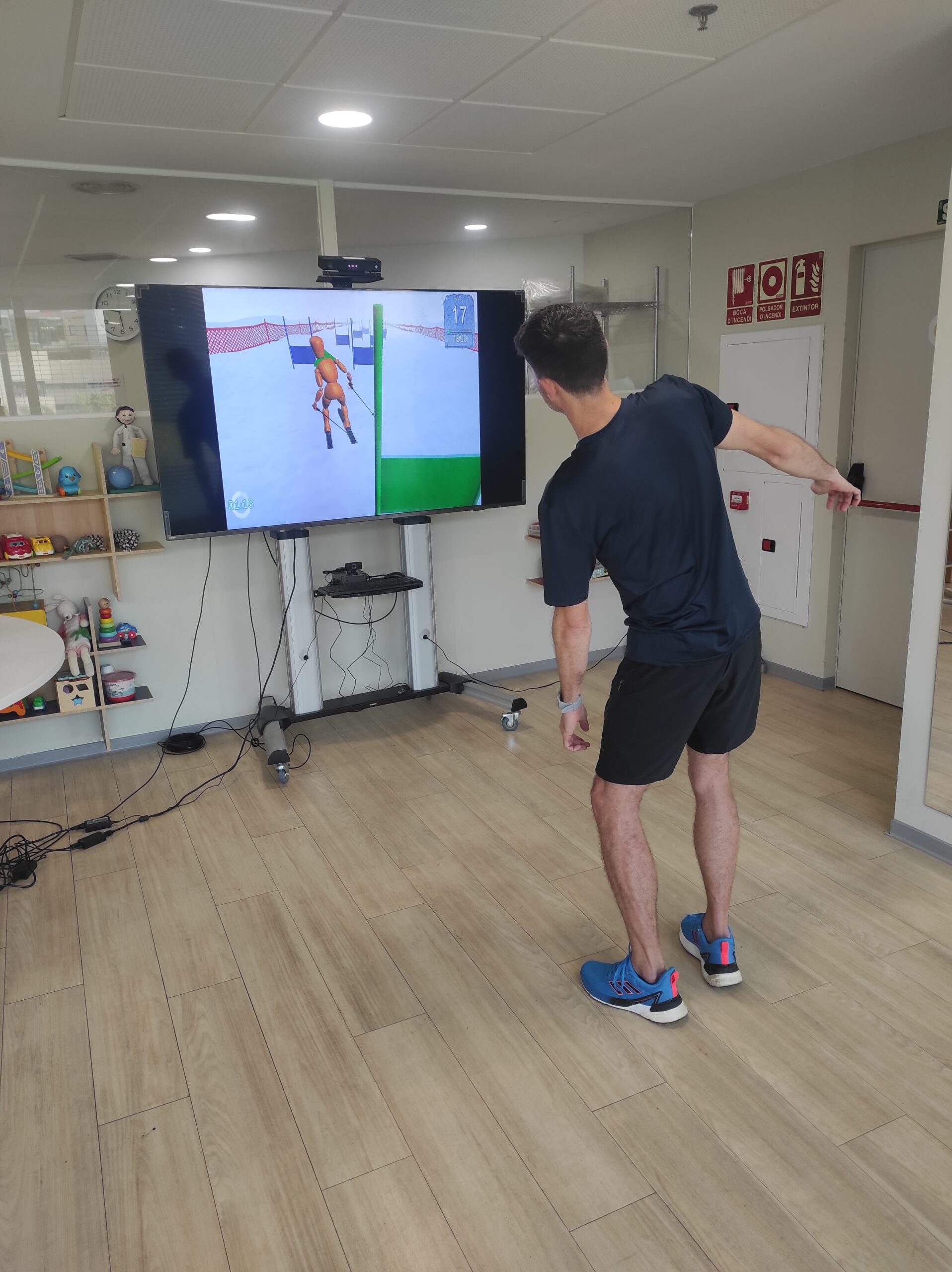
Lower Back Pain
Mobility in all planes, motor control, and progressive work without increasing symptoms.
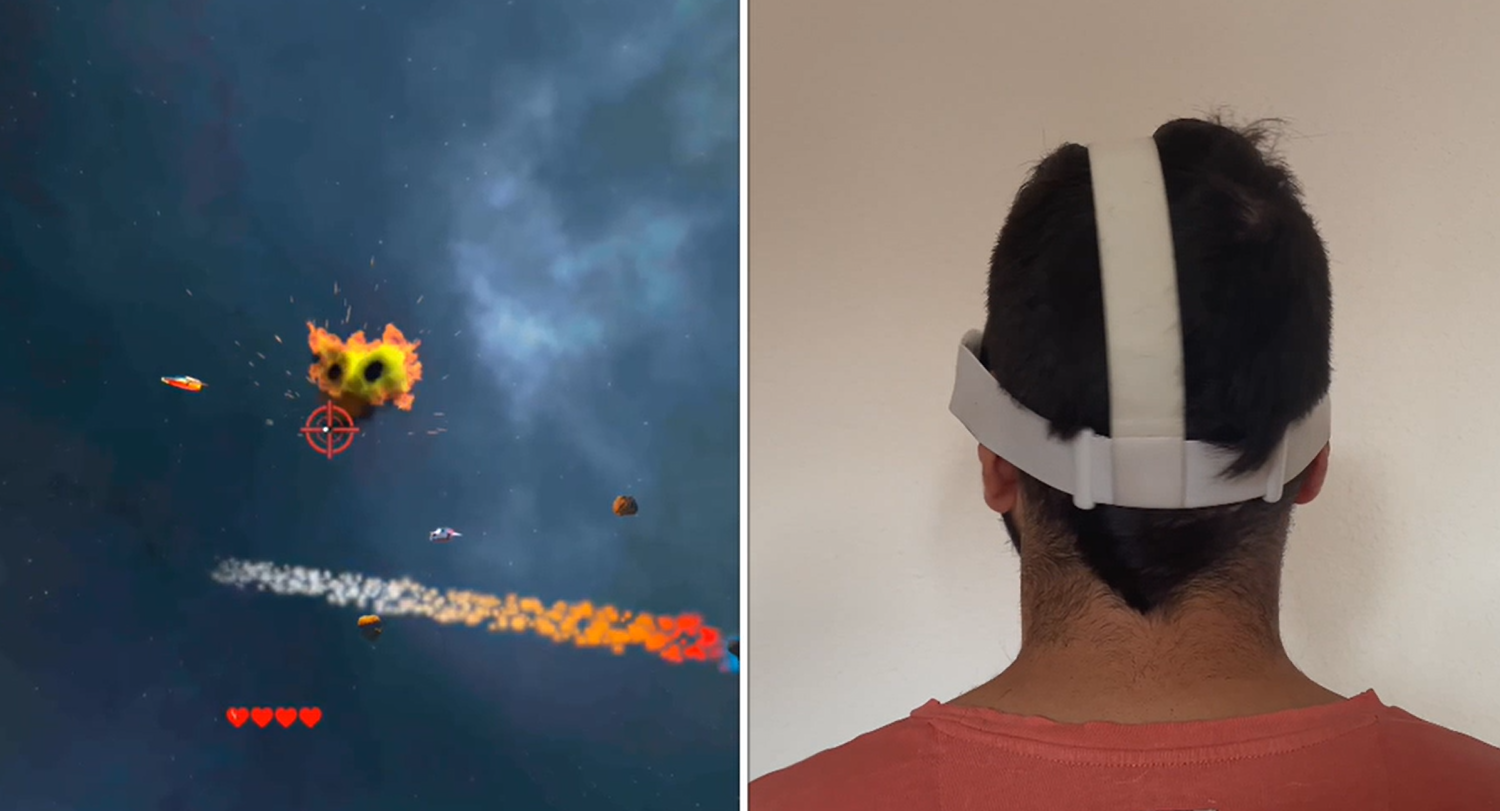
Neck pain
Cervical proprioception, visual tracking, and movement control within safe ranges.
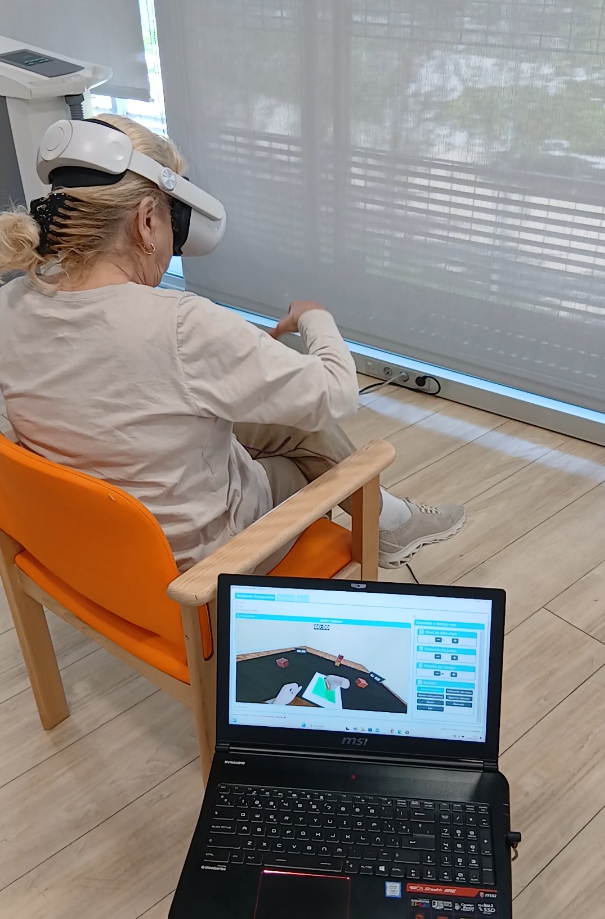
Shoulder
Active mobility, progressive elevation, functional patterns, and reaching tasks that help reduce apprehension.
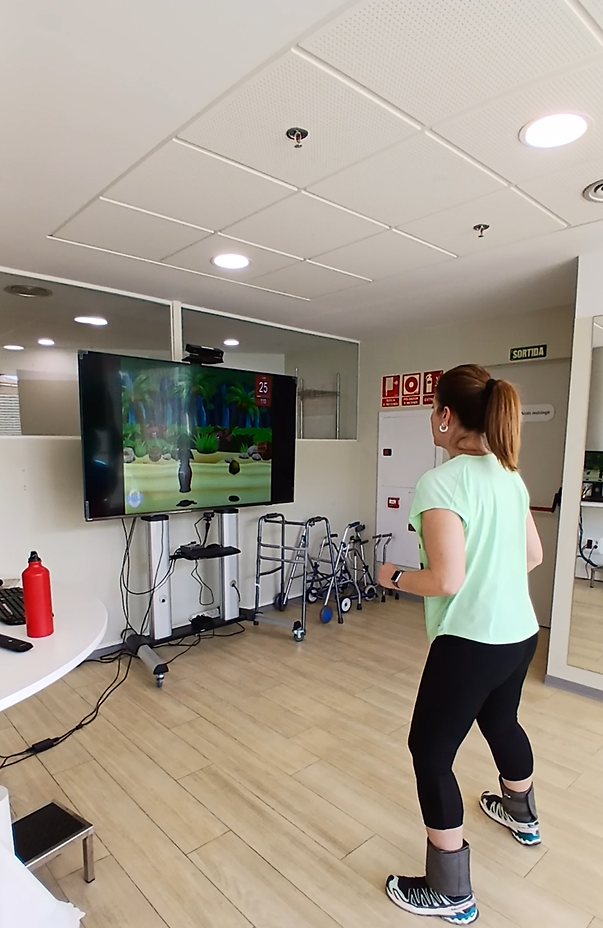
Knee and hip
Balance, dynamic stability, and shifts in support.
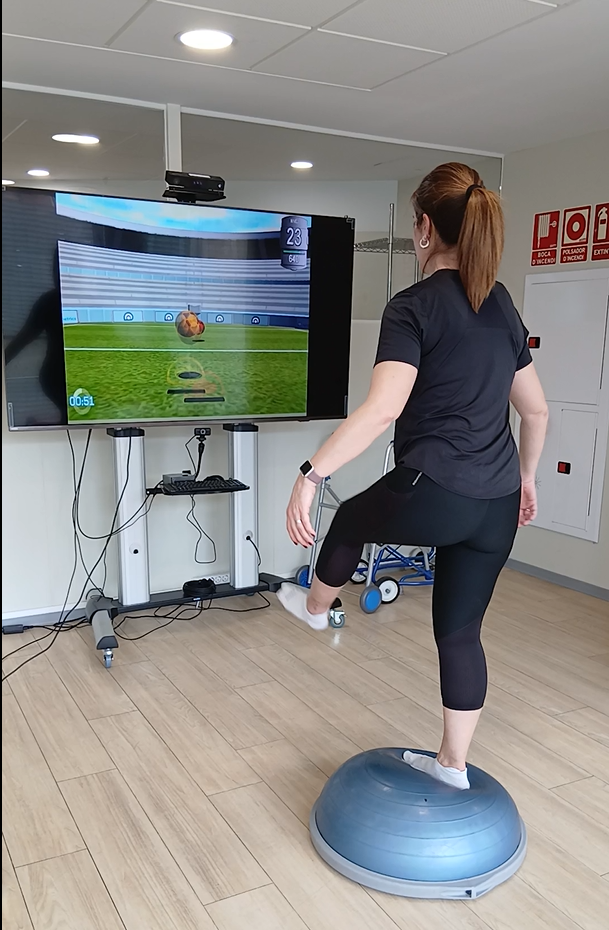
Musculoskeletal postoperative care
Assisted mobility within safe ranges, exploration of movement without threat, and adapted functional exercises.
Practical exercises in virtual reality for rehabilitation of the musculoskeletal system
Some examples that are particularly useful in consultation:
-
tasks of varying scope
-
guided movements with visual feedback
-
reaction time exercises for motor control
-
precision tasks to improve proprioception
-
functional activities such as touching, dodging, picking up, or moving objects
All of this allows an increase in the volume of repetitions without the exercise being perceived as monotonous or tedious.
How to integrate VR into the clinic workflow
The implementation is straightforward if it is well structured:
-
Initial assessment focused on mobility, pain, goals, and tolerance.
-
Selection of activities according to clinical objective.
-
Short adaptation sessions lasting between 5 and 15 minutes.
-
Automatic or manual progression depending on the response of the patient.
-
Recording of metrics to monitor progress.
-
Periodic review to adjust treatment.
VR does not replace anything. It enables patients to do more, better, and with greater safety.
Additional benefits for the clinic
The clinics that already use this technology refer:
-
more motivated patients
-
greater efficiency in session
-
more repetitions
-
objective data that enrich the assessment
-
clear differentiation from the competition
-
reduction of frustration in patients with fear of movement
It is a tool that adds value both to the professional and to the patient.
La realidad virtual no cambia la esencia de la fisioterapia, pero sí facilita que el paciente haga más, progrese mejor y entienda su propio movimiento. Es una forma de trabajar que reduce barreras, mejora la experiencia y abre posibilidades que antes costaba conseguir en sesión.