Chronic Low Back Pain and Neck Pain: How to Guide Gradual Exposure to Movement
Back and neck pain rarely improves simply by managing the pain. When the fear of moving persists over time, the key is to gradually increase exposure, pace it judiciously, and give the patient a tangible reason to trust their own movement again.
What Sets Chronic Lower Back Pain and Chronic Neck Pain Apart
A patient with low back pain or neck pain lasting more than three months typically presents for a consultation with a relatively unremarkable physical examination: preserved or only slightly limited range of motion, absence of neurological signs, and imaging findings that do not fully explain the intensity of the pain reported. In most cases, there is no active structural lesion that would justify keeping the patient on bed rest or under constant observation; what is present, however, is a sensitized nervous system and a movement pattern that has gradually deteriorated week after week.
This is an idea that should generally be communicated to the patient and incorporated into the treatment plan: persistent spinal pain does not always behave like acute pain. Once red flags have been ruled out (progressive neurological symptoms, significant history of trauma, systemic symptoms), in many cases the clinical goal shifts from “eliminating pain before moving” to “restoring movement and function, with pain as just another variable to manage, not as a barrier.” The weight each team assigns to this approach versus others—which are more focused on symptom management or imaging—depends on the individual case, the professional’s training, and the clinical judgment of each department.
We’ve already discussed the spine as one of the key areas in technology-assisted musculoskeletal rehabilitation, as well as this general framework of persistent pain, in the article on kinesiophobia, dosage, and feedback. In the spine, this pattern has its own nuances: low back pain is often associated with avoidance of flexion and axial loading, while neck pain is often associated with avoidance of rotation and sustained positions (such as working at a computer screen or driving). That is why it warrants a specific approach rather than applying the same exercise template used for the shoulder or knee.

Why Fear of Movement Contributes to Back and Neck Pain
The fear-avoidance model describes a cycle that many clinicians who treat spinal conditions recognize, although not all interpret it or give it the same weight in their reasoning: the patient perceives a movement as dangerous, avoids it, and that avoidance reduces their actual tolerance for the movement and, in some cases, reinforces the belief that the movement “hurts them.” Over time, this can lead to a loss of confidence that, in certain patients, is just as limiting as the stiffness or muscle weakness itself. The Tampa Kinesiophobia Scale is a tool designed to help objectively assess this component during a consultation; however, like any questionnaire, it should be interpreted in conjunction with the clinical evaluation and not in isolation.
In low back pain, this is frequently seen in patients who have stopped bending at the waist to pick up objects from the floor, who avoid sitting on low surfaces, or who have stopped performing daily activities “just in case.” In neck pain, the typical pattern includes a reduced range of active rotation, voluntary neck stiffness while driving or looking backward, and constant hypervigilance regarding any discomfort in the area.
This ties directly into the dosing of therapeutic exercise and the intensity of the load, which have already been discussed in this cluster: if the starting point for dosing ignores the component of fear of movement, it is easy to overestimate what the patient is willing to attempt outside of the session, even if they perform the exercise without any problems during the session.
Principles of Gradual Column Exposure
Gradual exposure does not involve “forcing” the patient to do what they fear, but rather building a hierarchy of movements—from least to most threatening according to their own perception—and working through it using objective criteria, not just based on how they feel on a given day.
1. Start with a movement that the patient can control
The first exercise in the progression should be one that the patient can already perform with reasonable confidence, even if the range of motion is limited. This provides a point of reference and prevents the first experience of the session from being, once again, one of failure or pain.
2. Calibrate by exposure, not just by load
In the spine, the axis of progression isn't always "more weight": it can be greater range of motion, greater speed, a less protected position (from lying down to sitting, from sitting to standing), or less external support. Each of these axes can be adjusted independently, allowing you to continue making progress even when increasing the load isn't the priority.
3. Provide the patient with a visible measure of their own progress
When the patient only has their pain perception to judge whether they are "doing well," they tend to interpret any discomfort as an alarm signal. Showing them achieved range of motion, completed repetitions, or quality of movement across successive sessions helps shift the focus from "how I feel today" to "how much I have progressed this week," which is a framework far less vulnerable to daily pain fluctuations.
These three principles serve as a general guide rather than a fixed rule: the order, pace, and emphasis given to each should be adapted to the patient, the stage of treatment, and the clinician's judgment. Teams may legitimately differ on how to balance these elements—some prioritizing the psychosocial aspect first, others focusing on load progression.
What Does the Evidence Say About Interactive Column Technology?
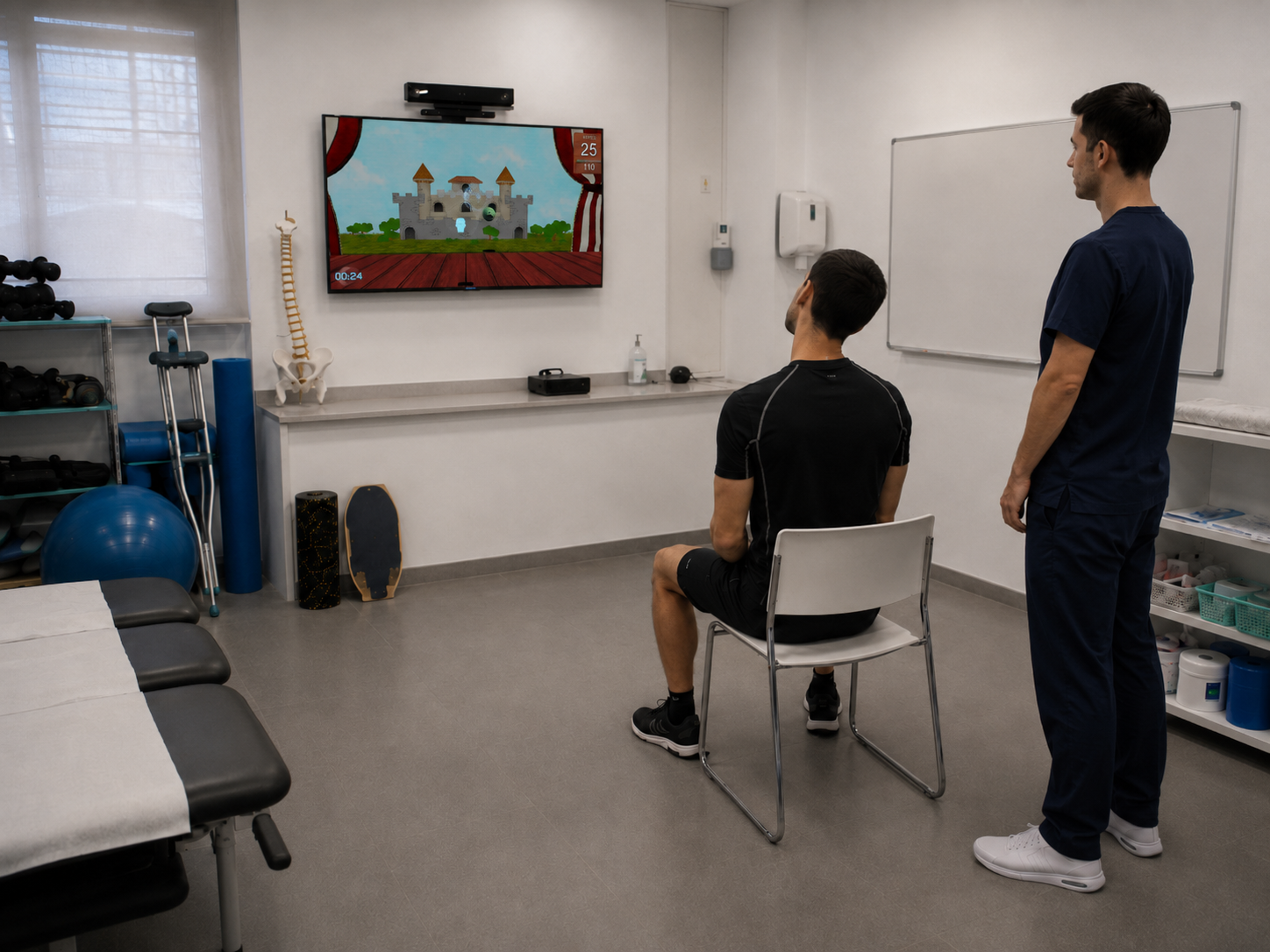
The recent literature on virtual reality and back pain is consistent on one point and cautious on another. On the one hand, several trials and reviews show significant improvements in pain, kinesiophobia (Tampa scale), and disability (Oswestry index) in patients with chronic low back pain following virtual reality interventions, according to a systematic review and meta-analysis published in JMIR (2024;26:e45406). A more recent review in Healthcare (2025;13(11):1328) reinforces these findings regarding nonspecific chronic low back pain.
On the other hand, it is important to be honest about this nuance: the JMIR review itself finds no significant differences at 3–6 months of follow-up compared to the control group, suggesting that the benefit is concentrated during the period of active intervention and that the technology serves as a support within an ongoing plan, not as a solution that, on its own, maintains the outcome over time without sustained clinical effort.
In chronic neck pain, a meta-analysis of randomized controlled trials found significant differences in favor of virtual reality in both the cervical disability index and kinesiophobia, with results that were sustained during long-term follow-up. A single-blind randomized controlled trial added that the virtual reality group also showed improvements in postural control, not just in the classic variables of pain and fear of movement.
As is often the case with evidence in rehabilitation, the available studies have moderate sample sizes and protocols that vary widely from one another; therefore, they should be viewed as guidance rather than definitive conclusions. Overall, they do appear to support the use of interactive technology as a complement—not a substitute—for therapeutic exercise and gradual exposure in selected patients with chronic low back pain or neck pain, especially when the fear of movement is a significant factor, always under professional supervision and as part of a broader treatment plan.
How to Work on Trunk and Cervical Control During a Session
In practice, this usually translates into three overlapping areas of focus throughout the treatment plan, although the order, emphasis, and pace of each depend on the individual case and the team’s judgment:
- Segmental motor control. Movement isolation exercises (moving the pelvis without compensating with the back, rotating the neck without raising the shoulder) before progressing to more complex functional tasks.
- Specific dosage based on range and speed. Start with short arcs and controlled speed, prioritizing range of motion over speed in most patients with high kinesiophobia.
- High-quality visual feedback on the gesture. Showing the patient, either in real time or at the end of the session, how they are moving—not just how much—helps correct protective patterns that persist even after the pain has subsided. We have already discussed this principle in depth in the article on biofeedback in rehabilitation.
The goal of these three blocks is no different from that of any well-structured therapeutic exercise program: the key difference is that the starting point almost always involves managing fear of the movement before the load can be increased normally.

The Role of Rehametrics in Spinal Rehabilitation
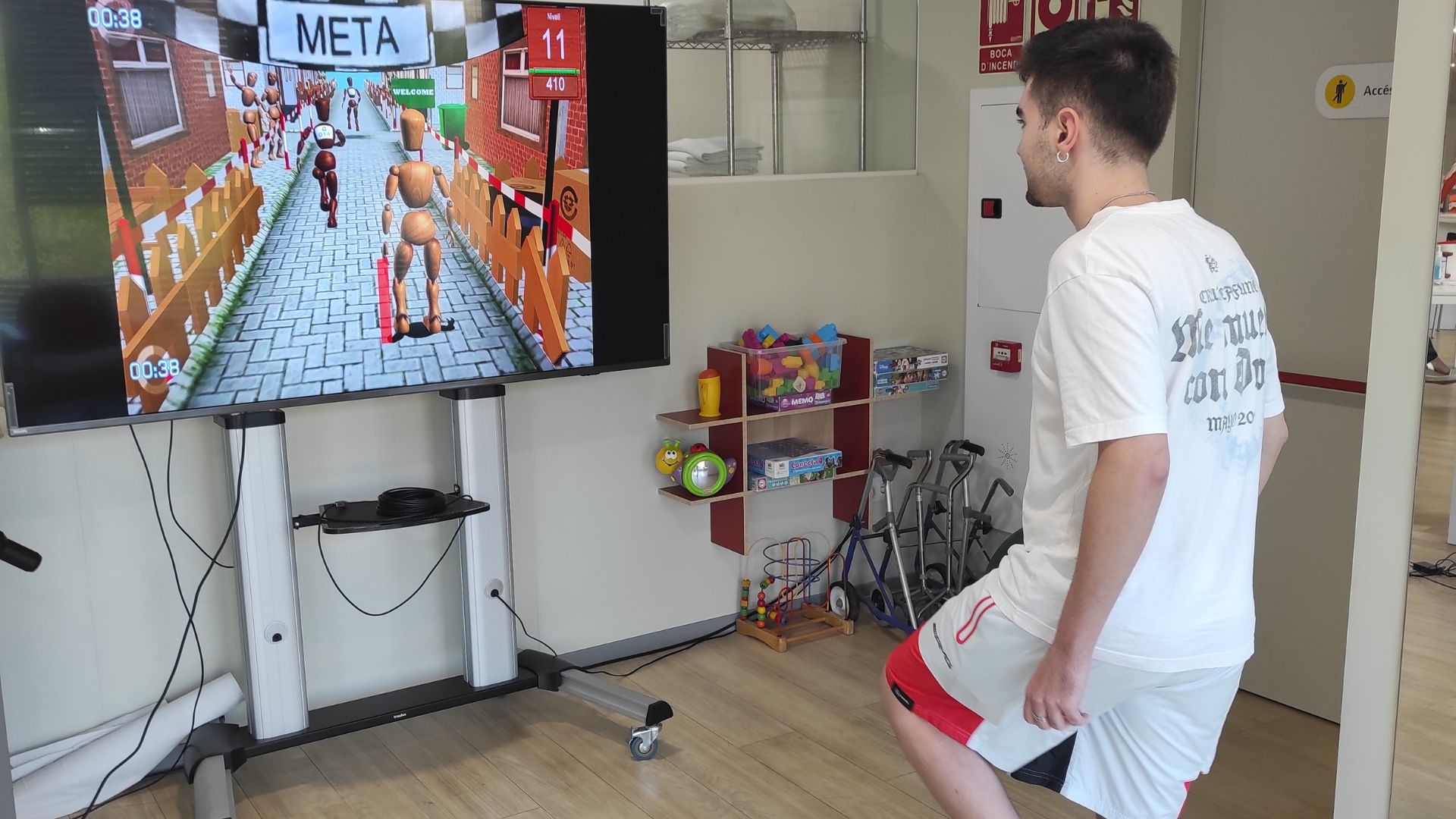
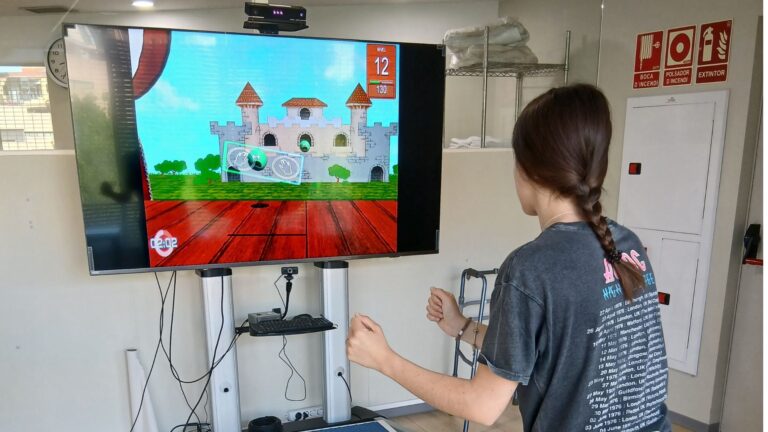
Once the clinical criteria have been established—which movement to work on, in what order, and with what progression—technology can help translate those criteria into a more specific session experience for the patient. Rehametrics Physical includes trunk and lower back control among its exercise categories, with exercises that track range of motion, repetitions, and execution consistency without the need for sensors or controllers: the patient sees the result of their own movement on the screen, which provides precisely that objective measure of progress we mentioned earlier.
For functional practice—such as replicating everyday movements that the patient has begun to avoid, like bending down, twisting the torso, or looking over the shoulder—interactive tasks allow these movements to be practiced within a controlled and adjustable environment, which aligns well with the exposure hierarchy described above.
In terms of follow-up, having objective data on progress from session to session—not just the patient’s subjective assessment on that particular day—helps the team decide when to increase the dose and makes it easier to explain to the patient, using numbers rather than just words, that their spine is moving more and better than it did three weeks ago.
This does not replace clinical judgment or the physical therapist’s treatment plan: technology provides data collection and visual stimulation; the professional remains the one who decides what to work on, when to do so, and for which patients this approach makes sense. We’ve already explored this same concept of support—not replacement—in the article on the patient’s experience with virtual reality in rehabilitation.
Modules relevant to low back pain and neck pain
Trunk and Lower Back Control
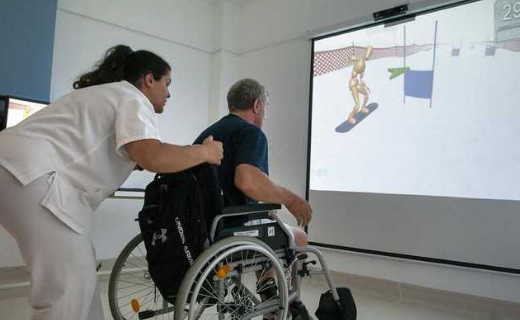
Motor control and spinal mobility exercises using motion capture without sensors or controllers, with tracking of range of motion and repetitions from session to session.
View module →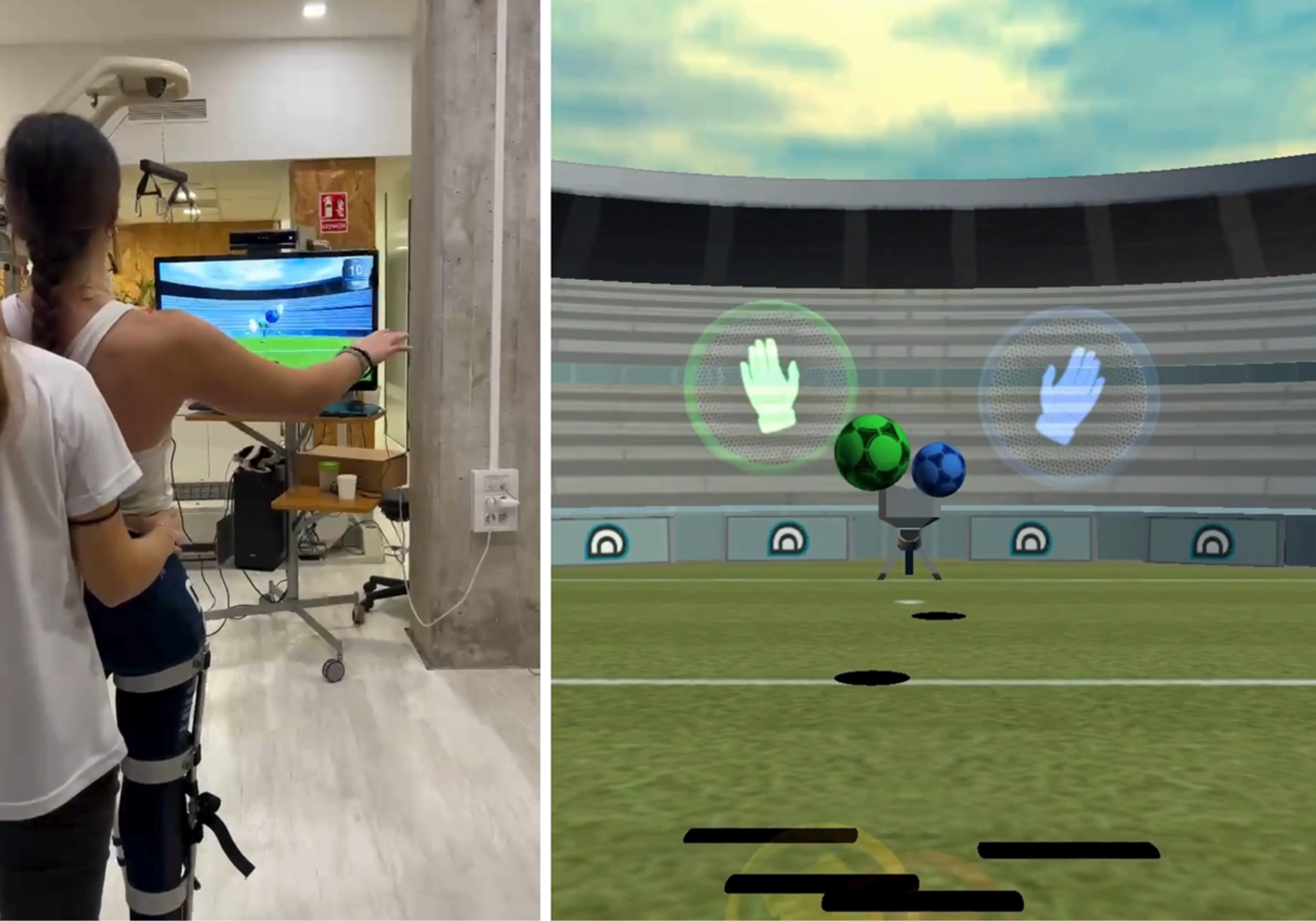
Adjustable functional tasks
Postural control and balance tasks for replicating everyday gestures within a controlled display hierarchy.
View exercises →
Progress Reports
Quantitative tracking of range of motion, repetitions, and movement quality, which makes it easier to decide when to increase the workload and to communicate progress to the patient.
See clinical validation →Frequently Asked Questions
How can you tell if a patient's lower back pain is mechanical or requires referral?
How is gradual exposure applied in a patient with neck pain and a fear of turning the neck?
Does virtual reality replace conventional therapeutic exercise for the spine?
How long does it take to see an improvement in kinesiophobia with this approach?
For which patients with back or neck pain is this approach not recommended?
Would you like to experience this with your own patients?
We'll show you how to use Rehametrics to work on gradual exposure and trunk and cervical control, using real-life cases of chronic low back pain and neck pain.
Request a demo