
What to review before starting a digital cognitive stimulation session
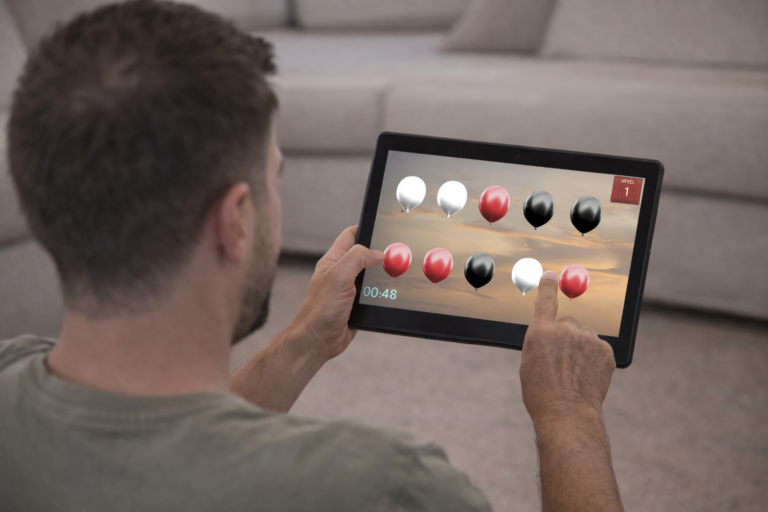
The quality of a digital cognitive stimulation session depends to a large extent on what happens before the patient begins to interact with the task. Insufficient preparation increases the risk of early fatigue, frustration or low therapeutic benefit.
This article covers the main clinical aspects that should be reviewed before starting a session, with a practical approach focused on its use in clinical settings.
Initial screening
Initial screening has a clear clinical function: to identify which variables need to be adjusted before starting the session. It does not establish rigid inclusion or exclusion criteria.
The areas that should be explored are:
Comprehension
It is assessed whether the patient understands simple instructions. This information shows the level of guidance initially required, the type of instructions and the pace of introduction of the tasks.
Attention
It is observed whether the patient is capable of maintaining a task for several minutes. This data determines the initial duration of the session and the density of stimuli.
Tolerance screens
To identify signs of visual fatigue, rejection, physical dyscomfort or overload. It allows you to adjust the pace, breaks, and duration of the blocks in the session.
Sensory capacity
Vision and hearing functionality directly influence the selection of stimuli, size of elements, contrast and modality of feedback.
Interaction with the device
The use of a mouse, touch screen, or other control systems is evaluated. This aspect determines the most appropriate mode of interaction and the degree of initial simplification.
Behavior towards structured tasks
Observing tolerance for following guided activities, impulsivity, perseverance, and the need for constant supervision. This allows to anticipate the level of support required.
Motivation and willingness
The initial attitude of the patient guides the type of tasks assigned to them, the level of challenge and the style of feedback.
Download now the new guide for digital cognitive stimulation
Recommendations prior to use: prepare the context of intervention
When preparing a digital cognitive stimulation session
Physical environment
-
A quiet space, free from distractions.
-
Sufficient and stable lighting
-
Screen positioned at a comfortable height and distance.
-
Stable and comfortable posture.
These conditions reduce external interference that may affect the performance and the clinical interpretation of results.
Preparation of the patient
-
Brief explanation and simple language.
-
Clarify that this is not a formal exam or assessment.
-
Confirm physical comfort and disposition to begin the task.
-
Resolve any questions before getting started.
This approach reduces anxiety, encourages involvement, and improves tolerance for error.
Initial selection of tasks
-
Prioritize simple and predictable tasks.
-
Avoid cognitive or sensory overload during the first exposure.
-
Facilitate an initial experience of control and understanding.
The objective initially is not to measure the maximum performance, but to generate familiarity, confidence, and adherence.
Base structure of a digital cognitive stimulation session
A digital cognitive stimulation session must maintain a stable organization that facilitates both therapeutic work as well as the patient’s tolerance of the treatment.
Approximate duration
-
Standard session: 30–45 minutes
-
Patients with low cognitive tolerance: 20–30 minutes
-
Patients with good endurance: up to 60 minutes, with breaks
The duration must be adjusted based on:
-
Age.
-
Cognitive level.
-
Fatigue baseline
-
Comorbidities.
-
Previous experience with technology.
A well-prepared session improves the quality of the patient’s experience, enhances performance consistency, and facilitates more solid progress over the medium term. This ensures that, from the very beginning, every digital cognitive stimulation session is truly adaptive.
With tools such as Rehametrics, professionals can facilitate session design, the necessary customization for each patient, and adjustments during treatment.