
Clinical rehabilitation technology developed by clinicians, for clinicians
We are a Spanish company founded in Valencia in 2014. Today, more than 450 healthcare and social care centres rely on Rehametrics to provide evidence-based physical, cognitive and occupational rehabilitation.
What is Rehametrics?
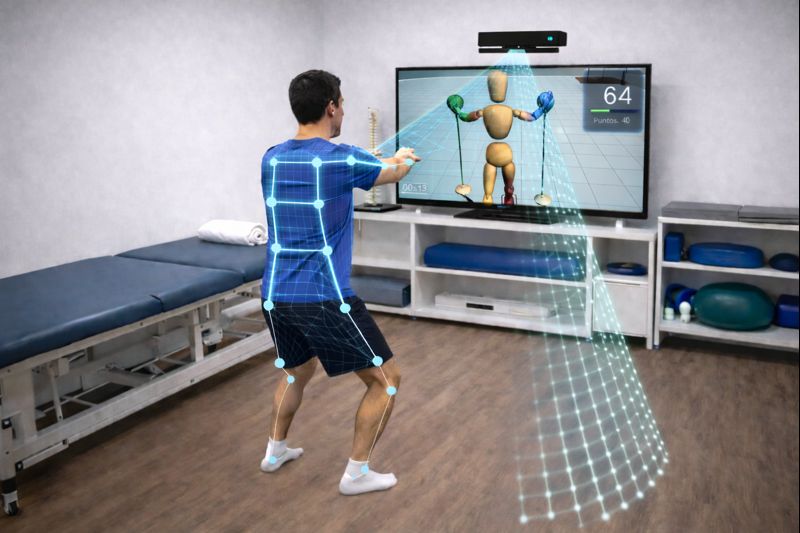
Rehametrics is a CE-marked medical device that integrates physical, cognitive and occupational rehabilitation into a single platform. It operates without external sensors or controllers: patients interact directly with their body’s natural movements and via a touchscreen tablet.
It is designed for clinical use by physiotherapists, neuropsychologists, occupational therapists and speech and language therapists in any setting: hospitals, clinics, care homes, day centres, organisations and telerehabilitation.
Unlike wellness or fitness apps, Rehametrics automatically records more than 100 kinematic parameters per session, joint range of motion, base of support, centre of gravity, speed of movement, without any manual intervention from the clinician.
- Medical device with CE marking, complies with the European MDR regulation.
The problem that gave us our raison d’être
The demand for rehabilitation is growing faster than the capacity of healthcare systems to meet it. Waiting lists are getting longer, patients need more intensive treatment, and healthcare professionals are under constant pressure to do more in less time.
This challenge does not only affect healthcare capacity. It also has an impact on the continuity of treatment, patient adherence and, ultimately, clinical outcomes.
Rehametrics was not created to replace therapists. It was created to enhance their work. We help professionals deliver more effective therapy, improve patient adherence and motivation, increase the productivity of services, and provide objective data to support better clinical decision-making.
Because more accessible, more attractive and better-suited rehabilitation leads to better outcomes for everyone.
From Valencia to the world
Let’s start with a simple question: why isn’t the motion-detection technology used in video games used in hospitals? We spent the first few years focusing on clinical validation, not sales.
Founded in Valencia
Physiotherapists and software engineers joined forces with a clear initial goal: to make telerehabilitation accessible and quantifiable. The first version of the platform enabled clinicians to prescribe and monitor remote rehabilitation sessions.
Microsoft Award & European Acceleration
Rehametrics received recognition from Microsoft for innovation in digital health. The platform was selected among the most promising healthtech companies in Europe.
International Expansion
Established a presence across 5 countries. Initiated partnerships with leading reference hospitals and foundations such as Mútua Terrassa, Hospital La Pedrera, and the FIVAN Foundation. Published the first scientific papers backed by platform data.
Lanzadera & Tampa Bay Wave
Rehametrics was selected from over 1,000 applicants to join the Traction programme at Lanzadera (Marina de Empresas, Valencia). That same year, it entered the TechDiversity Accelerator by Tampa Bay Wave in Florida, a programme funded by the Nielsen Foundation.
CE-Marked Medical Device
Successfully obtained the CE marking under Medical Device Regulation (MDR) standards. Reached over 24 clinical publications in indexed medical journals. The platform surpassed 100 active healthcare facilities.
Immersive VR Module Launch
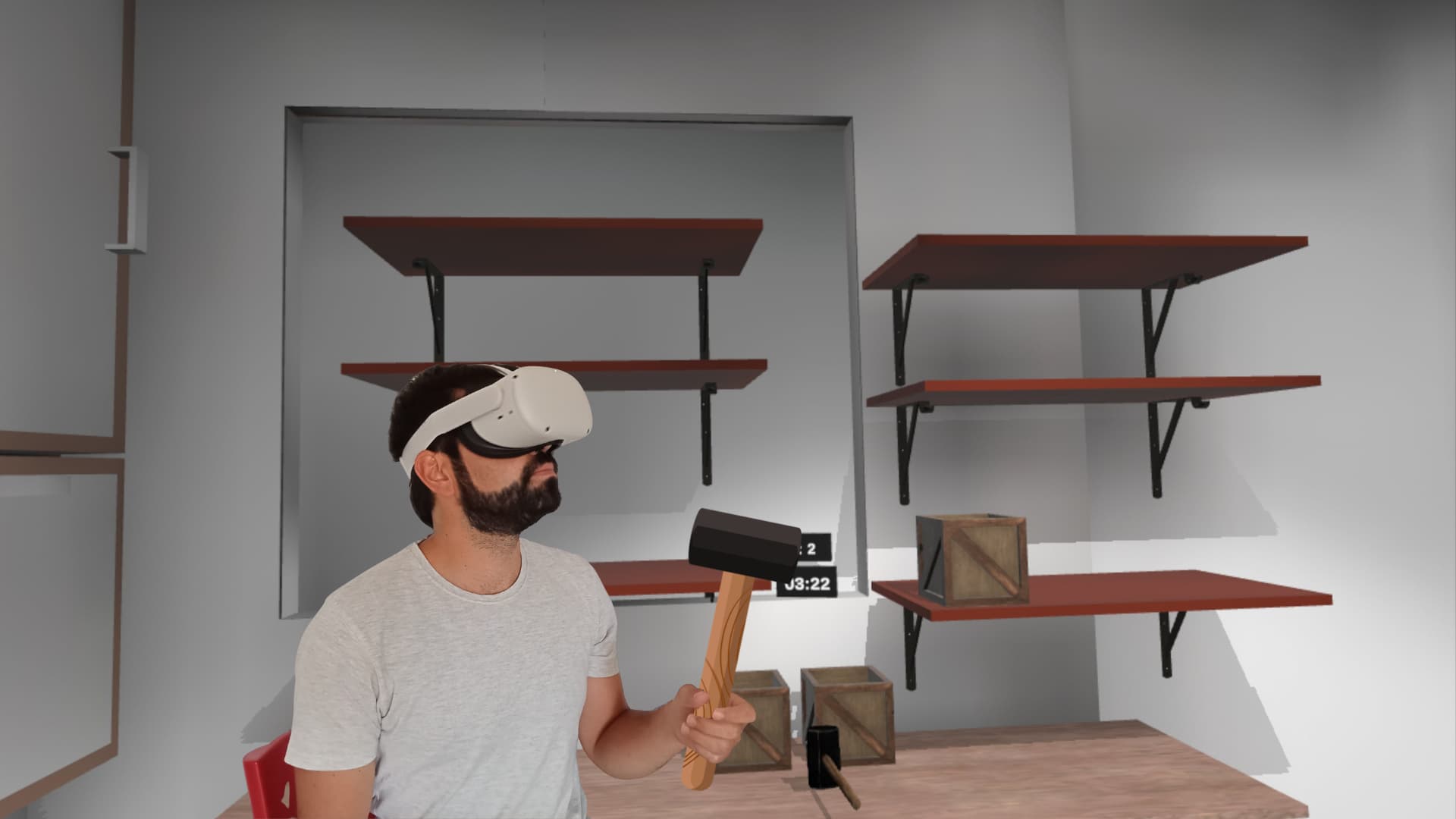
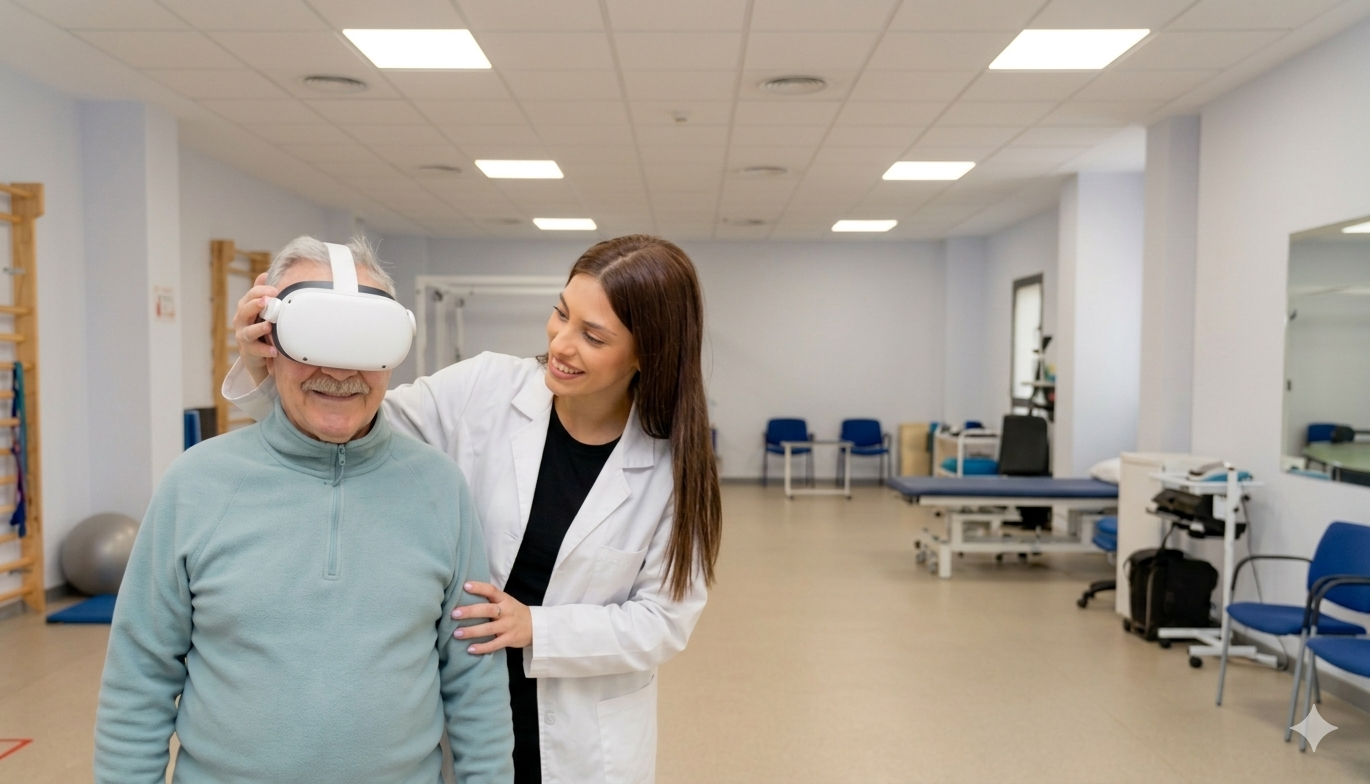
Rehametrics launched its immersive virtual reality rehabilitation module for occupational therapy and cognitive-motor treatment, featuring over 70 exercises driven entirely by hand-tracking technology without controllers or gloves.
Mixed Reality & European Reference Status
Launched the advanced mixed reality module in VR. Scaled to over 450 active clinical centres and over 40 peer-reviewed scientific publications. Officially recognised as a digital rehabilitation benchmark by public health administrations and international bodies.
A holistic approach: physical, cognitive and functional
Three modules within a single clinical setting, designed to meet the needs of each patient. All are CE-marked as medical devices.
Physio Module
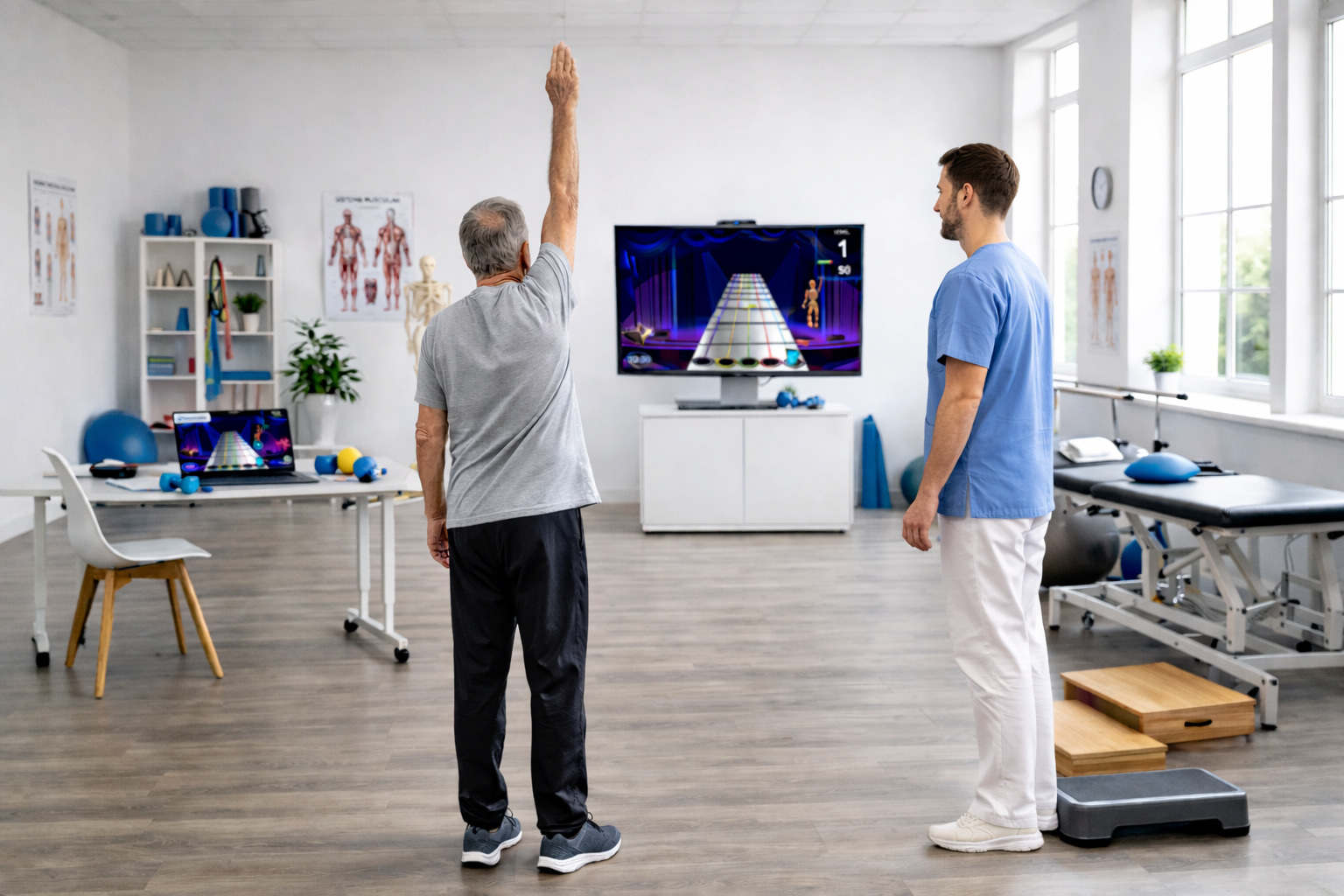
Movement-based rehabilitation using augmented reality. No sensors or controllers: the system detects the body’s natural movements. Balance, coordination, range of motion, postural control and fall prevention — with over 100 kinematic parameters recorded automatically per session.
Immersive VR Module
Occupational therapy and cognitive-motor rehabilitation in immersive virtual reality environments. Over 70 exercises for the upper limbs, fine motor skills and dual tasks that combine simultaneous physical and cognitive demands. No gloves or controllers required.
Cognitive Module
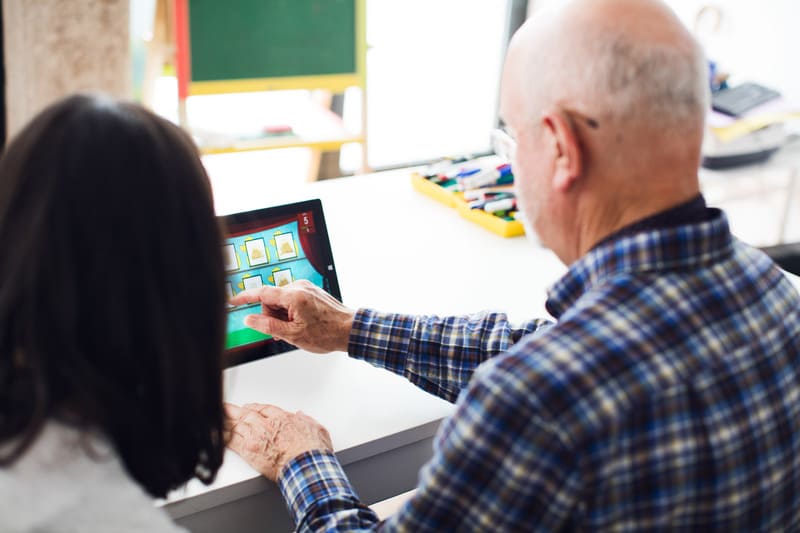
Over 190 gamified exercises for cognitive stimulation: attention, memory, executive functions, language and activities of daily living. Adaptive difficulty based on recorded progress. Accessible via a touchscreen tablet with no prior technical knowledge required.
What drives us
We don’t develop technology for the sake of it. Every product decision stems from a specific clinical question.
Our mission
To make high-quality rehabilitation accessible to any patient who needs it, regardless of where they are or the resources available at the centre treating them.
Evidence first
Every feature we develop is based on a proven clinical hypothesis. We do not add anything that is not supported by real patient data.
Clinically designed
Our products are designed and validated by the professionals who use them. We don’t add layers of technology that complicate the work — we remove them.
True accessibility
No attached sensors, no controls, no prior technical knowledge required. If a patient with severe cognitive impairment cannot use it, it is not finished.
Who is behind Rehametrics?
Rehametrics is driven by a multidisciplinary team that brings together clinical, technological and scientific expertise. Our team includes physiotherapists, occupational therapists, neuropsychologists, software engineers, artificial intelligence specialists, clinical experience designers and experts in medical device regulation.
However, our expertise is not limited to our in-house team. We work closely with a wide network of hospitals, clinics, rehabilitation centres, universities and healthcare professionals who are actively involved in the platform’s development.
This ongoing collaboration enables us to develop solutions that reflect clinical reality, validate new features in real-world settings, and meet the needs of patients and healthcare professionals. Every improvement to Rehametrics stems from a combination of scientific evidence, technological innovation and clinical experience.
We’re growing. If you share our vision, we’d love to meet you.
One of the digital rehabilitation platforms with the most published scientific evidence
Clinical studies conducted using Rehametrics cover the main neurological, musculoskeletal and cognitive impairment conditions, and have been published in indexed journals specialising in neurology, physiotherapy and rehabilitation.
Evidence is not a sales pitch — it is at the heart of the product development process. Before an exercise or protocol is added, there is a body of clinical evidence to support it.
Adopted by leading public and private organisations
When a public authority selects a healthcare technology, the process is rigorous. The fact that the Xunta de Galicia, IMSERSO and international healthcare organisations such as Teletón use Rehametrics is the result of clinical evaluation processes, not commercial strategies.










How the platform works
Rehametrics is designed to allow clinicians to focus on the patient. The technology records, organises and analyses, the therapist interprets and makes decisions.
Exercises and Sessions Dashboard
The platform brings together hundreds of activities comprehensively categorised by module, intervention area, level of impairment, age, socioeconomic background, and delivery format, whether individual or group, digital or print-based.
Physical exercises are structured as video games controlled directly through body movement, requiring no sensors or controllers. Cognitive tasks adjust their difficulty automatically based on the patient's performance, preventing memorisation patterns and generating endless variations of each activity.
The clinician can design personalised sessions in minutes, assign them to one or multiple patients simultaneously, and schedule them to run autonomously, either within the clinic or from home.
Physical Rehabilitation
Balance, coordination, range of motion, postural control, gait, and mobility, with over 100 automated kinematic parameters tracked per session.
Cognitive Rehabilitation
Attention, memory, executive functions, language, perception, and activities of daily living. Over 120 gamified exercises with adaptive difficulty levels.
VR Occupational Therapy
Fine motor skills, upper limb intervention, and dual-task activities within immersive virtual reality environments. Guided without gloves or external controllers.
Telerehabilitation
Patients carry out their prescribed sessions from home under remote, real-time clinical supervision. The clinician receives results automatically upon completion.
User Management & Case Records
Manage all facility patients from a unified system. Clinical history, anamnesis data, medical documentation, and metrics are accessible from any device, fully compliant with data protection regulations.
Objective Analytics & Tracking
The platform automatically tracks quantitative parameters for each task, speed, range, accuracy, and reaction times. Clinicians can add qualitative notes to complete the patient's progress profile.
Long-Term Therapeutic Programmes
Group sessions into structured treatment pipelines with specific timelines and clinical goals. Assign identical protocols to patients with similar baselines and evaluate multi-week progress.
Would you like to see Rehametrics in action at your centre?
Speak to one of our clinical specialists. No sales pressure, we start by getting to know your environment, your team and your patients.
- A bespoke demo tailored to your type of centre and the conditions you treat
- No obligation, no cost
- A reply within 24 hours
- Access to scientific evidence specific to your specialism
Request a free demo
We will contact you in less than 24 hours.
Collaborations
Would you like to be part of the movement towards the digitalisation of rehabilitation?
Digital rehabilitation goes beyond technology, it is a shift in mindset. And that shift is also shaped by the voices of those on the front line: researchers, clinicians, therapists and communicators who understand what is at stake.
If you are a researcher, healthcare professional or specialist content creator and would like to collaborate with Rehametrics, we’d love to hear from you. We are open to:
Scientific or outreach co-authorship
Articles on digital rehabilitation, neurorehabilitation, or assistive technology.
Posts and entries on our blog
Content signed by industry experts, with your voice and clinical judgment.
Social media and podcast
Collaborations to amplify the message of clinical digitalization.
Research and clinical validation
Research projects using our software as a clinical tool.
We’re not looking for suppliers; we’re looking for partners. If you share our vision that the rehabilitation of the future is digital, measurable and accessible, let’s talk.
Tell us how you’d like to get involved
We will get in touch with you within 48 hours.
Frequently Asked Questions about Rehametrics
Can’t find the answer? Get in touch with our team.
Rehametrics was founded in 2014 in Valencia, Spain, with an initial focus on telerehabilitation. Its headquarters remain in Valencia (Av. del Oeste 49, 46001), from where it manages operations across more than 20 countries in Europe, Latin America, and the Middle East.
Yes. Rehametrics is CE-marked as a medical device, meaning it fully complies with the safety, efficacy, and quality standards set by the European Medical Device Regulation (MDR). This establishes a clear distinction between Rehametrics and generic wellness or fitness apps that are not subject to this strict regulatory framework.
Rehametrics is the only platform that integrates physical, cognitive, and occupational rehabilitation within a single clinical ecosystem, requiring no external sensors or handheld controllers. It operates via automated body-movement detection and large-screen touchscreen tablets, making it highly accessible for older adults, individuals with cognitive decline, or those with limited technological literacy. Furthermore, its clinical effectiveness is backed by over 40 peer-reviewed scientific publications.
Rehametrics is deployed in both public and private hospitals, specialised rehabilitation clinics, residential care homes, day centres, patient associations, foundations, and healthcare insurers, as well as being used as a home-based telerehabilitation model. In total, the platform supports over 450 active clinical centres.
The platform is clinically validated for stroke and acquired brain injury (ABI), spinal cord injury, multiple sclerosis, Parkinson's disease and other neurodegenerative conditions, cognitive decline and dementia, musculoskeletal injuries, post-operative rehabilitation, chronic pain, physical and intellectual disabilities, paediatric rehabilitation, and active ageing programmes.
No. Physical exercises are driven entirely by natural body movement — with no wearable sensors or handheld devices required — while cognitive tasks are completed via a large touchscreen tablet. The entire interface is specifically designed for older adults or individuals with cognitive impairment who may have never interacted with modern digital technology before.
More than 40 clinical studies published in indexed neurology, physiotherapy, and rehabilitation journals have utilised data gathered through Rehametrics. These research pieces cover neurological conditions, musculoskeletal pathologies, cognitive decline, and active ageing. Our R&D department maintains continuous partnerships with key universities and hospitals to generate robust clinical evidence.
The regional Government of Galicia (Xunta de Galicia) has rolled out Rehametrics across its public residential care homes. Spain's National Institute for Social Services (IMSERSO) has included the system within its active ageing frameworks. Additionally, healthcare facilities within the NHS-equivalent frameworks of the Valencian Community (GVA) and the Community of Madrid actively deploy the platform. Internationally, major public healthcare networks in Latin America, such as Teletón, work natively with Rehametrics.