
Physical and Cognitive Rehabilitation for People with Physical and Intellectual Disabilities
Rehametrics is the clinical platform that enables physiotherapists, occupational therapists, neuropsychologists and special needs teachers to design rehabilitation programmes – whether physical, cognitive or both – for people with physical and intellectual disabilities. All within a single system, with automated recording of each session and longitudinal monitoring of progress.
+30%
more sessions completed compared with the conventional approach
+100
clinical parameters recorded per session
89%
of patients who reported higher levels of motivation
What people with physical and intellectual disabilities need
Physical and intellectual disabilities encompass a broad spectrum of conditions: cerebral palsy, Down’s syndrome, spinal cord injury, muscular dystrophies, and intellectual disabilities of various aetiologies, each with very different functional profiles. What they have in common is the need for systematic, tailored and ongoing rehabilitation to maximise functional independence and quality of life.
The challenge for professionals is to design effective and sustainable programmes: programmes that motivate a population that often struggles with adherence, that can be adapted to a wide range of abilities, and that are capable of objectively tracking slow and subtle progress.
The challenge for professionals is to design effective and sustainable programmes: programmes that motivate a population that often struggles with adherence, that can be adapted to a wide range of abilities, and that are capable of objectively tracking slow and subtle progress.
Conditions addressed with Rehametrics
- Cerebral palsy
- Down's syndrome
- Intellectual disability of various aetiologies
- Spinal cord injury and acquired physical disability
- Muscular dystrophies and neuromuscular disorders
- Spina bifida · Fragile X syndrome · ASD with ID
- Other conditions involving motor and/or cognitive impairment
Conditions addressed with Rehametrics
Each condition has a different functional profile. Rehametrics allows the physical, cognitive or combined approach to be tailored to each person’s needs and the centre’s objectives.
Cerebral palsy
The PC offers a wide range of functional possibilities. Rehametrics enables users to work on motor control, balance, coordination and functionality in activities of daily living, as well as cognitive functions such as attention, memory and processing, depending on each person’s profile and the centre’s therapeutic approach.
Down's syndrome
People with Down’s syndrome can benefit from structured cognitive stimulation programmes focusing on memory, attention, executive functions and language, as well as adapted physical activity aimed at maintaining motor skills, balance and preventing a sedentary lifestyle.
Intellectual disability
Intellectual disability can have various causes: Fragile X syndrome, ASD with intellectual disability, spina bifida or other causes. In all cases, tailored cognitive stimulation and supervised physical activity are cornerstones of the rehabilitation approach. Rehametrics offers exercises that can be adapted to each person’s actual functional level, with controlled progression and objective monitoring.
Spinal cord injury and acquired physical disability
The aim is to maximise preserved functionality, prevent secondary complications and promote independence in everyday activities, with the option of incorporating cognitive training where clinically relevant.
Muscular dystrophies and neuromuscular disorders
Maintaining function and preventing secondary deterioration are key objectives. Rehametrics enables the design of programmes tailored to current functional capacity, with particular attention paid to fatigue and the progressive course of the condition.
A holistic approach to intellectual and physical disabilities
Three modules within a single clinical setting, designed to meet the needs of each patient. All are CE-marked as medical devices.
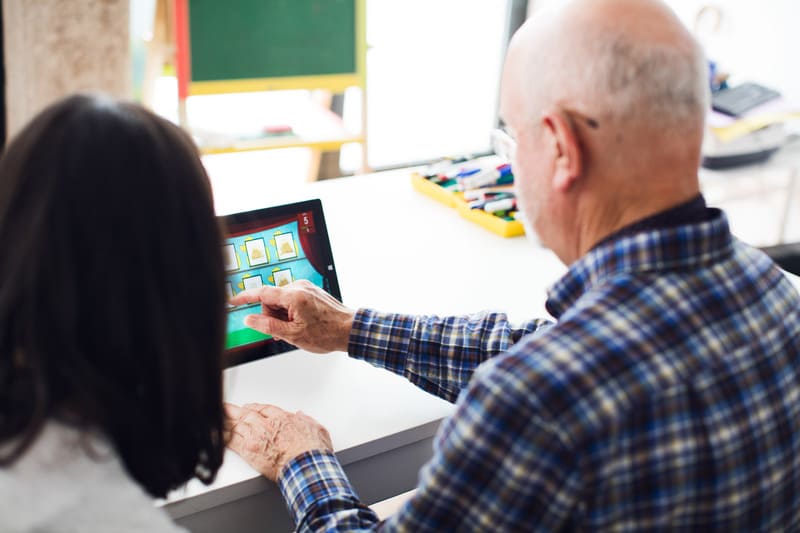
Cognitive Module
+190 gamified exercises tailored to each patient’s neuropsychological profile: attention, memory, executive functions, language and activities of daily living.
The difficulty level is adjusted manually or automatically depending on the progress recorded. This is particularly useful where physical and cognitive recovery go hand in hand.
- Intellectual disability of various aetiologies
- Down's syndrome
- Prader-Willi, Angelman, Williams and Rett syndromes
- Cerebral palsy with cognitive impairment
- ASD with an intellectual disability
- Cognitive sequelae of acquired brain injury in childhood
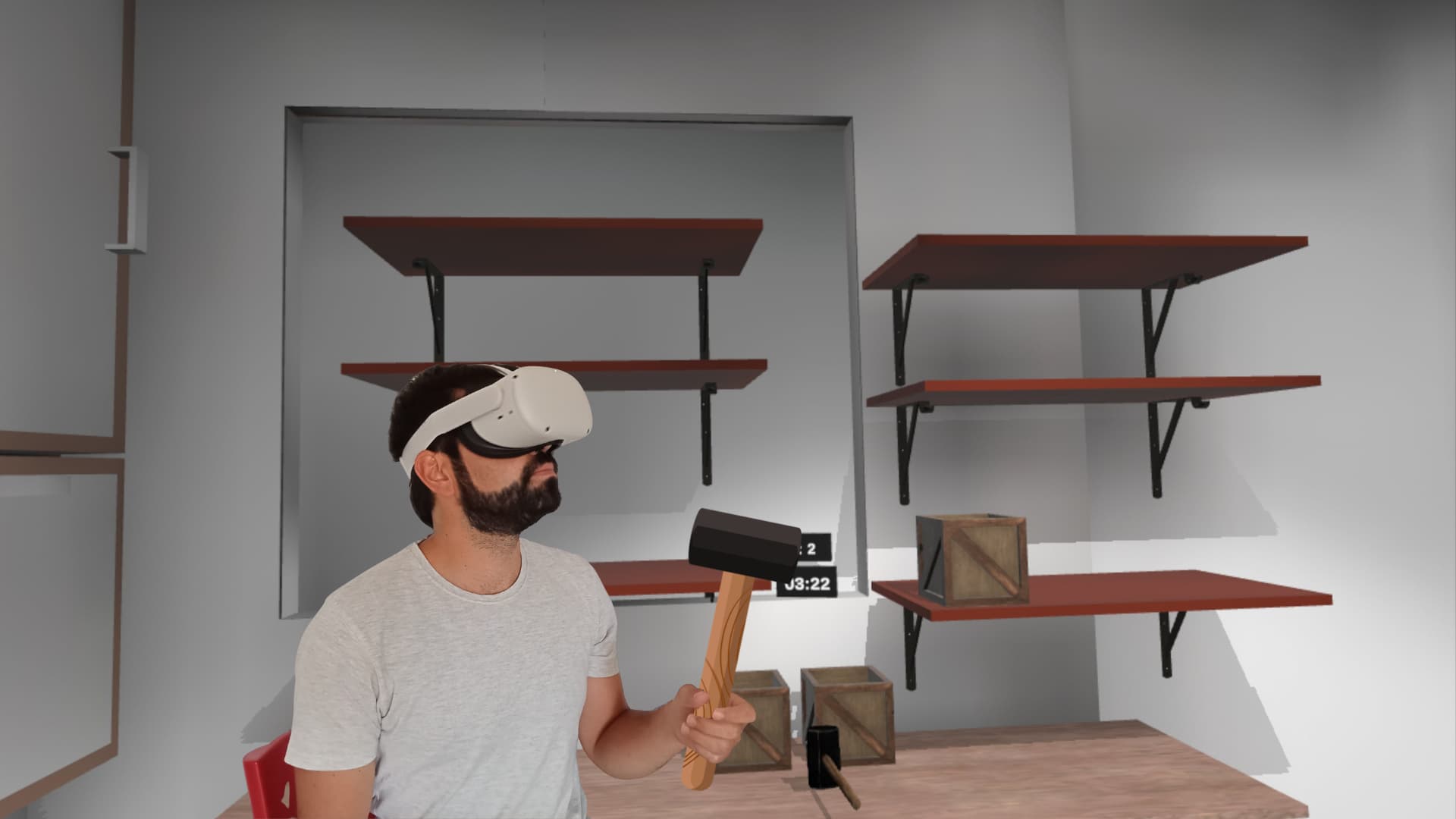
VR Module
VR environments featuring over 70 exercises for the upper body, fine motor skills and dual-tasking activities that combine simultaneous physical and cognitive challenges. No gloves, controllers or calibration required.
The clinician monitors the patient in real time from their computer without interrupting the patient’s session.
- Cerebral palsy affecting the upper limb
- Down's syndrome
- Incomplete spinal cord injury
- Charcot-Marie-Tooth disease
- Traumatic brain injury in children
- Dual physical-cognitive tasks
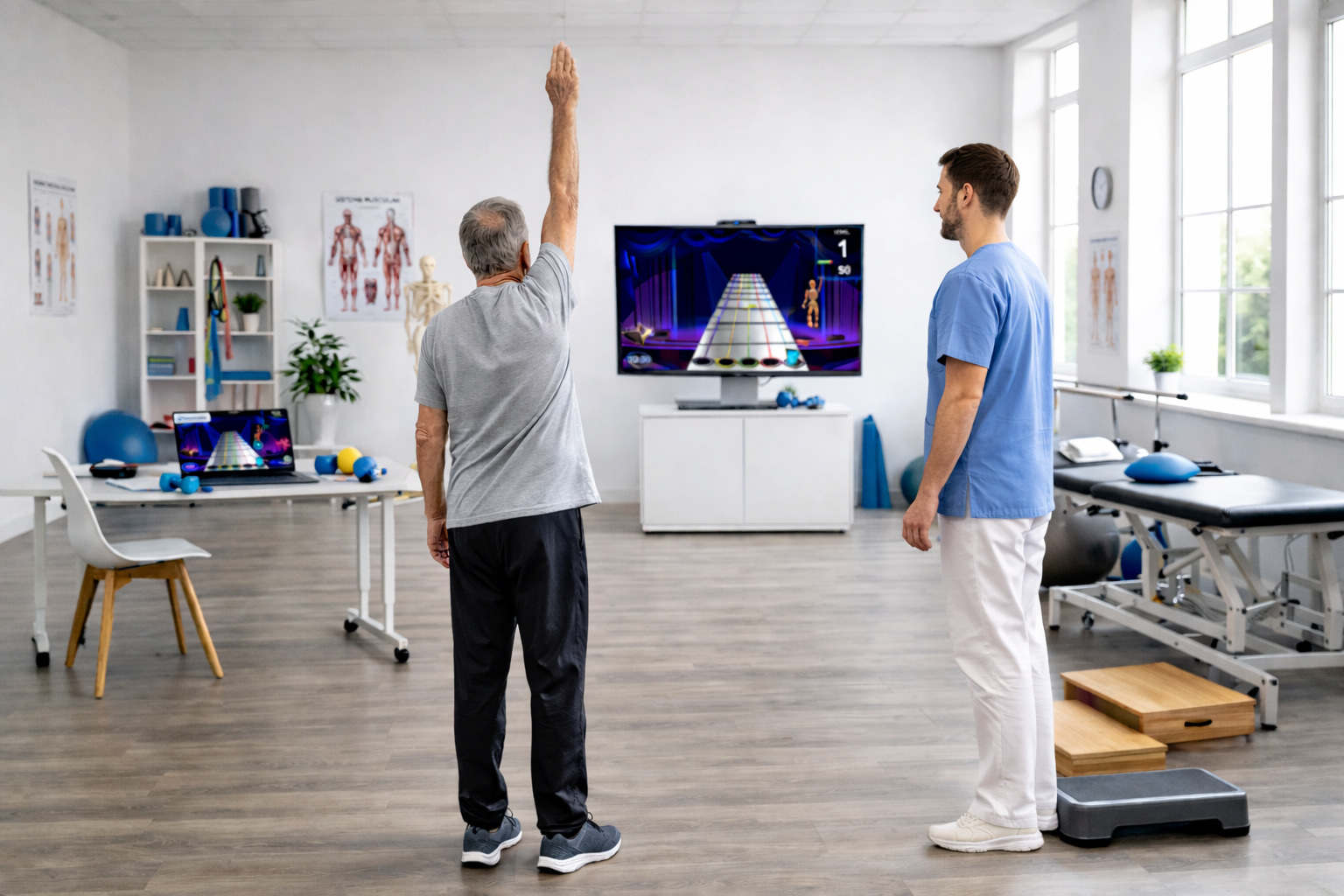
Physio Module
Augmented reality system with motion detection. Over 120 exercises focused on motor control, balance, coordination and functionality in activities of daily living: range of motion, postural control, gait patterns and the prevention of secondary complications.
The system automatically records more than 100 kinematic parameters per session without any manual intervention by the clinician.
- Cerebral palsy
- Down's syndrome
- Spinal cord injury and acquired physical disability
- Muscular dystrophies, spinal muscular atrophy and other neuromuscular disorders
- Motor sequelae of acquired brain injury in childhood
- Spina bifida
What Rehametrics brings to the clinical team
A platform designed for multidisciplinary work, personalised treatment and the objective monitoring of people with a wide range of functional profiles.
A single system for the multidisciplinary team
Physiotherapists, occupational therapists, neuropsychologists and special needs teachers all work on the same platform, with access to the same user data. This facilitates the coordination of the treatment plan, prevents duplication of records and provides a comprehensive overview of progress.
Personalised and flexible sessions
Every person with a disability has a different functional profile that changes over time. Rehametrics enables the design of physical, cognitive or functional sessions, allows the difficulty to be adjusted progressively, and enables the protocol to be modified when progress so requires, with full traceability of all changes.
Automatic recording and quantification
The system records more than 100 clinical parameters per session: response times, accuracy rates, range of motion, balance, level of difficulty achieved and consistency between sessions. All this data is used to generate automatic clinical reports.
Longitudinal monitoring of developments
In cases of physical and intellectual disability, continuous monitoring makes it possible to detect subtle progress, identify areas where progress has stalled, and adjust the programme in an informed manner. The platform documents the therapeutic impact — key information for families, clinical teams and referral services.
Tele-rehabilitation for greater continuity
Many people with disabilities face logistical difficulties in attending the regular face-to-face sessions required by an intensive programme. Rehametrics enables treatment to continue from home, with the same level of clinical monitoring and data recording as in face-to-face sessions.
number of sessions completed compared with the conventional method
clinical parameters recorded per session
of patients who reported higher levels of motivation
health organisations in 20 countries

A platform designed for professionals who work with people with physical and intellectual disabilities
If you work with people with cerebral palsy, Down’s syndrome, an intellectual disability or other conditions affecting physical or cognitive function, and are looking for a tool that can be adapted to a wide range of profiles, helps to boost motivation and documents progress using objective data, Rehametrics is designed for your team.
Frequently asked questions about rehabilitation for people with physical and intellectual disabilities
Yes. Rehametrics is designed to adapt to each individual's actual functional level, regardless of their diagnosis. The professional defines the therapeutic goals, selects the appropriate exercises, and personalises the difficulty. This makes it particularly useful for conditions with high functional variability, such as cerebral palsy or learning disabilities of various etiologies.
Rehametrics features exercises with different levels of cognitive complexity, including highly accessible tasks. The clinician selects the appropriate baseline level, and the platform logs progression even when improvements occur slowly. The gamified and immersive nature of the virtual reality experience also enhances motivation and adherence within this population.
The clinician retains full control over the parameters of each session at all times: duration, intensity, exercise type, and working posture.
Yes. Rehametrics adapts seamlessly to both healthcare settings and specialized disability care facilities: special educational needs schools, day care centres, early intervention services, and residential homes. The centralised clinical dashboard allows professionals to manage multiple users and configure supervised group sessions.