
Help your patients regain their functional independence.
Designed by clinicians for occupational therapists who wish to provide more effective, objective and functional rehabilitation.
Three questions you’ve no doubt already asked yourself.
How can you train activities of daily living safely, repeatably, and in a motivating way within your practice?
How do you maintain patient engagement in upper limb exercises that require many repetitions to be effective?
How do you objectively demonstrate functional improvement from one session to the next?
Rehametrics answers all three, starting with Virtual Reality (VR) rehabilitation designed specifically for occupational therapy practice.
Requhttps://es.wix.com/est a free demo ›Tools for every aspect of functional rehabilitation
As an occupational therapist, you can combine the modules according to each patient’s profile and functional goals. Both are CE-marked as medical devices and were designed by clinicians for clinical use.
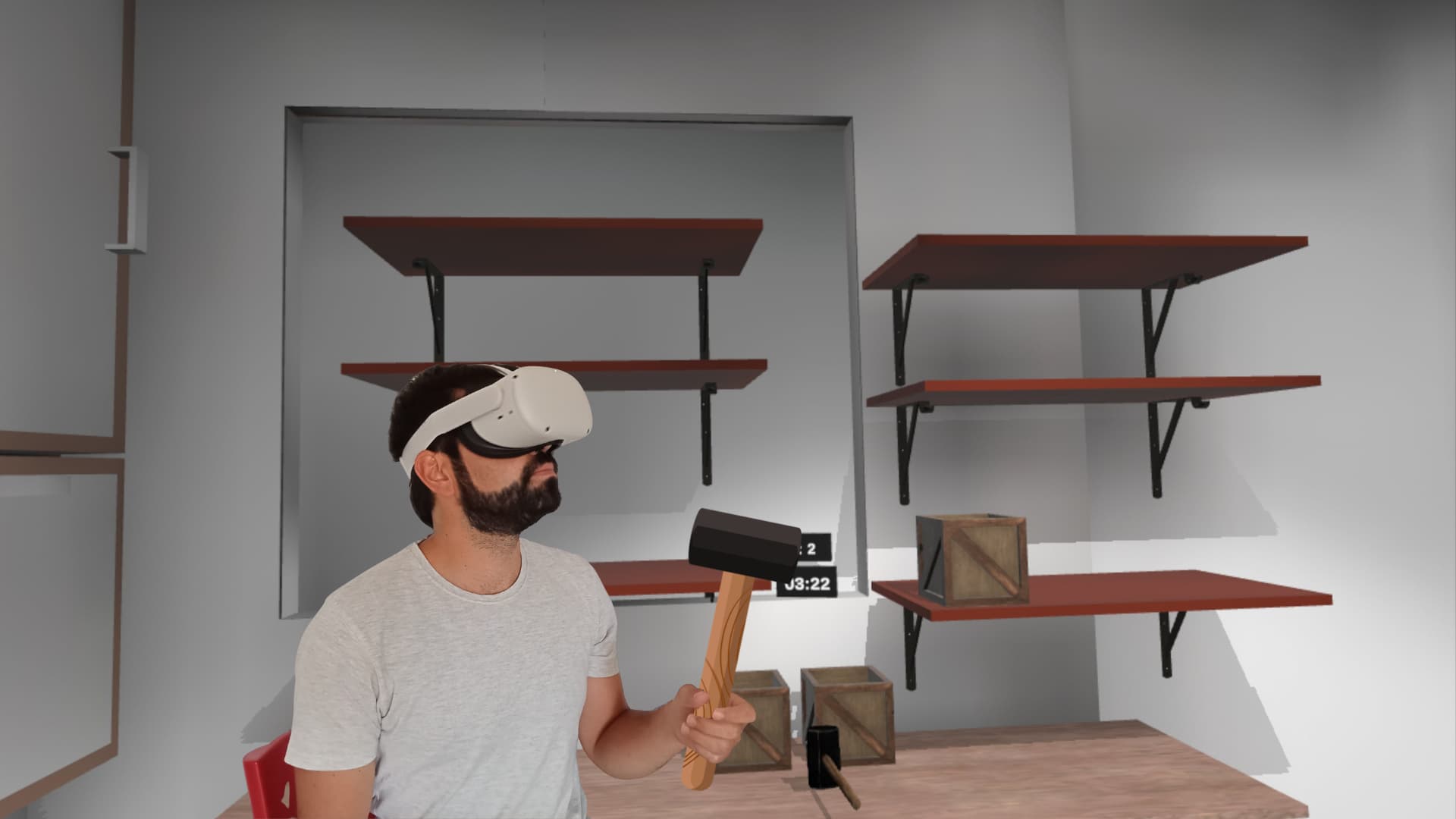
VR Module
Main module
With VR headsets, your patients are immersed in virtual environments to work on upper limb function, grasping, fine motor skills, praxias and activities of daily living – without the need for gloves, controllers or calibration – thanks to hand tracking.
The clinician can see what the patient is doing in real time and adjust the session from their computer without interrupting it.
Stroke with upper limb impairment
Traumatic brain injury (TBI)
Spinal cord injury
Parkinson’s disease
Multiple sclerosis
Cerebral palsy
Post-traumatic hand rehabilitation
Post-shoulder, elbow, or wrist surgery
Acquired brain injury
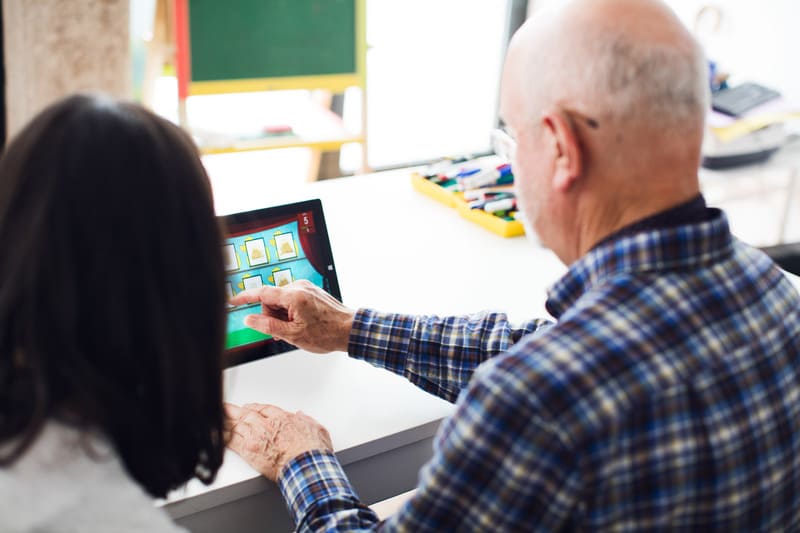
Cognitive Module
Supplementary module
For patients with concurrent cognitive and physical impairments, the Cognitive Module enables them to work on balance, coordination, body control and gait through interactive exercises, complementing cognitive training either during the same session or in parallel sessions with the physiotherapy team.
It involves dual tasks that combine simultaneous motor and cognitive demands.
Acquired brain injury
Neurodegenerative diseases
Cognitive impairment
Mental health
Intellectual disability
Active aging
In 5 steps, from the session to the report
A workflow designed to make technology work for you, not the other way round.
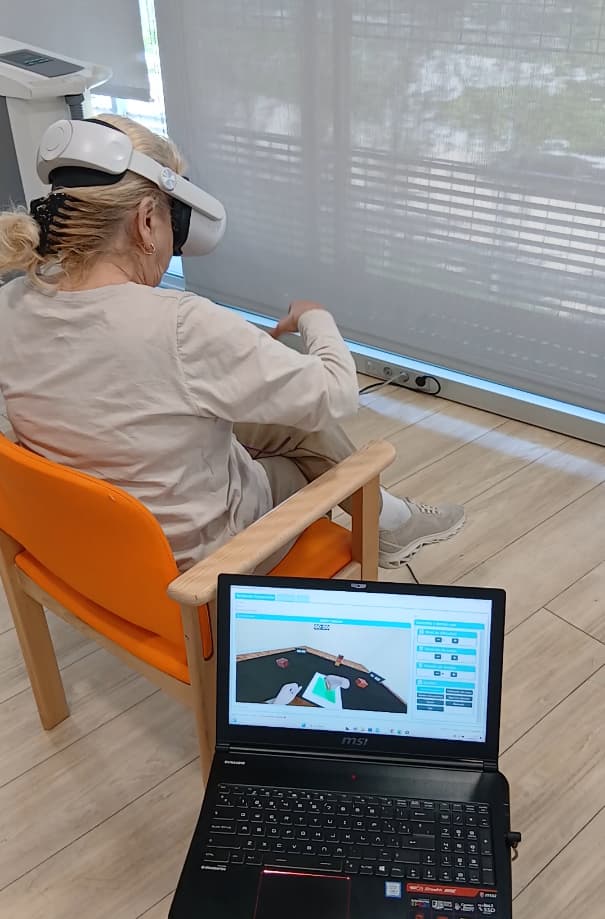
You select the exercises based on the patient’s functional goals
You set the difficulty level and the session settings
The patient carries out the session guided by the system, with the difficulty level adjusted automatically, under the supervision of the therapist
Rehametrics automatically records motor and functional performance
You can generate the clinical report with a single click, ready to print or export as a PDF
Results that matter
A system designed with two perspectives in mind: the patient’s experience and the healthcare professional’s efficiency.
For the patient
Safe environments to practice ADLs without fear of making mistakes or falling.
Thanks to gamification, high-repetition exercises are more motivating.
Visible functional progress is observed, which strengthens adherence to the program.
For professionals
Objective motor performance data per session, without manual recording
Integrated standardized assessment scales (BBT, 9HPT)
Automatic reports ready for clinical records or referrals
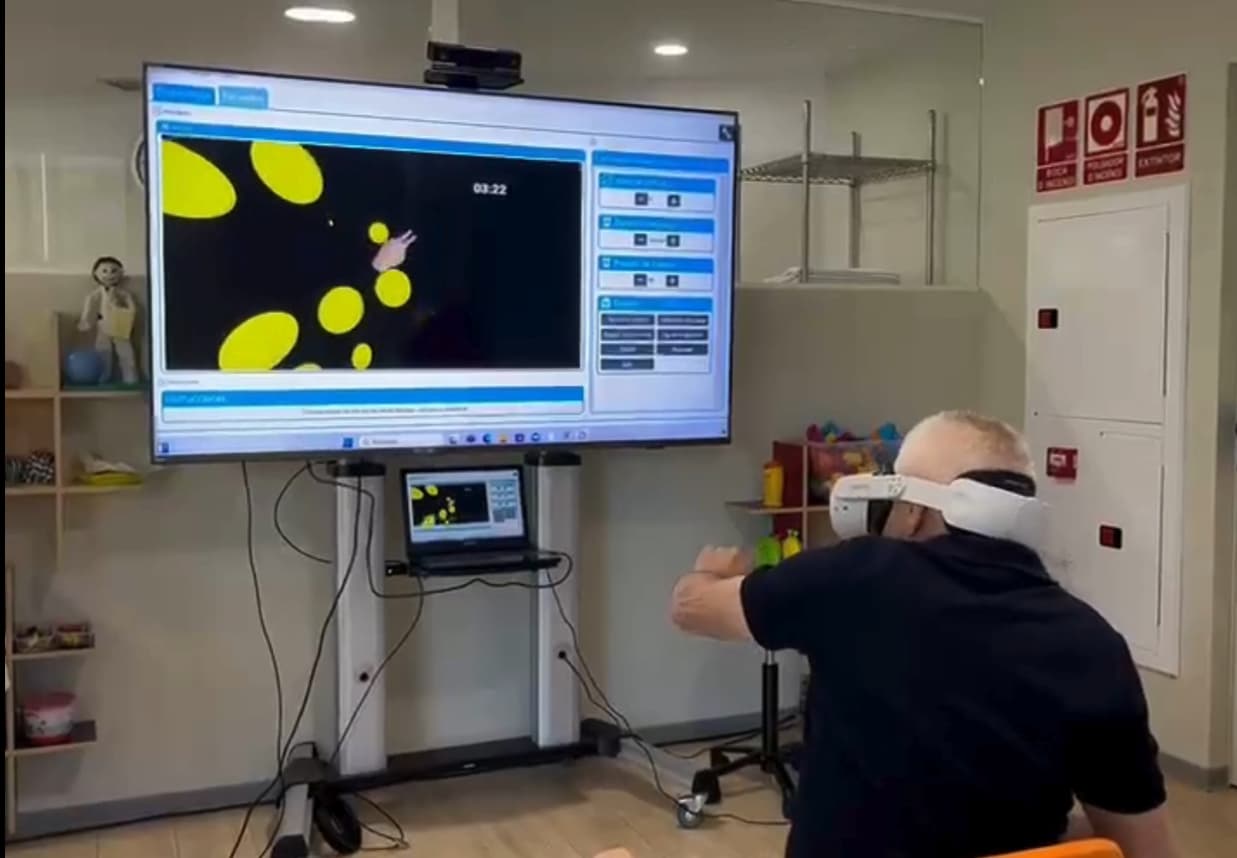
"We have been working with Rehametrics in occupational therapy for years. The immediate feedback provided by the glasses – for pain management, coordination and activities of daily living – is something you don’t find in other tools."
Alex Ibars Gordillo
Occupational Therapist, Rehabilitation Department, MútuaTerrassa University Hospital
Results observed in clinical settings
Centres that have integrated Rehametrics into their daily practice report measurable improvements in patient engagement, personalised treatment and clinical follow-up.
Greater involvement in therapy
Patients report greater motivation and active participation during upper limb exercises and activities of daily living.
Immersive rehabilitation exercises
To develop fine motor skills, upper limb range of motion and activities of daily living, without the use of gloves or controllers.
Integrated standardised rating scales
Box and Block Test (BBT) and Nine Hole Peg Test (9HPT), carried out directly on the platform, without the need for any additional materials.
Data collected from clinical centres that use Rehametrics in their day-to-day practice.
Would you like to see it in action with your patients?
Request a personalised demo and we’ll show you how Rehametrics can be tailored to your clinical practice.
Frequently Asked Questions
Rehametrics is a digital rehabilitation platform with CE marking as a medical device. For the occupational therapist, its primary tool is the VR Module, featuring over 70 virtual reality exercises to work on upper limb function, grasp, fine motor skills, and activities of daily living, without the need for gloves or controllers.
No. The system guides the patient throughout the entire session using visual instructions and immediate feedback. The therapist maintains full control from an external screen and can adjust the session in real-time without interrupting it.
The Immersive Rehabilitation module includes the Box and Block Test (BBT) and the Nine Hole Peg Test (9HPT), two standardized scales widely used in occupational therapy to assess hand and upper limb function.
Yes. Rehametrics is especially indicated for patients with stroke, acquired brain injury, Parkinson's, multiple sclerosis, or spinal cord injury who present with upper limb impairment. The cognitive module complements functional work in profiles where motor and cognitive recovery go hand in hand.
Rehametrics is a medical device with CE marking, specifically designed for clinical use. It does not require gloves, controllers, or calibration. It includes standardized assessment scales, automatic registration of functional parameters, and the generation of exportable clinical reports—features that commercial VR applications do not offer.