
Cognitive Rehabilitation in Cognitive Impairment
Rehametrics is the clinical platform that enables neuropsychologists, occupational therapists and neurorehabilitation teams to design personalised cognitive rehabilitation programmes for patients with mild to moderate cognitive impairment. All within a single system, featuring adaptive exercises, objective quantification and longitudinal monitoring of progress.
+30%
more sessions completed compared with the conventional approach
+100
clinical parameters recorded per session
89%
of patients who reported higher levels of motivation
Cognitive rehabilitation tailored to the patient’s progress
Cognitive decline can affect memory, attention, orientation or executive functions, progressively impairing the patient’s functional independence.
Cognitive rehabilitation requires personalised programmes that are continually adapted to clinical progress. Rehametrics enables the design of individualised sessions, automatically adjusts the difficulty level according to the patient’s performance, and objectively records all cognitive progress within a single clinical environment.
Deterioration profiles addressed using Rehametrics
- Mild Cognitive Impairment (MCI)
- Alzheimer’s in the mild and moderate stages
- Vascular dementia
- Lewy body dementia
- Frontotemporal dementia
- Age-related cognitive decline
Profiles of cognitive decline addressed using Rehametrics
The platform adapts to each patient’s level and progress, with programmes designed to maintain functionality and slow the progression of deterioration.
Mild Cognitive Impairment (MCI)
In the early stages, cognitive stimulation programmes are structured according to each patient’s profile and rate of progress, prioritising the areas most affected.
Alzheimer’s in the mild and moderate stages
Rehametrics enables patients to work on their memory, orientation, attention and functional cognitive activities tailored to their developmental level.
Dementias and neurodegenerative syndromes
The platform provides personalised programmes for patients with vascular dementia, Lewy body dementia, frontotemporal dementia and other neurodegenerative conditions.
Age-related cognitive decline
The programmes can be tailored to patients with age-related cognitive difficulties and mild functional decline, helping them to maintain their independence.
Cognitive decline in Parkinson’s disease and multiple sclerosis
In these conditions, cognitive impairment typically affects attention, processing speed and executive functions. Rehametrics enables these areas to be addressed specifically, alongside the physical rehabilitation of each patient.
A comprehensive approach to cognitive decline
Three modules within a single clinical setting, designed to meet the needs of each patient. All are CE-marked as medical devices.
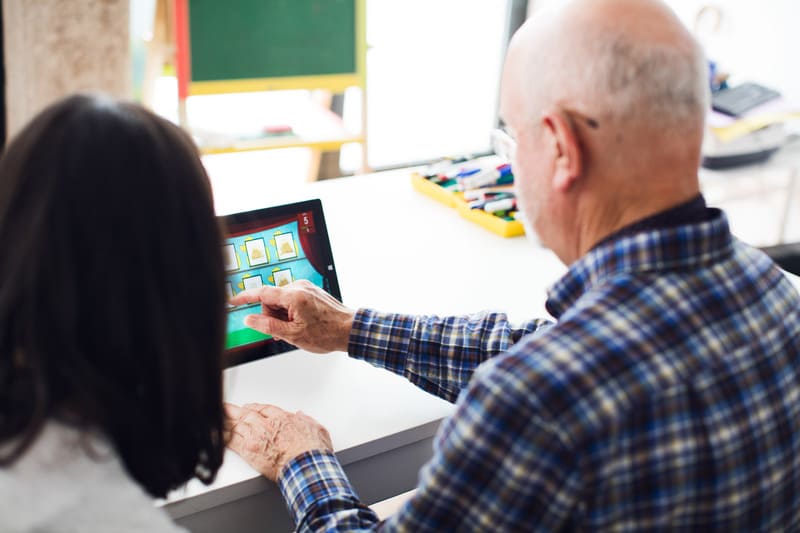
Cognitive Module
Main module
+190 gamified exercises tailored to each patient’s neuropsychological profile: attention, memory, executive functions, language and activities of daily living.
The difficulty level is adjusted manually or automatically depending on the progress recorded. This is particularly useful where physical and cognitive recovery go hand in hand.
- Alzheimer’s and other forms of dementia
- Mild Cognitive Impairment
- Parkinson’s disease with cognitive impairment
- Multiple Sclerosis
- Frontotemporal dementia
- Active ageing
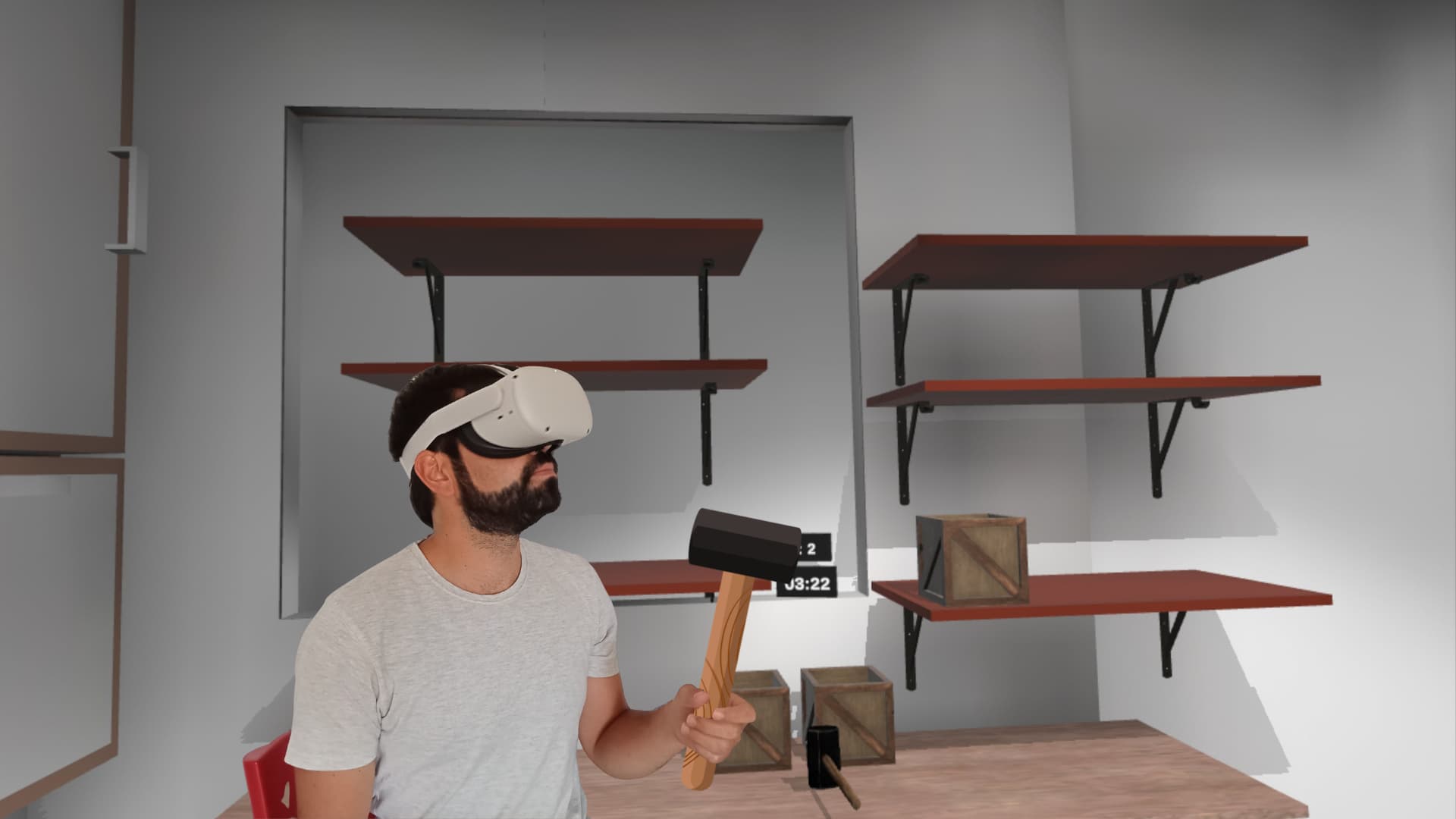
VR Module
Supplementary Module
VR environments featuring over 70 exercises for the upper body, fine motor skills and dual-tasking activities that combine simultaneous physical and cognitive challenges. No gloves, controllers or calibration required.
The clinician monitors the patient in real time from their computer without interrupting the patient’s session.
- Parkinson’s disease affecting the upper limb
- Cerebral palsy
- Multiple Sclerosis
- Mild to moderate dementia
- Incomplete spinal cord injury
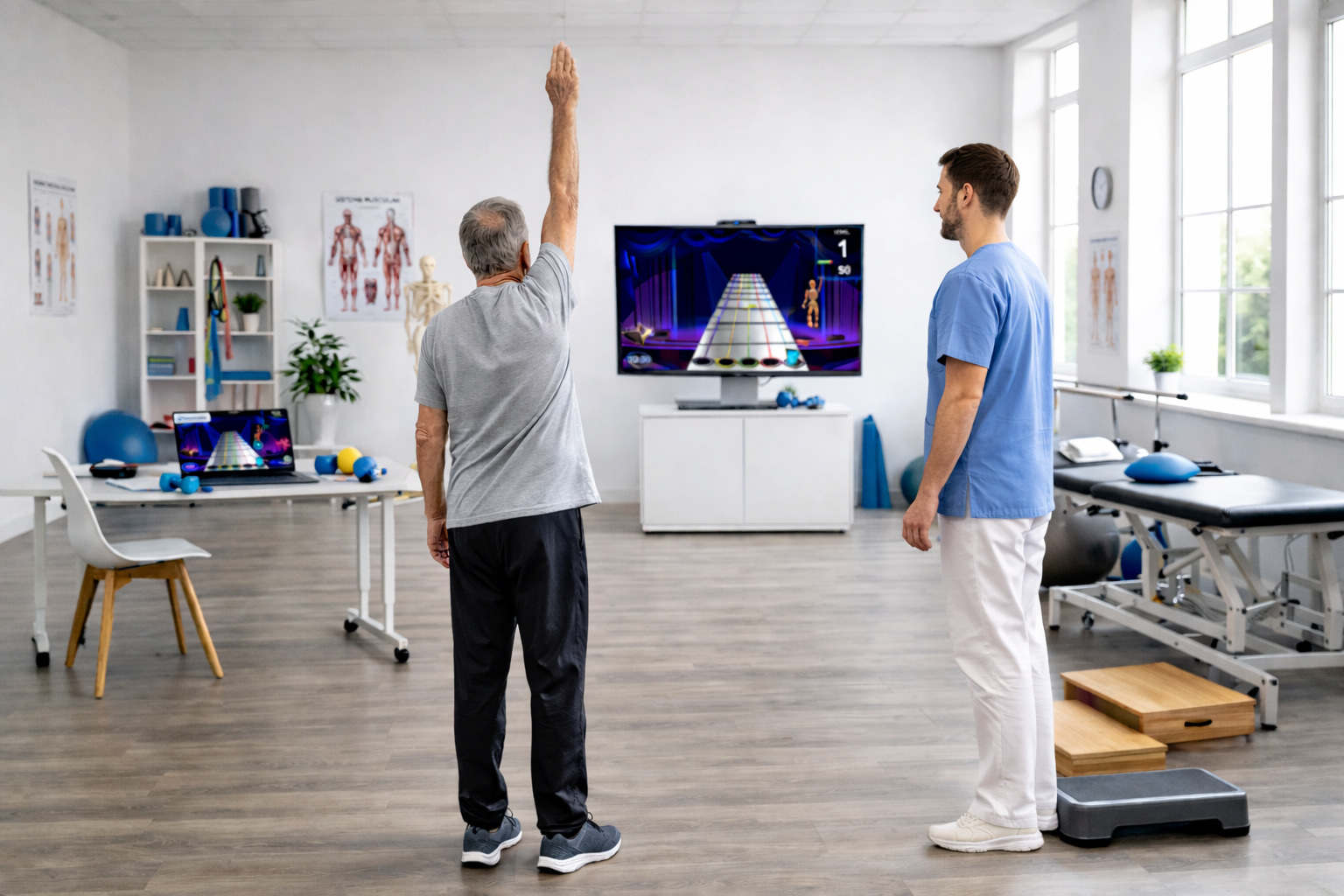
Physio Module
Supplementary module for mixed perFiles
Augmented reality system with motion detection. Over 120 exercises designed to maintain motor function and prevent secondary complications: static and dynamic balance, coordination, postural control, range of motion and movement patterns.
The system automatically records more than 100 kinematic parameters per session without any manual intervention by the clinician.
- Parkinson's disease
- Multiple Sclerosis
- Fall prevention
- Ataxias and balance disorders
- Active ageing
- Progressive supranuclear palsy
What Rehametrics brings to the clinical team
A platform designed to personalise cognitive treatment, objectively measure outcomes and document each patient’s progress over time.
Sessions tailored to each individual’s cognitive profile
The practitioner can adjust the level of difficulty, cognitive load and therapeutic objectives in line with each patient’s functional progress.
Objective quantification of progress
The system automatically records response times, accuracy rates, errors and progress between sessions.
Greater engagement and participation
Interactive virtual environments encourage motivation and active participation, as opposed to conventional, repetitive teaching methods.
Longitudinal monitoring of deterioration
The platform enables users to compare performance across sessions and objectively document cognitive changes over time.
Cognitive telerehabilitation
Rehametrics makes it easier to run home-based programmes with clinical supervision and automated performance monitoring.
number of sessions completed compared with the conventional method
clinical parameters recorded per session
of patients who reported higher levels of motivation
health organisations in 20 countries



Incorporate advanced cognitive rehabilitation into your clinical practice
If you work with patients with cognitive impairment and are looking for a tool that allows you to personalise sessions, measure outcomes objectively and carry out longitudinal monitoring using clinical data, Rehametrics is designed for your team.
Frequently asked questions about cognitive rehabilitation for cognitive impairment
The platform can be used in mild cognitive impairment, Alzheimer's disease in mild and moderate stages, dementias and other neurodegenerative conditions with cognitive involvement.
Rehametrics enables intervention on memory, attention, processing speed, executive functions and cognitive activities of daily living.
The clinician can manually adjust clinical parameters, or allow the system to adapt them according to performance recorded in each session.
Rehametrics is clinical software, supervised by a healthcare professional. The system objectively quantifies performance and automatically generates clinical reports for each session.
Yes. The patient can continue treatment from home whilst maintaining clinical supervision and automated tracking of performance.
Rehametrics has clinical validation studies in cognitive decline and neurodegenerative conditions. View clinical evidence →