
Physical and Cognitive Rehabilitation in Neurodegenerative Diseases
Rehametrics is the clinical platform that enables physiotherapists, neuropsychologists, occupational therapists and speech and language therapists to design comprehensive physical and cognitive rehabilitation programmes for patients with neurodegenerative diseases. All within a single system, with automated recording of each session and longitudinal monitoring of progress.
+30%
more sessions completed compared with the conventional approach
+100
clinical parameters recorded per session
89%
of patients who reported higher levels of motivation
A holistic approach: what patients with neurodegenerative diseases need
Neurodegenerative diseases – such as Parkinson’s, Alzheimer’s, multiple sclerosis, Huntington’s, Lewy body dementia and other forms of dementia – cause progressive deterioration that affects patients’ motor and cognitive functions. On a motor level, they may manifest as problems with balance, coordination and postural control; on a cognitive level, as impairment of memory, attention, language or executive functions.
The therapeutic aim in these conditions is not recovery but to slow down the progression of the condition and maintain functionality for as long as possible. To achieve this, the programme must be systematic, progressive, continuously adapted and sufficiently intensive.
Rehametrics is designed to address this challenge: a platform that offers solutions for both physical and cognitive approaches within a single clinical setting, featuring gamified and virtual reality exercises that facilitate adherence, and a data-logging system that enables clinical decisions to be made based on objective data.
Conditions treated with Rehametrics
- Parkinson's disease
- Alzheimer's disease
- Multiple Sclerosis
- Mild Cognitive Impairment (MCI)
- Lewy body dementia
- Frontotemporal dementia
- Ataxias
- Progressive supranuclear palsy
- Other neurodegenerative syndromes
Neurodegenerative disorders treated with Rehametrics
Each condition has a different clinical profile. Rehametrics allows treatment to be tailored to each patient’s needs.
Parkinson's disease
It presents with motor symptoms such as tremor, rigidity, bradykinesia and disturbances in gait and balance, as well as possible associated cognitive deficits. Rehametrics enables the treatment of both motor rehabilitation and cognitive functions such as attention, processing speed and executive functions, depending on the needs of each patient and the centre’s therapeutic approach.
Alzheimer’s and other forms of dementia
In mild and moderate stages, structured cognitive stimulation has been shown to support functional maintenance. Rehametrics offers exercises targeting memory, orientation, attention and activities of daily living, which can be complemented by adapted physical activity.
Multiple Sclerosis
It may present with physical and cognitive fatigue, spasticity, balance problems, coordination difficulties and cognitive symptoms. Rehametrics allows you to set up personalised programmes by adjusting the intensity, duration and objectives.
Mild Cognitive Impairment
Early intervention through cognitive stimulation is one of the most widely used strategies for delaying functional decline. Rehametrics enables the implementation of structured cognitive programmes, which can be complemented by adapted physical activity and longitudinal monitoring of performance.
Other neurodegenerative disorders
Frontotemporal dementia, Lewy body dementia, ataxias, progressive supranuclear palsy and other syndromes may benefit from personalised physical or cognitive rehabilitation programmes, tailored to each patient’s functional profile and stage of the condition.
A holistic approach: physical, cognitive and functional
Three modules within a single clinical setting, designed to address each patient’s neurodegenerative profile. All are CE-marked as medical devices.
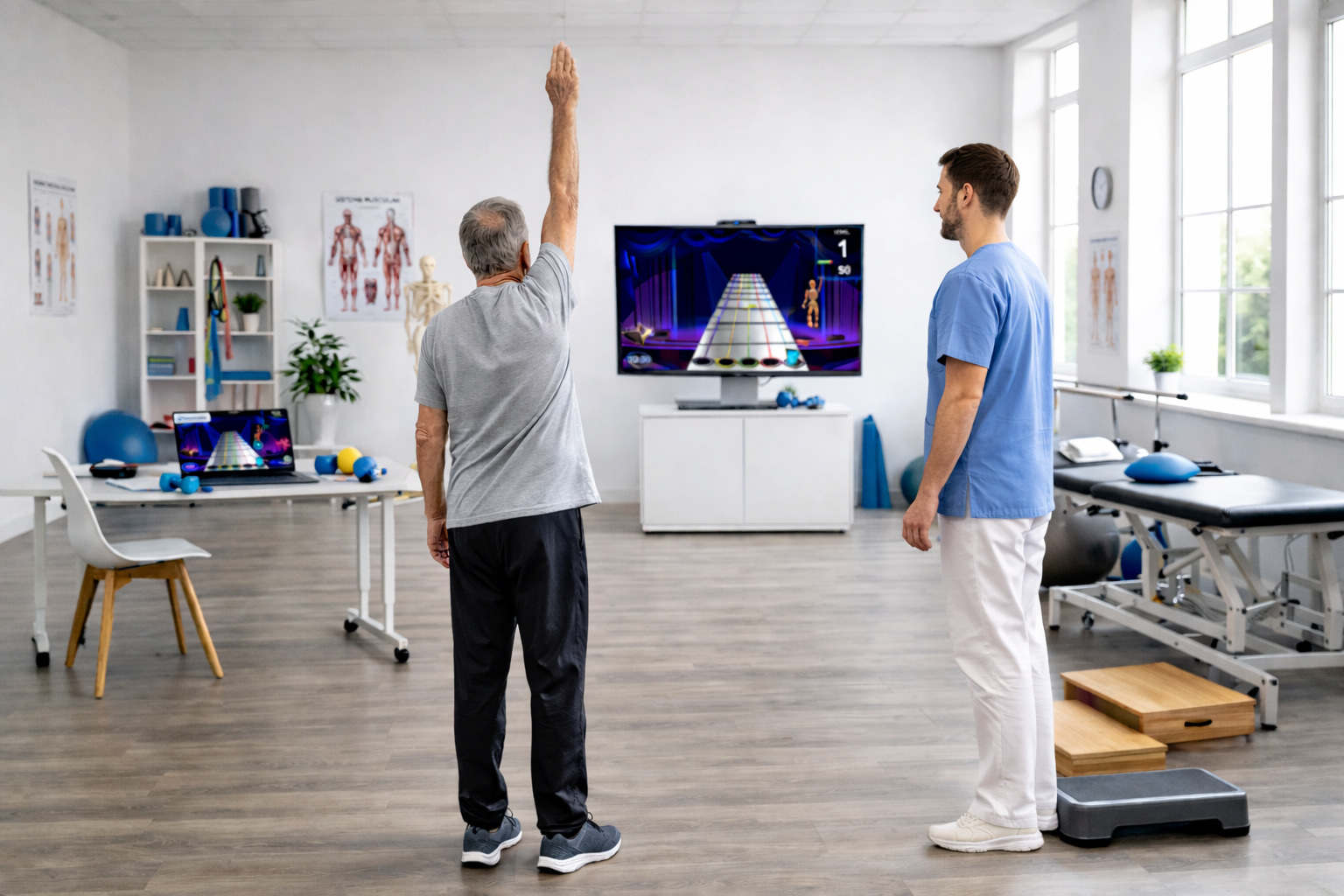
Physio Module
Augmented reality system with motion detection. Over 120 exercises designed to maintain motor function and prevent secondary complications: static and dynamic balance, coordination, postural control, range of motion and movement patterns.
Augmented reality system with motion detection. Over 120 exercises designed to maintain motor function and prevent secondary complications: static and dynamic balance, coordination, postural control, range of motion and movement patterns.
- Parkinson's disease
- Multiple Sclerosis
- Fall prevention
- Ataxias and balance disorders
- Active ageing
- Progressive supranuclear palsy
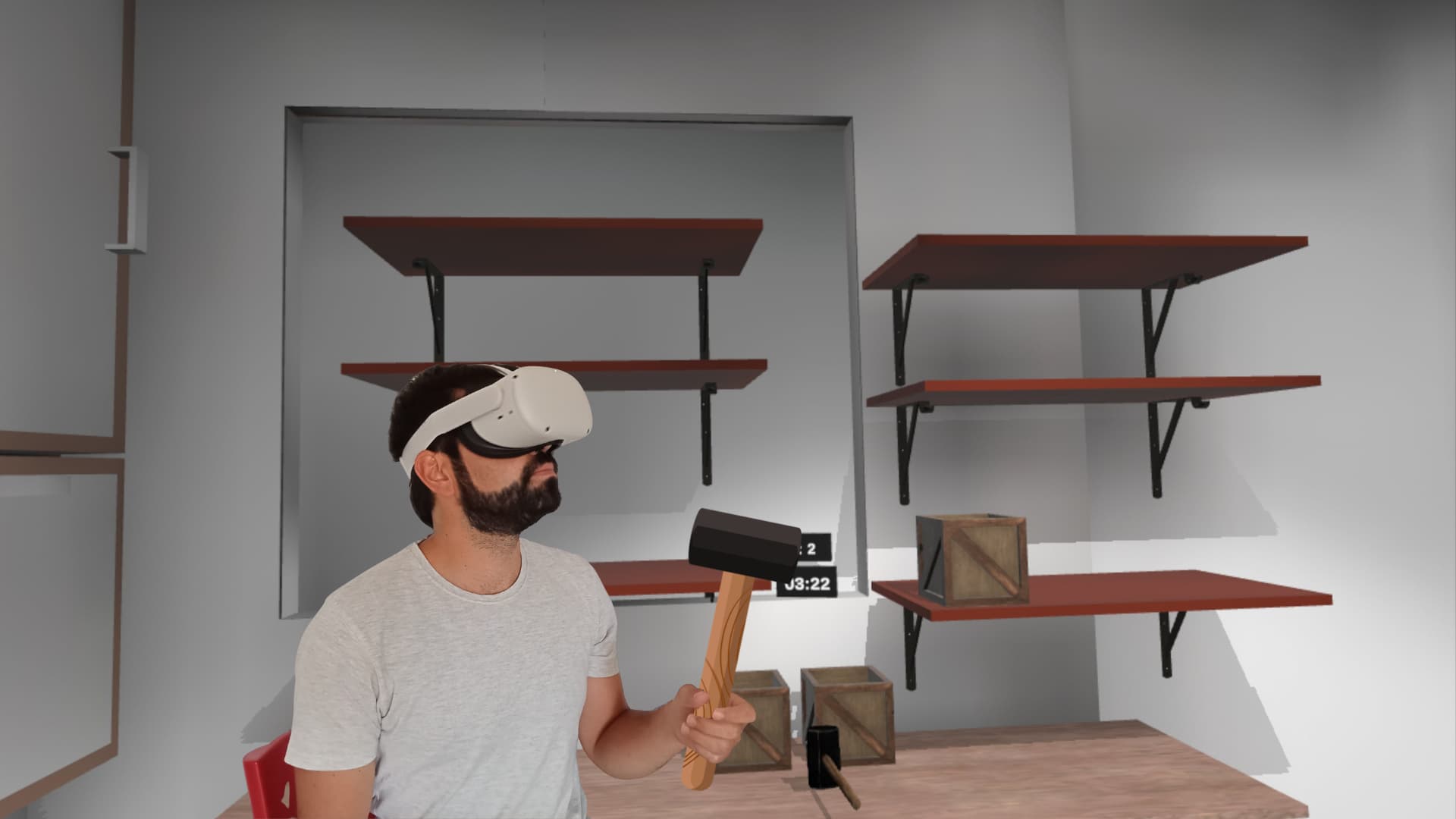
VR Module
VR environments featuring over 70 exercises for the upper body, fine motor skills and dual-tasking activities that combine simultaneous physical and cognitive challenges. No gloves, controllers or calibration required.
The clinician monitors the patient in real time from their computer without interrupting the patient’s session.
- Parkinson’s disease affecting the upper limb
- Cerebral palsy
- Multiple Sclerosis
- Mild to moderate dementia
- Incomplete spinal cord injury
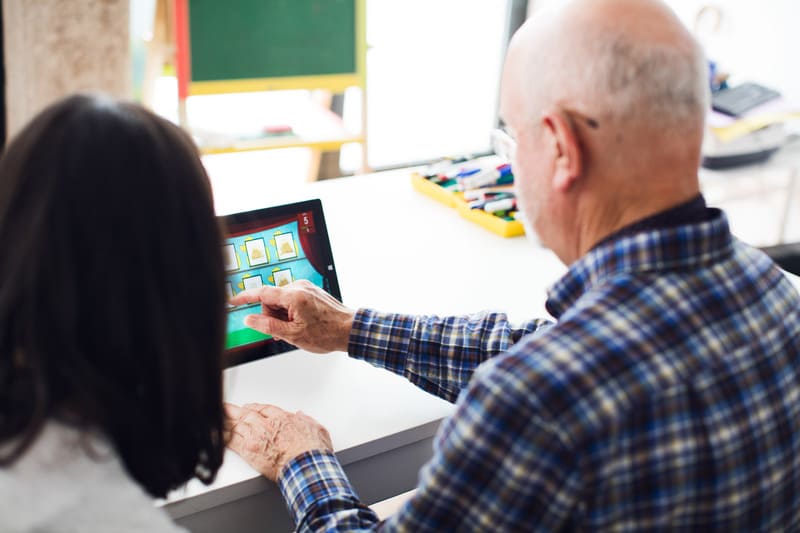
Cognitive Module
+190 gamified exercises tailored to each patient’s neuropsychological profile: attention, memory, executive functions, language and activities of daily living.
The difficulty level is adjusted manually or automatically depending on the progress recorded. This is particularly useful where physical and cognitive recovery go hand in hand.
- Alzheimer’s and other forms of dementia
- Mild Cognitive Impairment
- Parkinson’s disease with cognitive impairment
- Multiple Sclerosis
- Frontotemporal dementia
- Active ageing
What Rehametrics brings to the clinical team
A platform designed for multidisciplinary work and long-term clinical monitoring, providing objective data at every session.
A single system for the multidisciplinary team
A physiotherapist, a neuropsychologist and an occupational therapist work on the same platform, with access to the same patient data. They coordinate the treatment plan without duplicating records across disciplines.
Personalised and flexible sessions
Every patient with a neurodegenerative condition has a different profile that changes over time. Rehametrics enables the design of physical, cognitive or combined sessions, allows the difficulty to be adjusted progressively, and enables the protocol to be modified when the patient’s condition requires it.
Automatic recording and quantification
The system records more than 100 clinical parameters per session: response times, accuracy rates, range of motion, balance, level of difficulty achieved and consistency between sessions. The system automatically converts these into clinical reports.
Longitudinal monitoring of deterioration
The platform compares performance across sessions to identify the rate of progress and detect significant changes, thereby documenting the impact of the therapeutic programme. This information facilitates communication with families and other specialists.
Tele-rehabilitation for greater continuity
Patients with neurodegenerative conditions often find it difficult to attend appointments as regularly as an intensive programme requires. Rehametrics enables treatment to continue from home, with the same level of clinical monitoring and data recording as in a face-to-face session.
more sessions completed compared with the conventional approach
clinical parameters recorded per session
of patients who reported higher levels of motivation
health organisations in 20 countries



Incorporate comprehensive rehabilitation into your clinical practice in the field of neurodegenerative disorders
If you work with patients with Parkinson’s, Alzheimer’s, multiple sclerosis or other neurodegenerative diseases and are looking for a tool that combines physical and cognitive approaches, enables personalised sessions and documents progress using objective data, Rehametrics is designed for your team.
Frequently asked questions about rehabilitation for neurodegenerative diseases
Yes. Rehametrics is the only platform that integrates physical and cognitive rehabilitation in a single clinical environment. Clinicians can design sessions that combine both dimensions — including dual tasks — or address them separately according to the therapeutic stage, with unified recording of all parameters.
The clinician controls session duration, number of exercises, difficulty level, and rate of progression. For patients with high fatigability it is possible to design short, frequent sessions or alternate between physical and cognitive work days, with complete recording of each intervention.
Rehametrics is clinical software, not a consumer product. The clinician prescribes and controls the programme, the system records objective clinical parameters, and the reports generated form part of the patient's clinical documentation. This is not self-management. It is supervised treatment with complete traceability.
The clinician manages all patients from a centralised clinical dashboard. Automatic reports are available to the entire team and are exportable to the patient record. The platform adapts to individual care models as well as supervised group sessions in a day centre or hospital unit.
Yes. Rehametrics has clinical validation studies across different neurological populations, supported by more than 24 scientific publications with clinically documented improvements.