
Rehabilitate more. Measure more effectively. Ensure your patients complete their treatment.
Rehametrics helps physiotherapists to personalise rehabilitation through digital therapy based on augmented reality, objective assessment and continuous monitoring of patients’ progress.
Three questions you’ve no doubt already asked yourself.
How can you ensure that each patient works at their optimal level without compromising the pace of the session?
How can you maintain patient motivation when recovery stretches on week after week?
How can you track functional progress objectively and consistently across sessions?
Rehametrics provides the answer to all three, with a modular system designed for physiotherapists.
See how it works ›Tools for every stage of rehabilitation
As a physiotherapist, you can tailor the modules to each patient and stage of treatment. All are CE-marked as medical devices and have been designed by clinicians for use in healthcare settings.
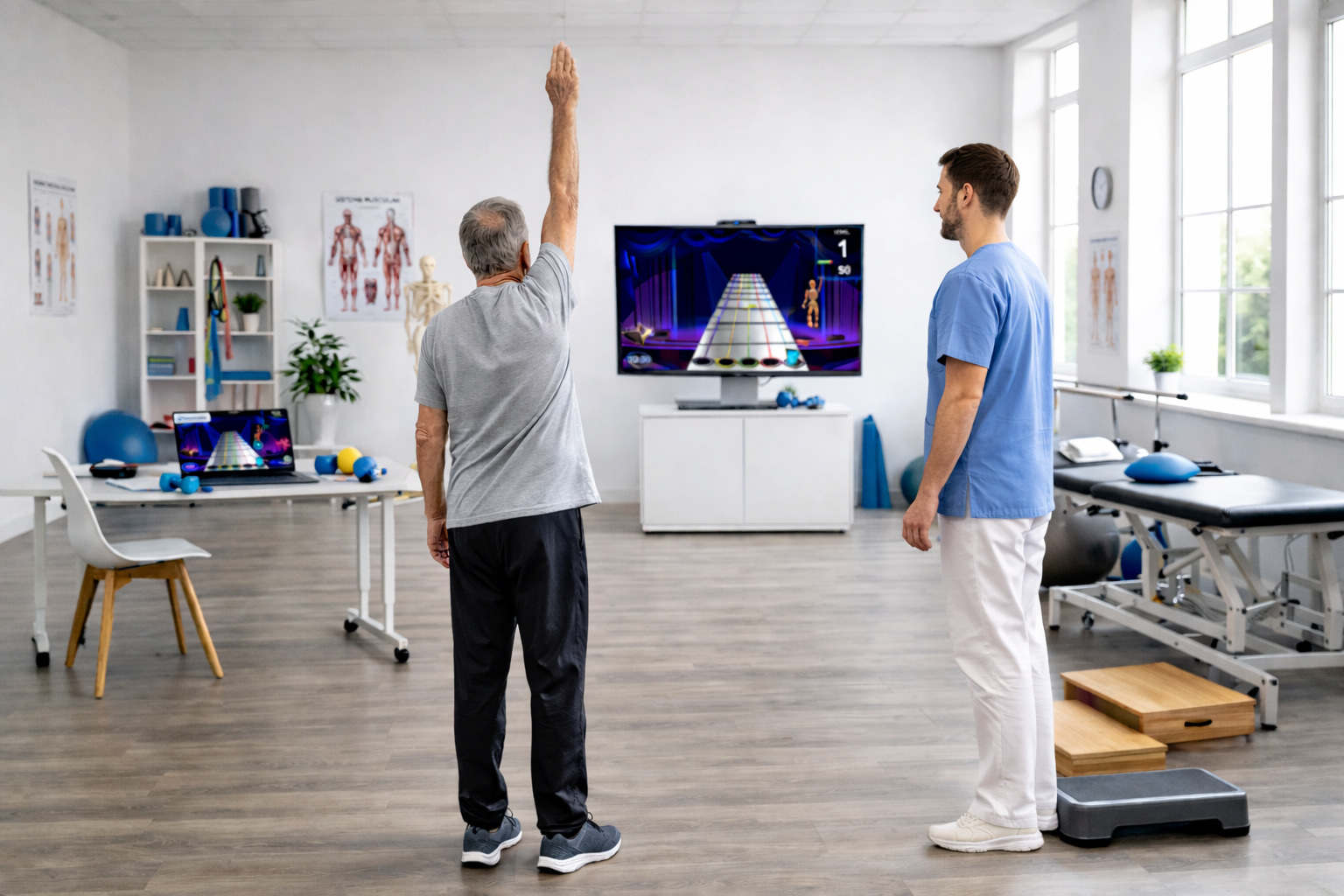
Physio Module
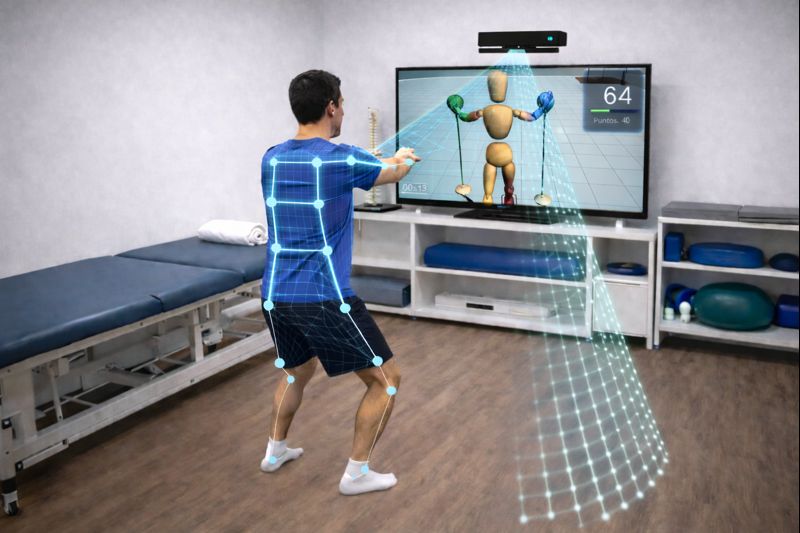
An augmented reality system with motion detection that combines analytical and functional exercises; no sensors or controllers required.
+120 interactive exercises to work on balance, range of motion, coordination, body control, balance and gait, strength and movement.
The system automatically records more than 100 kinematic parameters per session – including range of motion, base of support, centre of gravity displacement and stride height – without any manual intervention by the clinician.
- Musculoskeletal injuries
- Spinal cord injury
- Fall prevention
- Active ageing
- Acquired brain injury (stroke, traumatic brain injury)
- Neurodegenerative diseases (Parkinson’s, multiple sclerosis)
- Post-operative rehabilitation (knee, hip, shoulder)
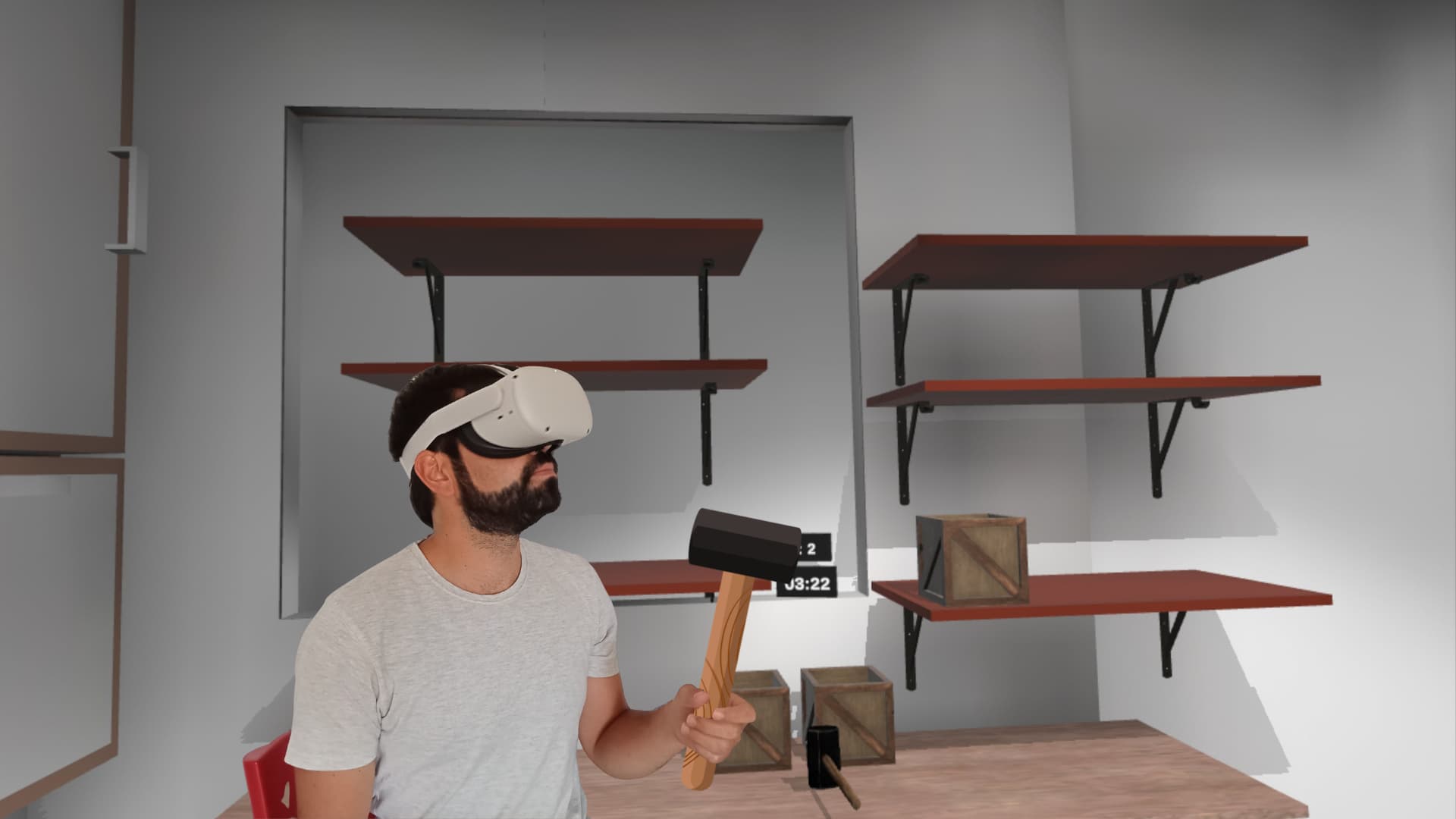
VR Module
With VR headsets, your patients are immersed in immersive or mixed virtual environments featuring over 70 exercises to work on upper limb strength, fine motor skills, dual-tasking and activities of daily living. No gloves, controllers or calibration required.
The clinician can see what the patient is doing in real time and can adjust the session from their computer without interrupting it.
- Stroke affecting an upper limb
- Parkinson
- Cerebral palsy
- Post-traumatic hand rehabilitation
- Following shoulder, elbow or wrist surgery
- Incomplete spinal cord injury
In 5 steps, from the session to the report
A workflow designed to make technology work for you, not the other way round.
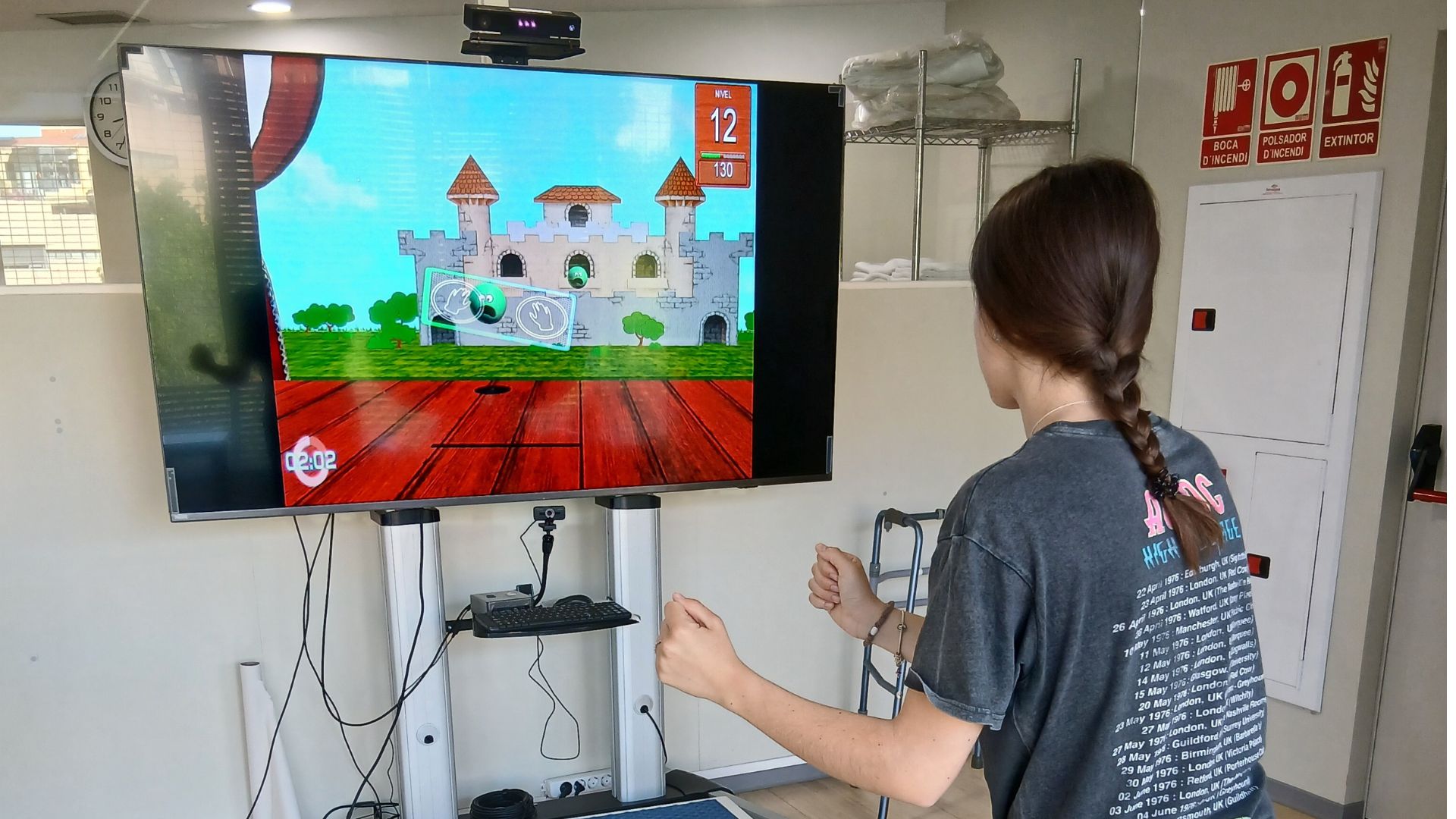
You select the exercises based on the patient’s clinical goals
You set the difficulty level and the session settings
The patient carries out the session guided by the system, and the difficulty level is adjusted automatically
Rehametrics automatically records all kinematic parameters
You can generate the clinical report with a single click, ready to print or export as a PDF
Results that matter
A system designed with two perspectives in mind: the patient’s experience and the healthcare professional’s efficiency.
For the patient
- Greater adherence thanks to motivation
- Immediate feedback
- Faster and more noticeable functional improvement
- Help with pain and kinesiophobia
For professionals
- Objective data for each session, with no manual recording required
- Continuous monitoring and exportable
- Automatic reports ready for the medical record
- Precise adjustment of difficulty and exercise settings
"Ultimately, it’s just another tool that adds value. It provides us with information, engages the patient and makes it easier for them to stay active. Adherence is one of the major challenges in physiotherapy, and technology, when used effectively, can make all the difference."
Xavier Díaz
Physiotherapist, Traumatology Department, Mútua Terrassa
Results observed in clinical settings
Centres that have integrated Rehametrics into their daily practice report measurable improvements in therapeutic activity, patient adherence and clinical follow-up.
Therapeutic increase
More therapeutic activity per session compared with conventional rehabilitation.
Greater involvement in therapy
Patients who report greater motivation and active participation during the exercises.
Clinical variables per session
Recorded automatically, without any manual intervention by the clinician.
Data collected from clinical centres that use Rehametrics in their day-to-day practice.
Would you like to see it in action with your patients?
Request a personalised demo and we’ll show you how Rehametrics can be tailored to your clinical practice.
Frequently Asked Questions
Rehametrics is a digital rehabilitation platform with CE marking as a medical device. It allows physical therapists to prescribe, guide, and monitor physical, cognitive, and occupational rehabilitation sessions through interactive exercises based on motion detection and virtual reality. The system automatically records kinematic parameters and generates clinical reports without manual intervention.
For the Physical Module, you need a Windows 10 (64-bit) computer, a screen of at least 42 inches, and a Kinect camera or webcam, depending on the version. A computer or tablet is sufficient for the Cognitive Module. For Immersive Rehabilitation, a Meta Quest 2, 3, or 3S headset is also required. No special infrastructure or complex integration is needed.
Rehametrics is indicated for a wide variety of profiles: patients with musculoskeletal injuries, acquired brain injury, neurodegenerative diseases, spinal cord injury, cognitive impairment, as well as in active aging, fall prevention, and pediatric programs for children aged 4 and up. The physical therapist decides which patients and at what stage of treatment to incorporate it.
Yes, always under the prescription and supervision of a physical therapist. The clinician schedules the sessions remotely, and the patient performs them at home using a webcam and a computer. The professional can monitor progress and adjust the protocol without the patient needing to travel to the clinic.
Rehametrics is a Software as a Medical Device (SaMD) with a CE mark, specifically designed for clinical use. Unlike commercial applications, it allows for complete exercise customization, automatically records objective clinical parameters in each session, and generates exportable reports for clinical records. It does not require controllers or sensors on the patient's body.
Rehametrics exercises incorporate gamification dynamics, immediate feedback, visual progression, and interactive environments, which increase patient motivation during the session. Studies in centers using the platform show that 89% of patients report higher active engagement during exercises compared to conventional rehabilitation.
Yes. At the end of each session, Rehametrics automatically generates a clinical report with the parameters recorded during the exercises: range of motion, base of support, center of gravity displacement, step height, among others. The report is customizable, exportable in PDF, and can be integrated into the patient's clinical history.
Yes. The system guides the patient throughout the entire session with visual instructions and real-time feedback, without the need for prior technological knowledge. Physical therapists who use it with older populations report that even patients with no digital experience adapt quickly thanks to the intuitive interface and the playful component.
Rehametrics has three modules: Physical, Cognitive, and Immersive Rehabilitation (VR). For the physical therapist, the Physical Module is the natural starting point, with over 120 exercises to work on balance, joint range, coordination, and gait. The other two modules can be incorporated according to the patient's profile, especially in neurological cases where physical and cognitive recovery go hand in hand.