
Comprehensive clinical telerehabilitation: physiotherapy and cognitive rehabilitation in the patient’s own home
Rehametrics is the only telerehabilitation platform that integrates clinical modules into a single digital environment: prescribed by a healthcare professional, carried out by the patient at home, and monitored in real time.
Clinics that already USE Rehametrics




Health and social care centres
Countries
scientific publications
integrated modules
What is Rehametrics and why should we opt for telerehabilitation?
Rehametrics is a CE-marked medical device that integrates physical and cognitive rehabilitation into a single platform. It enables professionals to prescribe personalised therapeutic programmes, monitor patients’ progress remotely and adapt treatment according to their progress.
It facilitates continuity of care between the clinic and the patient’s home, improving adherence to treatment and providing objective monitoring through the automatic recording of activity and results.
- Backed by more than 40 scientific publications and adopted by public authorities as a benchmark for the modernisation of geriatric care.
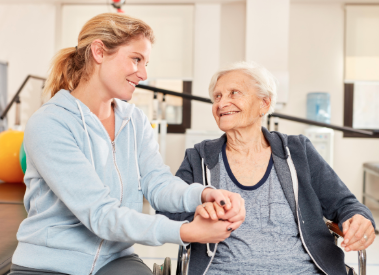
Benefits of telerehabilitation with Rehametrics
A solution designed to meet the needs of the entire organisation.
Higher treatment adherence: Guided goals and exercises that help the patient maintain consistency throughout the entire recovery process.
Seated and standing exercises adapted to all functional levels, from high-dependency users to the most active individuals.
Physical, cognitive, and occupational rehabilitation in a single ecosystem: Balance, range of motion, coordination, memory, attention, activities of daily living (ADLs), and more.
Improved autonomy and quality of life: The patient performs the prescribed exercises safely while maintaining continuous contact with their clinical team.
Zero technological barriers: Physical exercises are controlled directly through body movement, requiring no sensors or controllers. Cognitive tasks run on large-screen touchscreen tablets, fully accessible for users with low vision.
Pre-designed or fully customisable sessions tailored to each specific profile: Alzheimer's, Parkinson's, mild cognitive impairment, musculoskeletal pathologies, acquired brain injury, and disabilities.
Automated kinematic parameters: Instant tracking of range of motion, base of support, centre of gravity, and step count — requiring no additional setup effort from the therapist.
Automated clinical reports per user for granular tracking, streamlined case updates, and clear communication with families and multidisciplinary teams.
Group and individual sessions managed from a unified interface, enabling simultaneous monitoring of multiple users.
Seamless integration into existing care routines, complementing facility protocols without disrupting current workflows.
Distinctive competitive advantage: Offers a digital rehabilitation framework that most residential homes and day care centres do not yet provide.
Higher user and family satisfaction: Families visiting the facility can see their relatives participating actively and with high motivation, a decisive factor in selection and retention metrics.
CE-marked medical device backed by public administrations like the Xunta de Galicia, reinforcing the institutional credibility of the facility.
Optimisation of active therapy hours: The clinician can monitor multiple users simultaneously while the system independently processes and logs each session.
Reduced material expenses by migrating part of the physical therapeutic inventory into a digital format.
Objective data for families, compliance checks, and annual activity reviews via clear, exportable progress reports per user.
A holistic approach: physical and cognitive
Three modules within a single clinical setting, designed to address each patient’s neurodegenerative profile. All are CE-marked as medical devices.
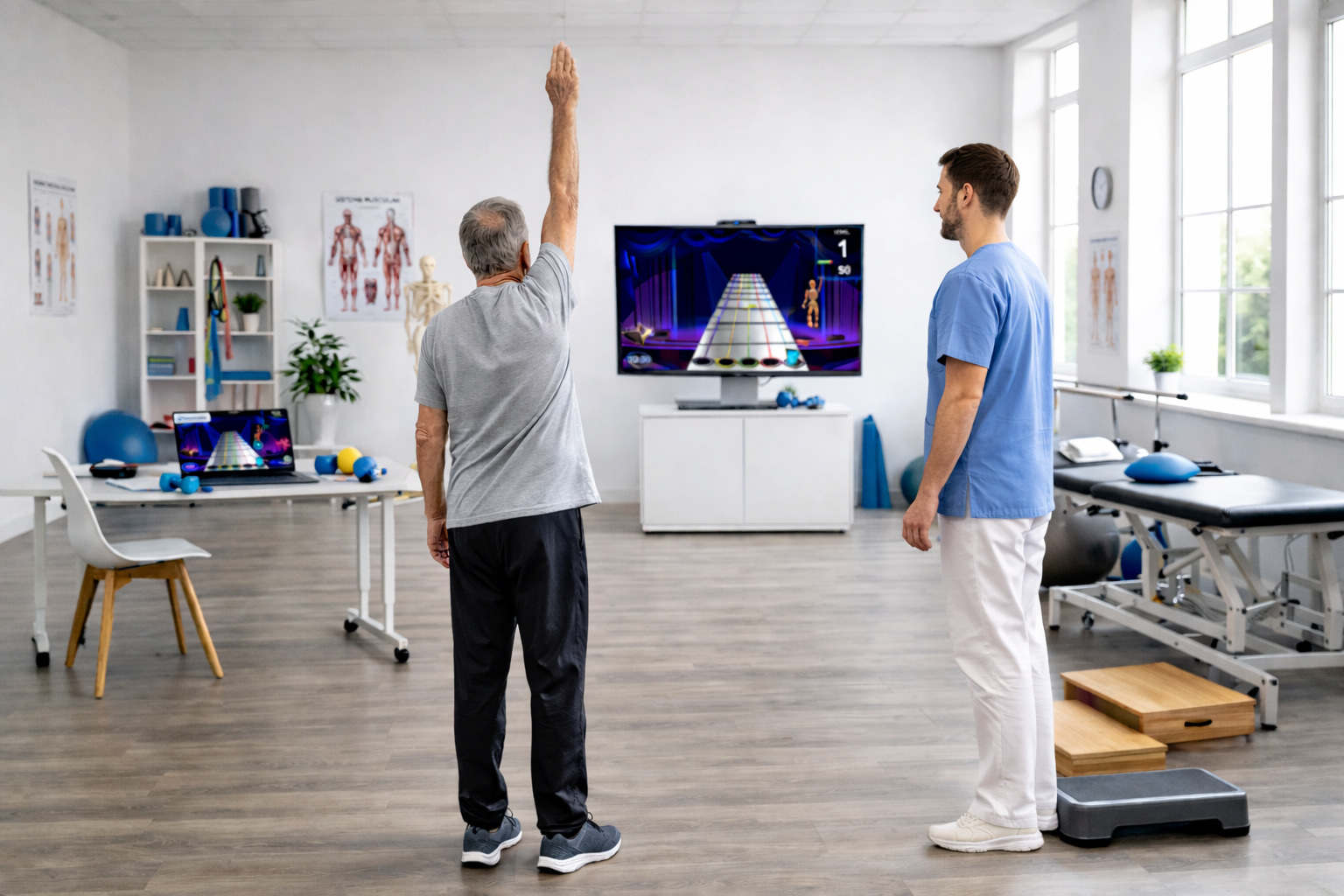
Physio Module
Augmented reality system with motion detection. Exercises aimed at maintaining motor function and preventing secondary complications: static and dynamic balance, coordination, postural control, range of motion and movement patterns.
The system automatically records more than 100 kinematic parameters per session without any manual intervention by the clinician.
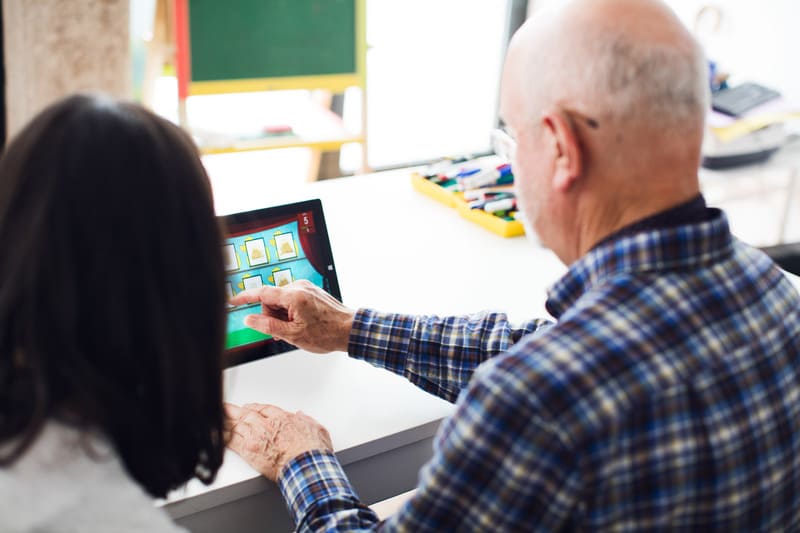
Cognitive Module
+190 gamified exercises tailored to each patient’s neuropsychological profile: attention, memory, executive functions, language and activities of daily living.
The difficulty level is adjusted manually or automatically depending on the progress recorded. This is particularly useful where physical and cognitive recovery go hand in hand.
"Telerehabilitation has allowed us to reach people who previously could not access our services due to mobility limitations or distance. The outcomes are comparable to those we achieve in our rehabilitation center."
Andrés Ilundáin
Director, ADACEN, Navarra Brain Injury Association
Does your centre already offer telerehabilitation?
Discover how Rehametrics enables you to extend rehabilitation beyond the clinic with a clinically validated platform. Monitor your patients’ progress remotely, improve treatment adherence and access objective data during each session. Fill in the form and a specialist will advise you, with no obligation.
- Physical and cognitive rehabilitation on a single platform
- CE marking and published evidence in the workplace
- Automatic biomechanical parameters per session
- Individual and group supervision from a single platform
Request a free demo
We will contact you in less than 24 hours.
Frequently Asked Questions
Telerehabilitation is the delivery of rehabilitation services at a distance using digital technology. The clinician prescribes and monitors the treatment from the clinic, while the patient performs the exercises at home. With Rehametrics, telerehabilitation covers specific clinical modules: physical therapy and cognitive rehabilitation.
They only need a device with a camera: a computer or laptop with a webcam for physical exercises, a tablet or smartphone for cognitive therapy, and an internet connection.
Rehametrics automatically logs kinematic parameters during each session: range of motion, centre of gravity, base of support, and gait features. The professional can access this data in real time to monitor patient progression without needing face-to-face check-ups.
According to Rehametrics data, 80% of clinical objectives are successfully met within telerehabilitation programmes, and 85% of patients complete more sessions compared to an exclusively in-person model. Home-based therapy enhances treatment adherence and enables a higher practice frequency, which are key factors for functional recovery. The platform is also backed by over 40 scientific publications demonstrating clinically significant outcomes.