
Cognitive rehabilitation exercises for executive functions
At Rehametrics, professionals have access to more than 50 exercises designed to target key executive functions, with multiple levels of difficulty and automated clinical monitoring.
- Stroke, traumatic brain injury, cognitive impairment, ADHD and acquired brain injury
- The difficulty level adjusts automatically to the patient’s performance
- Contextualised tracking based on stimulus type and similarity for each error
Rehabilitation of executive functions using clinical software
Cognitive rehabilitation exercises for executive functions focus on people’s ability to plan, organise, initiate and regulate their own behaviour. Patients do not simply complete tasks: they must also anticipate consequences, adapt their response when the rules change, categorise information, inhibit impulses and sequence actions in order to achieve a goal.
Executive functions are what enable us to cope with new situations, make complex decisions and adapt effectively to our environment. Any impairment of these functions has a direct impact on the patient’s independence, as many activities of daily living – such as managing time, solving household problems, planning an outing or following a course of treatment – depend on these functions being intact.
- Over 50 exercises: categorisation, calculation, cognitive flexibility, spatial orientation, sequencing and inhibition.
- Clinical monitoring tailored to the type of stimuli and the degree of similarity in each response.
- Suitable for patients with stroke, traumatic brain injury, cognitive impairment, ADHD and neurodevelopmental disorders.
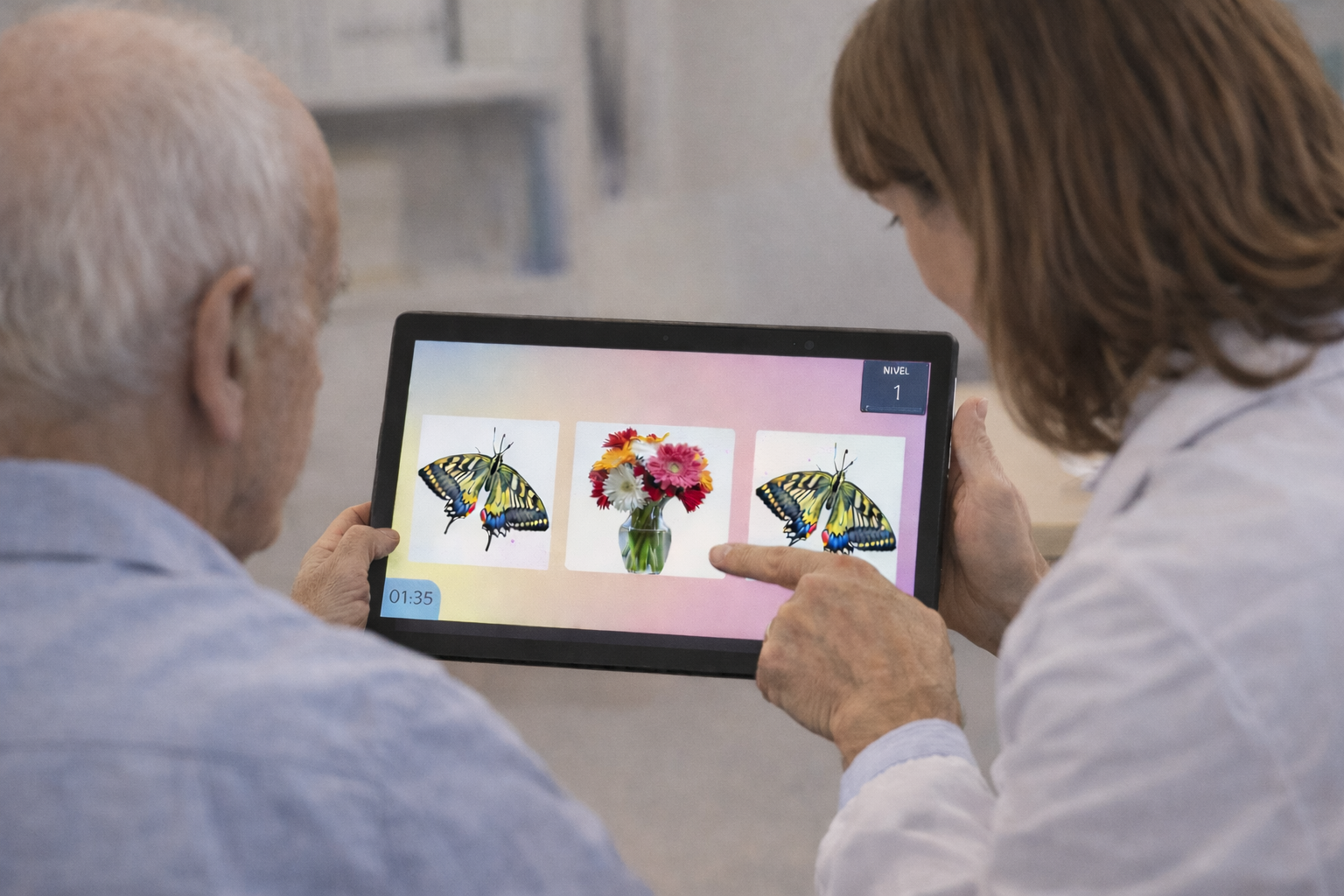
Which executive functions are being worked on?
The objectives vary depending on the patient’s clinical profile and the stage of treatment. The difficulty level can be adjusted in real time according to performance.
Examples of executive function exercises
Activities that automatically adapt to the patient’s level and can be configured with different parameters depending on the clinical objective.
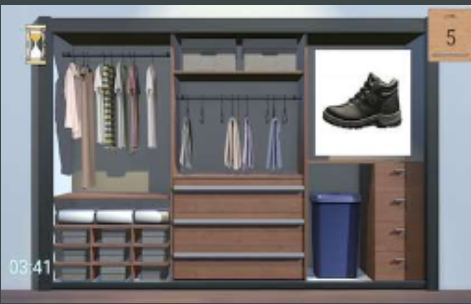
Wardrobe
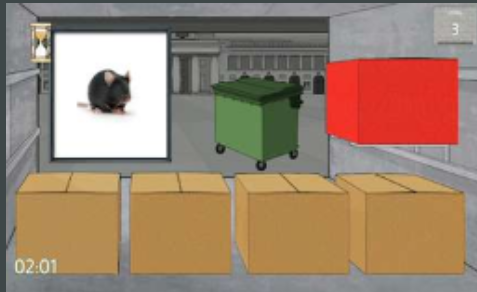
Categorisation
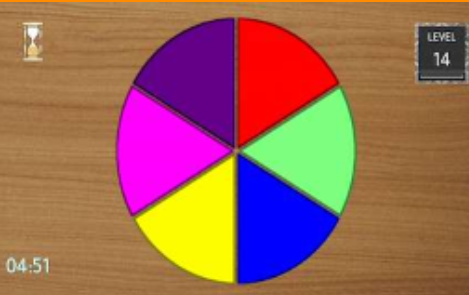
Working memory
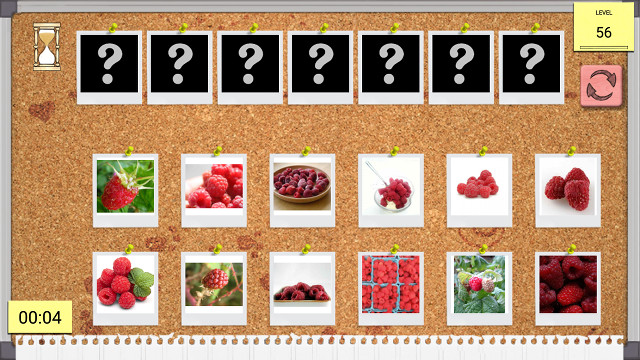
Visual working memory
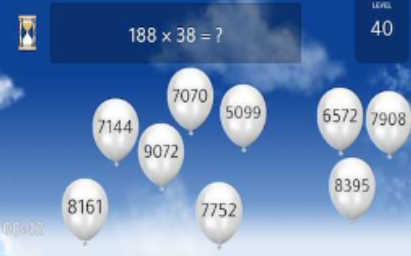
Calculations
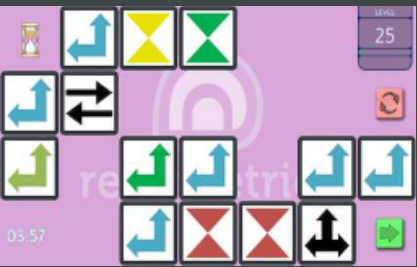
Cognitive Flexibility
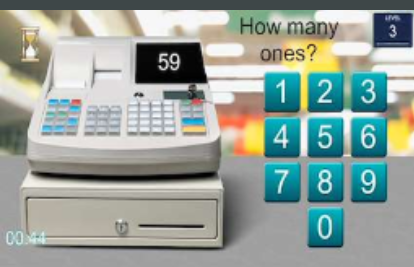
Number sense

Kitchen

Processing speed
+40
more exercises
Objective monitoring of the rehabilitation of executive functions
Rehametrics automatically records correct answers, errors, response times and the level of difficulty achieved in each session, and breaks down performance according to the exact conditions of each task, the type and number of distractors, and the relationship between stimuli, to show in which specific situations the patient’s performance improves or deteriorates. Furthermore, it tracks the patient’s progress session by session and also within each exercise, reflecting how the system automatically adjusts the difficulty in real time based on their performance.
This enables the therapeutic team to monitor the patient’s progress objectively, identify which executive functions present the greatest difficulties, and adjust the treatment plan accordingly.
Successes
Errors
Response time
Level of difficulty
Context and type of stimuli in each response
Benefits of digital exercises for executive functions
A tool designed to improve functional independence, increase adherence to treatment and provide accurate, context-specific clinical monitoring.
Greater autonomy in complex situations
The exercises focus on skills that can be directly applied to everyday activities: managing the home, organising a diary, dealing with unexpected events, or following a course of medical treatment independently.
Greater motivation and adherence to treatment
Automatic adjustment of the difficulty level and immediate feedback ensure that the patient is challenged at an optimal level, preventing frustration and a loss of motivation caused by the exercise being too difficult or too easy at any stage of the process.
Objective and context-specific monitoring
Sessions are recorded using both quantitative and qualitative data. The practitioner has access to detailed information and exportable reports on the types of errors, response times and progress from session to session.
Discover our software solution for cognitive rehabilitation
Find out how Rehametrics helps with rehabilitation through personalised therapeutic exercises and digital tools for professionals.
Frequently Asked Questions
They are a set of higher-order cognitive processes that allow us to plan, organise, initiate, monitor, and regulate our behaviour in order to achieve goals. They encompass abilities such as planning, cognitive flexibility, inhibition, decision-making, and reasoning, among others.
Primarily for people with acquired brain injury (stroke, traumatic brain injury), cognitive decline, neurodevelopmental disorders such as ADHD, and any neurological or psychiatric condition that has affected the patient's ability to plan, make decisions, or adapt to new situations.
Rehametrics supports work on planning, cognitive flexibility, inhibition, categorisation, sequencing, calculation, spatial orientation, perceptual integration, and decision-making, among others. Exercises can be configured to prioritise specific functions according to each clinical objective.
Difficulty adjusts automatically based on performance: if the patient completes tasks consistently, the level increases; if errors are made, difficulty decreases to keep within a therapeutically optimal range. Clinicians also have multiple customisation options to tailor sessions to each patient's individual needs.
Rehametrics automatically records the number of correct responses, errors, and response time at each difficulty level. Results are contextualised by indicating which stimulus types appeared on screen and their degree of similarity, enabling more precise analysis of error patterns and clinical progress session by session.
The software enables greater precision in controlling task variables, automatic recording of results, and a higher volume of practice without a proportional increase in clinician time. This supports more structured, measurable sessions adapted to the patient's actual performance, complementing the clinician's therapeutic judgement.
This depends on the configuration. Rehametrics can be used in clinics under direct professional supervision, or in remote mode with follow-up from the therapy team.
Because their impairment has a direct impact on patient autonomy. Many everyday activities — from managing time to solving problems or making decisions — depend on these functions being preserved. Targeting them in rehabilitation directly improves quality of life and functional independence.
This varies depending on the patient, the type and severity of the executive deficit, and the intensity of treatment. The regularity of sessions and the correct progression of difficulty are the most determining factors in achieving functional improvements.
Yes. Exercises can be adapted for children from the age of 4 with executive function difficulties arising from neurodevelopmental disorders, adjusting task type, difficulty level, and stimuli to match the patient's profile.
No. The system is designed so that any clinical professional can configure sessions according to their therapeutic criteria and access tracking data intuitively, without the need for specialist technical training.