
Cognitive language rehabilitation exercises
At Rehametrics, speech and language therapists and neuropsychologists have access to more than 40 tasks designed to support language rehabilitation at different levels: letters, syllables, words, sentences and texts.
- Aphasia, acquired dyslexia, acquired brain injury and other neurological disorders
- The difficulty level adjusts automatically to the patient’s performance
- Automated clinical monitoring with linguistic context for each error
Cognitive language rehabilitation using clinical software
Cognitive language rehabilitation exercises focus on a person’s ability to identify, understand, produce and process written and spoken language. Patients do not just work with letters or words: they also recognise syllables, complete sentences, understand texts, match sounds to graphemes and process linguistic information at different speeds.
This approach is essential in the treatment of people with aphasia, dyslexia, acquired brain injury or other language disorders resulting from neurological conditions. Many everyday activities, such as reading a note, following a conversation or writing a message, depend directly on linguistic ability.
- Customisable exercises: type of stimuli, response time, reading aloud and level of similarity between stimuli.
- Clinical monitoring: performance, correct answers, type of error, longitudinal monitoring and printable reports.
- Suitable for patients with aphasia, dyslexia, cognitive impairment and neurodevelopmental disorders affecting language.

What does cognitive language rehabilitation involve?
The objectives vary depending on the patient’s clinical profile and the stage of treatment. The difficulty level can be adjusted in real time according to performance.
Examples of speech rehabilitation exercises
Activities that can be automatically adapted to the patient’s performance and set to different levels of difficulty depending on the therapeutic objective.
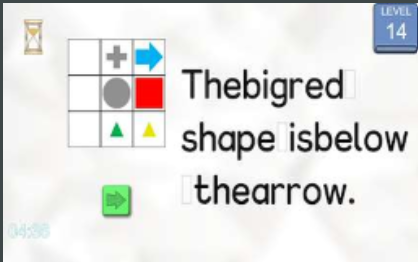
Lexical retrieval

Expression — Spelling
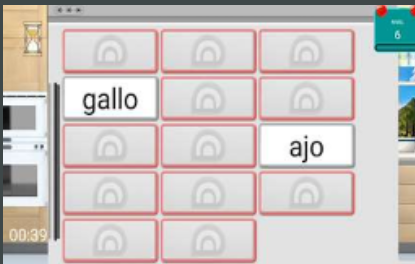
Verbal Memory
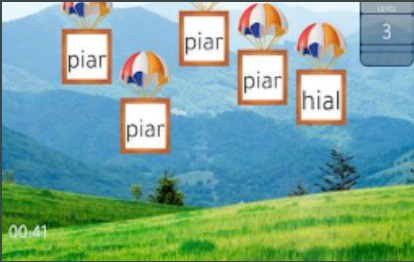
Reading speed
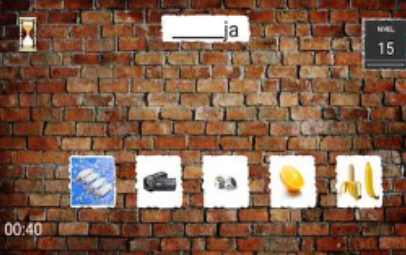
Phonological Awareness — Syllable
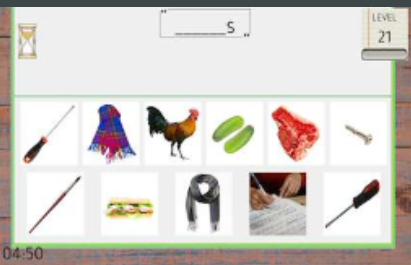
Phonological Awareness

Word-Image Comprehension
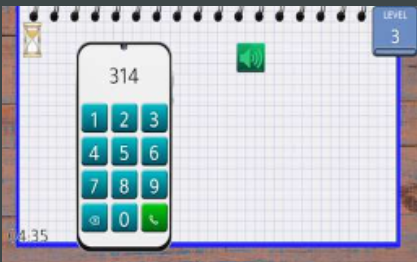
Dial the number
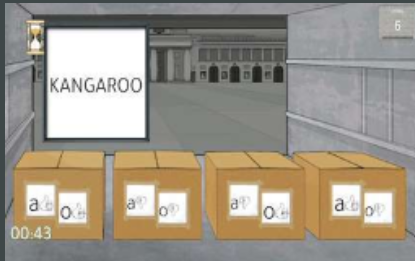
Word categorisation
+30
more exercises
Objective monitoring of speech and language rehabilitation
Rehametrics automatically records correct answers, errors, response times and the level of difficulty reached in each session, and breaks down performance according to the exact conditions of each task, the type and number of distractors, and the relationship between stimuli, to show in which specific situations the patient’s performance improves or deteriorates. Furthermore, it tracks the patient’s progress session by session and also within each exercise, reflecting how the system automatically adjusts the difficulty in real time based on their performance.
This enables the treatment team to monitor the patient’s progress objectively, identify patterns of error and adjust the treatment in line with their actual progress.
Successes
Errors
Response time
Level of difficulty
Linguistic context of each response
Benefits of speech rehabilitation exercises
A tool designed to improve communication skills, increase adherence to treatment and provide accurate, context-specific clinical monitoring.
Transfer to real life
The exercises focus on skills that are directly transferable to everyday activities: reading, writing, understanding and expressing oneself independently in real-life situations.
Greater motivation and adherence to treatment
Digital presentation, with immediate feedback and automatic adjustment of the difficulty level, increases patient engagement, particularly during long-term rehabilitation programmes.
Objective and context-specific monitoring
The sessions are recorded using both quantitative and qualitative data. The practitioner can access information on the type of errors, response speed and progress from session to session.
Discover our software solution for speech and language rehabilitation
Find out how Rehametrics supports speech and language rehabilitation through personalised therapeutic exercises and digital tools for speech and language therapists and neuropsychologists.