
Dual-task exercises in rehabilitation: examples of motor-motor and cognitive-motor tasks
Dual-task exercises in rehabilitation allow us to simulate situations in which the patient must respond to more than one demand at the same time. This is important because many everyday activities are not performed in isolation: walking while carrying an object, maintaining balance while reaching for a piece of clothing, turning around while listening to an instruction, or handling objects while making a decision.
In this context, a dual task can be motor-motor, when it combines two motor demands, or cognitive-motor, when it integrates a motor task with a cognitive demand. Both can be of clinical interest, provided they are selected with a clear functional objective and are appropriate for the patient’s safety level.
To interpret this type of work, it is helpful to start with the general concept of dual tasks in rehabilitation, particularly how a secondary demand can alter the quality of movement, gait, balance, or attention.
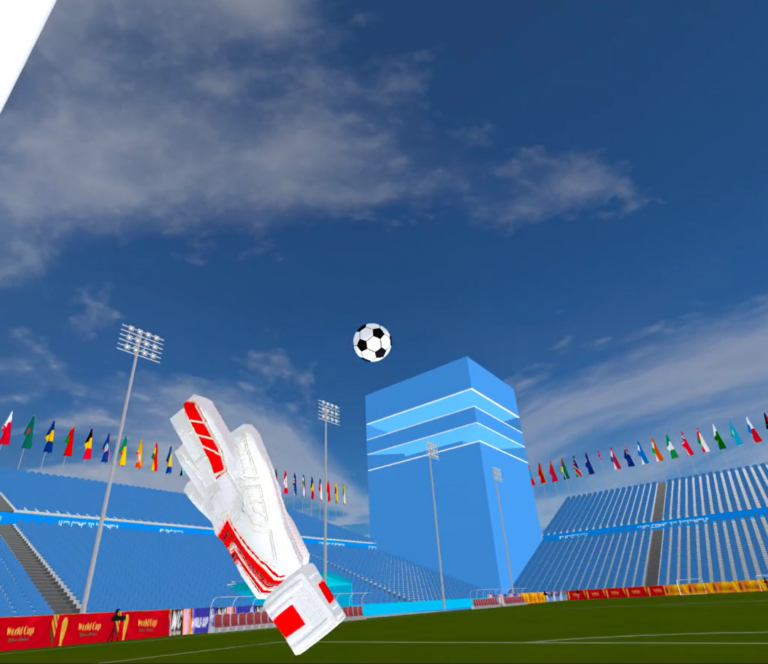
Table of contents
What Makes a Well-Designed Dual-Task Exercise
A dual-task exercise is not simply about “doing two things at once.” For it to be clinically meaningful, it must include a primary task, a secondary demand, a functional goal, and clear safety criteria.
For example, walking while counting backward can be useful if the goal is to observe how gait changes under a cognitive load. But it won’t always be the best option. For a patient at high risk of falling, it may be more appropriate to start with a simple dual motor task, such as maintaining a standing position while performing controlled reach-and-reach tasks.
The question isn’t just what exercise we’re doing, but what we want to observe or train:
Is it losing stability?
Does it slow things down a lot?
Do you make more mistakes?
Does he give up on one of the two tasks?
Need more help?
Can you maintain good form?
Is the task related to a functional activity?¿La tarea se relaciona con una actividad funcional?
The literature on dual-tasking typically examines variables such as gait, balance, motor function, cognitive performance, and the cost of dual-tasking. In stroke patients, for example, a systematic review with meta-analysis found improvements in certain gait parameters following dual-task training, such as step length, cadence, stride length, and the 10-meter walk test; however, the effect on balance should be interpreted with greater caution.
Dual motor-to-motor task
Dual motor-motor tasks combine two simultaneous physical demands. They are a highly effective way to introduce complexity, especially when the goal involves balance, gait, upper-body function, postural control, or activities of daily living.
Some examples include:
- Walking while carrying an object;
- Maintain an upright posture while reaching for objects;
- Shift your weight while handling a ball;
- Control the trunk while moving the upper limb;
- Turn while holding an object;
- Standing up from a chair while holding a light load;
- Walking while navigating an obstacle.
These types of tasks closely resemble many real-life situations. A person doesn’t just walk—they walk while carrying a bag. They don’t just stand—they stand while washing themselves, reaching for a towel, or opening a cabinet. They don’t just move their arm—they do so while controlling their torso, adjusting their posture, and manipulating objects.
The dual motor-motor task can be particularly useful when there is no need to introduce an explicit cognitive load, but there is a desire to increase the functional complexity of the task.
Examples of motor skills
In terms of balance, a simple progression can begin with stable standing and forward reaches. Sideways reaches, weight shifts, varying heights, a smaller base of support, or manipulating objects can then be introduced.
In practice, a dual motor-motor task might involve walking while carrying a light object, changing direction while holding a ball, walking over low obstacles, or moving around while performing a simple manual task.
For the upper extremities, reaching and grasping exercises can be performed while the patient maintains postural control. For example, reaching for objects in different directions, sorting items by shape or size, passing objects from one hand to the other, or manipulating objects while sitting or standing.
During transfers, the dual task may involve standing up, turning, or sitting down while holding a safe, lightweight object. In these cases, the focus is not on adding difficulty for its own sake, but on observing whether the patient maintains postural control and stability when faced with an additional functional demand.
A multidisciplinary approach through three treatment modules
Address physical, cognitive, and occupational rehabilitation from a single, integrated solution.
The modules can be used independently or simultaneously by different members of the clinical team.
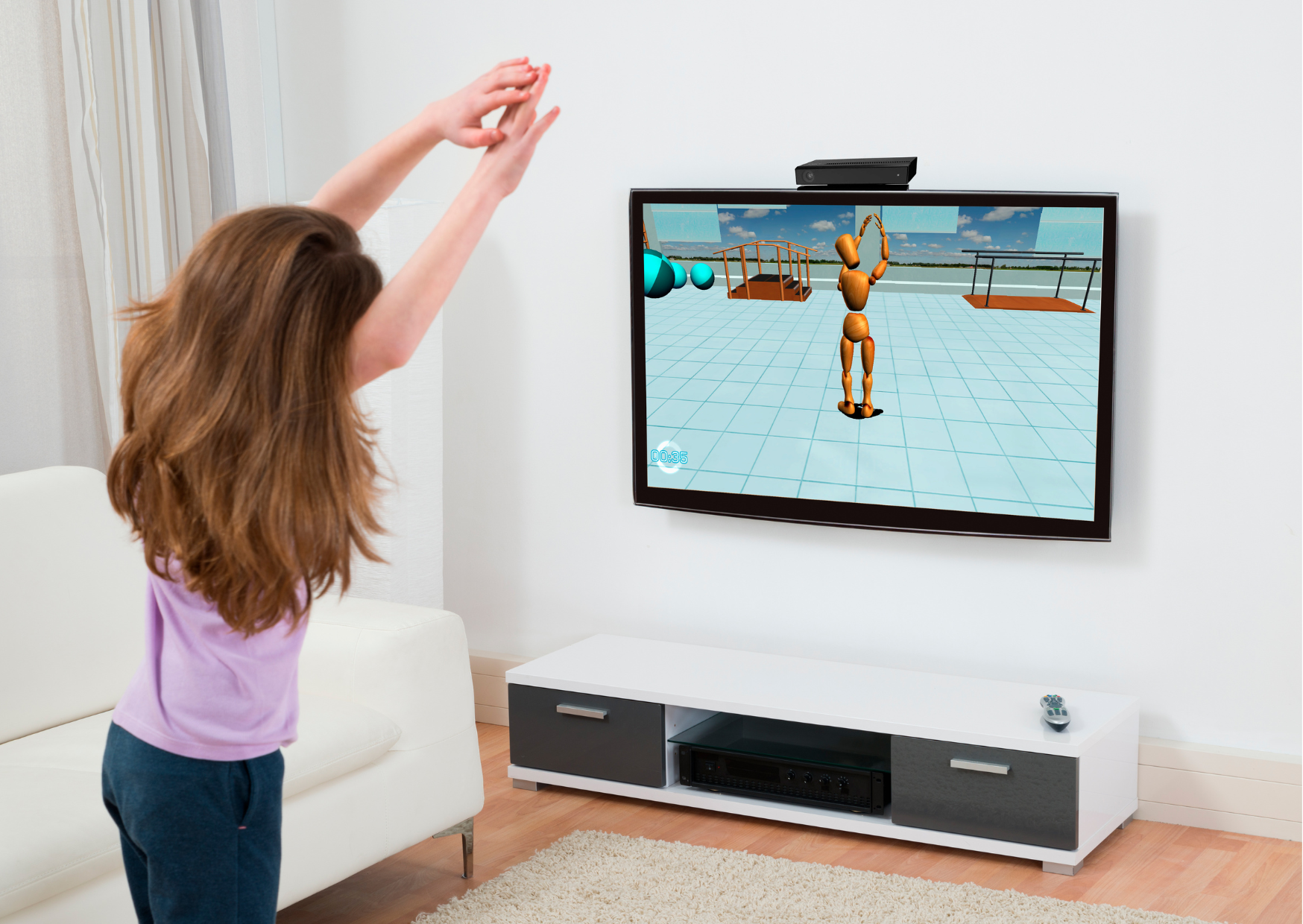
Digital support for neurological physiotherapy
Functional exercises oriented toward movement recovery.
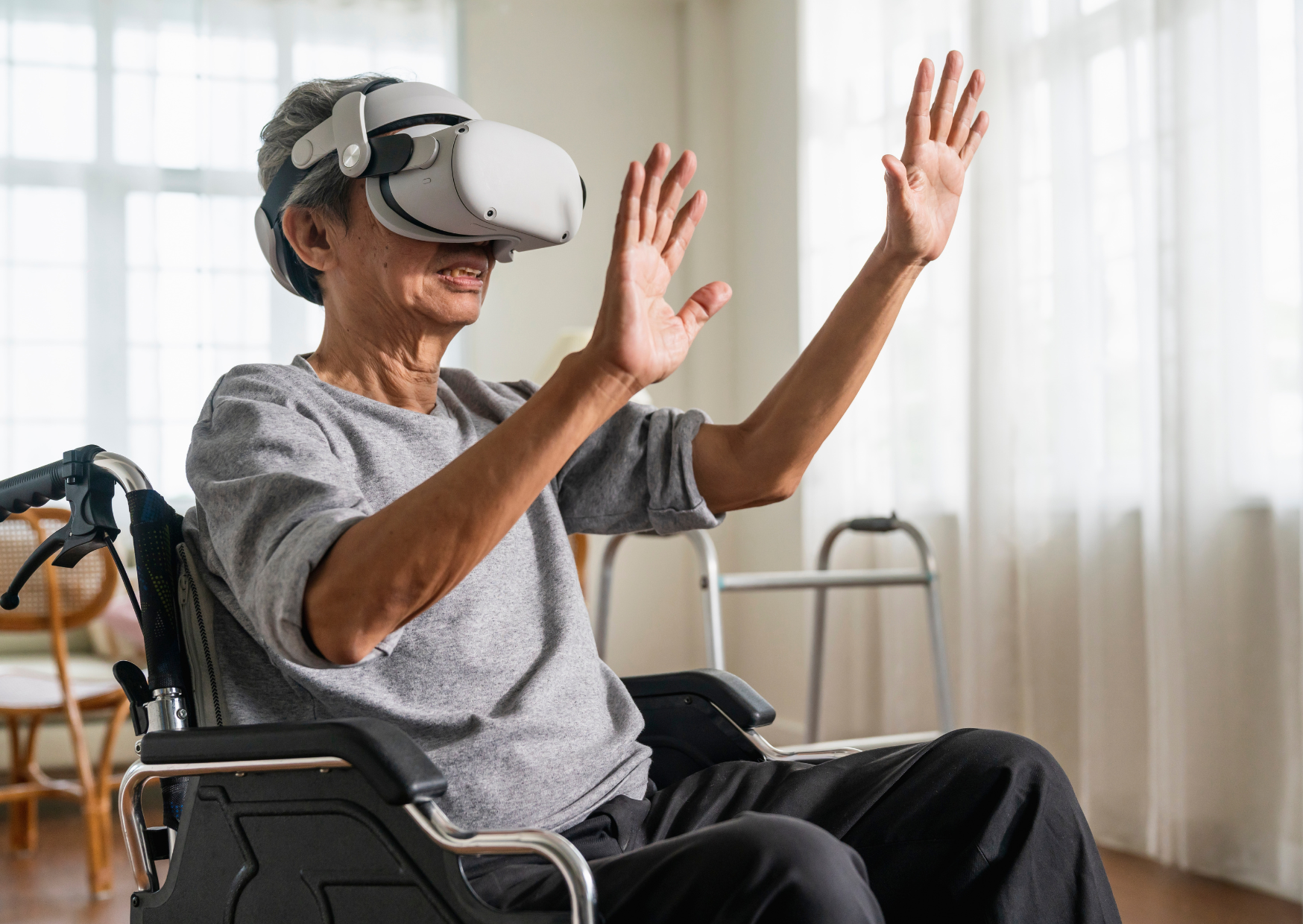
Virtual rehabilitation as a therapeutic support tool
Functional intervention aimed at the recovery of movement and cognition
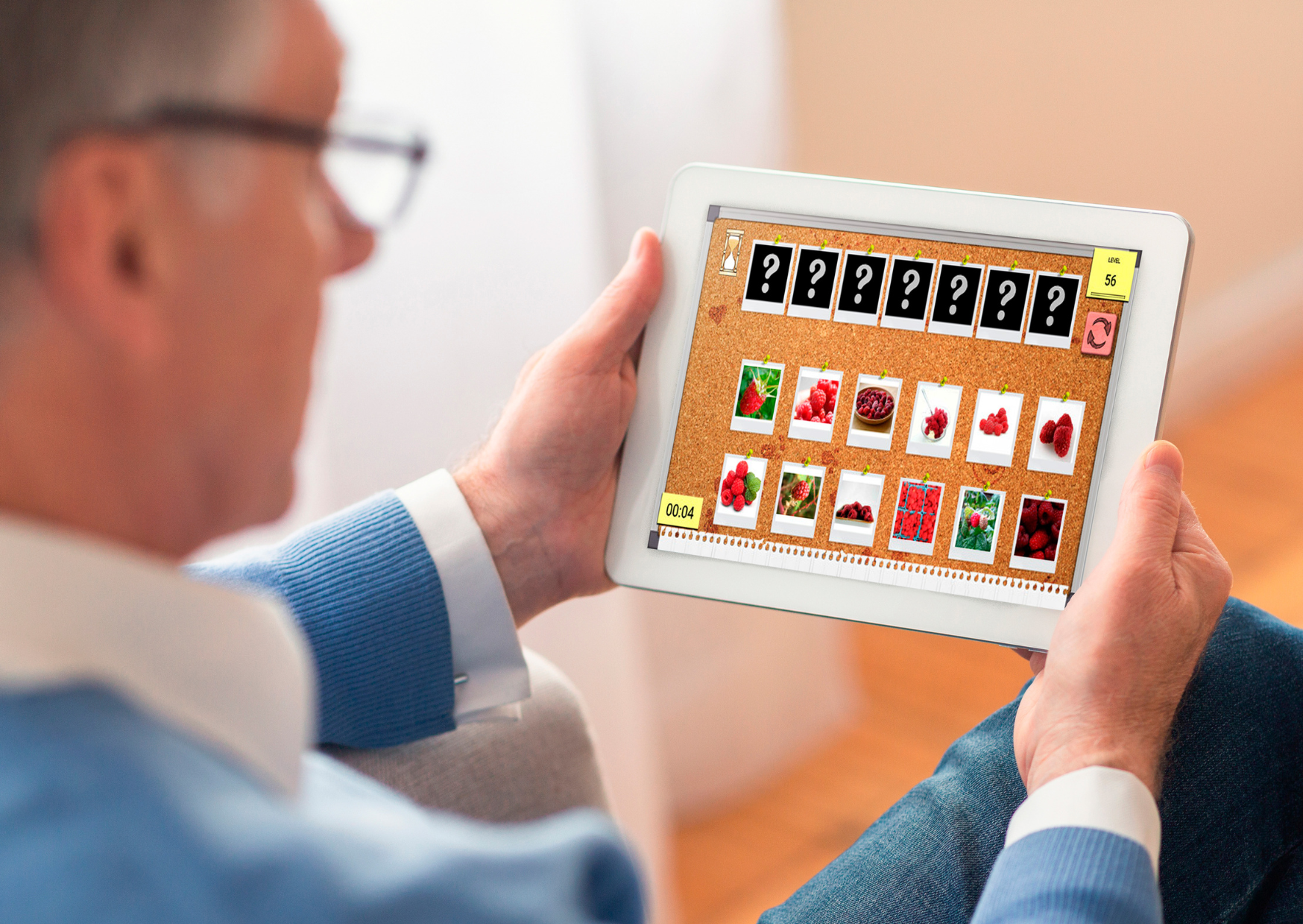
Supervised digital cognitive rehabilitation
Clinician-adapted digital cognitive rehabilitation programs for use in clinical settings.
Dual cognitive-motor task
A dual cognitive-motor task combines a physical task with a cognitive demand. It may involve attention, working memory, calculation, language, decision-making, inhibition, or response to stimuli.
Common examples include:
- walking while naming words from a particular category;
- maintain balance while responding to visual stimuli;
- reach for objects in response to a verbal command;
- walk and stop at a traffic signal;
- handle objects in a specific order;
- change direction according to an instruction;
- to perform a motor task while recalling a rule.
This type of task can be useful when the goal is to assess or train how attentional load affects movement. In older adults and people with cognitive impairment, systematic reviews have explored dual-task training as a strategy for improving cognitive and physical functions, although the results depend on the population, intervention, and measures used.
Examples of cognitive-motor tasks
In terms of balance, an exercise may involve maintaining an upright stance while the patient identifies colors, responds to auditory cues, or follows changing instructions. If the exercise is too challenging, the difficulty can be reduced by increasing the base of support, simplifying the instructions, or slowing down the pace of the cues.
While walking, you can use activities such as naming animals, counting backward, responding to a signal, or changing direction based on a verbal instruction. The important thing is to observe whether the gait becomes slower, more unsteady, or less confident.
For the upper limbs, tasks involving reaching and selection can be considered. For example, touching only objects of a certain color, reaching for objects in a specific order, or manipulating objects while following a simple rule.
In functional tasks, cognitive-motor dual tasks may arise when organizing materials, following a sequence of steps, responding to instructions during an activity, or making small decisions while maintaining physical exertion.
Technology and Virtual Reality in Dual-Task Exercises
Technology can support the design and progression of dual-task exercises, although it does not always have to replicate a complete dual task. It can help train motor, cognitive, or perceptual components that the professional then integrates into more functional activities.
Digital tools can be used to improve accuracy, reaction time, reach, coordination, visual attention, decision-making, and task repetition. They can also track data such as time, errors, achievement levels, and progress between sessions.
Technology designed to assist with cognitive-motor dual-tasking has been extensively reviewed, particularly in the context of age-related chronic conditions, with applications including virtual reality, exergames, sensors, and interactive systems. The evidence base is active but heterogeneous; therefore, it is advisable to avoid making general claims about efficacy and to evaluate each intervention based on the target population, objective, and outcome measure.
At this point, Rehametrics can be viewed as a tool to help structure exercises, adjust difficulty levels, and track performance on physical or cognitive tasks. On the physical side, the focus may be on developing motor skills such as reach, coordination, mobility, balance, or postural control. In immersive virtual reality settings, there may be greater opportunities to integrate stimuli, the environment, motor responses, and decision-making.
Precauciones clínicas
The secondary task should not be introduced if the primary task has not yet been mastered. In patients with instability, a high risk of falling, poor comprehension, impulsivity, severe fatigue, or poor error awareness, it is advisable to start with very simple tasks and close supervision.
It is also important not to confuse complexity with functionality. A task may be difficult but of little relevance to the patient. The dual task should be linked to specific goals: walking more confidently, handling objects, improving balance during activities, responding better to stimuli, or tolerating more demanding situations.
When using virtual reality or immersive tools, it is also important to consider motion sickness, eye strain, sensory tolerance, postural safety, and the need for supervision.